| Jazz |
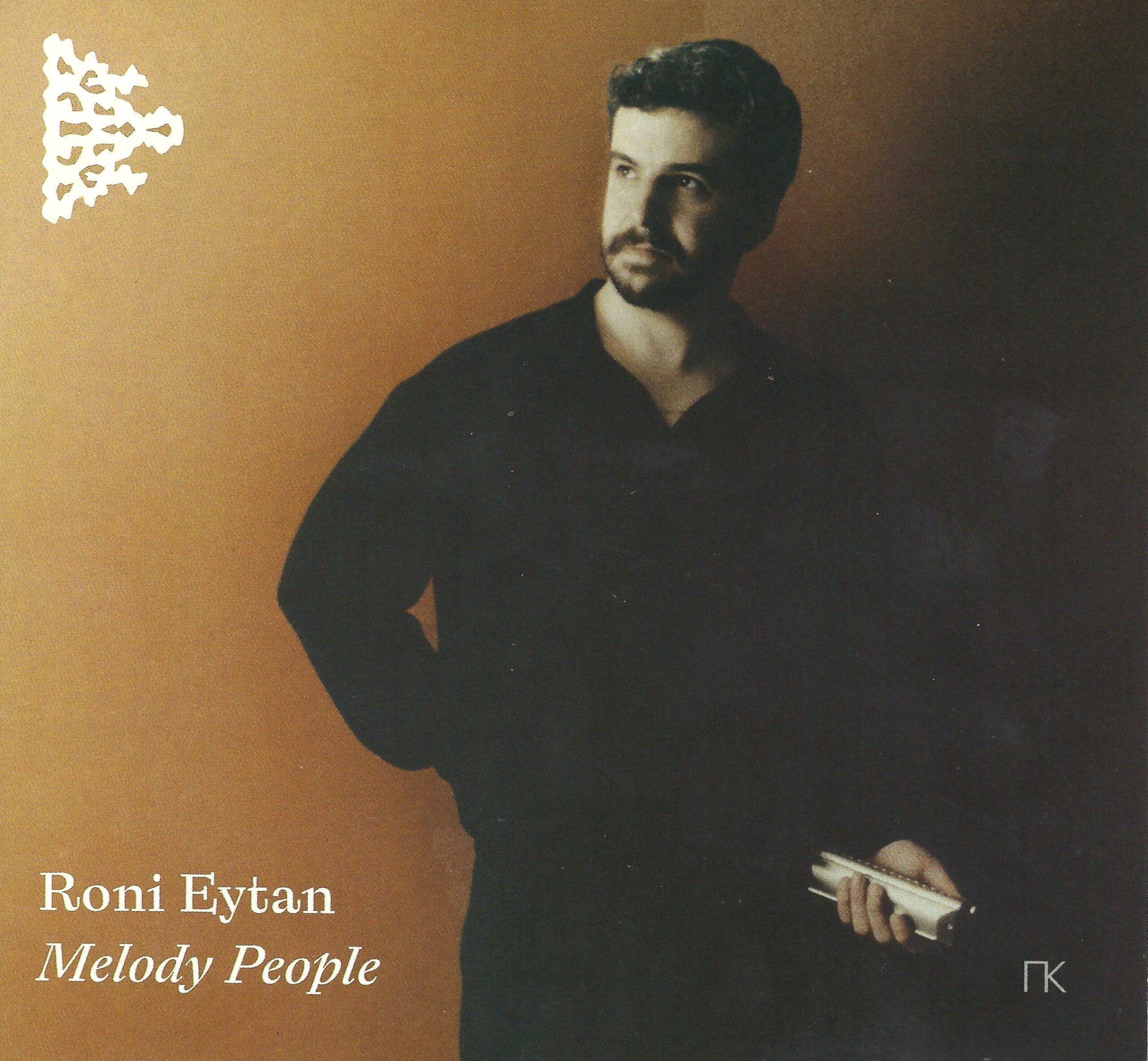
Melody People: Roni Eytan’s Stunning Debut Puts the Harmonica at the Heart of a New Kind of Storytelling
Melody People, the first record under his own name by harmonica player and composer Roni Eytan, announces something extremely pleasant: a fully formed artistic vision, carried by an instrument too often confined to the margins of jazz. From the very first notes, it’s clear this isn’t a calling-card record designed to showcase technique. It’s a deeply personal, beautifully conceived piece of storytelling, and it’s one of the loveliest jazz albums of the year. A debut that already sounds like a mature statement
The history of jazz harmonica is a short but distinguished one: Larry Adler carried the instrument out of vaudeville and into the concert hall, and Belgium’s Toots Thielemans later made it a legitimate jazz voice alongside Charlie Parker, Miles Davis and Bill Evans. Eytan belongs firmly in that lineage, but he’s also pushing it somewhere genuinely new. Alongside New Zealand harmonica innovator Brendan Power, he helped develop the first microtonal harmonica, an instrument built to capture the subtle pitch inflections of Middle Eastern maqam, inflections the conventional chromatic harmonica simply cannot reach. Hearing that instrument in a jazz context, woven naturally into chamber-like arrangements rather than treated as a novelty, is one of the real pleasures of this record. Fellow harmonica virtuoso Grégoire Maret put it well when he described Eytan’s playing as marrying his cultural roots with the roots of jazz, and that marriage is audible in every phrase here.
Eytan’s credentials make his arrival as a leader feel overdue rather than sudden. He was the first harmonica player ever chosen for the Herbie Hancock Institute of Jazz (formerly the Thelonious Monk Institute), personally selected by a panel that included Herbie Hancock, Wayne Shorter and Ambrose Akinmusire, and mentored by Hancock and Shorter directly. He spent two years touring internationally with Grammy-winning pianist Danilo Pérez’s band, and has worked as a sideman with John Patitucci, Eddie Gomez, Brian Blade, Kris Davis and Kevin Hays, among others. That is a remarkable résumé for any musician, let alone one playing an instrument so rarely given centre stage.
What gives Melody People its emotional weight, though, isn’t the pedigree, it’s the story behind it. The album is dedicated to Eytan’s grandfather, a natural storyteller who passed melodies down through the family: folk songs, popular tunes from his youth, and melodies for Hebrew prayers handed down for generations. In his own words, printed in the album’s liner notes, Eytan writes with real tenderness about those memories: singing together, melodies that stayed even as other things, a home, words, people, slipped away. “At the end he had almost no words left. We still sang. He never lost a melody, from beginning to end”, he writes. It’s a quietly devastating image, and it explains everything about why this record sounds the way it does: patient, lyrical, unhurried, built on the conviction that a melody can hold what words sometimes cannot.
That personal history runs through the whole album, but it comes most fully into focus on “Elegy for Saba”, a tender duet between Eytan’s harmonica and Shai Maestro’s piano, written specifically for his grandfather. Eytan has explained that the melody traces back even further, to his grandfather’s own grandfather, a cantor who composed some of the prayer music the family still sings. Hearing that lineage distilled into eight and a half minutes of restrained, deeply felt duet playing is one of the most moving passages on the record.
Produced by the gifted pianist Shai Maestro, who also plays throughout, Melody People was written for a chamber-like acoustic quintet: Maestro on piano, Nitzan Bar on guitar, Barak Mori on bass and Daniel Dor on drums, with cellist Mayu Shviro appearing as a guest. It’s a setting that favours dialogue over display, and the whole band responds in kind. Eytan has spoken admiringly of Dor’s extraordinary dynamic range, able to sound like a full kit drummer one moment and a hand percussionist the next, and that flexibility shapes much of the record’s character, never pushing, always listening.
The album opens with “Winter Dance (A Call to Gather),” a lively, Middle Eastern-flavoured duet between Eytan’s microtonal harmonica and Dor’s percussion that sets the record’s tone immediately: rooted, rhythmic, and unmistakably personal. “Hopeful” unfolds in a pensive 6/8 before building to a crescendo where Eytan wails with real abandon on chromatic harmonica. The title track, “Melody People”, carries a surging, uplifting energy, later revisited in condensed, super-charged form as “Melody People (Holding | Letting Go)”, with Dor laying down a slamming backbeat beneath Eytan’s most fiery playing on the record.
Elsewhere, the album leans into melancholy without ever tipping into sentimentality. “Tears (A Mother’s Lament)” is a mournful, quietly devastating requiem, and “Like a River,” featuring Mayu Shviro’s cello, is one of the record’s most poignant ballads, arriving as a segue from the brief, sombre cello solo piece “Before It Begins”.
“A Modern Folk Tale” brings a flamenco-tinged lift, while “Harmonica Song (For Dave)” is a brightly buoyant duet with Bar’s nylon-string guitar. The quintet also takes on two beloved covers: a lyrical reading of Yoni Rechter’s “Hayalda Hachi Yafa BaGan”, and a delicate version of the fantastic and poignant Jacques Brel’s “Ne Me Quitte Pas”, a tune Toots Thielemans himself performed often in concert, making its inclusion here feel like a quiet passing of the torch.
What makes Melody People so special is how naturally its ambitions, instrumental innovation, cultural inheritance, jazz improvisation and personal memory, sit together. Nothing here feels forced or academic. Eytan has said the album asks what folklore means today, how old stories keep finding new forms in a globalized world, and that question is answered not through explanation but through feeling: every piece genuinely sounds like a story being told, exactly as he intended. As saxophone legend Benny Golson said of Eytan, “tomorrow belongs to him”, and on the evidence of this remarkable debut, that’s not an overstatement.
This is a rare kind of first album: assured, emotionally generous, and played by musicians who clearly believe in every note. It belongs in any serious jazz collection, and it deserves to introduce Roni Eytan to a far wider audience.
Frankie Pfeiffer
Editor in chief – PARIS-MOVE
PARIS-MOVE, October 4th, 2026
Follow PARIS-MOVE on X
:::::::::::::::::::::
Musicians:
Roni Eytan: harmonica and microtonal harmonica
Shai Maestro: piano
Nitzan Bar: guitar
Barak Mori: bass
Daniel Dor: drums
Special guest:
Mayu Shviro: cello
Tracklisting:
- Winter Dance [2:19]
- Hopeful [3:31]
- Melody People [8:31]
- Tears (A Mother’s Lament) [6:34]
- A Modern Folk Tale [7:38]
- Before It Begins [1:13]
- Like A River [4:43]
- Harmonica Song (For Dave) [3:24]
- Elegy for Saba [8:30]
- Melody People (Holding | Letting Go) [1:26]
- Hayalda Hachi Yafa Bagan [3:34]
- Ne Me Quitte Pas [6:10]
Total time: 57:36
All music composed and arranged by Roni Eytan except:’Before It Begins’ by Mayu Shviro, ‘Hayalda Hachi Yafa BaGan’ by Yoni Rechter (lyrics by Yehonatan Geffen), ‘Ne Me Quitte Pas’ by Jacques Brel, arranged by Roni Eytan.
Recorded at La Buissonne, Pernes-les-Fontaine, France.
Recorded and mixed by Gérard de Haro, assisted by Matteo Fontaine.
Mastered by Nicolas Baillard at La Buissonne Mastering Studio.
Additional recording at Big Orange Sheep, Brooklyn, NY, by Alon Benjamini.
Additional recording at Pluto Studios, Tel Aviv, Israel, by Asaf Shai and Daniel Anglister.
Roni Eytan plays Suzuki Harmonicas. The microtonal harmonica was developed with Brendan Power.
Produced by Shai Maestro.