| Jazz |
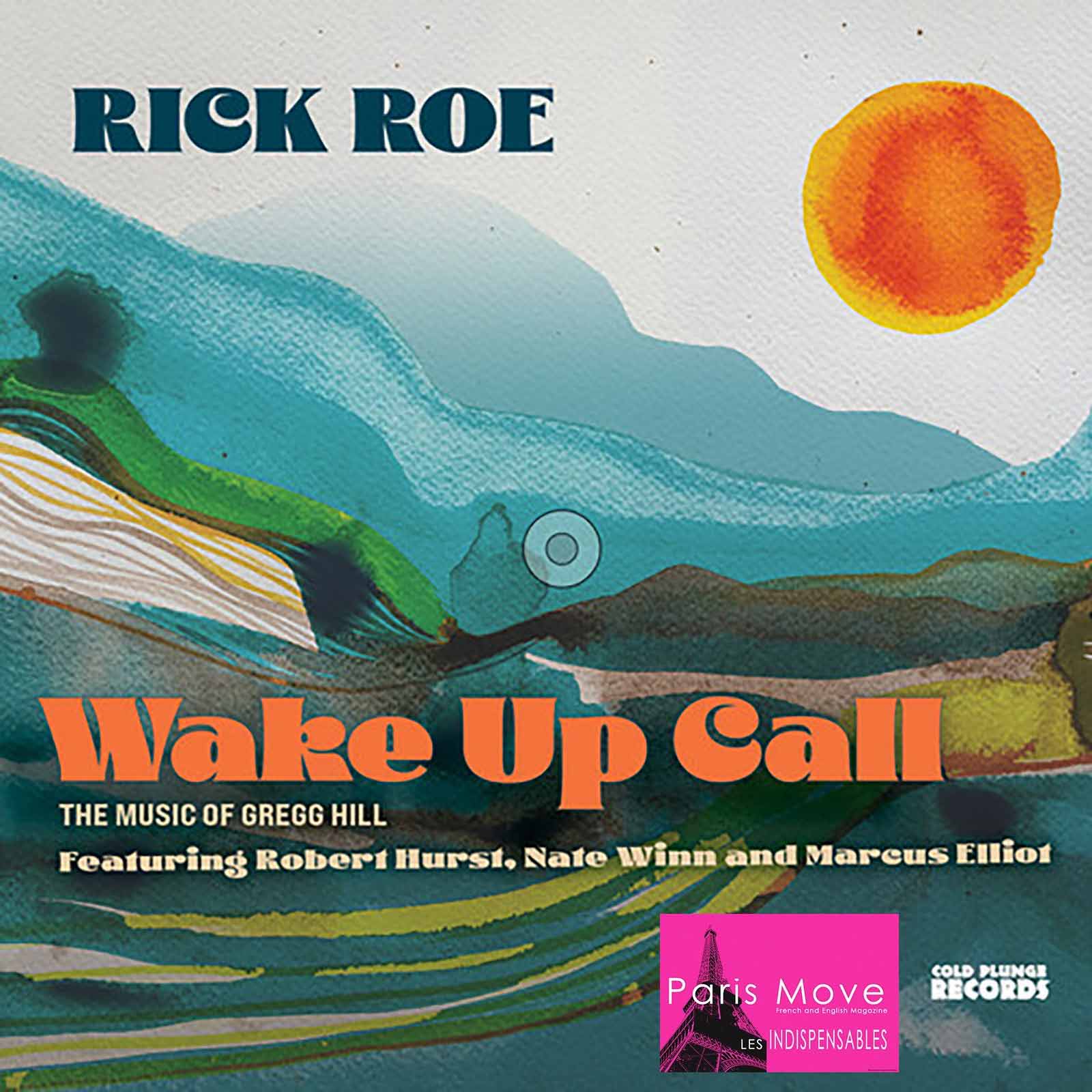
There is something quietly subversive about listening to Rick Roe on the morning of January 1, 2026. In an era when contemporary jazz often oscillates between radical experimentation and carefully branded nostalgia, this music arrives in near silence. Outside, the street is motionless, no cars, no voices, nothing but the faint sound of my fingers on the keyboard disturbing the gentle torpor of the post-holiday lull. It is precisely in this suspended moment, between the exhaustion of the past year and the tentative promises of the next, that this album asserts itself.
The record had been watching me for days, impossible to ignore. To be fair, I already know Rick Roe’s musical language well. As a pianist, arranger, and musical chameleon, Roe appears regularly on releases from Origin Records, a label that has quietly become one of the most consistent curators of modern jazz rooted in tradition yet open to narrative ambition. Familiarity, in this case, did not breed indifference, it sharpened expectation. If, like me, you are drawn to Roe’s artistic universe, this web page offers a revealing overview of the many facets of his work.
Before going any further, it is worth clarifying the architecture of this project. At its core are the compositions of Gregg Hill, a composer whose work has increasingly become a point of convergence for jazz musicians seeking both structural depth and emotional openness. Rick Roe’s role here is not merely that of an interpreter. As pianist and arranger, he acts as a narrative conduit, reshaping Hill’s writing, framing it, and, at times, inhabiting it so fully that the boundary between composer and arranger begins to blur.
On Hill’s own website, the album is described in glowing terms: Roe’s ambitious arrangements take listeners on a journey Hill himself had never imagined. An exceptionally tight-knit group of Detroit musicians elevates the music, revealing its formal richness while stirring genuine emotion. Particular praise is given to the propulsive, interactive rhythm generated by Roe, the brilliant bassist Robert Hurst, and the energetic drummer Nate Winn, as well as to the mature phrasing, spontaneity, and controlled intensity of the solos by Roe and tenor saxophonist Marcus Elliot.
All of that is true, and still incomplete.
What ultimately emerges is a shared authorship that feels organic rather than negotiated. Roe has a rare ability, cultivated over years of collaborative work, to slip into the artistic skin of the composers he serves. I had already noticed this quality on previous Origin Records projects: he absorbs another artist’s musical identity while subtly infusing it with his own unmistakable sensibility. In this project, the carefully chosen ensemble does more than support Gregg Hill’s writing, it enhances it, serving the music with an elegance that feels both deliberate and deeply felt.
There is one moment, midway through the album, that crystallizes this approach. The piano introduces a theme with almost deceptive restraint, leaving space rather than filling it. Hurst’s bass enters not as an anchor but as a second voice, while Winn’s drumming suggests motion without insisting on it. When Marcus Elliot finally steps forward, his tenor solo unfolds with a measured intensity, never rushed, never indulgent, allowing the composition itself to breathe. It is here that Roe’s arranging philosophy becomes audible: complexity without congestion, emotion without excess.
Wake Up Call unfolds like a novel. There is an introduction that establishes the emotional landscape, a middle section where tensions quietly accumulate, and a conclusion that—true to Gregg Hill’s aesthetic, feels unmistakably hopeful. Over the past three years, more and more musicians have built entire projects around Hill’s compositions, and the reasons become increasingly clear the deeper one listens. His works seem governed by two fundamental principles. First, they are structurally complex yet deliberately spacious, inviting artists to shape them through arrangement and interpretation. Second, despite that complexity, the music remains accessible, anchored by melodic lines that guide rather than challenge the listener.
The kind of compositional work practiced by Gregg Hill, or by our friend Anthony Branker, is both deeply solitary and relentlessly demanding. It closely resembles the labor of a literary author. Few have articulated this creative solitude better than Paul Auster, whose reflections on writing apply with uncanny precision to this type of composer. In a 2024 interview for L’Atelier d’écriture, Auster said:
“It happened when I stopped trying to make literature. That may sound strange, but from that moment on, writing became a different experience for me. When I picked up the pen again after a year-long slump, the words came out as prose. The only thing that mattered was writing what I had to say, without regard for established conventions, without worrying about form. That was at the end of the 1970s, and since then I’ve continued to work in that state of mind.”
The full interview, in French, can be read HERE.
Gregg Hill appears to follow a similar path. Rather than composing for an initiated elite, he addresses a broader audience through the poetry of his approach. Somewhere between romance and nostalgia, his music resists categorization and instead affirms something increasingly rare in contemporary jazz: a belief in shared beauty, in music as a space where complexity and generosity can coexist.
Thierry De Clemensat
Member at Jazz Journalists Association
USA correspondent for Paris-Move and ABS magazine
Editor in chief – Bayou Blue Radio, Bayou Blue News
PARIS-MOVE, January 1st 2026
Follow PARIS-MOVE on X

::::::::::::::::::::::::
Musicians :
Rick Roe – Piano
Robert Hurst – Bass
Nate Winn – Drums
Marcus Elliot – Tenor and Soprano Sax
Track Listing:
Inside Straight
Sunspiration
Wake Up Call
Wide River
The Return Of Mr. Pea
Modal Yodel #2
La Canción
The Ringer
Hyperbarity
Double Play
All compositions by Gregg Hill
All songs arranged by Rick Roe
©2025 Cold Plunge Records All Rights Reserved etc.
Recorded at Solid Sound Recording Company, Ann Arbor, Michigan on April 29th and 30th 2025 / solidsound.net /
Recording Engineer – Eric Wojahn
Edited, mixed, and mastered by Eric Wojahn
Photography and album design by Lynne Brown