| Jazz |
Summary: On Roots & Byways, Ran Blake and Dominique Eade transform the voice and piano format into a profound artistic dialogue. Drawing from jazz, folk, classical music, and the broader American song tradition, the duo delivers a demanding yet deeply rewarding album that challenges conventional notions of Americana while showcasing nearly five decades of shared musical understanding. A sophisticated and emotionally resonant work from two of jazz’s most distinctive voices.
Ran Blake & Dominique Eade’s Roots & Byways Review: A Masterful Reimagining of Americana and Vocal Jazz
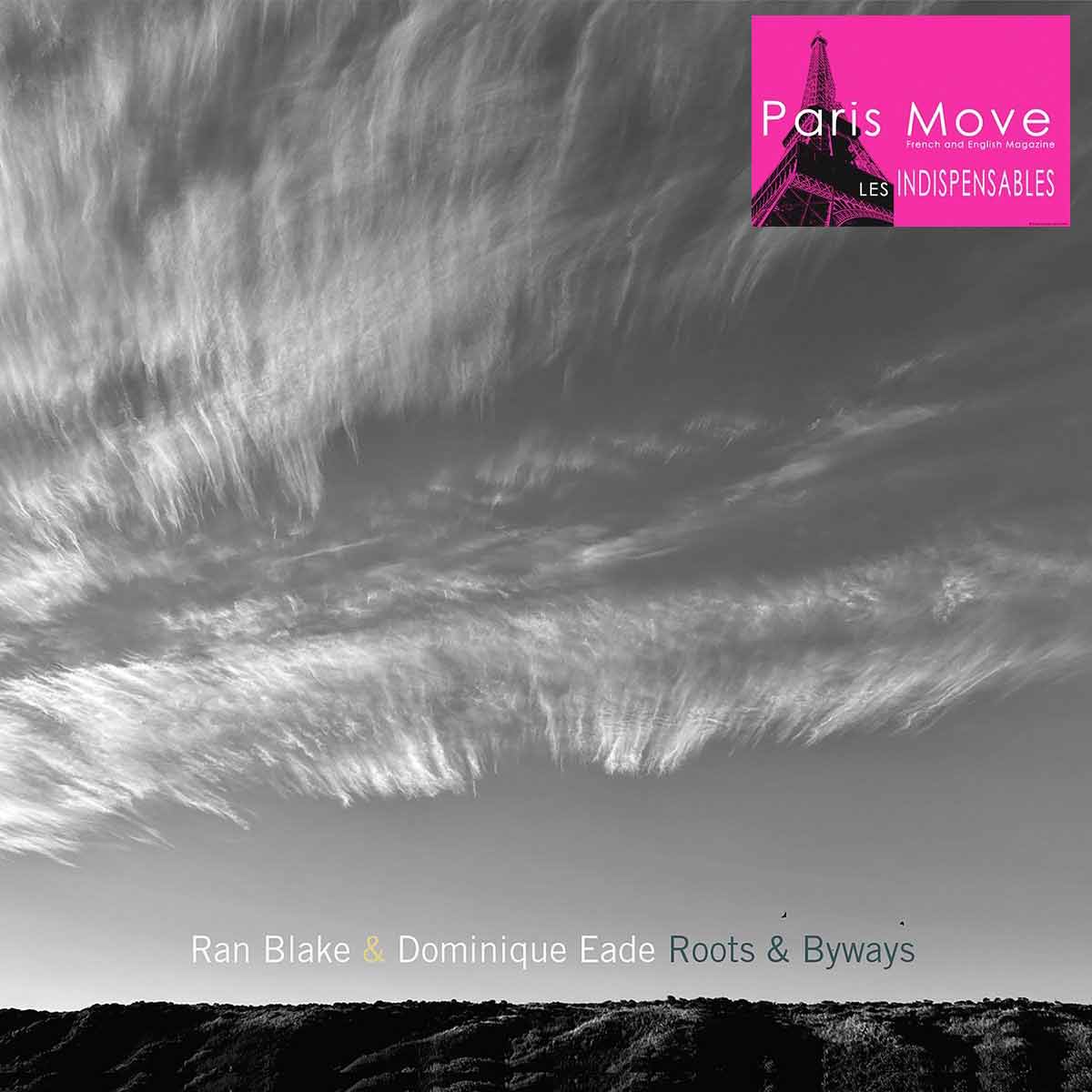
There is something quietly revealing about the cover of Roots & Byways. A simple grayscale image rests beside a mixing console, carrying only two names: Ran Blake and Dominique Eade. Nothing flashy, nothing designed to attract attention through spectacle. Just a voice, a piano, and the promise of a conversation.
Yet that apparent simplicity is deceptive. From the opening moments, it becomes clear that Roots & Byways is not merely another voice and piano recording. It is an artistic encounter of uncommon depth, the kind of intimate musical statement that feels almost too personal to share. One is never quite certain whether the piano is leading the voice or whether the voice is guiding the piano. The distinction ultimately becomes irrelevant. What emerges instead is a rare state of musical symbiosis in which both artists inhabit the same emotional landscape while preserving their own identities.
The album’s power lies not in overt drama or theatrical interpretation. Rather, it resides in the extraordinary quality of Eade’s vocal expression. Her lines can be profound one moment and ethereal the next, hovering above Blake’s harmonies with an almost elusive grace. At times, the music seems to suggest an invisible choreography, as though every phrase were part of a timeless dance unfolding beyond the listener’s reach.
Like many great artistic partnerships, this one is rooted in a remarkable story. Dominique Eade first encountered Ran Blake in 1978 after arriving in Boston to study at Berklee College of Music. Hearing Blake perform at the New England Conservatory, where he continues to teach today, proved transformative.
“Ran’s solo playing felt like a natural extension of Thelonious Monk, whose music I deeply loved,” Eade has recalled. “That experience convinced me to transfer to NEC.”
Some encounters alter the course of a career. Others reshape an artist’s entire creative outlook. Eade’s meeting with Blake seems to have accomplished both.
The musical chemistry that developed between them remains extraordinary decades later. The relationship is built upon mutual admiration. Blake has long spoken enthusiastically about Eade’s gifts as a vocalist, composer, and educator.
“Dominique is one of our great singers, composers, and teachers,” Blake has said. “Her range is exceptional, and her ear captures astonishing nuances. Her repertoire stretches from Stan Kenton to mining songs and English folk music. She possesses an extraordinary sense of rhythm, whether she is singing bebop scat, protest songs, or forgotten standards.”
That breadth of musical curiosity forms the intellectual foundation of Roots & Byways. At its core lies a challenge to conventional definitions of Americana. For many years, the term has often been reduced to a narrow sonic identity associated primarily with folk and country traditions. Blake and Eade propose a far more expansive vision. In their view, America’s musical heritage extends from Jimmy Webb to Thelonious Monk, from Charles Ives to Beyoncé. It is a landscape defined not by stylistic boundaries but by creative diversity.
This broader conception of Americana may be one of the album’s most significant contributions. Rather than treating American music as a fixed tradition rooted in a handful of familiar genres, Blake and Eade present it as an evolving conversation between regional histories, cultural influences, and artistic imaginations. Their approach acknowledges that American identity itself is layered and often contradictory. Folk ballads, jazz standards, classical modernism, popular songwriting, and vernacular traditions coexist within the same cultural fabric. Roots & Byways embraces this complexity rather than simplifying it, offering a portrait of America that feels richer, more inclusive, and ultimately more truthful.
Their exploration of this broader American song tradition has unfolded over decades, and Roots & Byways stands as a compelling document of that journey.
The album also gains additional resonance when viewed through the lens of Blake’s singular place in American music. For more than six decades, the pianist has occupied a category almost entirely his own. As one of the principal architects of the Third Stream movement, he helped create a space where jazz and contemporary classical music could coexist without sacrificing their individual identities. His work has influenced generations of improvisers, composers, and educators, yet he has never sought the spotlight in the manner of many celebrated jazz figures. Instead, Blake has remained devoted to cultivating a deeply personal musical language shaped by film noir, modern classical composition, gospel music, and the jazz tradition. Roots & Byways reflects that lifelong commitment to exploration while demonstrating how naturally Dominique Eade has become part of that artistic vision.
This is not, however, an album designed for effortless listening. It demands attention, curiosity, and a willingness to engage with music on multiple levels. Beneath every performance lies a deeper inquiry into the nature of the material itself.
Whether one considers the haunting interpretation of “Lost Highway” or the purely pianistic meditation of “Les Grognards,” the listener continually encounters a coherent artistic vision. There is a seriousness of purpose here that occasionally recalls the exploratory spirit of Béla Bartók. Yet the comparison extends beyond Bartók alone. One also hears echoes of Charles Ives in the collision of musical worlds, traces of Paul Bley’s willingness to leave space unresolved, and even a hint of Carla Bley’s refusal to accept stylistic boundaries as permanent. Like those artists, Blake approaches familiar material not as a museum artifact but as a living object capable of endless reinvention.
What makes the project especially remarkable is Eade’s ability to inhabit such a demanding environment. Few vocalists possess the technical command, harmonic sophistication, and artistic fearlessness necessary to thrive within Blake’s singular universe.
On “I Remember,” for example, Eade performs in a manner that approaches a cappella singing, bending rhythm and reshaping harmonic expectations with astonishing freedom. Every phrase feels intentional. Every silence carries weight. Such mastery is no accident.
Indeed, Eade’s artistic development has been intertwined with Blake’s influence for nearly half a century. When she arrived in Boston to deepen her musical studies, Blake’s solo performances offered a revelation. He succeeded in creating unexpected connections between jazz and contemporary classical music, two worlds that Eade had already begun exploring independently. Her decision to join the New England Conservatory’s pioneering Third Stream department allowed her to study directly under Blake’s mentorship, establishing a creative relationship that continues to bear fruit today.
Perhaps the most striking achievement of Roots & Byways is the absence of fragility often associated with voice and piano recordings. Such formats can easily become unbalanced, with one performer overshadowing the other. That never happens here. Blake and Eade assert their individual artistic identities while simultaneously serving a shared vision. Each artist follows an inner rhythm, yet both remain fully attentive to the other’s movements.
Curiously, despite decades of performing together, Blake and Eade did not document their partnership in the recording studio until the release of Whirlpool in 2011. That album was followed by Town and Country in 2017, and now by Roots & Byways, another significant chapter in a collaboration that has matured over nearly fifty years.
One can only hope the interval before their next recording proves shorter. Projects of this caliber have become increasingly rare in today’s vocal jazz landscape. At a time when much contemporary music favors immediacy and accessibility, Blake and Eade continue to remind listeners of the rewards that come from patience, depth, and genuine artistic dialogue.
More importantly, Roots & Byways arrives at a moment when contemporary jazz is increasingly divided between tradition and innovation, between audience accessibility and artistic experimentation. Blake and Eade refuse to accept that such choices must be mutually exclusive. Their work demonstrates that intellectual rigor and emotional resonance can coexist, that historical awareness can fuel creativity rather than constrain it. In an era often defined by speed, this album embraces reflection. In a cultural environment that rewards certainty, it celebrates ambiguity.
That may ultimately be the recording’s greatest achievement. Rather than offering definitive answers, Roots & Byways invites listeners into an ongoing process of discovery. It asks difficult questions about American music, artistic memory, and creative collaboration while remaining deeply human at every turn.
Roots & Byways is not simply an album. It is a testament to the enduring possibilities of musical partnership, a compelling reexamination of what Americana can mean in the twenty first century, and a reminder that some of the most profound artistic statements emerge not from grand gestures, but from two musicians listening carefully to one another.
Thierry De Clemensat
Member at Jazz Journalists Association
USA correspondent for Paris-Move and ABS magazine
Editor in chief – Bayou Blue Radio, Bayou Blue News
PARIS-MOVE, June 25th, 2026
::::::::::::::::::::::::
Musicians:
Ran Blake – piano
Dominique Eade – vocals
Track Listing :
Mood Indigo
Grey December
Portrait
Mendacity
Saving All My Love for You
Lost Highway
Who Cares
Dreamsville
Les Grognards
Way Out There
Pannonica
What’s Your Story, Morning Glory
You Go to My Head
I Remember
On Top of Old Smokey
Watch What Happens