
| Jazz |
And Then, Nothing: Jazz in a World That Never Falls Silent
There are mornings when the news seems to have invaded even the most private corners of our lives. Images flash across screens, official statements pile up, anger feeds on anger, and violence, now a familiar presence in the media landscape, begins to dictate the rhythm of public life. We follow the news because we believe we must remain informed, yet the sheer accumulation of events can make it harder to distinguish what matters from what merely demands our immediate reaction. France, the country where I was born, remains central to these concerns. Not because I long for an idealized version of the country, or because I wish to pass judgment from a comfortable distance, but because attachment to a place also means retaining the right to examine what is changing, what is becoming fragile and what may be slipping away. For an independent journalist, the freedom to speak, write and question is not an abstract legal principle to be filed away among democracy’s historic achievements. It is a daily obligation, a way of resisting intimidation, simplification and indifference. It was in this frame of mind that I approached And Then, Nothing, the album by bassist and composer Peter Brendler. I was not looking for a direct commentary on current events, much less a musical answer to political disorder. I was looking for a different relationship to time, one that might offer a counterpoint to the relentless urgency of the news. Jazz does not have to become an editorial to tell us something about the world we inhabit. Sometimes, it simply changes the terms on which we experience it.
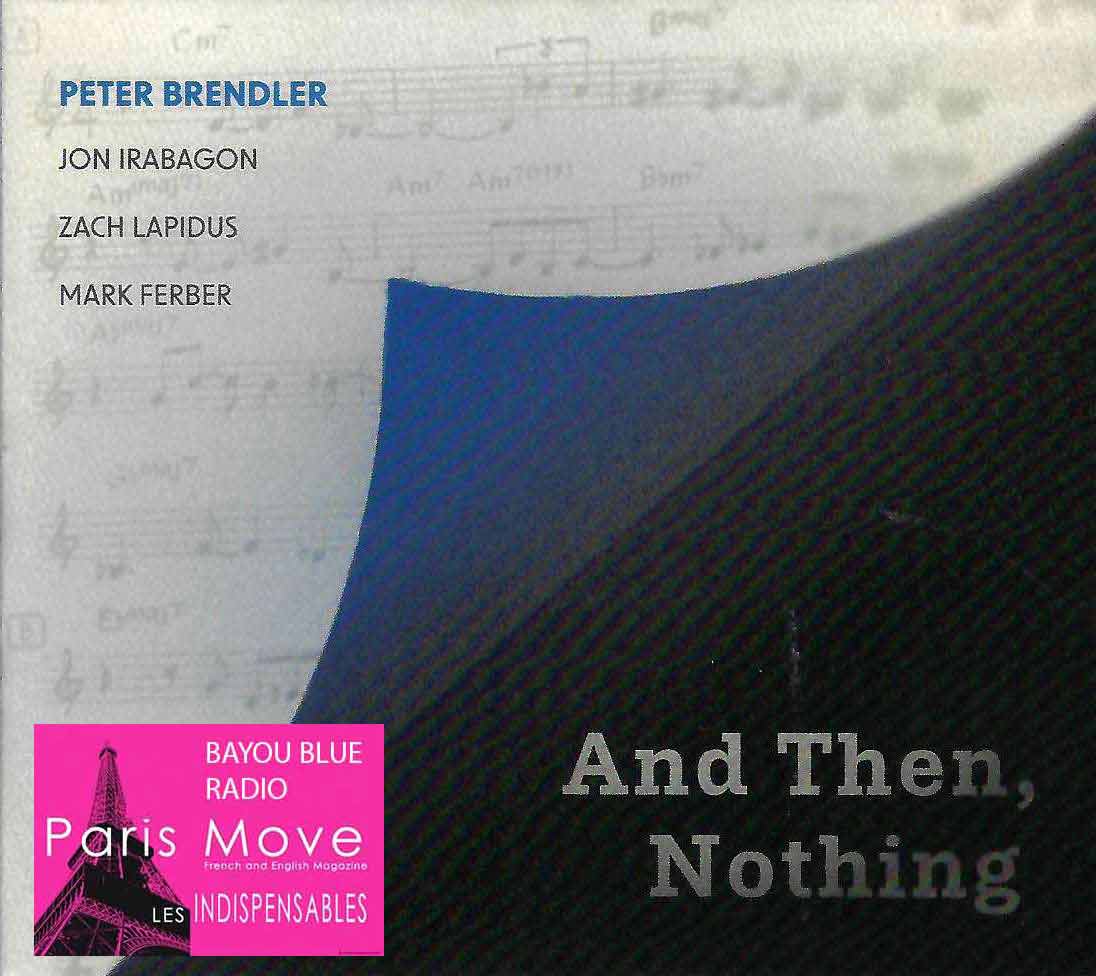
With And Then, Nothing, Brendler brings together compositions that have taken shape over years of work and reflection. The result is an album whose individual pieces feel connected not by a single formula but by a shared understanding of how music can develop in real time. Brendler is joined by tenor saxophonist Jon Irabagon, pianist and keyboardist Zach Lapidus, and drummer Mark Ferber, three musicians whose distinctive voices never disappear into anonymous accompaniment. The quartet’s strength lies in the relationship between carefully considered writing and an interpretive freedom that never mistakes spontaneity for the absence of structure. Brendler’s bass provides an anchor, but it also emerges as a melodic voice, a point of resistance or an impulse capable of redirecting the music. Irabagon explores the tenor’s possibilities, moving from lyrical passages to sharper, more angular lines. Lapidus shifts the harmonic density and tonal color, while Ferber shapes the passage of time rather than merely marking it. These roles are never fixed. Depending on the piece, the initiative passes from one musician to another, and the group’s balance continually changes as the players respond to one another. Their cohesion comes not from uniformity of sound but from a common approach to building music in the moment. The album’s title evokes the emptiness that can follow the achievement of a long-pursued goal. Yet the nothing in question is not necessarily barren. It can also be the space that opens when the pressure to produce a result finally subsides, when the destination matters less than what happens along the way. That idea finds a musical counterpart in an album more interested in the quality of a journey than in spectacular arrivals, more attentive to subtle shifts and provisional balances than to the easy satisfaction of a grand finale.
“More So Than Ever” establishes the quartet’s character from the outset. Irabagon’s tenor supplies the initial surge of energy, but the real story lies in how the other musicians keep that momentum from becoming a vehicle for solo display. Brendler’s bass provides a firm foundation without sacrificing the mobility that allows the music to breathe. Lapidus contributes harmonic responses and sharply placed accents that enrich the conversation without crowding it. Ferber, meanwhile, does more than maintain the beat. His drumming changes the listener’s perception of the pulse, emphasizing certain passages, propelling others forward and creating pockets of tension around which the instrumental lines can move. Rhythm becomes less a fixed framework than a terrain the musicians negotiate together. The saxophone can push ahead, linger over an idea or alter its course, while the rhythm section absorbs those variations and gives them coherence. This is what distinguishes collective improvisation from a simple succession of solos. Each intervention changes the conditions for the next; the musicians do not merely take turns but actively reshape one another’s contributions. Virtuosity is certainly present, but it cannot be measured solely in speed or intensity. It also lies in timing, in the decision to leave a phrase unresolved, in the recognition that an idea may become more powerful when it makes room for someone else. The result is music that feels energized but never mechanical, its tension arising from the fact that it remains in motion.
“The Least of It” takes the quartet into more angular, unsettled territory. Ferber’s drumming becomes especially consequential here. His accents do not simply drive the soloists forward; they carve up the musical space, shift the points of emphasis and create an instability that keeps the other players alert. The drums function as a compositional force, altering the way a phrase is heard without necessarily changing its melodic shape. Lapidus responds with piano work that combines harmonic construction with a percussive edge. Rather than filling every gap, he introduces sharp angles, contrasts and moments of density that give Irabagon a more complex landscape in which to operate. The saxophonist can push toward greater friction, emphasizing inflection and interruption instead of relying on an immediately appealing melodic line. Brendler holds these elements together without smoothing away their differences. The music finds its coherence through the management of intensity. The group understands that tension matters only if it can develop, ease or change direction. That approach gives the piece its urgency, but also its intelligence. The listener is not simply carried along by the pulse. The ear must continually readjust, recognize new points of reference and accept that the music will not always announce where it is headed. What might otherwise become a succession of effects instead feels like a sustained act of collective decision-making.
The quartet’s interpretation of Keith Jarrett’s “Country” reveals another side of Brendler’s writing and musical sensibility. Where the earlier pieces emphasize mobility and tension, this performance places melody and the character of individual sounds at the center. The piano introduces a line of striking clarity, whose apparent simplicity depends on a delicate balance of notes, silences and phrasing. The bass enters without weighing down the melody. When Brendler switches to the bow, his instrument takes on a different function: rather than simply anchoring the lower register, it acquires an almost vocal continuity, stretching musical time and deepening the emotional resonance of the line. Irabagon adopts a more restrained approach, emphasizing the shape and articulation of his phrases rather than sheer projection. This restraint does not diminish the expression; it relocates its intensity. Each note seems to matter more because it is not in a hurry to announce itself. Lapidus gradually enriches the piece’s tonal palette, subtly changing its atmosphere without erasing its original character. More pronounced rhythmic accents eventually give the music a new suppleness, as though the melody, after being contemplated, has rediscovered the body’s instinct for movement. The quartet does not treat Jarrett’s composition as a museum piece. It preserves the melodic strength of the original while allowing it to pass through the group’s own sensibility. The performance succeeds in that balance between fidelity and reinvention. Here, simplicity becomes a test of precision: the musicians must know when not to add more, preserve the space around the melody and allow each instrument to reveal what the others cannot.
“You’ll Be Sorry” shifts the album’s sonic landscape through a more pronounced use of electric textures. Lapidus’s keyboards and the effects applied to the bass alter the quartet’s sound, moving it away from the relative transparency of the acoustic passages. Sound itself becomes more than a vehicle for melody or harmonic progression. It becomes material to be thickened, distorted and placed in tension with other elements. Brendler’s bass, in particular, moves beyond its conventional role as a grounding instrument. Its altered timbre expands the range of colors available to the ensemble and changes the relationship between the low end and the instruments above it. This shift matters because it allows Brendler to bring different conceptions of jazz into the same musical space without simply placing them side by side. The legacy of jazz fusion can be heard in the electric colors and in the interplay between composition and texture, but the piece does not amount to a reconstruction of an earlier style. Its sounds contribute to its dramatic shape. They create areas of shadow, alter the perceived distance between the instruments and lend the exchanges a more unsettled quality. Irabagon must work within a different sonic environment, one in which the keyboards and transformed bass change the way his tenor occupies the ensemble. Ferber maintains rhythmic continuity without locking the piece into a uniform groove. The music’s appeal lies in the tension between a familiar vocabulary and the impulse to move beyond it. Brendler is not trying to prove that jazz can absorb any influence. He is showing that influences become meaningful only when they change the way musicians interact and organize sound.
“Lucky in Astoria” and “High Water Mark” extend that exploration through contrasting moods and less predictable musical trajectories. Their significance lies not simply in their differences of atmosphere, but in the way Brendler sustains a recognizable ensemble identity as the balance shifts. The compositions do not assign each instrument a permanent function. Instead, they establish conditions for interaction. The bass can serve as a point of reference, then become a source of movement. The piano can reinforce the harmony or momentarily unsettle it. The drums can drive the music forward, then fragment the pulse and create room for the saxophone to rethink its phrasing. This approach allows the album to maintain continuity without relying on repetition. Brendler does not try to sustain the same level of intensity throughout, a strategy that would eventually flatten the listening experience. Instead, he shapes variations in density, energy and texture. The more turbulent passages gain meaning from the openness of the quieter ones; the electric colors acquire greater definition when set against the relative sparseness of the acoustic writing. The album’s coherence emerges through contrast, but those contrasts never harden into rigid oppositions. Its identity rests on a conception of jazz in which composition establishes the ground rules while the music itself comes alive through the ways performers inhabit that space, test its limits and move its boundaries.
“Since Forever,” the album’s closing piece, brings these concerns together in a more suspended form. Repeated patterns in the bass, drums and keyboards create a sense of continuity that feels both reassuring and faintly unstable. Repetition here does not mean standing still. Each return changes the listener’s perception of the motif because the accents, colors and interventions of the other instruments gradually alter its meaning. Irabagon’s saxophone traces its phrases through this framework, developing and reshaping ideas rather than simply asserting a theme. The effect is almost hypnotic, but the ensemble avoids turning repetition into a mechanical exercise. The instruments sustain a quiet tension, balancing permanence against variation. The patterns return, but never quite in the same form. The ending does not resolve that tension with a grand gesture. Instead, the music gradually seems to recede, as though it were moving away without requiring a final declaration. The choice gives the album’s title a particular resonance. After the last note, there is no climax to celebrate, no moral to extract, no promise to sell. What remains is the memory of a process whose value lies less in its destination than in the discoveries made along the way. Silence becomes part of the musical experience, allowing the relationships, breaths and tensions that have shaped the album to linger beyond its final sound.
Listening to And Then, Nothing will not resolve a political crisis, correct an injustice or relieve us of the obligation to confront events as they unfold. Music cannot become a permanent refuge from the world, nor should it be required to justify its existence through some immediate practical purpose. Its value lies elsewhere: in its capacity to preserve forms of complexity that public discourse too often sacrifices to speed, spectacle and confrontation. For anyone who writes, the ability to step back is essential. We must be able to reconsider words, examine assumptions and distinguish fact from emotion and political theater. We must also accept that not every question demands an immediate conclusion. My attachment to France does not require me to look away from its contradictions. It requires me to preserve the freedom to name them, even when public debate hardens or collapses into simplistic opposition. Freedom of expression is defended not only through grand declarations but also through the precision of language, the refusal to be intimidated and the determination to keep questioning what others would prefer to leave unquestioned. And Then, Nothing makes none of these arguments explicitly, and it does not need to. Its meaning lies in the way four musicians make room for one another to exist, take risks, change direction and pick up the thread again without erasing their differences. The album does not romanticize collective creation. It reveals the work involved: the friction, the provisional balances and the willingness to let another musician alter the course of an idea. In a world that encourages us to react before we have understood what is at stake, that kind of collaboration offers a modest but compelling alternative. When the record ends, silence provides no definitive answer. It leaves us with a more difficult and perhaps more useful possibility: to return to the world without mistaking its noise for its meaning.
Thierry De Clemensat
Member at Jazz Journalists Association
USA correspondent for Paris-Move and ABS magazine
Editor in chief – Bayou Blue Radio, Bayou Blue News

PARIS-MOVE, October 19th, 2026
Follow PARIS-MOVE on X
::::::::::::::::::::::::
Musicians :
Jon Irabagon – tenor saxophone
Zach Lapidus – piano & synths
Mark Ferber – drums
Peter Brendler – bass
Track Listing :
1. More So Than Ever [06:10]
2. You’ll Be Sorry [05:00]
3. The Least of It [04:16]
4. Country [06:15]
5. Lucky in Astoria [05:49]
6. And Then, Nothing [06:49]
7. High Water Mark [07:45]
8. Since Forever [09:03]