
| World |
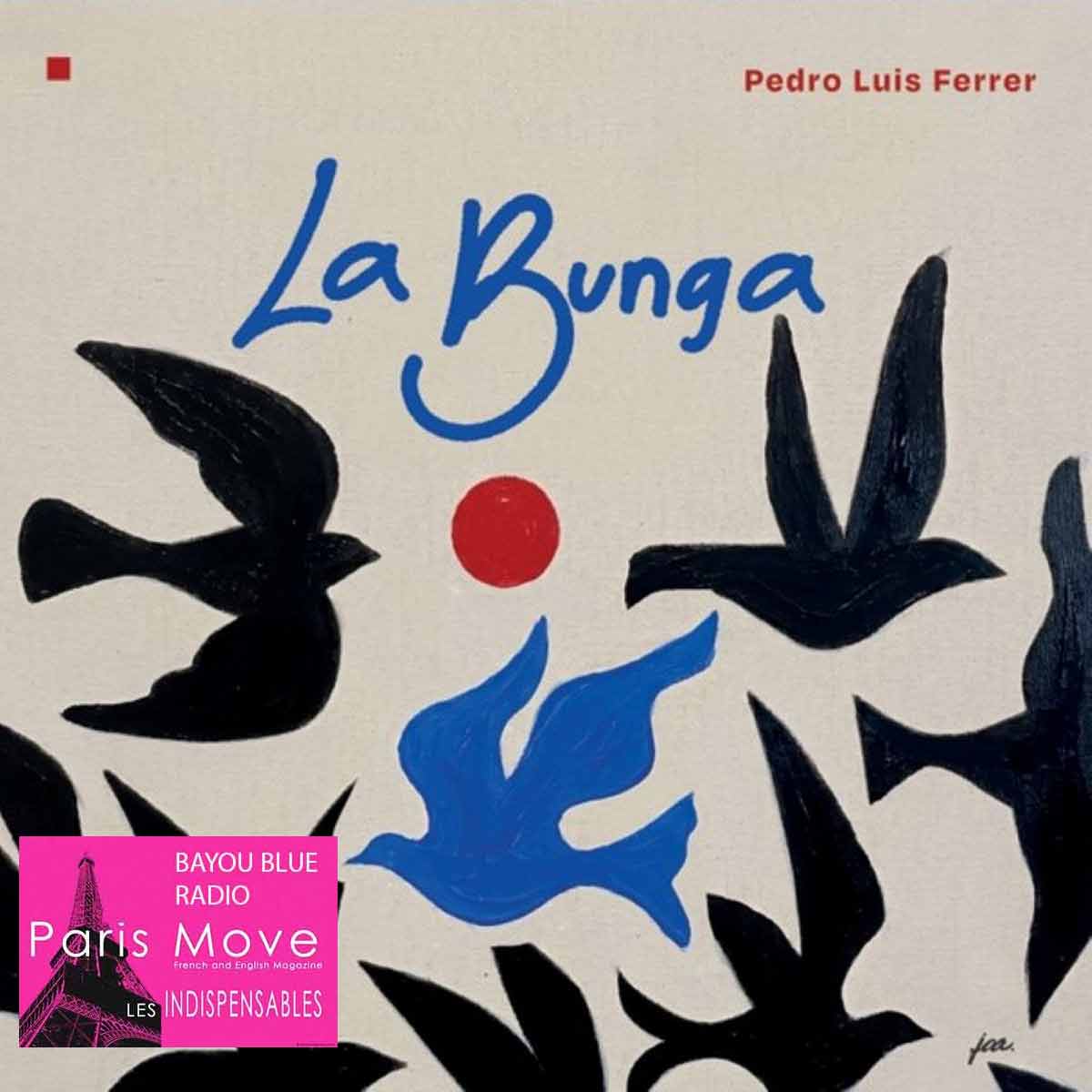
Summary: A personal review of Pedro Luis Ferrer’s La Bunga, exploring its fusion of Cuban rhythms, poetry, guitar, humor, and deeply individual musical language.
Pedro Luis Ferrer’s La Bunga: When Cuban Tradition Becomes Personal
As far back as I can remember, I have been fascinated by Cuban music and, above all, by its rhythms. That fascination is hardly something I could have escaped, especially after Wim Wenders, one of my favorite filmmakers, brought the Buena Vista Social Club story to such a vast international audience. Yet when La Bunga finally reached me, rather late, I immediately sensed that I was entering different territory. After several close listens, first through headphones and then on studio monitors, that feeling became impossible to ignore. This was not simply another record built around the familiar vocabulary of Cuban music. There was something more cerebral, more literary, and ultimately more personal at work. La Bunga does not ask to be heard merely as an example of Cuban tradition. It asks to be heard as the work of an individual artist who has spent decades absorbing that tradition, questioning it, taking it apart, and rebuilding it according to his own internal logic.
Pedro Luis Ferrer is a composer, guitarist, singer, poet and troubadour, but none of those descriptions quite explains what makes his music distinctive. His language moves naturally between popular song and more formally developed instrumental writing, between the immediacy of son and guaracha and the more reflective world of poetry. He treats Cuban musical tradition neither as an archaeological site nor as a nostalgic refuge. For Ferrer, these forms remain living materials. The rhythms are recognizable, sometimes immediately so, but the melodic turns, the phrasing and the relationship between voice and instrument keep shifting the perspective. He is not interested in demonstrating that he knows the tradition. He is interested in finding out what it can still say.
That distinction is important because Ferrer’s music never feels like an exercise in authenticity. There is no sense that he needs to prove his Cuban credentials. His relationship with son, trova, guaracha and other island traditions is too intimate for that. They are simply part of his musical vocabulary, just as poetry is part of his way of thinking. His background helps explain this unusual combination. Largely self-directed as a musician, Ferrer developed a practice broad enough to encompass popular songs and guarachas, guitar works, larger instrumental pieces and even classical forms such as preludes and fugues for piano. As a poet, he has worked with décimas, sonnets, redondillas and freer forms. None of this feels like an intellectual layer added afterward. The music itself often seems to grow out of the tension between language and rhythm.
That relationship with language is particularly revealing on La Bunga. Even without understanding every word of Spanish, I found myself listening to Ferrer’s voice almost as I would listen to an instrumentalist. A syllable is delayed, another pushed forward, a phrase suddenly accelerates or falls behind the beat. The voice becomes percussion. Then the guitar answers. At other moments, the guitar seems to anticipate the voice, as if the two were having a private conversation. This is one of the album’s most compelling qualities: voice, guitar and rhythm rarely behave as separate elements. They are constantly negotiating with one another.
Anyone who has spent time with poetry knows that meaning is not confined to vocabulary. Rhythm, repetition, inflection, silence and the physical shape of language can communicate before every word has been understood. That is particularly true here. Ferrer’s delivery gives the songs a physical presence that makes the language accessible even when its precise meaning remains just out of reach. Humor can sometimes be heard before it can be translated. So can irony. So can affection.
His songs are playful without ever being lightweight. He has a gift for melodies that can settle quickly into the ear, but beneath those apparently simple hooks there is considerable thought. He takes folkloric gestures and conventions from popular music and gives them enough elasticity to become unmistakably his own. Humor is part of that process, as is skepticism. His subjects can be as basic and human as food, beauty, pleasure, freedom, dignity or everyday life, but he rarely turns them into solemn declarations. The intelligence is there, but it does not stand above the music. It moves inside it. The music smiles, but it is not naïve.
Ferrer has perhaps expressed this philosophy most clearly when describing himself as his own version of what is Cuban, his own version of son, his own version of trova, even his own version of the Cuban revolution. The statement sounds almost casual, but it functions as an aesthetic manifesto. It explains why La Bunga resists easy categorization. Ferrer does not seem interested in representing a tradition on behalf of anyone else. He wants to remain responsible for his own version of it. That is a very different proposition. Every important album has a door through which the listener enters. On La Bunga, for me, that door is “Conga Del Pueblo.” At 4:09, it does not announce itself as a monumental centerpiece, and that is precisely why it works. Instead, it reveals the logic of the album. Once the track settles into place, the surrounding music begins to make more sense. Ferrer’s ability to make guitar, voice, rhythm and poetry behave as parts of the same organism becomes clearer. He is not simply accompanying himself on guitar, nor is the instrument functioning as a rhythmic prop. The guitar participates in the construction of the song, sometimes answering the voice, sometimes pushing it, sometimes simply allowing the rhythm to breathe.
The title “Conga Del Pueblo” suggests something collective, yet Ferrer’s performance remains intensely individual. The rhythm moves with the forward momentum expected from Cuban popular music, but nothing about it feels like a formula being reproduced. The words bounce against the beat, the vocal phrasing creates its own propulsion, and the guitar keeps the whole structure moving. The effect is deceptively direct. Listen more closely and the apparent simplicity begins to reveal its craft. The fourteen tracks that make up La Bunga reinforce that sense of movement. “Celebración” opens the record with an invitation, while “Papurrico” quickly establishes Ferrer’s instinct for making rhythmic ideas feel conversational. “Conga Del Pueblo” becomes the first major point of arrival, followed by “Soncito” and “Güirón Del Coco,” where groove, melody and verbal phrasing continue to intersect in unexpected ways. “San Sucé,” “To Totá” and “Consciente” keep changing the angle without breaking the flow. “La Mandonga,” “Nengona Mía,” “Seduction” and “Son De Medio Peso” carry the record forward, before “Gandinga No” and “Conguero Al Cielo” bring it toward its close. At a little over forty-two minutes, the album feels almost perfectly proportioned. It gives the music enough time to establish its world without overstaying its welcome.
What became more striking with each listen was how little La Bunga depends on exoticism. Cuban music has too often been presented to international audiences through a collection of familiar signs: percussion, dance rhythms, old Havana imagery, the tres, and, inevitably, Buena Vista Social Club. Ferrer needs none of that scaffolding. His Cuban identity is embedded in the way he thinks musically, not pasted onto the surface of the recordings. That is one reason the album feels so much more substantial than a straightforward exercise in roots music.
The Buena Vista comparison is therefore useful only as a point of departure. Wenders’ film and the Buena Vista Social Club phenomenon opened an enormous international window onto Cuban musicians and repertoire, but La Bunga belongs to a different conversation. Ferrer is not looking backward toward a golden age. He is working from the present, carrying with him decades of musical and poetic experience. His music feels less like a reconstruction of something that disappeared than a continuation of something that never stopped evolving. There is a fascinating tension between intimacy and scale throughout the album. Ferrer can begin with something ordinary and allow it to open into something larger. Food, humor, beauty, everyday life and pleasure can lead toward questions of freedom, identity or conscience without the music ever becoming didactic. This is where his poetry and music become inseparable. The melody makes the idea memorable, but the idea gives the melody its staying power. Long after the rhythm has disappeared from the room, certain phrases remain.
That connection between popular immediacy and intellectual depth has been central to Ferrer’s career. His international discography includes his 1999 album for Atlantic Records, followed by Rústico, Natural, Tangible and Final, issued through the Escondida imprint. Several of those recordings were drawn from Ferrer’s personal archive and recorded, mixed and mastered by the composer himself in his Havana studio. That degree of control is revealing. For Ferrer, the recording studio seems to be more than a place where music is documented. It is another instrument. That independence matters when considering La Bunga. Ferrer has spent decades moving between Cuba, Europe and the United States while maintaining a musical language that does not seem designed to satisfy anyone else’s expectations. His work has continued to develop on its own terms, and that sense of artistic autonomy can be heard in the record. There is no obvious attempt to make the music more familiar for an international audience. If anything, Ferrer trusts the listener to come toward him.
The presence of his daughter Lena Ferrer adds another dimension. She contributes harmony vocals, marímbula, cajón, hand and pedal claves, güiro, güirón, maracas, keyboards and piano, while Pedro Luis handles an unusually broad range of instruments, including guitar, tres, lute, bass, piano, keyboards, strings, brass, batá drums and timbales. What emerges is not a conventional singer-with-backing-band arrangement. The family relationship becomes part of the sound. Lena’s voice does not merely reinforce her father’s lead; it gives the music another angle, another color and another rhythmic response. The result is intimate without ever becoming sentimental. That intimacy becomes particularly apparent in a studio environment. On headphones, the small percussion gestures and vocal details become almost tactile. Through monitors, the rhythmic architecture opens up and the music acquires a different physical dimension. An apparently simple acoustic texture can reveal carefully placed instrumental colors. This is one of those records where repeated listening is not simply useful but necessary. The first pass gives you the songs. The second begins to reveal the construction. By the third or fourth, you start hearing the personality behind the construction.
And personality may be the key word here. Plenty of technically accomplished musicians can reproduce Cuban rhythmic forms with extraordinary precision. Ferrer’s achievement is different. He has developed a vocabulary in which technique disappears into character. The rhythms are there. The tradition is there. The instrumental knowledge is there. But none of it feels like a demonstration. He seems more interested in what happens after mastery, when the musician no longer needs to prove that he can speak the language and can simply use it to say what he wants.
That is also why the inability to understand every Spanish lyric becomes almost irrelevant. Of course, there is something frustrating about missing the precise meaning of a poem, especially when language is so central to Ferrer’s art. But La Bunga continually provides other ways into the music. The voice becomes melody. The guitar becomes punctuation. Percussion creates a physical vocabulary. Repetition provides structure. The emotional contour of the performance communicates something that translation alone cannot reproduce. I am also less interested here in the word “authenticity.” When discussing music rooted in a particular culture, authenticity can become a trap, especially when an artist is expected to represent an entire country, tradition or political history. Ferrer seems to resist that burden instinctively. He does not need to be the definitive Cuban voice. He is one Cuban voice, singular and uncompromising. His insistence on being his own version of Cuba is therefore more convincing than any external definition could be.
La Bunga also demonstrates that complexity and complication are not the same thing. The music is sophisticated, but it rarely feels overworked. The arrangements leave enough room for rhythm to breathe and for the songs to retain their popular character. Even when the underlying ideas are intricate, the surface remains inviting. That balance is difficult. Too much simplicity and the music become predictable; too much intellectual ambition and the machinery become visible. Ferrer generally manages to keep both out of the way. The closing stretch is especially revealing. “Gandinga No” carries a hypnotic rhythmic quality before “Conguero Al Cielo” brings the record to its final moments. Yet the ending feels less like a conclusion than the closing of a conversation. There is no grand gesture insisting that the journey is over. Instead, the music leaves a residue, the sense that something remains to be investigated. After forty-plus minutes, you are not relieved that the record has ended. You are tempted to begin again.
That feeling of continuation may be the most appropriate way to think about Pedro Luis Ferrer’s music. His career has moved through decades, countries, recording technologies and changing ideas about what Cuban music is supposed to sound like. Yet the central impulse seems remarkably stable: to make music that belongs to him. La Bunga is therefore more than another entry in a long discography. It feels like the statement of an artist who has reached the point where experience, technique, poetry, humor and memory can coexist without needing to explain themselves.
For listeners who already know Cuban music, La Bunga offers the pleasure of recognition followed by the much greater pleasure of discovery. You hear son, trova, guaracha and the rhythmic vocabulary that has made Cuban music so influential, but you also hear someone refusing to remain inside those categories. For listeners who know little about the tradition, the album works differently but just as effectively. It does not require a cultural passport. It asks only for attention.
That is what kept bringing me back to the record. The first listening caught my ear; the later ones caught my mind. Somewhere between the guitar, the voice, the percussion, the poetry and the sly humor, La Bunga stopped sounding like a record I was reviewing and started sounding like a conversation I had not finished having. Even without understanding every word, I could feel the intelligence behind the phrasing, the history inside the rhythm and the freedom behind the performance.
Pedro Luis Ferrer is a poet who happens to sing, a guitarist who understands rhythm as language, and a composer who refuses to separate popular music from serious thought. La Bunga brings those sides of his personality together with remarkable coherence. It is Cuban music, certainly, but it is also something harder to define and therefore more interesting: the sound of one artist insisting on the right to define his own relationship with Cuba, with son, with trova, with poetry and with the world around him.
That is why the album ultimately reaches beyond language. You may not understand every sentence, every joke or every poetic reference, but you understand the conviction. You understand the rhythm. You hear the smile behind the phrase and the intelligence behind the groove. And if you give La Bunga enough time, those fourteen songs begin to reveal themselves not as a lesson in Cuban music, but as an invitation to listen more closely to what happens when tradition becomes personal.
This troubadour does not need to convince you with the first note. He simply has to play it. The rest comes naturally.
Thierry De Clemensat
Member at Jazz Journalists Association
USA correspondent for Paris-Move and ABS magazine
Editor in chief – Bayou Blue Radio, Bayou Blue News

PARIS-MOVE, September 15th, 2026
Follow PARIS-MOVE on X
::::::::::::::::::::::::
Musicians:
Pedro Luis Ferrer: lead vocals, harmony vocals, batá drums, timbales, keyboards, lute, tres, guitar, bass guitar, strings, brass, piano
Lena Ferrer: harmony vocals, marímbula, cajón, hand and pedal claves, güiro, güirón, maracas, keyboards, piano
Track Listing:
Celebración
Papurrico
Conga Del Pueblo
Soncito
Güirón Del Coco
San Sucé
To Totá
Consciente
La Mandonga
Nengona Mía
Seduction
Son De Medio Peso
Gandinga No
Conguero Al Cielo