| Guitar, Jazz Fusion |
Paul Ricci’s Path: A 29-Year Journey Toward a Borderless Jazz
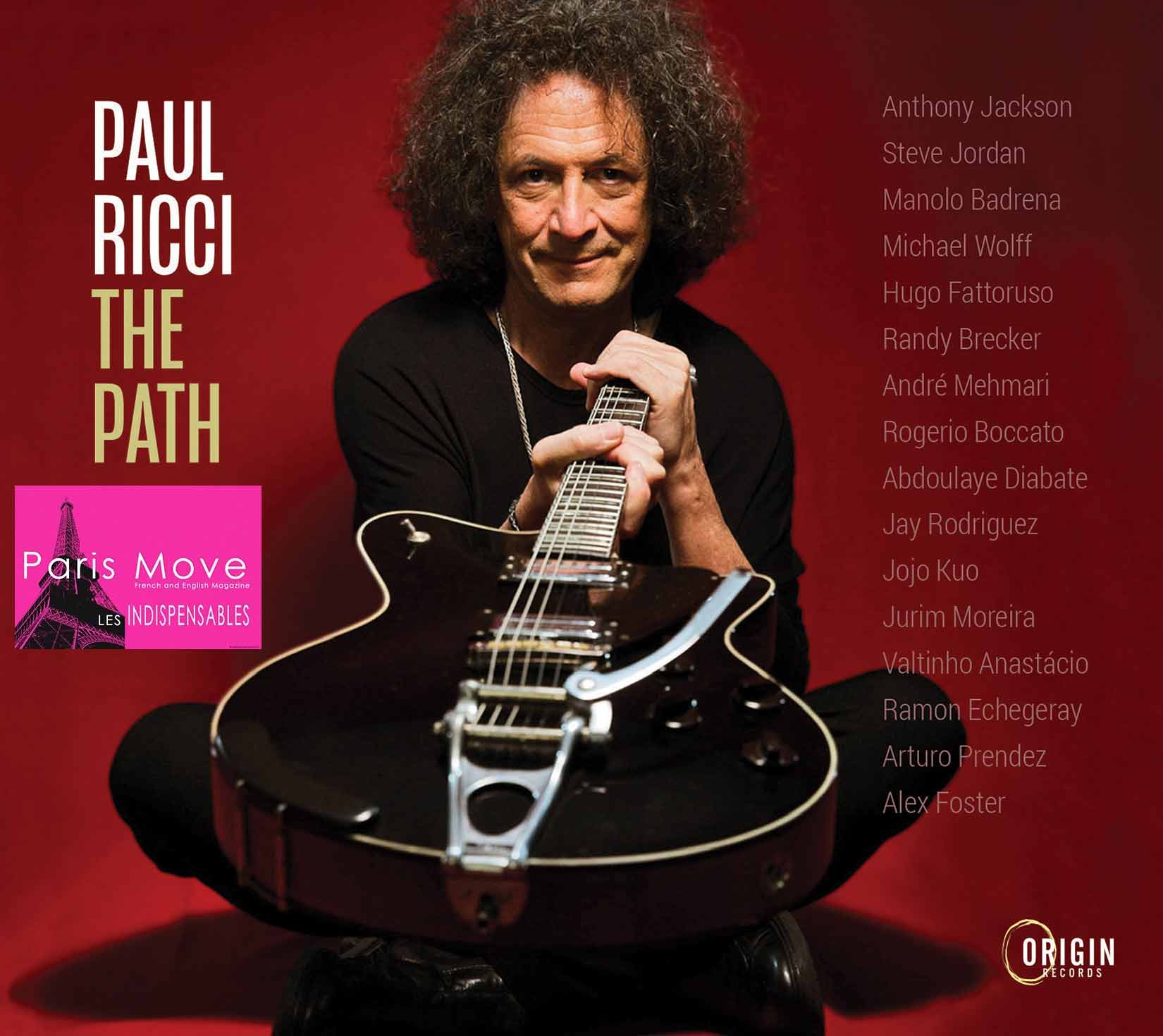
It took 29 years, 17 collaborators, and a lifetime of travel for composer and guitarist Paul Ricci to complete Path. In an era of instant releases and compressed creative cycles, this jazz-fusion album arrives as a quiet rebuke to speed, an argument for patience, accumulation, and the slow maturation of ideas across cultures and continents.
The project was first imagined in New York City, where Ricci dreamed of an album that could bring together the many musicians from diverse backgrounds with whom he had worked over the years. His goal was to give shape to a rhythmic, multicultural music, one that resisted easy categorization and reflected the lived experience of a traveling musician. What began as an idea gradually evolved into a long-term artistic pursuit, shaped by decades of encounters, performances, and reflection.
The first decisive step came in 1997, when Ricci entered the studio with an extraordinary ensemble that included Anthony Jackson, Steve Jordan, Michael Wolff, Manolo Badrena, and Randy Brecker, alongside musicians from Brazil, Uruguay, Cameroon, and Mali. These sessions produced the backbone of Path, capturing its core energy and intent. Yet Ricci would later realize that the album still needed new voices to reach its full expression.
Years passed. Concerts led to conversations, conversations to new musical possibilities. It was not until 2021 that Ricci returned to the studio to complete the album, bringing fresh perspectives to material that had already traveled far. “Some music needs time to tell you what it wants to become,” Ricci reflects. “This album was never about finishing quickly, it was about listening, and letting the experiences shape the sound.”
One of the album’s most striking moments comes with “Lobo,” where the hypnotic voice of Malian singer Abdoulaye Diabaté weaves effortlessly through Ricci’s expansive guitar lines. Here, the guitarist reveals himself as a true musical nomad. His travels—particularly his extended stay in Brazil, are not presented as stylistic ornamentation, but as deeply integrated elements of the compositional language. The result is music that feels cinematic, unfolding in scenes rather than songs.
Placed within today’s jazz landscape, Path aligns with a lineage of globally minded projects that view jazz less as a fixed genre than as a meeting ground. There are echoes of Joe Zawinul’s most exploratory work, particularly the Weather Report years, where a strong personal voice absorbed multiple traditions without diluting its identity. Listeners may also hear distant kinship with the Pat Metheny Group or certain phases of Mike Stern’s output—music that balances technical sophistication with emotional accessibility.
That balance requires both mastery and humility, and Ricci demonstrates both. The presence of pianist Michael Wolff on the album’s opening tracks adds a refined harmonic depth, while the full roster of contributors, listed at the end of this review, underscores the collective nature of the project.
Ricci’s pedigree is well established. He first drew attention at the Blue Note in 1986 and was cited by The New York Times in 1991 following a tribute concert to Stan Getz at the Hollywood Bowl in Los Angeles. On that occasion, he accompanied Astrud Gilberto, surrounded by an all-star group that included Roy Haynes, Gary Burton, Kenny Barron, and George Mraz. These experiences are not footnotes; they are integral to understanding Path as a synthesis of decades spent in close proximity to some of jazz’s most influential voices.
Brazil, Africa, and Ricci’s own musical roots converge throughout the album in compositions that feel like chapters from a sunlit novel, sometimes introspective, often joyful, always grounded in rhythm. Path is the kind of album that immediately puts the listener at ease, even as it reveals layers of complexity through cleverly constructed arrangements.
Like a fine Armagnac, this music has benefited from time. And much like Mike Stern, Ricci has a way of placing notes that borders on the magical, though it is, in truth, the result of deep preparation and attentive listening. Path asks the same of its audience. Those willing to listen closely will discover an album that unfolds gradually, rewarding patience with richness, warmth, and a sense of genuine artistic arrival.
Thierry De Clemensat
Member at Jazz Journalists Association
USA correspondent for Paris-Move and ABS magazine
Editor in chief – Bayou Blue Radio, Bayou Blue News
PARIS-MOVE, December 24th 2025
Follow PARIS-MOVE on X

::::::::::::::::::::::::
Musicians :
Paul Ricci – guitars, electric bass (4)
Michael Wolff – electric piano (1,2)
Hugo Fattoruso – piano (5), organ (6), clavinet (3)
André Mehmari – Fender Rhodes (4)
Anthony Jackson – contrabass guitar (1,2,3,5,6)
Steve Jordan – drums (1,2,6)
Jojo Kuo – drums (3)
Rogerio Boccato – drums, percussion (4,7)
Jurim Moreira – drums (5)
Manolo Badrena – percussion (1,2,5,6)
Valtinho Anastácio – percussion (5)
Ramon Echegeray, Arturo Prendez, Hugo Fattoruso – Candombe percussion (3)
Alex Foster – soprano sax (2)
Abdoulaye Diabaté – vocals (3)
Jay Rodriguez Sierra – soprano sax (3)
Randy Brecker – flugelhorn (6)
Track Listing :
1 Major Look 5:44
2 Whenever 5:57
3 Lobo 6:23
4 Sleeping Beauty 4:22
5 Around the Block 5:25
6 September Glide 5:26
7 Down on 6th St. 3:30
All music by Paul Ricci (Stringsong Music) except (3) lyrics by Abdoulaye Diabaté
Production Info:
Produced by Paul Ricci
Mixed & mastered by David Darlington at Bass Hit Studio, New York City
Cover photo by Murilo Alvesso
Cover design & layout by John Bishop