
| World Jazz |
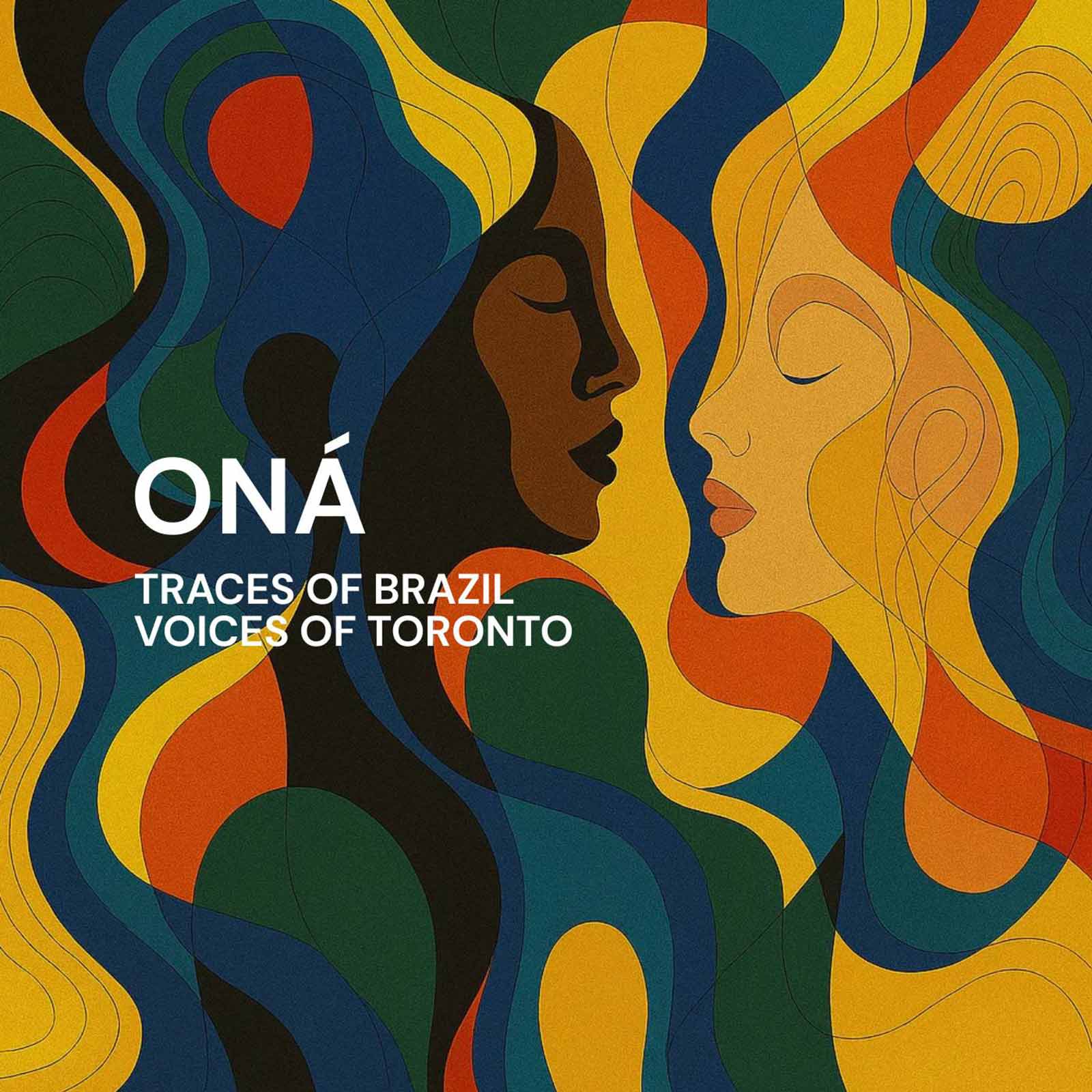
Canada has produced so many exceptional musicians that any attempt at a comprehensive inventory would be futile. Yet every so often, a project distinguishes itself not by raising its voice, but by knowing how to listen. This Toronto-based ensemble offers a compelling example. At a time when many musicians attempt to reproduce Brazilian masters note for note, often mistaking surface style for deeper substance, this group takes a more considered path. What they offer is not imitation, but trace: gestures, atmospheres, and rhythmic imprints of Brazil filtered through their own sensibility.
Rather than claim total command of a tradition that is not theirs by birth, they explore its contours with discernment. They grasp the elasticity, the luminous melancholy, and the subtle rhythmic undercurrents that define Brazilian music, and from there they construct a personal language. Their interpretation is enriched by a fluid integration into a more conventional jazz framework, at times closer to contemporary chamber jazz than to samba schools or bossa nova salons, establishing a dialogue between traditions rather than a mere stylistic collage. It is a delicate balancing act, handled with restraint.
Instrumentally, the architecture is decidedly atypical. Two French horns and a bassoon form a warm, almost orchestral core, joined by soprano saxophone, flute, and clarinet, alongside guitar, bass, and percussion. At moments, the result evokes the textural refinement of chamber-oriented ensembles such as the Maria Schneider Orchestra, while remaining within a more intimate format. One also senses an affinity with certain Brazil-inflected jazz explorations, such as those of Egberto Gismonti, not through direct quotation, but through a shared conviction that Brazilian rhythm is a living architecture rather than decorative embellishment.
On the track “Sentimental” a delicately syncopated guitar motif establishes the harmonic landscape before the horns enter with warm, interwoven voicings. The percussion hints at the baião without ever fully settling into it, while the soprano saxophone unfolds a melodic line that oscillates between lyricism and abstraction. In “Do Seu Olhar,” the bassoon anchors a passage of shifting meters that dissolves into a luminous coda led by the flute, a moment that perfectly illustrates the ensemble’s command of dynamic contrast and structural patience. This is not demonstrative virtuosity, but carefully constructed conversations among musicians.
Although this is an EP rather than a full-length album, the caliber of the performers already leaves little room for doubt. One might even argue that a perfectly realized EP is preferable to an overly ambitious and uneven album. Nothing here feels superfluous. The concision strengthens the impact and leaves the listener wanting more. If this release serves as the foundation of their work, one can reasonably anticipate that a future album will further expand their sonic palette and narrative scope.
Traces of Brazil, Voices of Toronto asserts an expansive artistic vision, open to experimentation, cultural dialogue, and multidisciplinary influences. The compositions of André Valério reflect the maturation of Oná’s identity, grounded in innovation and authenticity. The ensemble pushes formal and sonic boundaries while maintaining emotional clarity and accessibility that feel entirely intentional. Ambition never comes at the expense of connection.
Above all, this is the work of passionate musicians, passionate about sound, travel, color, contrast, and about music in its broadest sense. A careful ear will quickly perceive that Brazil is not their sole source of inspiration. One detects echoes of European chamber traditions in the horn harmonizations, North American post-bop inflections in the phrasing, and a structural rigor that transcends genre affiliation. Such openness commands respect.
The question is no longer whether this ensemble will fulfill the promise of this EP, but how far they will carry this approach. Will a subsequent album delve more deeply into Brazilian rhythmic frameworks, or move toward an even more assertive chamber abstraction? Will the orchestration expand, perhaps with the addition of strings or an enriched percussive apparatus, or refine this intimate format into an even sharper signature? If this EP is any indication, what comes next will not merely repeat the formula; it will extend the dialogue and, quite possibly, surprise us again.
Thierry De Clemensat
Member at Jazz Journalists Association
USA correspondent for Paris-Move and ABS magazine
Editor in chief – Bayou Blue Radio, Bayou Blue News
PARIS-MOVE, March 4th 2026
Follow PARIS-MOVE on X

::::::::::::::::::::::::
Musicians :
Horn: Olivia Esther
Horn: Victor Prado
Bassoon: Sheba Thibideau
Reeds: Colleen Allen
Guitar: André Valério
Bass: Rich Brown
Drums: Alan Hetherington
Track Listing :
1.Pro Olmir 03:52
2.Sem Você 04:37
3.Sentimental 05:32
4.Do Seu Olhar 04:52
5.Sambado 04:23
Music by André Valério
Recorded in 2025 at Union Sound Company