| Jazz |
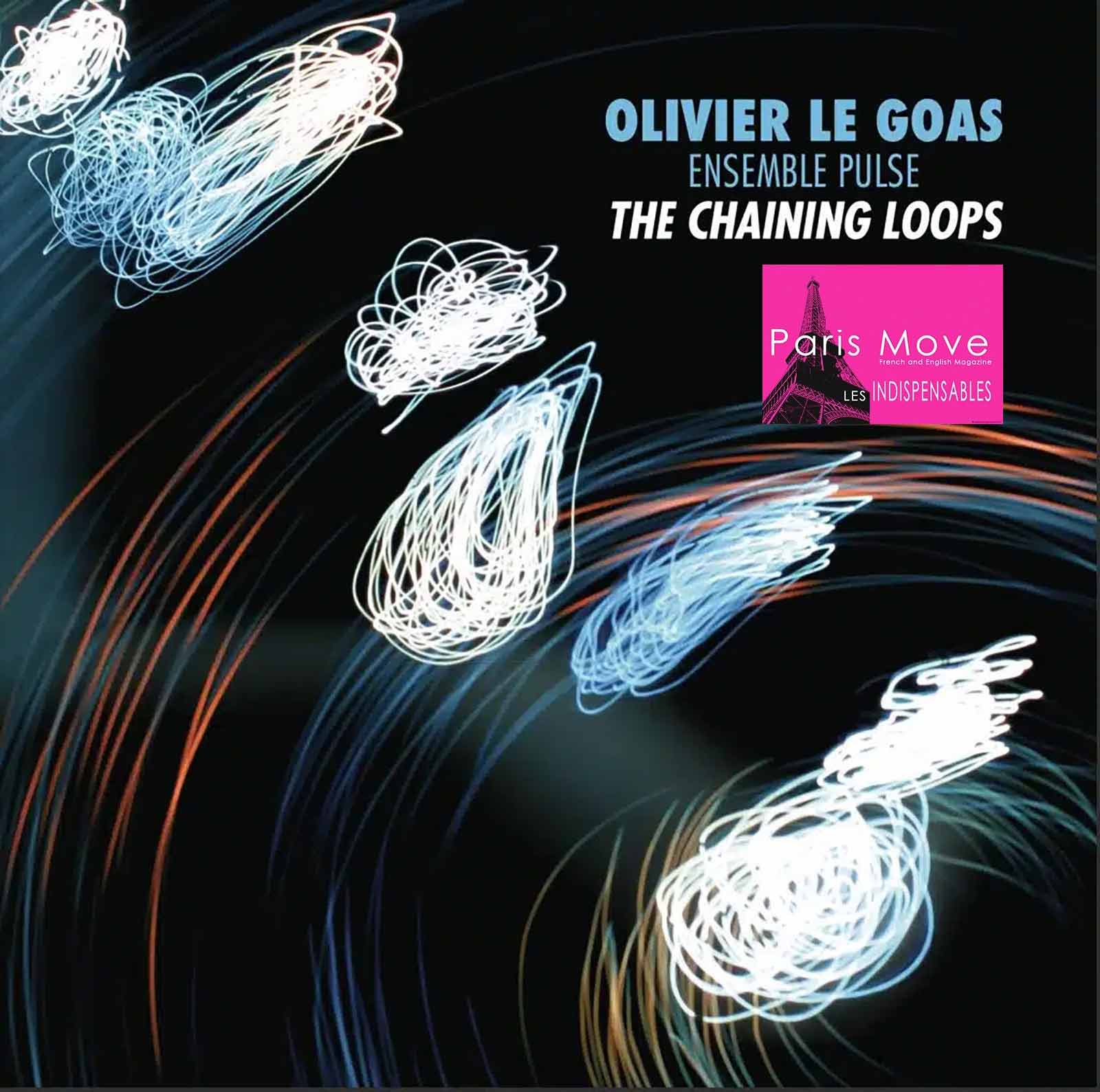
Sumnmary: Olivier Le Goas’s The Chaining Loops blends Parisian precision with New York’s modern jazz energy, delivering a bold, rhythm-driven album elevated by Médéric Collignon.
Olivier Le Goas’s The Chaining Loops: A Transatlantic Jazz Statement of Rhythmic Ambition
From its opening bars, this album feels less like a French release than a transmission from New York’s contemporary jazz underground, a transatlantic sensibility that speaks to Olivier Le Goas’s formative years at The New School. It was there, immersed in one of the most fertile training grounds for modern improvisation, that his artistic identity appears to have taken decisive shape. His teachers included trumpeter Charles Tolliver, pianist Peter Zak, guitarist Rory Stuart, composer Kurt Nuork, and drummers Jeff Ballard and Eric McPherson.
Beyond the classroom, Le Goas embedded himself in a network of forward-thinking musicians, performing alongside figures such as Ben Monder, Jason Lindner, Avishai Cohen, Jacques Schwarz-Bart and Tim Lefebvre. The result is a musical language that aligns more closely with the restless, structurally adventurous currents of the New York scene than with any narrowly defined national tradition. Though not his first release, this album stands as one of the clearest and most fully realized expressions of that aesthetic.
For this project, Le Goas convenes a septet, Ensemble Pulse, recorded in Paris but shaped by decades of shared musical history. The group, known for its command of complex meters and interwoven polyrhythms, was formalized during a 2021 creative residency supported by DRAC Bretagne. Bringing together long-time collaborators from across Le Goas’s career, the ensemble finally entered Studios de la Seine in June 2024, after an earlier session had been postponed, to record The Chaining Loops.
Large ensembles rarely come together without friction, the practical realities of coordinating multiple artistic lives often stand in the way. That makes this recording feel all the more purposeful: not merely a session, but a convergence. The album also offers a compelling showcase for its instrumental voices, notably the excellent vibraphonist David Patrois and a trombone presence that adds depth and character to the ensemble’s tonal palette.
Musically, the record unfolds through evolving forms built on interlocking rhythmic cells, shifting meters and extended melodic arcs that remain central even as the underlying structures grow increasingly intricate. Le Goas’s writing moves with striking fluidity between groove-driven propulsion and more open, textural passages, allowing dense ensemble sections to dissolve into moments of exposed improvisation. These contrasts, between energy and lyricism, density and space, are not incidental but structural, shaping pieces that feel less like compositions in the traditional sense than like unfolding narratives, always in motion, always pressing forward.
This is not an album designed to court traditionalists. Its language is urban, layered, and unapologetically modern. Yet for listeners attuned to this idiom, Le Goas’s voice is immediately identifiable. Rhythm sits at the core of his approach, but it never comes at the expense of musicality; the melodic lines are finely wrought, precise without becoming rigid. In that sense, his compositional thinking often resembles that of a percussionist, attentive to balance, weight and silence, capable of both force and restraint.
Across five tracks, three of them expansive, almost suite-like in scope, the album makes clear that it is conceived as a complete statement rather than a brief format. Themes are allowed to develop, stretch and transform over time. Drawing in part on classical principles of form and development, the music maintains a seriousness of intent throughout, never drifting into the decorative or the superficial. It asks for attentive listening, but rewards that focus with a rich and immersive experience.
And then there is Médéric Collignon, quite simply prodigious. On cornet and voice, he brings a volatile, electrifying presence that cuts through the ensemble’s intricate frameworks without ever destabilizing them. His contributions add both urgency and unpredictability, elevating the album’s most intense passages and leaving a lasting imprint on its overall character.
In the broader landscape of contemporary European jazz, The Chaining Loops stands out as a work of notable structural ambition and artistic coherence, a recording that bridges continents, disciplines and sensibilities with rare assurance.
Thierry De Clemensat
Member at Jazz Journalists Association
USA correspondent for Paris-Move and ABS magazine
Editor in chief – Bayou Blue Radio, Bayou Blue News
PARIS-MOVE, March 19th 2026
Follow PARIS-MOVE on X

::::::::::::::::::::::::
Musicians :
Olivier Le Goas (drums)
Médéric Collignon cornet (vocals)
Michael Felberbaum (guitar)
Gueorgui Kornazov (trombone)
David Patrois (vibraphone)
Yoni Zelnik (double bass)
Frédéric Borey (saxophone)
Track Listing :
The Chaining Loops
Direction
Friction
Fifteen Miles
Light in the Sky