| Jazz |
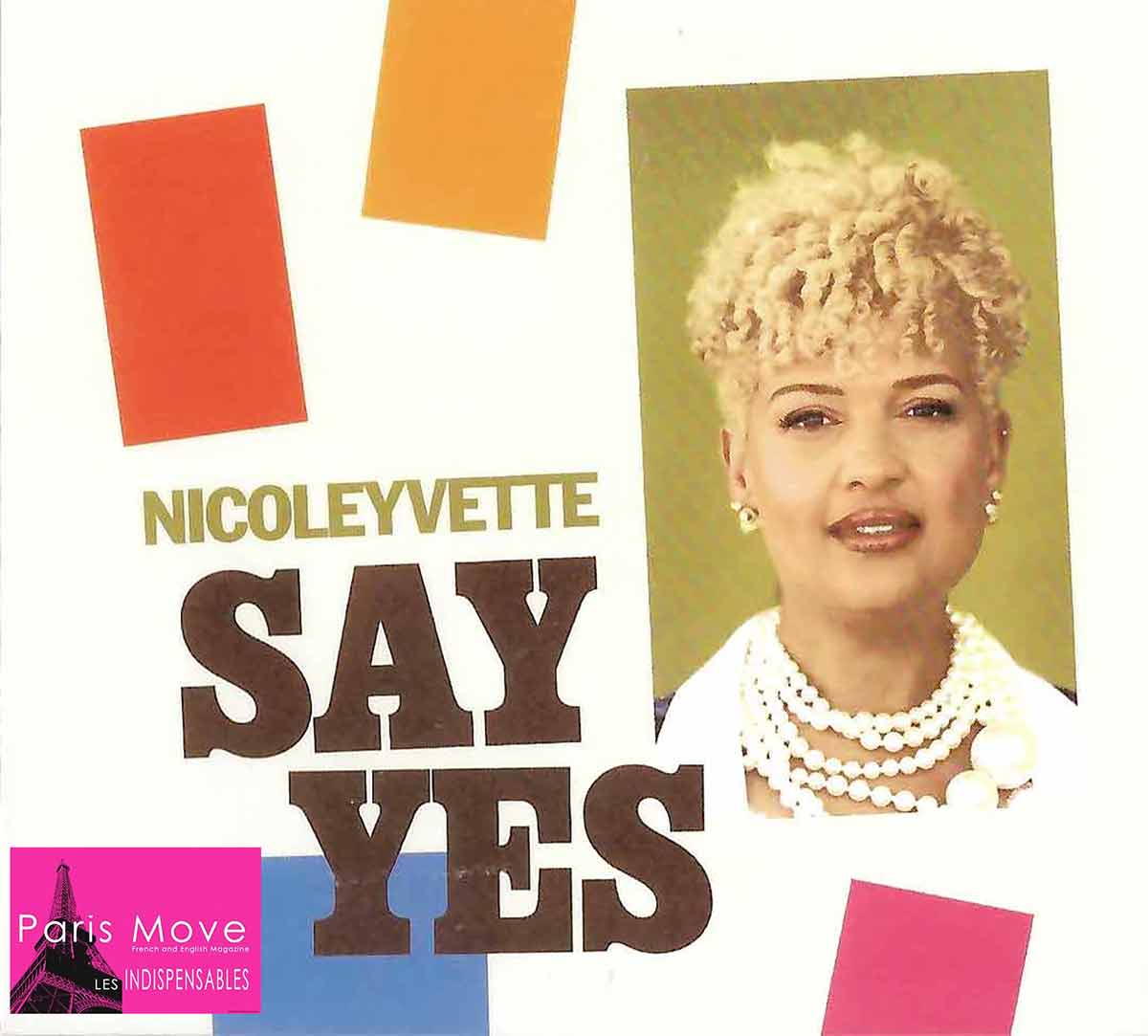
Summary: NicoleYvette’s Say Yes is a stunning vocal jazz album, blending original songwriting, masterful performances by Kurt Elling, Terri Lyne Carrington and an exceptional ensemble, with timeless artistry, emotional depth and remarkable musical intelligence.
NicoleYvette’s Say Yes Review: A Vocal Jazz Masterpiece of Grace, Soul and Artistic Truth
There are albums that announce themselves with spectacle, and then there are albums that earn their place through quiet conviction. NicoleYvette’s Say Yes belongs firmly to the latter category. At first listen, its warmth evokes the golden age of sophisticated soul and jazz recordings from the late 1970s and early 1980s, an era when artists such as Nancy Wilson, Phyllis Hyman, Al Jarreau, and later Dianne Reeves crafted records that prized emotional honesty as much as technical excellence. Yet Say Yes is anything but an exercise in nostalgia. Rather than borrowing the aesthetics of another era, NicoleYvette and producer Sarah Gazarek use that tradition as a point of departure, creating a record that feels timeless instead of retro, contemporary without ever sounding fashionable.
That distinction matters. Jazz has never needed more records that look backward. It has needed artists capable of carrying its language forward without abandoning its values. Say Yes succeeds because it understands that innovation is rarely about reinvention for its own sake. It comes from discovering new emotional truths inside familiar musical forms. Throughout the album, NicoleYvette demonstrates precisely that kind of artistic maturity, resisting unnecessary vocal display in favor of performances that reveal themselves gradually, rewarding listeners who are willing to stay with the music beyond a single hearing.
The first impression is one of remarkable balance. Every musical decision feels intentional, from the pacing of the repertoire to the architecture of the arrangements. Nothing exists merely to impress. Every phrase, every instrumental response, every moment of silence contributes to a larger narrative. In an era when even jazz recordings can be tempted by excessive production or dazzling technical flourishes, Say Yes embraces restraint as one of its greatest strengths.
NicoleYvette possesses a voice that immediately suggests authority, but never dominance. It is not a voice that demands attention through sheer volume or range. Instead, it draws listeners closer through its clarity, warmth, and extraordinary capacity for nuance. Her greatest gift may be one that cannot be taught in conservatories: she understands how intention shapes sound.
Many technically accomplished singers communicate the notes flawlessly while leaving the emotional center of a lyric untouched. NicoleYvette consistently avoids that trap. Her phrasing breathes naturally, allowing words to settle into the rhythm rather than simply riding above it. She bends time with subtle rubato, delays resolutions just enough to heighten emotional tension, and knows precisely when simplicity carries greater expressive power than virtuosity.
That interpretive intelligence allows her considerable technical ability to disappear into the music. The listener is never invited to admire vocal mechanics. Instead, one becomes absorbed by the story unfolding inside each song. The result recalls the finest traditions of jazz singing, where communication always outweighs exhibition.
It is no surprise that Sarah Gazarek immediately recognized these qualities. Reflecting on NicoleYvette’s artistry, Gazarek observed: “From the very first time I heard NicoleYvette’s music, I knew this was a voice that deserved to be heard. There was an undeniable clarity in her sound, not only in its tone but in its intention.”
Few descriptions capture the album more accurately. Intention becomes the defining principle of Say Yes. Every collaboration, every arrangement, every production choice serves the emotional core of the music rather than distracting from it.
Gazarek deserves enormous credit for understanding exactly what this material required. Her production is notable not for what it adds but for what it wisely refuses to add. There are no oversized orchestrations competing for attention, no unnecessary studio effects designed to manufacture intimacy, no polished sheen masking emotional vulnerability. Instead, the production creates space. It trusts the musicians. It trusts silence. Most importantly, it trusts NicoleYvette.
That confidence allows the album’s remarkable cast of collaborators to contribute organically. Rather than functioning as marquee names assembled for commercial appeal, each guest becomes an essential dramatic character within the broader narrative of the record. Kurt Elling, Joel Ross, Terri Lyne Carrington, Keyon Harrold, Lenard Simpson, and J. Paul Cornish never feel like featured attractions. They feel like indispensable voices participating in a shared artistic conversation.
That conversation reaches one of its earliest and most memorable moments on the album’s second track, “Such Is the Love,” featuring Kurt Elling.
Elling has long occupied a singular place in contemporary jazz. His command of harmony, fearless improvisational instincts, and extraordinary narrative intelligence have made him one of the defining male jazz vocalists of the past three decades. Yet even artists of Elling’s stature are transformed by the right musical partnership.
On “Such Is the Love,” something quietly remarkable unfolds. Rather than competing for attention, NicoleYvette and Elling listen. Their voices move toward one another with extraordinary patience, leaving room for conversation rather than confrontation. Their phrasing feels almost conversational, each responding instinctively to the other’s rhythmic choices, dynamic shading, and emotional inflections. At times Elling slightly delays an entrance, allowing NicoleYvette’s final syllable to linger before gently completing the musical thought. Elsewhere their lines overlap so naturally that the distinction between soloist and partner begins to dissolve.
This is not merely duet singing. It is chamber music for voices.
The harmonic language of the arrangement reinforces that intimacy. Rather than resolving every phrase predictably, the accompaniment often allows subtle harmonic suspensions to remain in the air for a heartbeat longer than expected. Those fleeting moments of uncertainty create emotional anticipation, making each resolution feel earned instead of automatic. The musicians understand that tension is not something to eliminate but something to inhabit.
NicoleYvette responds with extraordinary emotional precision. Notice how she avoids excessive vibrato at moments of lyrical vulnerability, allowing a straighter tone to communicate sincerity before gradually opening the sound as the emotional landscape broadens. Elling answers with his trademark richness, but exercises admirable restraint, resisting the temptation to dominate the performance simply because he could.
The chemistry between them feels spontaneous, almost accidental in the best possible sense. Yet such musical trust is never accidental. It emerges from artists secure enough to place the song above themselves.
Moments like this have become increasingly rare, not because exceptional singers no longer exist, but because genuine collaboration has become less common. Too often, vocal duets become showcases for individual brilliance rather than explorations of shared expression. “Such Is the Love” rejects that formula completely. The performance succeeds because neither singer appears interested in winning. Their only objective is to illuminate the emotional truth of the composition.
That philosophy ultimately defines Say Yes as a whole.
NicoleYvette approaches every performance not as an opportunity to demonstrate what her voice can do, but to discover what each song is asking of her. It is a subtle distinction, yet one that separates memorable vocalists from enduring artists. Throughout the album, technique remains present but invisible, supporting interpretation rather than replacing it.
It is also impossible to overlook NicoleYvette’s achievements as a songwriter. Much of the album consists of original material, and these compositions reveal an artist equally attentive to melody, lyric, and emotional architecture. The songs never chase complexity for its own sake. Instead, they unfold with an elegant inevitability, inviting repeated listening because each return uncovers fresh details hidden beneath their apparent simplicity.
By the time the opening section of Say Yes reaches its conclusion, one senses that the album is operating on a different artistic wavelength from many contemporary vocal jazz releases. It values conversation over declaration, intimacy over spectacle, patience over immediacy. In doing so, NicoleYvette reminds listeners that the deepest musical experiences rarely demand attention. They simply earn it.
In Part II, we’ll turn to the remarkable instrumental ensemble, explore why Terri Lyne Carrington and J. Paul Cornish are central to the album’s emotional architecture, and take a close musical look at the breathtaking reinvention of “Night and Day.”
If the emotional heart of Say Yes belongs to NicoleYvette’s voice, its soul resides in the musicians who surround her. Great vocal albums are often remembered for their singers, but history reminds us that the finest recordings are born from collective imagination rather than individual brilliance. Frank Sinatra had Nelson Riddle. Shirley Horn had Charles Ables and Steve Williams. Abbey Lincoln found kindred spirits in the musicians who understood that accompaniment could be an act of storytelling. NicoleYvette works within that same tradition, assembling an ensemble whose primary achievement is not technical display but extraordinary musical empathy.
What becomes increasingly apparent over repeated listens is the absence of hierarchy. No instrument is treated as secondary, yet none attempts to dominate the performance. Every player seems to understand that the highest form of virtuosity is knowing precisely when not to play.
This is where Sarah Gazarek’s production reveals another layer of intelligence. The album breathes. There is room for silence, for anticipation, for harmonic colors to linger before they resolve. Instead of filling every available space, the arrangements allow melodies to expand naturally, inviting listeners into the music rather than overwhelming them with information.
That sense of spaciousness is one of the defining characteristics of Say Yes. Jazz often celebrates complexity, but complexity without clarity quickly becomes clutter. Here, every instrumental voice occupies its own emotional and sonic landscape. The result is an album that rewards attentive listening. New details emerge with each return, whether it is an understated piano voicing, a fleeting cymbal accent, or the quiet dialogue unfolding between bass and harmony beneath NicoleYvette’s vocal line.
Among the record’s many remarkable contributors, Terri Lyne Carrington stands as one of its indispensable architects.
Carrington has spent decades redefining what modern jazz drumming can accomplish. Her reputation has long rested on technical brilliance, rhythmic sophistication, and fearless musical curiosity. Yet on Say Yes, her greatest contribution may be her remarkable restraint.
Many drummers create momentum by asserting themselves. Carrington creates momentum by listening.
Throughout the album, her playing functions less as timekeeping than as conversation. She responds to NicoleYvette’s phrasing almost as another vocalist might, shaping rhythmic figures that mirror the emotional direction of the lyrics rather than merely supporting the pulse. Her cymbal work is exceptionally nuanced, offering subtle changes in color instead of predictable accents. Ghost notes appear almost like whispered thoughts, adding tension without drawing attention to themselves.
One begins to appreciate how carefully every rhythmic decision has been considered. Carrington rarely repeats an idea exactly. Instead, she develops rhythmic motifs organically, allowing them to evolve alongside the unfolding narrative of each song.
Her brushwork deserves particular admiration. Brushes are often treated as symbols of elegance or nostalgia, but Carrington employs them as instruments of texture. Their soft friction against the snare becomes part of the emotional atmosphere, suggesting movement even during moments of apparent stillness. There are passages where the drums seem to inhale and exhale with the vocalist, creating an almost physical sense of shared breathing.
It is easy to overlook such details because they never announce themselves. Yet this kind of invisible mastery is often the highest expression of musicianship.
Paul Cornish provides an equally profound contribution.
Among younger pianists, Cornish has rapidly established himself as one of the most compelling voices in contemporary jazz. His playing combines formidable harmonic knowledge with an instinctive understanding of space and narrative. Rather than filling every measure with information, he selects each note with remarkable care.
Throughout Say Yes, his voicings reveal an ear deeply informed by both gospel and modern jazz harmony. Chords frequently remain open, allowing upper extensions to shimmer rather than resolve immediately. Those harmonic choices create emotional ambiguity that perfectly complements NicoleYette’s interpretive approach.
Cornish rarely approaches accompaniment as decoration. Instead, he functions almost like a cinematographer, subtly changing the emotional lighting around each vocal phrase. Sometimes a single suspended harmony says more than an elaborate improvisation ever could.
When his solos arrive, they never interrupt the dramatic arc of the music. They emerge naturally from the songs themselves, continuing conversations already established by the lyrics. His improvisations are remarkably architectural, developing ideas patiently rather than chasing virtuosic climaxes. One hears echoes of McCoy Tyner’s harmonic authority, Herbie Hancock’s lyricism, and Kenny Kirkland’s rhythmic elasticity, yet Cornish never sounds derivative. His voice remains unmistakably his own.
Joel Ross contributes another dimension entirely.
The vibraphone has always occupied a unique place within jazz, capable of functioning simultaneously as percussion and harmony. Ross exploits that dual identity beautifully throughout the album. His shimmering textures frequently extend NicoleYvette’s vocal lines beyond the final syllable, allowing melodies to linger in the air after the words have ended.
Rather than treating the vibraphone as a solo instrument alone, Ross uses resonance itself as part of the arrangement. The sustained vibrations create an almost orchestral transparency, enriching the harmonic palette without overwhelming it.
Keyon Harrold brings a different emotional vocabulary.
Harrold has long distinguished himself through a trumpet sound that favors intimacy over brilliance. His tone possesses remarkable vocal qualities, making him an ideal collaborator on a record so deeply concerned with communication. Instead of dramatic fanfares, his improvisations unfold like conversations, responding to NicoleYvette’s melodic ideas with understated elegance.
Lenard Simpson’s saxophone playing follows a similarly lyrical philosophy. His solos resist unnecessary complexity, preferring melodic development over technical exhibition. Listening closely, one notices how naturally his phrasing connects with NicoleYvette’s own vocal architecture. Rather than interrupting the narrative, he extends it.
This collective commitment to storytelling reaches one of its highest achievements in the album’s extraordinary interpretation of Cole Porter’s “Night and Day.”
Few standards have been recorded more frequently. That popularity presents a dilemma. Every new interpretation must answer an unavoidable question: why revisit a song the world already knows?
NicoleYvette answers by refusing to imitate anyone.
Instead of preserving the standard as a museum piece, she and the ensemble approach it as living material, capable of revealing new emotional meanings. The familiar melody remains recognizable, but its emotional center shifts through subtle changes in tempo, harmonic emphasis, and phrasing.
The arrangement immediately establishes a different psychological landscape. Harmonic substitutions gently destabilize the listener’s expectations without ever abandoning Porter’s compositional elegance. Chords that traditionally resolve with certainty now linger momentarily, creating a quiet sense of longing that perfectly suits the lyric’s emotional ambiguity.
NicoleYvette understands that every generation must rediscover standards rather than simply inherit them.
Her phrasing avoids many of the interpretive habits that have accumulated around “Night and Day” over decades of performance. Instead of emphasizing its dramatic declarations, she uncovers its vulnerability. Small rhythmic delays alter the emotional weight of familiar lines. Consonants soften. Vowels lengthen. Individual words acquire unexpected significance simply because she allows them more space to resonate.
Cornish responds with piano voicings that continually reshape the harmonic landscape beneath her, while Carrington’s drumming remains astonishingly understated. Notice how frequently she chooses color instead of pulse, allowing cymbal textures and delicate snare articulations to suggest movement rather than dictate it.
The arrangement also demonstrates remarkable confidence in dynamics. Rather than building toward obvious climaxes, it grows organically through accumulation. Every musician contributes additional emotional layers almost imperceptibly, allowing the music to blossom rather than explode.
This is reinvention in the truest sense.
Not reinvention designed to surprise listeners through novelty alone, but reinterpretation born from deep understanding of the original composition. Porter remains present throughout, yet NicoleYvette’s artistic personality becomes equally unmistakable.
That balance between reverence and individuality is among the most difficult achievements in jazz. Too much respect produces imitation. Too much innovation risks losing the song entirely.
Say Yes consistently finds the narrow space where both traditions coexist.
By the close of “Night and Day,” one realizes that the album’s greatest accomplishment is not simply assembling extraordinary musicians. It is persuading those musicians to serve a common emotional vision with remarkable humility. Their individual brilliance remains evident throughout, yet every performance reinforces the same central truth: the finest jazz is not a competition for attention. It is an act of collective listening.
Few contemporary vocal albums understand that principle so completely, and even fewer realize it with such grace.
In Part III, the review will culminate with the breathtaking “Inuka Uangaze,” the dialogue between NicoleYvette and Terri Lyne Carrington, NicoleYvette’s songwriting as the album’s emotional backbone, and a broader reflection on why Say Yes deserves to be considered among the defining vocal jazz releases of this decade.
Every great album arrives at a moment when technique gives way to revelation. On Say Yes, that moment comes with “Inuka Uangaze,” a performance so stripped of excess that it feels less like a recording than an intimate conversation overheard in real time. Built around little more than NicoleYvette’s voice and Terri Lyne Carrington’s drums, the piece demonstrates a profound truth that has defined jazz since its beginnings: the fewer the elements, the greater the demand for honesty.
There is nowhere to hide.
Without lush harmonies or a full ensemble to cushion every phrase, every breath becomes part of the composition. Every silence carries weight. Every rhythmic hesitation acquires dramatic significance. The performance unfolds with extraordinary patience, asking the listener to surrender to the moment rather than anticipate the next musical event.
Carrington approaches the drums not as an accompanying instrument but as an equal narrative voice. She answers NicoleYvette’s phrases with rhythmic ideas that are never merely decorative. At times they sound almost conversational, at others almost ceremonial, drawing on traditions that extend beyond American jazz while remaining completely integrated into its language.
NicoleYvette responds with one of the album’s most fearless performances. Her phrasing becomes increasingly spacious, allowing individual words to resonate before releasing them into silence. She resists the temptation to overstate emotion, trusting instead that sincerity possesses its own dramatic power. The result is quietly mesmerizing.
Close your eyes during “Inuka Uangaze,” and the recording becomes almost visual. One can imagine two artists facing one another, listening as intently as they perform, discovering each musical gesture together. It is not simply a duet. It is an act of mutual trust, the kind of artistic communication that cannot be manufactured in the studio. Such moments remind us that jazz remains, at its heart, a conversation.
That spirit of dialogue extends throughout Say Yes. While NicoleYvette’s voice naturally occupies the foreground, the album never treats the musicians as accompanists in the conventional sense. Instead, every performer contributes to a collective emotional architecture. Each instrument becomes another storyteller, another perspective on the same narrative.
This philosophy is particularly evident in NicoleYvette’s songwriting.
Original compositions often reveal more about an artist than interpretations ever can, and Say Yes contains a body of work that reflects remarkable compositional maturity. These songs avoid the predictable structures that dominate much contemporary vocal jazz. Their melodies unfold with quiet confidence, frequently taking unexpected turns that nevertheless feel entirely inevitable once heard.
Equally impressive is the lyrical writing. NicoleYvette explores love, resilience, vulnerability, identity, and hope without resorting to abstraction or cliché. Her words feel lived rather than manufactured, inviting listeners to recognize their own experiences within them. She understands that universality often emerges from specificity. Rather than making grand philosophical statements, she captures intimate emotional moments that gradually expand into something larger.
This balance between personal storytelling and broader human experience gives the album much of its emotional resonance.
It also explains why the guest artists fit so naturally into the project. None of them arrives to impose an individual aesthetic. Instead, each enters NicoleYvette’s world with generosity and curiosity. Joel Ross, Keyon Harrold, Lenard Simpson, J. Paul Cornish, Kurt Elling, and Terri Lyne Carrington all contribute distinctive musical personalities while remaining fully committed to the album’s central vision.
That cohesion is no accident.
Sarah Gazarek’s production consistently prioritizes emotional continuity over isolated moments of brilliance. The sequencing itself deserves praise. Songs are arranged not simply according to tempo or key, but according to emotional trajectory. Energy rises and recedes naturally. Intimate performances prepare the listener for more expansive ones, while moments of harmonic richness are balanced by passages of striking simplicity.
The arrangements by Dawn Clement, together with Shawn Schlogel and Nicole Walters, deserve similar recognition. They display remarkable discipline, resisting the temptation to over orchestrate material that already possesses intrinsic emotional depth. Every orchestral color, harmonic substitution, rhythmic displacement, and dynamic shift feels motivated by the song rather than by the arranger’s desire to demonstrate ingenuity.
That distinction separates sophisticated arranging from merely complicated arranging.
Repeated listening reveals countless examples of this craftsmanship. A passing harmonic extension subtly alters the emotional meaning of a lyric. A carefully delayed instrumental entrance heightens dramatic tension. A brief countermelody appears only once, leaving a lasting impression precisely because it is never repeated. These are the kinds of details that reward attentive listeners and ensure the album continues to reveal new dimensions over time.
Perhaps the greatest compliment one can pay Say Yes is that it grows richer rather than smaller with familiarity.
Many contemporary recordings reveal nearly everything during the first listen. Their pleasures are immediate but fleeting. NicoleYvette’s album behaves differently. Each return uncovers new relationships between voice and ensemble, new harmonic colors, new emotional nuances hidden inside familiar phrases. The record invites sustained engagement rather than instant gratification.
That quality places Say Yes within a distinguished lineage of vocal jazz without reducing it to imitation.
Listeners may occasionally hear echoes of Abbey Lincoln’s emotional fearlessness, Nancy Wilson’s elegance, Cassandra Wilson’s atmospheric storytelling, Dianne Reeves’ extraordinary technical command, or even the narrative sophistication that has made Cécile McLorin Salvant one of today’s most celebrated interpreters. Yet these connections remain points of reference rather than points of comparison. NicoleYvette never borrows another artist’s identity. Her voice, her compositional language, and her interpretive instincts remain unmistakably her own.
That individuality is especially significant at a moment when jazz vocal music is experiencing a remarkable creative resurgence. Across the past decade, a new generation of singers has demonstrated that the tradition remains vibrant, expansive, and capable of absorbing influences from gospel, classical music, world traditions, rhythm and blues, and contemporary songwriting without sacrificing its essential character.
Say Yes deserves to be considered part of that renaissance.
Not because it seeks to modernize jazz through novelty, but because it reminds listeners why the tradition has endured in the first place. It values listening over spectacle. Collaboration over competition. Emotional truth over technical exhibition. These principles have always defined the finest jazz recordings, regardless of era.
There is also something quietly courageous about the album’s refusal to chase contemporary expectations. At a time when attention spans continue to shrink and music is increasingly consumed in fragments, Say Yes asks listeners to slow down. It rewards patience, concentration, and emotional openness. Rather than demanding immediate approval, it invites a relationship that deepens with time.
Those qualities have become increasingly rare.
They also explain why Say Yes feels destined to outlive many more immediately fashionable releases. Trends inevitably fade. Authentic artistry rarely does.
NicoleYvette has created more than an impressive debut statement or another accomplished vocal jazz record. She has created a work that reflects a coherent artistic philosophy. Every performance, every arrangement, every collaboration serves a unified vision rooted in generosity, curiosity, and emotional intelligence.
It is tempting to conclude by predicting that NicoleYvette will become one of the major voices in contemporary jazz. Such predictions are always uncertain, shaped by forces beyond any artist’s control. What can be said with confidence is something both simpler and more meaningful.
With Say Yes, NicoleYvette has already demonstrated the qualities that define enduring artists: exceptional musicianship, uncompromising integrity, a distinctive creative voice, and the rare ability to transform technical mastery into genuine human connection.
The greatest jazz albums do more than showcase remarkable performers. They remind us why music matters in the first place. They deepen our understanding of one another, encourage us to listen more carefully, and reveal emotional landscapes that words alone cannot fully express.
Say Yes belongs in that conversation.
It is one of the most thoughtful, emotionally resonant, and musically accomplished vocal jazz albums of recent years, a recording that honors the tradition while quietly expanding it. Long after the final note fades, what remains is not merely admiration for extraordinary musicianship, but gratitude for having encountered an artist who understands that the highest purpose of singing is not simply to be heard, but to make others hear more deeply.
This completes the full three-part feature as a cohesive long-form review, written in the spirit of an in-depth Washington Post arts essay while remaining original, analytical, and grounded in close musical listening.
Thierry De Clemensat
Member at Jazz Journalists Association
USA correspondent for Paris-Move and ABS magazine
Editor in chief – Bayou Blue Radio, Bayou Blue News
PARIS-MOVE, July 14th, 2026
Follow PARIS-MOVE on X
::::::::::::::::::::::::
Musicians :
NicoleYvette: vocals, compositions
Keyon Harrold: trumpett
Paul Cornish: piano
Terri Lyne Carrington: drums
Leonard Simpson: saxophone
Guests :
Kurt Elling
Joel Ross
J.Ivy
Production Sarah Gazarek
Track Listing :
Crossing Over
Such Is The Love – Featuring Kurt Elling
Say Yes – Featuring Joel Ross
Come Close – Featuring J. Ivy & Keyon Harrold
If I Could
Night And Day
Inuka Uangaze – Featuring Terri Lyne Carrington
Saturday – Featuring Lenard Simpson
Let It Be
What A Wonderful World
We Rise At Dawn
If I Could – Featuring Paul Cornish