| Jazz progressif |
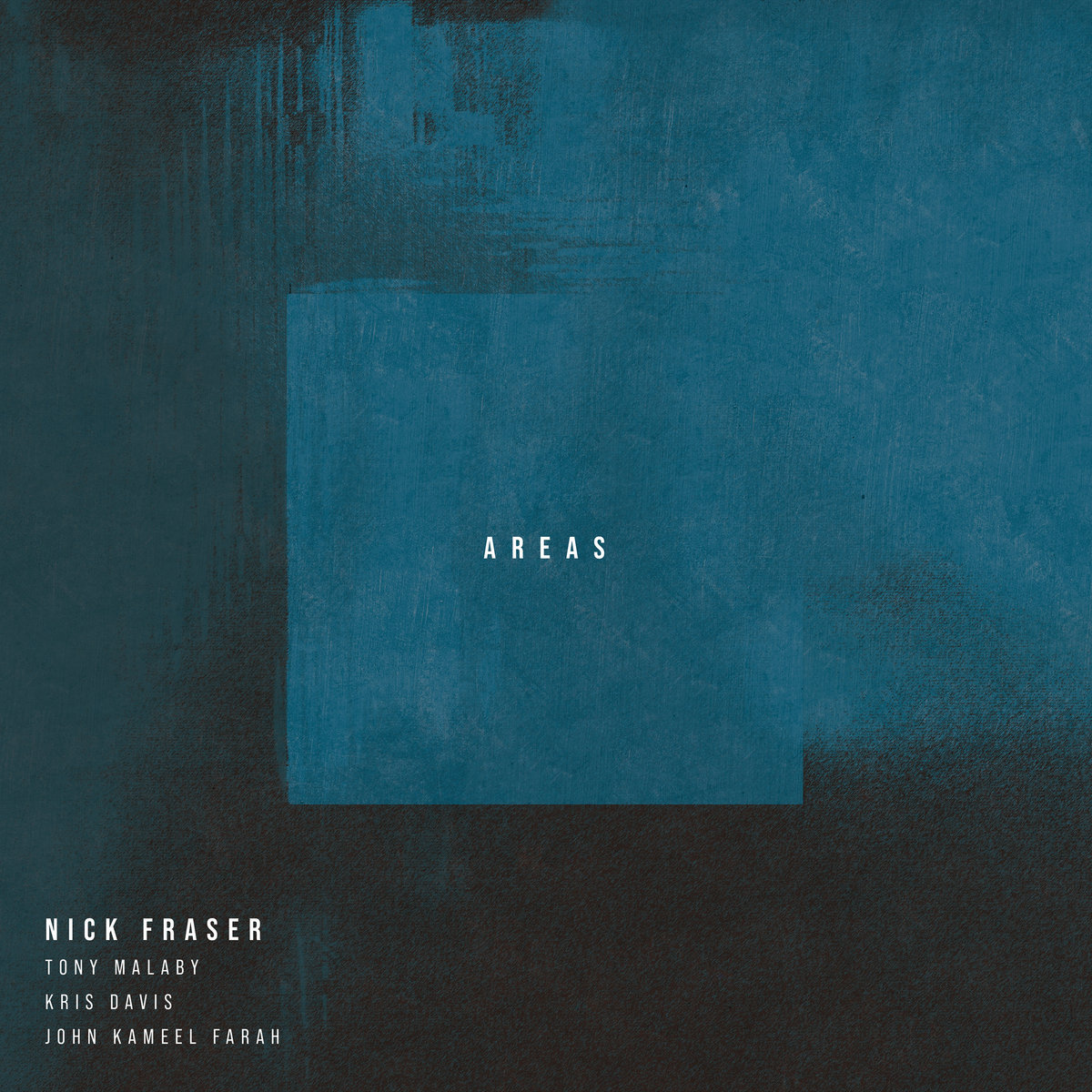
There are jazz albums that reassure, and there are others that challenge. Areas, the latest recording by Toronto drummer and composer Nick Fraser, unquestionably belongs to the latter category. It is an album that embraces uncertainty as a creative force, inviting the listener into a world where every note seems to emerge from discovery rather than certainty. This is not simply contemporary jazz, it is music in perpetual motion, where composition and improvisation continually reshape one another.
For more than two decades, Nick Fraser has been one of the essential figures of Toronto’s vibrant improvised music scene. As a drummer, composer, and founding member of The Association of Improvising Musicians of Toronto, he has helped shape an artistic community in which curiosity and collective exploration take precedence over stylistic convention. His long list of collaborations, including Drumheller, Ugly Beauties, Peripheral Vision, the Lina Allemano Four, and Titanium Riot, along with performances beside leading Canadian creative musicians such as David Occhipinti, Jean Derome, Marilyn Lerner, Scott Thomson, and many others, has established Fraser as a musician whose greatest strength lies in his willingness to embrace the unknown.
Alongside Fraser is an exceptional quartet of musical explorers. The always remarkable Tony Malaby, one of the most distinctive saxophonists in contemporary improvised music, brings his unmistakable combination of lyrical intensity and fearless experimentation. Pianist Kris Davis, internationally admired for her extraordinary imagination and architectural approach to improvisation, contributes harmonic landscapes of astonishing depth and originality. Completing the core ensemble is John Kameel Farah, whose electronic sound processing appears on three key pieces, expanding the group’s acoustic palette into fascinating new sonic territories. Fraser himself alternates between his primary instrument, the drums, and the unusual timbre of the piano harp, heard alongside Farah’s electronics on the album’s first, fourth, and seventh tracks.
The result is an ensemble whose members never seek to dominate one another. Instead, they listen with extraordinary sensitivity, allowing every musical idea to evolve collectively. This spirit of mutual trust gives the album its remarkable coherence, despite the constant unpredictability of its musical language.
What makes Areas especially fascinating is the very nature of jazz improvisation itself. Improvisation is one of the few artistic practices that genuinely embraces risk as an essential component of creation. Rather than following a predetermined route, musicians step into the unknown, discovering the music as they perform it. Each decision opens new possibilities while simultaneously closing others. There is no guarantee of success, no opportunity to revise or correct. The music exists only because the performers collectively dare to venture into uncharted territory.
This element of risk explains why improvised music often provokes such contrasting reactions. Some listeners may find its unpredictability unsettling. Without familiar structures, recurring melodies, or obvious destinations, the music can seem elusive, even challenging. Others, however, experience precisely the opposite reaction. For them, the absence of certainty becomes the source of excitement. Every unexpected turn, every spontaneous interaction, every fragile moment of musical discovery becomes part of an adventure shared between performers and audience.
Areas embodies this duality perfectly. It is not an album designed to provide immediate comfort or easy answers. Instead, it invites active listening, curiosity, and openness. It asks the listener to participate in the creative process, to follow the musicians as they invent the path beneath their own feet and this is precisely what makes the recording so rewarding.
The album’s centrepiece is undoubtedly “Area”, an expansive eleven-minute journey that perfectly illustrates the quartet’s collective imagination. The piece opens in an atmosphere of restraint and mystery, with Tony Malaby’s warm, expressive saxophone line floating above a constantly shifting landscape shaped by Kris Davis and Nick Fraser. Gradually, Davis begins to give the music greater weight and momentum through increasingly insistent piano figures. What initially feels fragile and exploratory slowly gains substance, drawing the ensemble into a more intense collective dialogue. The interaction becomes denser, the energy rises, and the quartet briefly converges around a powerful free-jazz pulse that recalls the adventurous spirit of the post-Coltrane era without ever sounding derivative.
One of the most fascinating aspects of “Area” is the way its centre of gravity continually shifts. At one moment the piano drives the music forward with commanding authority, at another, Fraser’s richly coloured drumming reshapes the landscape entirely, while Malaby responds with passionate, highly charged improvisations that seem to hover between lyricism and raw emotional urgency.
After reaching a dramatic peak, the quartet gradually lets the tension dissolve. The music returns to a quieter, more contemplative space, echoing the atmosphere of the opening while carrying the emotional traces of everything that has transpired. What remains is a feeling of hard-won serenity, as if the musicians have travelled through a turbulent terrain only to emerge into a strangely beautiful and luminous calm.
With Areas, Nick Fraser once again confirms why he has become one of Canada’s leading figures in creative improvised music. This is an album that celebrates exploration without abandoning musical coherence, that embraces complexity without sacrificing emotional depth, and that reminds us that genuine improvisation remains one of the most courageous forms of artistic expression.
Like every true adventure, Areas offers no guarantees, but it offers something far more valuable: the exhilaration of discovery. For listeners willing to embrace uncertainty, it is an immensely rewarding journey, and one that lingers in the imagination long after the final sounds of Brood have disappeared into silence.
Frankie Pfeiffer
Editor in chief – PARIS-MOVE
PARIS-MOVE, July 4th, 2026
Follow PARIS-MOVE on X
::::::::::::::::::::::::
Musicians:
Nick Fraser: Drums – Piano Harp(*)
Tony Malaby: Saxophones
Kris Davis: Piano
John Kameel Farah: Electronics and Sound Processing (*)
(*) Tracks 1, 4, 7 only
Tracklisting:
- In The Wreckage 02:41
- Mimic 06:03
- Area 11:12
- Howling Circuits 01:59
- There Are Other Ways 05:14
- Sketch 57 10:49
- Brood 02:22
Recorded @ Wellspring Sound, Acton MA
Mixed & mastered by Fedge
Art & design by Yesim Tosuner