| Jazz |
Summary : A richly orchestrated and inspiring debut, Tributaries showcases the New England Jazz Collaborative’s remarkable blend of contemporary jazz composition, superb ensemble playing, and bold artistic vision.
Some reviews begin with music. This one began with two baby doves.
They were perched almost regally at eye level in a tree just outside the studio, their quiet presence impossible to ignore. Moments later, I pressed play on New England Jazz Collaborative – Tributaries. The album opens with birdsong. Coincidence, perhaps. Or perhaps one of those rare moments when nature seems to offer a gentle prelude to what is about to unfold.
The first notes emerged through the studio monitors, filling the room with remarkable clarity. Yet almost immediately I reached for my headphones. I wanted to move closer to the orchestra, to hear every nuance, every carefully balanced harmony, every subtle exchange between sections. It proved to be the right decision.
What followed was simply breathtaking.
This is an album built with extraordinary craftsmanship, where the sophistication of the writing never overwhelms the sheer pleasure of listening. It is symphonic jazz in the noblest sense of the term, expansive in scale yet intimate in detail, constantly swinging with the effortless grace of a boat gliding across rolling waves. The arrangements breathe naturally, allowing every instrument to contribute to a musical conversation that feels both meticulously planned and wonderfully spontaneous.
Violinist Regina Carter captured the spirit of the project perfectly when she praised its remarkable diversity of styles, textures and moods, highlighting both the musicians’ versatility and the ensemble’s collaborative creativity. Bassist Ben Allison likewise celebrated the individual compositional voices that shape the recording, describing the music as both refreshing and inspiring. Veteran critic Bob Blumenthal perhaps summarized it best when he called the album a striking debut distinguished by its consistency and stylistic breadth.
He is absolutely right.
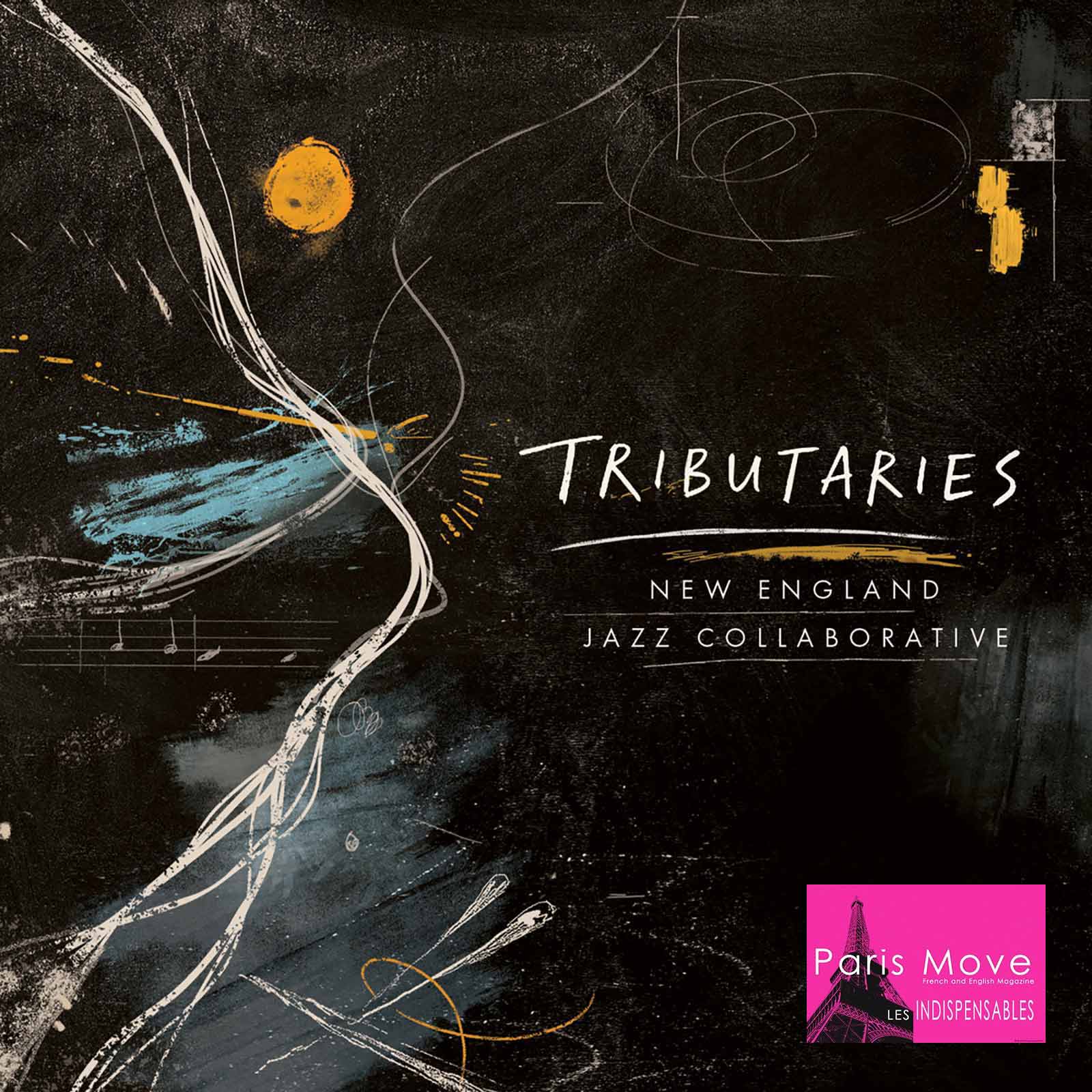
If anything, the album cover initially suggests a more restrained musical experience. Instead, Tributaries bursts into life as a joyful celebration of contemporary large ensemble jazz. Every composition is carefully constructed, every orchestration thoughtfully balanced and every performance delivered with complete conviction.
The debut recording by the New England Jazz Collaborative demonstrates the astonishing range of compositional approaches represented within the collective. Listeners travel effortlessly from the joyous pulse of traditional New Orleans swing to elegant lyrical ballads, from the sophisticated legacy of Third Stream to the infectious rhythmic vitality of West African highlife. Despite these stylistic shifts, the album possesses remarkable unity, largely because every work is driven by the same commitment to artistic honesty rather than stylistic display.
Across six original compositions, Jeremy Cohen, Darryl Harper, Matan Rubinstein and Sam Spear each reveal highly individual musical personalities while contributing to an artistic vision that feels genuinely collective.
To understand why Tributaries carries such emotional weight, one must first understand the philosophy behind the New England Jazz Collaborative itself.
The organization was born from a question that many composers quietly ask themselves. How can ambitious new music ever reach audiences if its creators have no realistic access to a professional orchestra capable of performing it?
Composer and percussionist Jeremy Cohen knew this dilemma all too well. He had accumulated an extensive catalogue of original scores but lacked the financial resources and institutional support necessary to rehearse, perform and professionally record them. Rather than accepting those limitations, he recognized that many fellow composers faced exactly the same challenge. He gathered friends, colleagues and like minded artists around a simple but powerful idea.
Together they founded an artist led nonprofit organization dedicated to commissioning new music, creating performance opportunities, supporting professional musicians and expanding audiences for one of America’s most adventurous musical traditions.
It is difficult not to admire such a vision.
The Collaborative does far more than showcase composers. It demonstrates what can happen when musicians perform because they genuinely believe in the music placed before them. Throughout the recording one senses an unmistakable enthusiasm radiating from every section of the orchestra. Brass, reeds, rhythm section and soloists all play with the confidence of artists discovering something alongside the listener rather than merely reproducing familiar repertoire.
That philosophy represents one of the album’s greatest strengths.
Classical concerts often rely on beloved excerpts from established masterpieces, works audiences already know by heart. The New England Jazz Collaborative embraces the opposite philosophy. Discovery is the destination. Every composition receives the same depth of rehearsal, the same intellectual commitment and the same emotional investment regardless of whether anyone has heard it before.
That commitment is audible throughout the album.
The orchestration deserves particular praise. The brass section possesses enormous power without ever sounding heavy handed. The saxophones alternate seamlessly between warmth and brilliance, while the rhythm section provides an elastic foundation that allows the music to breathe naturally. Individual solos emerge organically from the ensemble rather than interrupting it, creating the impression of one continuous musical narrative rather than a succession of isolated showcases.
Much of this cohesion reflects the direction of composer, conductor and educator Ken Schaphorst. His leadership is evident not through flashy gestures but through the remarkable balance, precision and flexibility of the ensemble. Large jazz orchestras often struggle to combine discipline with spontaneity. Here, both qualities coexist beautifully.
The Collaborative’s achievements in less than five years are every bit as impressive as its artistic ambitions. Since Jeremy Cohen first conceived the project, more than thirty original works for jazz orchestra have been premiered, while over one hundred thousand dollars have been paid directly to musicians and other local creative artists. The initiative has already inspired the formation of additional composer led jazz orchestras, demonstrating that its influence extends well beyond its own performances.
The orchestra itself reflects the extraordinary richness of the Greater Boston jazz community. Established musicians such as trumpeters Jason Palmer and Bijon Watson, saxophonists Felipe Salles and Brian Landrus and guitarist Eric Hofbauer perform alongside a younger generation of remarkable soloists whose performances suggest exciting careers ahead.
Among the album’s many highlights, Sam Spear’s Gee, Em… stands out as an especially fascinating achievement.
The work openly embraces the hybrid language envisioned decades ago by Gunther Schuller and Duke Ellington, allowing jazz improvisation and classical architecture to enrich one another without compromise. Alto saxophonist Allan Chase delivers a solo of wit, elegance and remarkable imagination, but beneath the music lies an equally compelling intellectual foundation.
A native of Cleveland and a former student of Schuller, Spear built the composition around the celebrated twelve tone sequence known as Gunther’s Magic Row, a subtle tribute both to his mentor and to Schuller’s wife Marjorie.
Yet none of this theoretical sophistication ever becomes an academic exercise.
These compositions are not intellectual puzzles designed merely to impress fellow musicians. Their architectural complexity always serves emotional expression. The listener never feels excluded by the compositional process because every structural idea ultimately reinforces beauty, narrative and human feeling.
That balance between intellect and emotion is perhaps the album’s greatest accomplishment.
Every composition on Tributaries opens the door to an entirely different musical landscape. Each work introduces a composer with a distinctive voice while collectively revealing an artistic movement that deserves far greater attention.
More than simply an impressive debut, this recording serves as a remarkable showcase for composers whose work deserves to be explored on a much larger scale. One finishes the album hoping that every one of these writers will eventually have the opportunity to record a full project devoted entirely to their own music.
If this debut is any indication, the New England Jazz Collaborative is not simply documenting the future of large ensemble jazz. It is helping to write it.
Thierry De Clemensat
Member at Jazz Journalists Association
USA correspondent for Paris-Move and ABS magazine
Editor in chief – Bayou Blue Radio, Bayou Blue News
PARIS-MOVE, June 27th, 2026
::::::::::::::::::::::::
Musicians :
Saxophones/Reeds:
• Allan Chase — Alto 1; soprano sax (“Green Turtle Strut”)
• Sam Spear — Alto 2
• Temidayo Balogun — Tenor 1; soprano sax (“Another Brighter Day”); talking drum, auxiliary percussion (“Green Turtle Strut”)
• Ian Buss — Tenor 2; clarinet (“Another Brighter Day”, “Gee, Em…”)
• Brian Landrus — Baritone sax; bass clarinet (“Kiss Me Again”); flute (“Another Brighter Day,” “Green Turtle Strut”)
• Felipe Salles — Soprano sax, flute, piccolo (“Another Brighter Day”); flute (“Green Turtle Strut”)
Trumpets:
• Bijon Watson — Trumpet 1
• Mark Tipton — Trumpet 2; flugelhorn (“Kiss Me Again”)
• Doug Olsen — Trumpet 3
• Jason Palmer — Trumpet 4
Trombones:
• Chris Gagne — Trombone 1
• Randy Pingrey — Trombone 2
• Joey Dies — Trombone 3
• Rob Krahn — Bass trombone
• Angel Subero — Additional bass trombone (“Another Brighter Day”, “Green Turtle Strut”)
Rhythm Section:
• Ellie Pruneau — Piano
• Mitch Selib — Guitar
• Bob Nieske — Upright bass; electric bass (“Another Brighter Day”, “Green Turtle Strut”)
• Lumanyano Mzi — Drums; auxiliary percussion (“Green Turtle Strut”)
• Eric Hofbauer — Additional guitar (“Green Turtle Strut”, “Ol’ Liminal”)
Conductor: Ken Schaphorst
Track Listing :
Another Brighter Day (Featuring Mitch Selib, Temidayo Balogun & Lumanyano Mzi)
Ol’ Liminal
Kiss Me Again (Featuring Mark Tipton, Ellie Pruneau & Temidayo Balogun)
The Secret (Featuring Lumanyano Mzi, Chris Gagne & Bijon Watson)
Gee, Em… (Featuring Allan Chase)
Green Turtle Strut (Featuring Eric Hofbauer)
Recorded June 6, 2025, at GBH Fraser Studio, Boston, MA
Recording, mixing & mastering — Antonio Oliart
Additional recording — Daniel Fox, Wondersmith Audio
Producer — Jeremy Cohen
Co-Producer — Ken Schaphorst
Associate Producer — Bijon Watson
Production Assistants — Andreas Michaelides, Ryan Goss
Liner notes — Bob Blumenthal
Cover art — Jeremy Cohen, developed with AI tools
Package design — Brian Caskey
Photography — Lucas Mulder, Stephen Sherman & Isabelle Cordova