| Jazz |
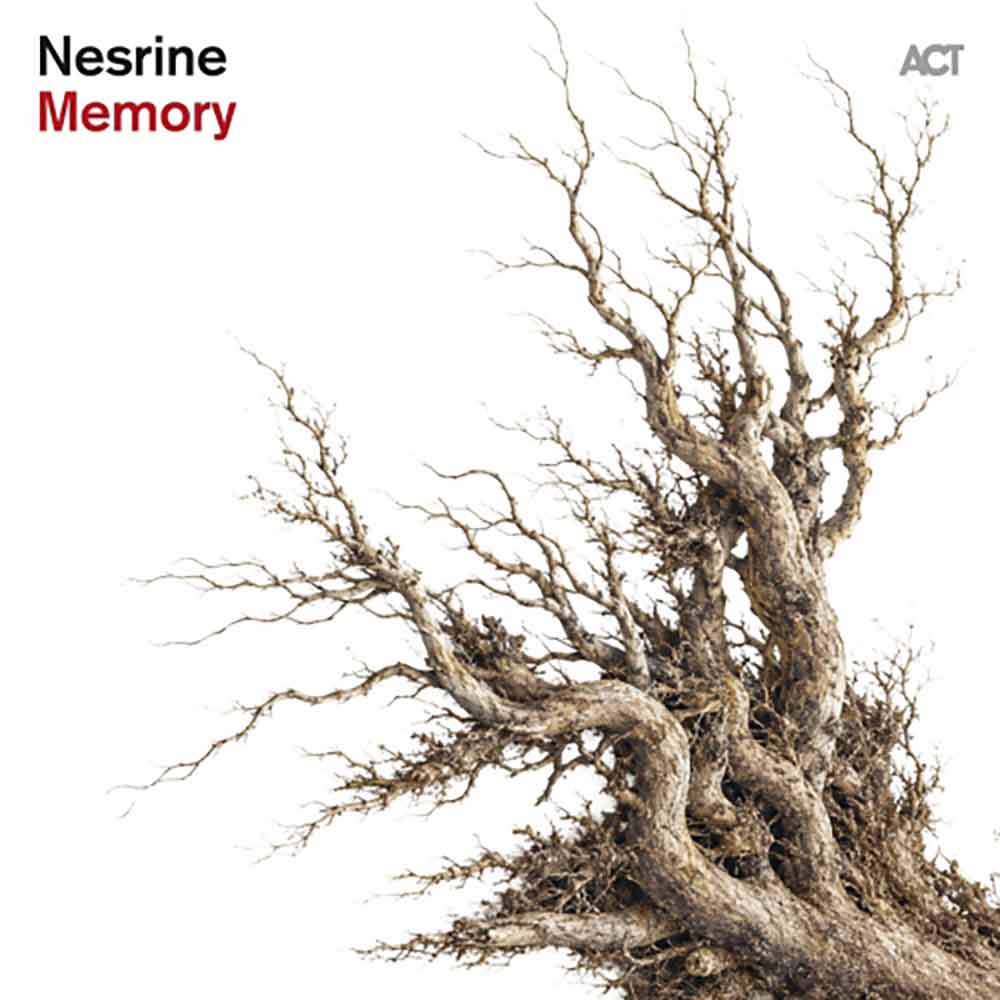
There are artists whose work we follow with a particular kind of affection, almost as though they have become part of our own musical landscape. Nesrine is one of them. As discreet as ever, and almost remarkably so given the extent of her talent, the composer, cellist and singer returns with Memory, a five-track EP that gives us something to enjoy while we wait for her next full-length album. But waiting for Nesrine never really feels like waiting. It is more like the pleasure of reconnecting with an artist whose next move is never entirely predictable, someone who keeps searching, exploring new territory and finding ways to surprise us without ever losing sight of what makes her music unmistakably her own. I have always had a particular admiration for her journey. With her training, instrumental mastery and musical sensibility, Nesrine could easily have pursued a brilliant career in classical music. She had the skills and credentials to join major ensembles, devote herself to a demanding repertoire and build a career within a world that would almost certainly have recognized her abilities. Instead, she chose a different path. It was probably the less predictable one, perhaps even the more difficult, but to my mind, it has proved far more compelling. She chose to develop her own compositions, build a musical world of her own, bring her voice to the forefront and pursue projects that reflect her personality. That is no small undertaking, particularly for someone with such high artistic standards. Yet it is precisely this decision that has allowed us to discover an artist of such remarkable individuality.
And that is what I find so appealing about Nesrine: her refusal to settle for what she already knows how to do. There is a constant sense of curiosity in her work, a determination not to be confined by her classical training, her influences or even her previous successes. Her cello is never simply a classical instrument inserted into a contemporary composition to lend it a touch of sophistication. It becomes another voice, another form of breathing, sometimes almost a character in its own right. The way she brings together different musical cultures, traditions and contemporary sensibilities never feels like an exercise in stylistic fusion. It seems entirely natural, an expression of her own history, her personality and, above all, the way she sees the world.
With Memory, Nesrine invites us to revisit five songs that have marked different stages of her artistic journey. For listeners already familiar with the albums on which these compositions first appeared, the appeal might not be immediately obvious. Why return to songs we have already heard, perhaps even loved for years? Precisely because these songs have lived. They have accompanied Nesrine through years of concerts, encounters and experiences, all the things that gradually change our relationship with the music we create. A composition is never truly finished. It evolves alongside the artist, takes on a different meaning when revisited years later and sometimes sheds elements that once seemed essential, revealing something that was there all along but had yet to emerge.
That is exactly what happens here. The five tracks have been completely reimagined, and they never feel like simple rerecordings of earlier work. They breathe differently. They have acquired new depth, fresh colors and a different sense of space. We recognize Nesrine’s musical world, the sensitivity that first drew us to her, but there is also a greater maturity at work, a newfound freedom in the arrangements and in the way these compositions are allowed to evolve. I was particularly impressed by Léo Jassef’s work on keyboards. His contribution is outstanding. He never tries to overwhelm the songs or draw attention to himself through unnecessary displays of virtuosity. Instead, he approaches them with remarkable intelligence, giving them room to breathe, adding depth and bringing out the orchestral dimension that seems to be playing an increasingly important role in Nesrine’s music. There is a genuine musical understanding between them, a sense of collaboration built around what these songs can become without sacrificing what made them special in the first place.
But perhaps what struck me most about this EP is the way Nesrine now approaches her voice. I find it more direct, more immediate, almost more intimate. The recording creates the impression that she is no longer interested in keeping a distance between herself and the listener. She comes closer, quite simply. And that approach suits her writing beautifully, because there has always been a poetic quality to her music that I find deeply moving. She doesn’t need to overstate anything. A few words, a subtle inflection, a breath, and the emotion is there. That is a rare gift, especially at a time when musical intensity is so often confused with sheer volume or elaborate production, when artists are encouraged to pile on effects simply to hold an audience’s attention. Nesrine seems to be moving in the opposite direction. She pares things back, refines her expression and allows the songs to speak for themselves. I find this artistic evolution particularly compelling. It gives Memory a significance that goes well beyond that of an EP designed simply to keep listeners occupied until the next album arrives. I hear it instead as a snapshot of an artist at a particular moment in her journey, looking back at a body of work that is already rich but by no means complete. When an artist returns to her own songs with this kind of freedom, it tells us something important: she is no longer quite the person who first wrote them. She knows them better, feels them differently and probably understands more clearly what needs to remain and what can be left behind. That is a form of maturity that has little to do with the complexity of the arrangements or the sophistication of the production. It is about knowing what matters and having the confidence to make the right choices.
It is also worth considering the distinctive place Nesrine occupies in the European music scene. I believe she is one of those artists whose significance has perhaps not yet been fully recognized. Her talent is extraordinary, her musical background impressive, but what deserves particular attention is the coherence of her artistic journey. She could have relied on her considerable gifts as a cellist and remained within a musical world where recognition might have come more easily. Instead, she took the risk of creating something of her own, writing her songs and bringing them to the stage as part of a project that is entirely hers. Listening to Memory, it becomes clear that this was never a temporary detour. It was something she needed to do.
I also appreciate the fact that she never seems particularly interested in manufacturing an image of herself as an artist. She doesn’t play a part, force a message or appear overly concerned with the need to remain constantly visible. Her discretion can seem almost surprising in an industry where musicians are expected to keep reminding the public that they exist. But, ultimately, I much prefer this way of moving forward. She lets the music do the talking, which is still the best thing an artist can do. It is a shame that musicians of her caliber do not always receive the attention they deserve, but there is also something reassuring about following an artist who continues to develop on her own terms, without compromising her standards.
Memory is, of course, a particularly fitting title. Memory is not simply about preserving what we once loved. It is also the remarkable ability to transform things, to give them a different meaning when we encounter them again. That is very much what I felt while listening to these new versions. We recognize the songs and rediscover familiar emotions, but something has changed. Perhaps it is Nesrine who has changed. Perhaps it is the way we listen to her now. Or perhaps it is simply that particular alchemy through which music can accompany us differently at different moments in our lives.
In the end, this EP feels like receiving a letter from a dear friend. You recognize the handwriting immediately, along with the sensitivity and the unmistakable way of speaking. You take your time reading it, appreciate the new nuances, and by the time you reach the final page, you already find yourself wanting to hear from that friend again. That may be the finest compliment I can pay to this recording: it doesn’t make me want to look backward. It makes me eager to discover what comes next. So, yes, Nesrine, thank you for these five songs, for this fresh interpretation of your own work and for an artistic evolution that I find genuinely exciting. If Memory offers us even a glimpse of what your next album might hold, then I suspect we have some wonderful music ahead of us. Your world continues to grow in depth, freedom and poetry. And I, like so many listeners who have followed your journey with affection, will certainly be there when the next album arrives. I really, truly can’t wait.
Thierry De Clemensat
Member at Jazz Journalists Association
USA correspondent for Paris-Move and ABS magazine
Editor in chief – Bayou Blue Radio, Bayou Blue News

PARIS-MOVE, November 10th, 2026
Follow PARIS-MOVE on X
::::::::::::::::::::::::
Musicians :
Nesrine / cello, vocals
Anissa Nehari / percussion
Leo Jassef / keyboards
Track Listing :
Ya Lil
Ahlam
You Made It Hard for Me
Kan Ya Makan
Fear