| Contemporary music |
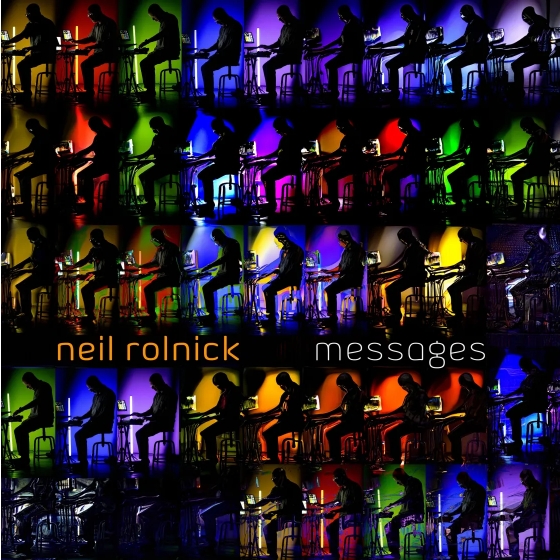
Summary: Neil Rolnick’s Messages turns three decades of laptop composition, grief, hearing loss and love into one of the year’s most moving electronic albums.
Messages: a laptop pioneer’s most human album
Messages, the new career-spanning collection from electronic music pioneer Neil Rolnick, is difficult to categorize because it’s something genuinely, disarmingly honest. Across eight pieces spanning more than three decades, Rolnick, one of the very first composers to bring a computer onto a concert stage, back in the late 1970s, has assembled something that resists every easy label. Strange, unsettling in places, tender, curious, and, by its final track, quietly devastating. It is, without question, one of the most singular and affecting CDs to come from Neuma Records this year, and one that leaves you thinking as much about your own life as about the music itself.
To understand what makes Messages work as a unified statement rather than a scattered retrospective, it helps to understand who’s behind the laptop. Neil Rolnick’s career reads almost like a survey of American experimental music’s last half-century: a Harvard literature degree, composition study under Darius Milhaud, John Adams and Olly Wilson, a PhD from UC Berkeley, computer music research at Stanford under John Chowning, and two years at IRCAM in Paris in the late 1970s, right at the birth of the technology that would define his life’s work. He went on to found the influential Integrated Electronic Arts programs at Rensselaer Polytechnic Institute, mentoring generations of artists over a 32-year teaching career, and has released work on twenty-two albums for labels including Nonesuch, Bridge, Cuneiform and Albany, performing everywhere from Carnegie Hall to Havana to the UN Climate Summit in Paris.
None of that biography, on its own, would predict an album this emotionally direct. But it’s precisely because Rolnick has spent fifty years mastering the technical vocabulary of sampling, looping and digital processing that he’s able, on Messages, to use all of it in service of something disarmingly simple: telling the truth about his own life, one track at a time.
The album opens on a note of playful psychological inquiry with “sO mANy mE’s”, built entirely from the voice of dancer and choreographer Alex Oliva, who recorded herself inhabiting a series of different personae, measuring, selling, falling apart, acting out, surrendering. Rolnick improvises with those vocal fragments the way another composer might improvise with a horn section, and the result is a genuinely inventive meditation on how many different people we all contain, shifting mask to mask across a single day. It’s a clever, disarming opener precisely because it sounds playful on the surface while asking a genuinely searching question underneath.
“Gate Beats” pulls from deeper in the archive, a 2002 protest tune called “No War Blues”, written for Rolnick’s improvising outfit FISH LOVE THAT in a doomed effort to keep the US out of Iraq. Rolnick himself is characteristically self-deprecating about its political impact, joking that the song failed entirely in its stated mission. But the piece built from its samples over a decade later is a genuine technical delight, a noise gate slowly rising on layered loops of violin, tenor sax and trumpet until, in the final stretch, the whole original tune comes rushing back into focus. It’s a lovely demonstration of Rolnick’s gift for making purely technical processes feel like storytelling.
“A Robert Johnson Sampler”, meanwhile, reaches back even further. Neil’s first real foray into digital sampling in 1987, born from a teenager’s hours spent trying to unlock the secrets of Robert Johnson’s guitar playing, and reframed after years in Paris as a deliberate assertion of something uniquely American amid Europe’s classical modernism. Nearly forty years and countless performances later, it remains a vivid, rhythmically playful piece, roots music refracted through genuinely experimental technique, decades before hip-hop and turntablism made that combination commonplace.
“O Brother!” takes a gentler, more personal angle on similar roots material, remixing recordings of Rolnick’s own younger brother Peter, a lifelong traditional folk musician, into a mashup that lets Neil finally take the musical lead in a relationship where he’s usually followed his brother’s example. And “Balkanization” turns fieldwork collected by Rolnick’s sister on a 1970s trip through Yugoslavia and Bulgaria into a genuinely pointed piece of political sound art, village music excerpts set deliberately at odds with one another, then painstakingly, imperfectly reconciled, a miniature parable about nationalism rendered entirely in sound.
But it’s the album’s final three tracks, taken together, that elevate Messages from an excellent retrospective into something genuinely exceptional, and it’s here that the record earns every one of the words you might reach for to describe it: astonishing, unsettling, captivating, essential.
“WakeUp”, written in 2013 shortly after Rolnick’s wife Wendy was diagnosed with lymphoma, samples the Everly Brothers’ signature harmonies into something that functions on the surface as a piece about nostalgic sampling technique, and underneath as a private vow to live fully awake in the face of uncertainty. Wendy kept the disease at bay for five years, and the couple travelled the world and stayed fully engaged with life and music throughout, exactly as the piece seems to hope for. When she passed away in the summer of 2018, she asked Rolnick to play this very piece at the celebration of her life. Knowing that context changes how you hear every loop and every harmony in it, what could easily read as a purely technical exercise becomes, instead, something closer to a vow kept.
“MONO Prelude” turns to a different kind of loss entirely: the sudden, permanent hearing loss Rolnick experienced in his left ear in 2008, arriving with a persistent tinnitus and a world newly heard only in mono. Rather than treating this as tragedy alone, Rolnick used the experience as the starting point for a genuinely fascinating piece of informal research, discovering through friends and online contacts just how many people quietly live with some form of altered sensory perception: sight, hearing, smell, taste, touch. The piece that resulted is less a lament than a genuinely moving meditation on the strange fact that despite all perceiving the world differently, we manage to agree on enough to talk about music, art and life together at all. It’s a piece about disability that somehow becomes a piece about connection.
And then there’s the title track, the album’s emotional and conceptual centre, and one of the most quietly devastating pieces of music you’re likely to hear this year. Days after Wendy’s death, in a moment of genuine panic that he could no longer recall the sound of her voice after forty-five years together, Rolnick searched desperately for any recording of her. He found none, until he discovered that deleted voicemail messages could be recovered, and un-deleted about a dozen of them, spanning the entirety of her illness. “Messages” is built from those recovered fragments: ordinary exchanges about dinner plans, concert reviews, the small quotidian texture of a forty-five-year marriage, woven together with fragments of music Wendy mentions within the calls themselves. There is nothing showy about it. It doesn’t reach for grand gestures of grief. It simply lets you hear, in Wendy’s own unguarded voice, exactly the kind of grace, humour and quiet strength that made someone worth building an entire life around. And in doing so, it becomes a genuinely profound meditation on love, on what we leave behind, and on what actually turns out to matter once everything else falls away.
What ultimately makes Messages so remarkable is how completely it earns its own strangeness. This is technically inventive, formally exploratory laptop composition of the kind Rolnick has been refining since before most electronic musicians working today were born and at the same time, it’s some of the most nakedly, unguardedly human music you’ll hear on any album this year, in any genre. Produced by Rolnick himself and recorded, mixed and mastered by the gifted electroacoustic artist Erdem Helvacıoğlu, the album never loses its sense of rhythm, wit and narrative momentum even at its most emotionally raw, a genuine achievement of craft in service of something far bigger than craft alone.
Messages doesn’t just document five decades of one composer’s restless technical curiosity, it asks you, gently but insistently, to think about your own life, about which of your many selves you show the world, about how you’d want to be remembered in the small, unglamorous traces of daily conversation, and about what love actually looks like once you strip away every occasion for grand gesture. Few albums genuinely earn the word essential. This one does.
Frankie Pfeiffer
Editor in chief – PARIS-MOVE
PARIS-MOVE, September 17th, 2026
Follow PARIS-MOVE on X
::::::::::::::::::::::::
To order the album on Neuma Records’ website
Tracklisting
- sO mANy mE’s (2022) 11:40
- Gate Beats (2003) 4:58
- WakeUp (2013) 10:22
- A Robert Johnson Sampler (1987) 10:18
- O Brother! (2014) 8:28
- Balkanization (1988) 7:41
- MONO Prelude (2009) 11:24
- Messages (2019) 9:36
Total: 74:27
Musician:
Neil Rolnick, laptop