| Jazz |
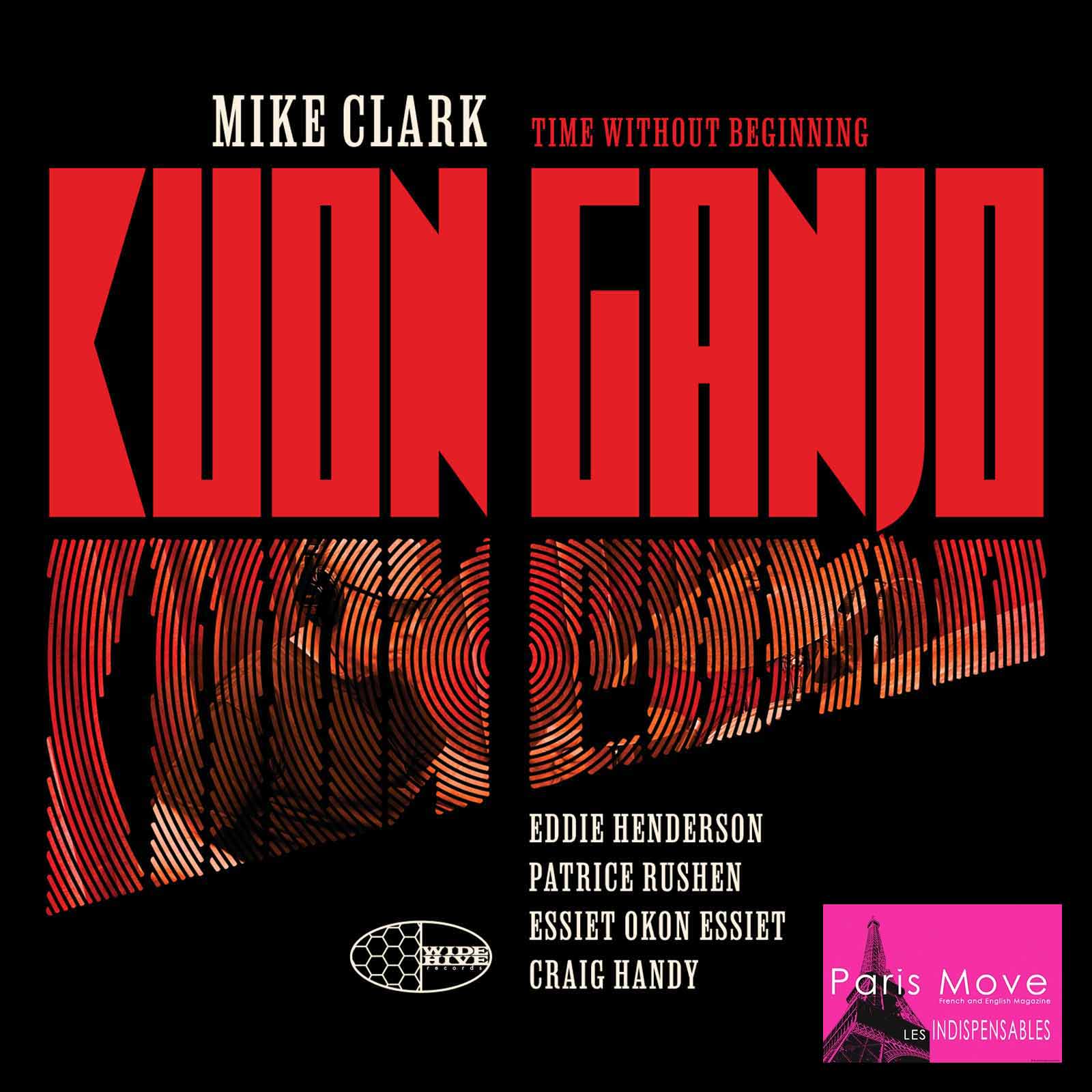
Summary: Mike Clark’s “Kuon Ganjo” is a powerful jazz album blending tradition and innovation. Featuring Eddie Henderson, Craig Handy, Essiet Okon Essiet, and Patrice Rushen, the legendary drummer reimagines classics by Sonny Rollins and Herbie Hancock with energy, creativity, and timeless musicianship.
Mike Clark’s “Kuon Ganjo” Reimagines Jazz Classics With Power, Precision and Soul
When a legendary drummer releases a new album, the first question is rarely about the title. The real measure comes from the music itself: the choices made, the musicians invited, and the story an artist chooses to tell after a lifetime spent shaping sound.
With “Kuon Ganjo,” Mike Clark delivers more than a new recording. He offers a musical conversation between generations, a reflection on the artists who influenced him, and a reminder that great jazz compositions are not frozen moments in history. They continue to evolve whenever musicians approach them with imagination, respect, and a willingness to explore new possibilities.
For listeners who may be discovering Mike Clark for the first time, particularly younger generations encountering jazz through new platforms and new perspectives, his legacy is one of remarkable depth. Clark is not simply a highly respected drummer; he is one of the musicians who helped define important chapters of modern jazz.
His reputation was built through decades of extraordinary collaborations, including his influential years with Herbie Hancock during the 1970s, when he became a key member of The Headhunters. That period placed him at the center of a revolutionary moment when jazz was expanding beyond traditional boundaries, embracing funk, electronics, rhythm experimentation, and new forms of collective expression.
Throughout his career, Clark has performed and recorded with an extraordinary list of artists including Christian McBride, Chet Baker, Wayne Shorter, Joe Henderson, Albert King, Michael Wolff, Billy Childs, Dr. Lonnie Smith, and Gil Evans. His musical history reads almost like a map of contemporary jazz itself, connecting generations of musicians who transformed the language of the music.
For “Kuon Ganjo,” his third album for the Wide Hive label, Clark does not attempt to compete with the past. Instead, he enters into a dialogue with it. The album is not simply a collection of new compositions. It is an act of interpretation and renewal, revisiting works connected to some of jazz’s most important voices, including Sonny Rollins, Herbie Hancock, Towner Gallaher, Sigmund Romberg and Oscar Hammerstein II, Gregory Howe and Erik Jacobson, and Thelonious Monk. Alongside these reimagined classics, Clark presents original compositions that reveal his own artistic personality and his continuing creative evolution.
From the opening moments of “East Broadway Rundown,” it becomes immediately clear that Clark’s goal is not imitation. He is searching for new emotional landscapes inside familiar material. There is a significant difference between performing a famous composition and discovering another way to make it speak.
That approach defines the entire album. For this ambitious project, Clark has assembled a remarkable ensemble featuring Eddie Henderson on trumpet, Essiet Okon Essiet on bass, Craig Handy on tenor saxophone, and the extraordinary Patrice Rushen on piano and Rhodes.
The chemistry between these musicians is one of the album’s greatest strengths. Each performer brings a distinct voice, yet the group functions as a unified musical conversation. Henderson delivers trumpet lines filled with warmth and intelligence. Handy remains a powerful and expressive storyteller on tenor saxophone. Essiet provides a foundation that is both flexible and deeply connected to Clark’s rhythmic vision. Rushen, meanwhile, brings an exceptional combination of sophistication and emotion, using both acoustic piano and Rhodes to expand the album’s sonic palette.
Following the success of “Itai Doshin,” which remained in the JazzWeek Top 40 for seven months, “Kuon Ganjo” confirms Clark’s ability to remain artistically relevant while staying connected to the traditions that shaped him.
The album carries the unmistakable energy of the East Coast jazz tradition: fast moving, rhythmically complex, and driven by a sense of urgency. Yet beneath the technical brilliance lies something more important: communication. This is music built around listening.
The nine-track collection includes three original compositions, alongside remarkable interpretations of Sonny Rollins’ “East Broadway Rundown” and Herbie Hancock’s “Toys.” Clark also revisits standards such as “Softly, As in a Morning Sunrise” and “Beauty and the Beast,” approaching them not as historical artifacts but as living compositions capable of transformation.
The title track, “Kuon Ganjo,” written by Clark himself, may represent the clearest expression of his personal voice. The composition reveals echoes of Wayne Shorter’s unique approach to harmony, melody, and structure, an influence that feels completely natural given Shorter’s enormous impact on generations of musicians.
Few artists have truly entered the world of Wayne Shorter’s personal compositions. His music requires more than technical skill; it demands imagination, patience, and an understanding of space. Musicians such as Clark, Joe Zawinul, Lakecia Benjamin, and a small group of other artists have demonstrated an ability to connect with that language while creating something personal.
Clark’s relationship with the music of Herbie Hancock also remains essential to understanding this album. His years with Hancock shaped his approach not only to rhythm but also to experimentation, ensemble interaction, and artistic freedom. Those lessons are still present in “Kuon Ganjo,” where decades of experience are transformed into a sound that feels both mature and alive.
As Clark explained when discussing the philosophy behind the project, the goal was not simply to revisit important compositions, but to allow these pieces to continue their journey through new interpretations and new musical conversations. This perspective defines the album’s greatest achievement: honoring history without becoming trapped by it.
“Kuon Ganjo” succeeds because every element has a clear purpose. The repertoire is carefully chosen. The musicians are exceptional. The performances balance discipline and freedom. Most importantly, Clark understands that jazz survives because artists continue to challenge it.
In today’s musical landscape, where speed and immediacy often dominate, Mike Clark offers another kind of experience. He reminds listeners that craftsmanship still matters, that musical heritage can remain vibrant, and that a great composition can reveal something new decades after it was written.
“Kuon Ganjo” is a bridge between past and present. It celebrates the musicians who came before while creating space for the future. It brings forgotten or familiar melodies back into focus, giving them renewed energy through the hands of artists who understand their history.
The album also demonstrates something essential about Mike Clark’s artistry. Reinterpreting a classic is one thing. Giving it a new identity is another. On “Kuon Ganjo,” Clark proves once again that he belongs among the musicians capable of doing both.
With this release, the beginning of August arrives with a welcome gift for jazz listeners. Mike Clark has created an album that respects tradition while refusing to live in the past. And after more than five decades of music making, he continues to prove that the strongest artistic voices do not disappear with time. They evolve.
Thierry De Clemensat
Member at Jazz Journalists Association
USA correspondent for Paris-Move and ABS magazine
Editor in chief – Bayou Blue Radio, Bayou Blue News

PARIS-MOVE, July 26th, 2026
Follow PARIS-MOVE on X
::::::::::::::::::::::::
Musicians :
Mike Clark on drums
Eddie Henderson (Blue Note) on trumpet
Essiet Okon Essiet on bass
Craig Handy (Herbie Hancock) on tenor saxophone
Patrice Rushen on piano and Rhodes
Track Listing :
East Broadway Rundown
Austin City Shuffle
Eddy And Hyde
Softly As In Morning Sunrise
Lungs
Toys
Kuon Ganjo
Monk’s Dream
Beauty And The Beast