| Latino |
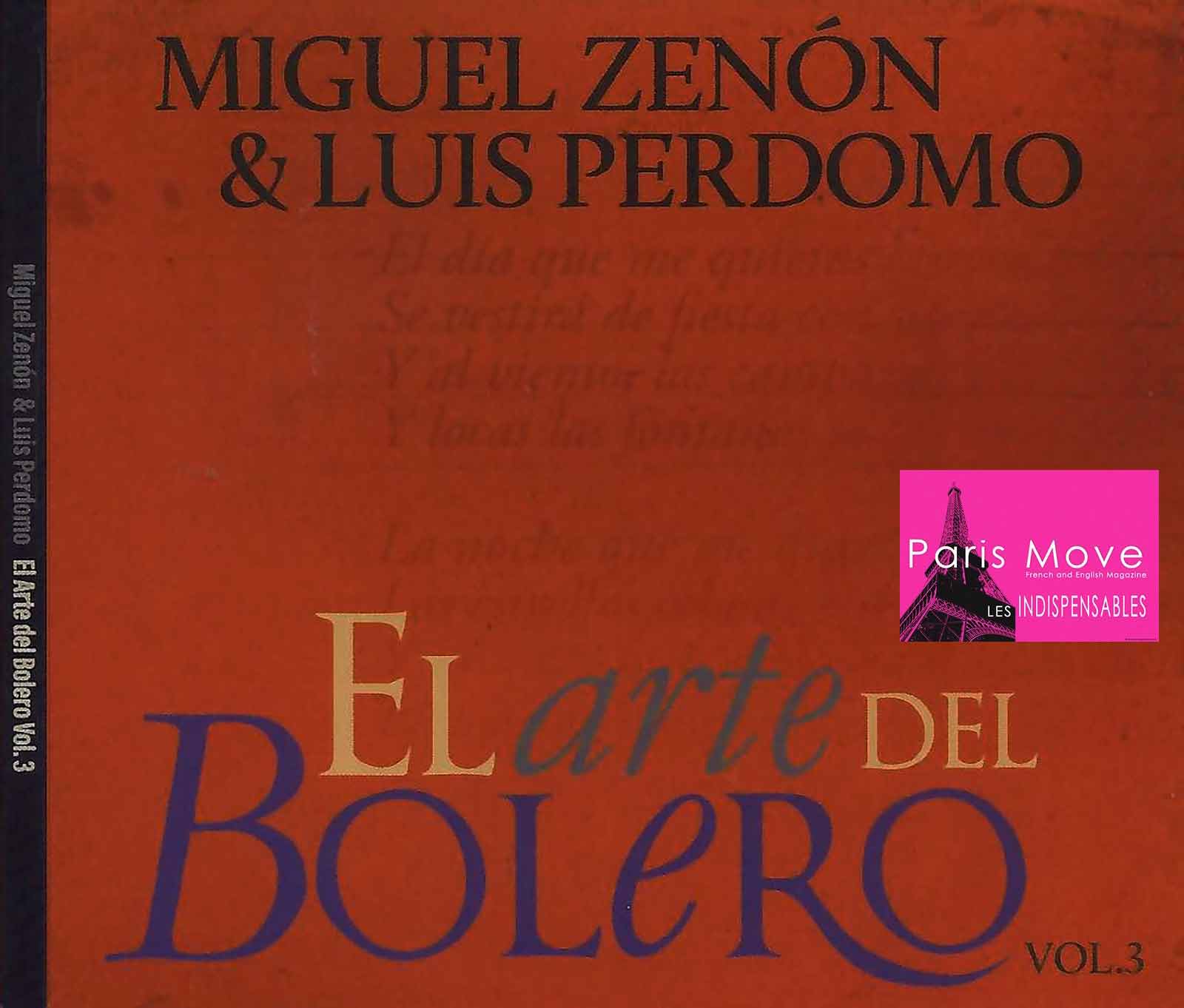
Miguel Zenón and Luis Perdomo Find New Life in the Timeless Language of the Bolero on “El Arte Del Bolero, Volume 3”
Few musical traditions carry the emotional weight and cultural memory of the bolero. Born more than a century ago, this intimate form of Latin American song has survived generations because it speaks to experiences that remain universal: love, absence, desire, heartbreak, and remembrance. Today, as many historic musical traditions search for new relevance in a rapidly changing cultural landscape, the bolero continues to find new voices willing to explore its depth. Among the most compelling are Miguel Zenón and Luis Perdomo, whose El Arte Del Bolero series has become one of the most thoughtful contemporary examinations of this extraordinary repertoire.
With the release of El Arte Del Bolero, Volume 3, the two longtime collaborators continue a musical conversation that began years ago, revisiting some of the most beloved compositions of the Latin American songbook while revealing emotional and harmonic dimensions that often remain hidden beneath their familiar melodies.
The album features a carefully selected collection of classics, including “La Gloria Eres Tu,” “Señora,” “El Día Que Me Quieras,” “Un Amor De La Calle,” “Sombras,” “Convergencia,” “Verdad Amarga,” and “De Qué Callada Manera.” Yet this is not a project built around nostalgia alone. Zenón and Perdomo are not attempting to preserve these songs as historical artifacts. They are searching for the deeper artistic possibilities contained within them.
From the opening moments of “La Gloria Eres Tu,” originally composed by José Antonio Méndez, the musicians establish the philosophy behind the entire project. The piece does not unfold as a simple reinterpretation. Instead, it becomes a transformation. The original melody remains recognizable, but it exists almost like a memory beneath the surface, a delicate thread connecting the past with the present.
Zenón’s extraordinary ability to understand the emotional architecture of a composition is central to the success of the recording. His approach is not based on decoration or reinvention for its own sake. He identifies the essential character of each song and allows new musical ideas to emerge naturally around it. The result is a version of “La Gloria Eres Tu” that seems to move beyond interpretation and toward rediscovery. Returning afterward to the original recording reveals just how far the musicians have traveled. The composition remains intact, but its possibilities have been expanded.
That is the true purpose of El Arte Del Bolero: to reveal the hidden poetry inside songs that have already entered collective memory. The project transforms familiar melodies into profound musical reflections, giving them a renewed sense of beauty and emotional complexity.
The third volume continues the artistic journey established by the previous albums, but it does not simply repeat their formula. Instead, it adds another layer to a collaboration built on trust, curiosity, and decades of shared experience. Zenón and Perdomo have spent 27 years developing a musical language together, a relationship that allows them to communicate with remarkable freedom and sensitivity.
Perdomo, a longtime member of Zenón’s quartet, understands the saxophonist’s musical instincts at an almost intuitive level. Their interaction gives the album an unusual sense of intimacy. Every phrase feels like part of a conversation, every silence has meaning, and every improvisation grows naturally from the emotional center of the composition.
The recording philosophy behind the series reflects that connection. Speaking about the second volume of El Arte Del Bolero, Zenón explained that the music was recorded almost like a concert, with minimal preparation beyond discussions about keys and basic structures. The musicians entered the studio ready to listen, respond, and discover the music together.
“We recorded this music as a concert, in one take, without any preparation other than some conversations about the keys and the basic structure of the songs,” Zenón explained. “The result surprised us in a very positive way, and we decided to share it.”
That spirit of spontaneity remains one of the defining elements of the third volume. The freshness of the performances comes from two musicians who know each other deeply but continue to approach music with curiosity. Their familiarity does not limit their imagination. Instead, it creates the freedom necessary for exploration.
The bolero itself provides the perfect foundation for such an approach. Emerging in the late 19th century, the genre began as popular music of everyday life, carrying stories of romance and longing from one generation to the next. Over time, many of these songs became cultural landmarks, only to gradually disappear from mainstream attention as new musical styles emerged.
Zenón and Perdomo understand that preserving a tradition does not mean freezing it in time. Their work is an act of renewal. They take the emotional essence of these songs and place it within the language of contemporary jazz, creating something that respects history while remaining completely alive in the present.
Listening to El Arte Del Bolero, Volume 3, one can imagine the two musicians surrounded by old scores and forgotten recordings, searching through decades of musical memories. Perhaps they discover a melody and one of them turns to the other with a simple question: “Do you remember this one?” That imagined moment captures the emotional heart of the project.
These songs are not only compositions. They are family memories, cultural references, and pieces of a shared history. They are the music that accompanied parents and grandparents, the melodies that existed in homes, celebrations, films, and quiet personal moments. The musicians are not simply revisiting the past. They are reconnecting with a living cultural inheritance.
The challenge, however, is that even the most meaningful popular songs can fade with time. Reviving them for new audiences requires more than respect. It requires exceptional musicianship, a shared artistic vision, and the courage to look at familiar material from a different perspective.
This is why El Arte Del Bolero has resonated so strongly. The series occupies a fascinating space between tradition and innovation, between Latin American cultural history and the evolving language of jazz. Much like other major reinterpretation projects in modern jazz, it demonstrates that the past is not something to be preserved behind glass. It is a source of inspiration that can continue to evolve.
After receiving Grammy recognition for the first two volumes, this third installment appears poised to continue that remarkable trajectory. More importantly, it confirms the artistic significance of the project itself. Zenón and Perdomo have elevated the bolero beyond its origins as popular song, revealing its complexity, sophistication, and enduring emotional power.
El Arte Del Bolero, Volume 3 is ultimately an album about memory and transformation. It reminds listeners that great melodies never truly disappear. They wait for new artists to rediscover them, reinterpret them, and allow them to speak again.
Miguel Zenón and Luis Perdomo have done more than revisit the Latin American Songbook. They have expanded it, proving that tradition and innovation are not opposites but partners in an ongoing musical conversation.
In their hands, the bolero is not a memory of the past. It is a living language still capable of surprising us.
Thierry De Clemensat
Member at Jazz Journalists Association
USA correspondent for Paris-Move and ABS magazine
Editor in chief – Bayou Blue Radio, Bayou Blue News
PARIS-MOVE, July 25th, 2026
Follow PARIS-MOVE on X
::::::::::::::::::::::::
To buy this album (August 25, 2026)
Musiciens :
Miguel Zenón, saxophone
Luis Perdomo, piano
Track Listing :
La Gloria Eres Tu
Senora
El Dia Que Me Quieras
Un Amor De La Calle
Sombras
Convergencia
Verdad Amarga
De Que Callada Manera