| Jazz |
The Shape of Silence: Migiwa Miyajima and the Courage to Listen
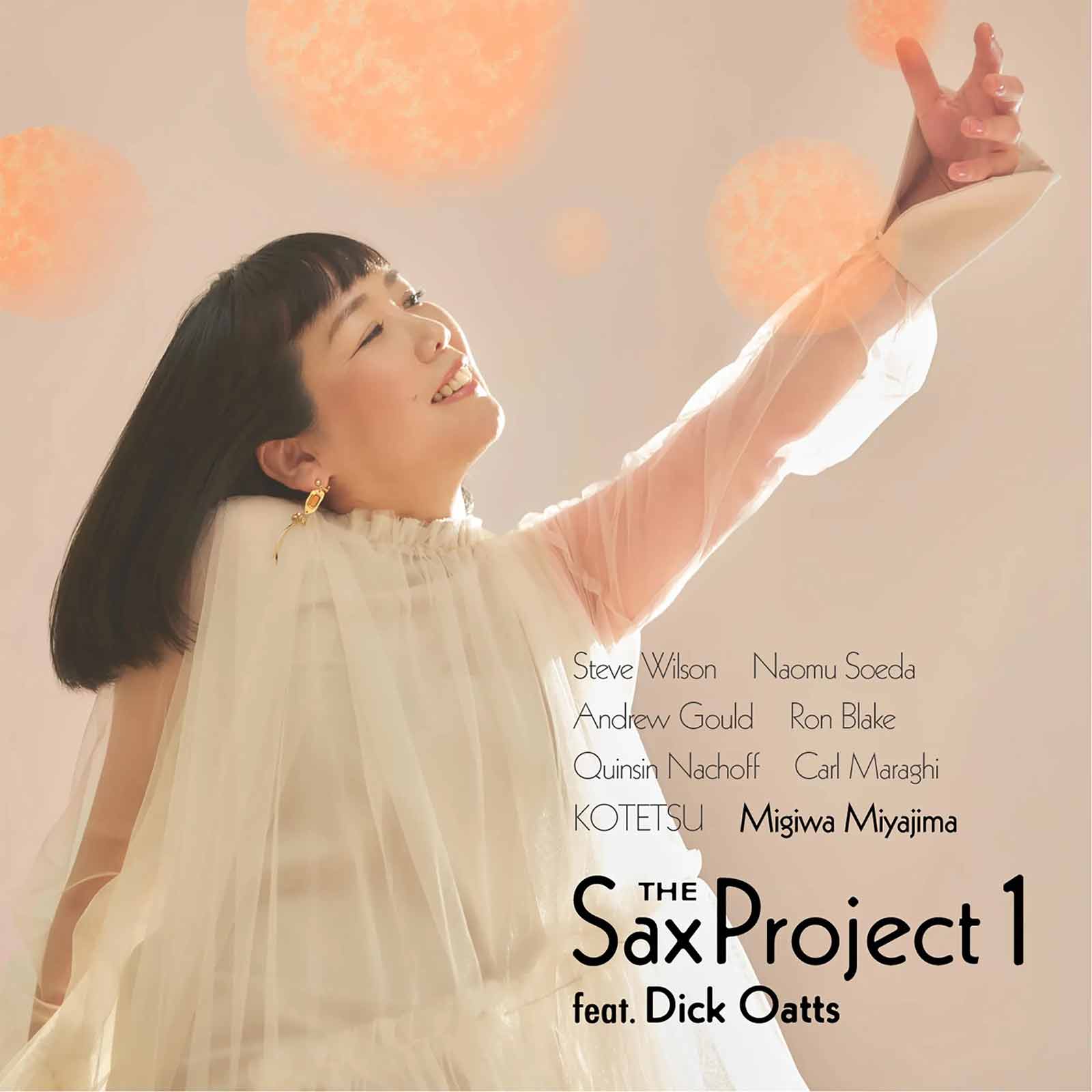
From Austin, Texas, where music is never far from the surface of everyday life, I have been reflecting on the particular responsibility that comes with listening. Not simply hearing notes, recognizing familiar sounds, or deciding whether a performance pleases us, but listening in a deeper sense: giving music our full attention, allowing it to unfold on its own terms, and accepting that it may challenge the expectations we bring to it. Migiwa Miyajima’s The Sax Project 1 invites precisely this kind of engagement. It is an album that asks more of us than passive appreciation. It encourages us to follow an artistic vision, pay attention to the spaces between sounds, and consider what happens when a musician approaches composition not as an exercise in display, but as a way of thinking. Miyajima’s journey to this music is part of what makes the project so compelling. Before establishing herself as a composer and saxophonist, she worked as a magazine editor. At first glance, that experience might seem far removed from the demands of musical composition. Yet I find the connection revealing. Editing and composing both require decisions about structure, emphasis, rhythm, proportion, and omission. Both involve recognizing that what is left out can matter as much as what is included. And both depend on having a point of view. A page does not become meaningful simply because it contains information; a composition does not become expressive simply because it contains notes. In either case, the work must be shaped by an intelligence capable of distinguishing what deserves attention from what merely occupies space.
There is no single path into music, and a previous career in publishing does not, by itself, explain an artist’s musical language. I would resist such a tidy biographical formula. But Miyajima’s editorial background offers a useful perspective from which to approach the architecture of The Sax Project 1. Her compositions suggest an awareness of how ideas are introduced, developed, interrupted, and revisited. They do not always follow the familiar pattern of a theme giving way to improvisation before returning to its starting point. Instead, they establish a dramatic environment in which repetition, contrast, silence, and shifts in texture become essential elements of the narrative.
The presence of Dick Oatts is significant in this context. His playing brings considerable experience and a deep understanding of the jazz tradition without turning the music into an exercise in nostalgia. His association with the Thad Jones/Mel Lewis Orchestra and the Vanguard Jazz Orchestra places him within a lineage in which composition, ensemble discipline, and individual expression have long existed in productive conversation. That history is audible not as a museum piece, but as a living resource. It provides a musical vocabulary through which Miyajima’s ideas can be explored, questioned, and brought to life. The distinction matters. Jazz has always had a complicated relationship with tradition. It can be treated as a fixed language, protected by conventions and familiar gestures, or understood as a living practice in which inherited forms remain open to reinterpretation. The most compelling musicians know that tradition is not something to reproduce mechanically. It is something to enter, examine, and sometimes challenge. In The Sax Project 1, the presence of musicians with extensive experience in large-ensemble writing and contemporary jazz gives Miyajima’s compositions a firm foundation, but it does not determine their destination. The music is not content simply to demonstrate its credentials. It wants to go somewhere. What strikes me first is the way the album balances formal discipline with uncertainty. Some passages suggest the clarity and emotional directness of classical composition, while others rely on repetition to create an almost cinematic tension. The music can feel carefully staged, yet never entirely predictable. A motif may return, but its meaning changes because the surrounding sound has changed. A phrase that initially seems straightforward can acquire a different emotional weight when heard again. Repetition becomes less a source of reassurance than a means of deepening perception.
This is one of the album’s most persuasive qualities. Repetition in music is sometimes mistaken for a lack of development, as though an idea that returns must necessarily be going nowhere. But repetition can be a form of scrutiny. It allows us to hear details that might otherwise pass unnoticed: a shift in articulation, a change in breath, a subtle adjustment in the balance between instruments. It can also produce a psychological effect. The more insistently a figure returns, the more we anticipate its arrival. That anticipation creates tension, giving an eventual variation its force. In Miyajima’s hands, repetition becomes a way of organizing time and shaping expectation.
The arrangements reinforce this dramatic quality. The saxophones do not simply function as interchangeable voices within a section. Their timbres, registers, and individual personalities create a shifting musical landscape. At times, they seem to reinforce one another, forming a collective voice; at others, their differences become the point. The music depends on the relationship between the individual player and the ensemble, between the freedom of a musical line and the discipline of the structure surrounding it. That relationship is central to jazz, but Miyajima approaches it with an ear for orchestral color and dramatic progression that gives the album a distinctive identity.
The contributions of musicians such as Steve Wilson, Naomu Soeda, Andrew Gould, Ron Blake, Quinsin Nachoff, and Carl Maraghi add to that breadth of expression. Their playing helps create an environment in which the saxophone becomes more than a vehicle for virtuosity. Its possibilities emerge through tone, phrasing, restraint, density, and movement across registers. The instrument can speak, argue, hesitate, insist, or withdraw. It can become part of a larger texture or step forward with the clarity of an individual voice. What matters is not simply how well the musicians play, but how attentively they respond to the demands of the composition.
That distinction deserves emphasis. Technical ability is indispensable here, but technique alone is not the story. Jazz criticism sometimes treats virtuosity as the most reliable measure of achievement. We count the speed of a solo, the complexity of a harmonic sequence, or the sophistication of a rhythmic displacement. These things can be impressive, and they have their place. Yet they do not necessarily tell us whether a musician has something to say. The more meaningful question is what the musician does with the possibilities available. Does the performance deepen the composition? Does it reveal another dimension in the material? Does it create a moment that could not have existed without that particular player, in that particular musical setting? Miyajima’s writing seems to place considerable value on these questions. The musicians have room to express themselves, but that freedom exists within a larger conception. It is not freedom as the absence of responsibility. It is freedom made meaningful through listening to others. The ensemble must understand the shape of the music while remaining alert to the unpredictable life that performers bring to it. This is where composition and improvisation meet-not as opposing principles, but as two ways of responding to the same musical reality.
The use of voice adds another dimension. KOTETSU’s contribution does more than introduce a different color into the arrangements. The human voice carries associations that an instrumental line cannot quite reproduce. Even when words are absent, or when the voice functions primarily as sound, we recognize something intimate in it: breath, vulnerability, presence. A saxophone can approximate the inflections of speech, but the voice begins in the body in a different way. Its presence brings the music closer, making it feel less abstract. It changes the emotional temperature of the ensemble.
I am particularly interested in what happens when voice and saxophone inhabit the same musical space. Both are instruments of breath, and both can move between lyricism and fragmentation. They can sustain a line, break it apart, or allow silence to interrupt it. Yet they do not carry identical meanings. The voice suggests language, even when it communicates without words. The saxophone, meanwhile, can seem to speak without ever becoming speech. Their relationship opens a space between expression and interpretation, inviting the listener to feel something without being told exactly what it is.
Silence is equally important. In a musical culture that often rewards constant activity, silence can be mistaken for an absence of ideas. But silence is not necessarily empty. It can be a pause that allows a phrase to resonate, a space in which the listener becomes aware of what has just happened, or a moment of tension before the music takes another direction. It can also be an act of restraint: a refusal to fill every available opening. That restraint is not passive. It requires confidence in the material and trust in the audience.
The most compelling passages of The Sax Project 1 understand this. They do not treat sound as something that must be supplied continuously. They allow musical ideas to breathe. They recognize that an arrangement is not necessarily improved by adding another layer, just as an essay is not strengthened by extending every argument beyond its natural conclusion. Sometimes the essential decision is to stop, leave a space, and allow the listener to complete the thought. In this sense, silence is not the opposite of composition. It is one of its most demanding forms. The titles If I Could See Thad and Haiku A/B/C offer further clues to the range of Miyajima’s imagination. The former evokes a relationship with a musical lineage and with the legacy of Thad Jones, whose influence on ensemble writing remains deeply felt. The latter suggests a more compressed, poetic approach to form. The reference to haiku is intriguing because it implies concentration: the effort to convey something through a limited number of elements, allowing brevity to carry weight. There is no need to impose a literary interpretation on the music, but the association points toward an aesthetic in which economy and precision matter. A short musical gesture can contain an entire emotional landscape when it is placed and shaped with care.
This attention to proportion is one of the qualities I value most in the album. The music does not seem interested in proving how much it can contain. Its ambition lies elsewhere: in discovering how much can be communicated through the relationship between a few carefully chosen elements. There is a difference between complexity and depth. Complexity can be measured by the number of moving parts; depth emerges from the significance of their relationships. Miyajima’s compositions are most compelling when they make those relationships audible, when the listener senses that every entrance, pause, recurrence, and change of texture belongs to a larger design. There is also a broader emotional context worth considering. Miyajima’s work on Unbreakable Hope & Resilience, connected to the earthquake and tsunami that struck Japan in 2011, suggests an artistic concern with how music can respond to collective trauma and the experience of rebuilding. I would not claim that every composition on The Sax Project 1 should be understood through that history, nor would I reduce an artist’s work to a single biographical or national experience. But the connection offers a glimpse of a broader conviction: music can confront vulnerability without turning it into spectacle. It can acknowledge loss, endurance, and uncertainty while preserving the possibility of hope.
That possibility is not sentimental. Hope, when it means something, is not a decorative emotion added to difficult circumstances. It is a decision to remain engaged with the world despite what it has taken away. Resilience, likewise, should not be confused with an obligation to appear unhurt. It can mean acknowledging damage and continuing to create without pretending that the damage has disappeared. Music cannot repair every wound, and it should not be asked to perform miracles. But it can offer a form of attention, a shared experience through which people may recognize something of their own lives in the work of another. This brings me to something Miyajima has said about music: that it is something to experience and to live, and that the work of a composer and producer is sacred. I find that choice of word striking. “Sacred” may sound excessive in a culture often suspicious of seriousness, particularly when the subject is art. But I understand the intention behind it. The word need not imply religious authority or artistic infallibility. It can describe a responsibility: to treat the work with care, respect the people involved, and recognize that the decisions made in the studio will shape the experience of those who eventually hear the music. To compose and produce is to make choices that others may never see. It is to decide what belongs, what should be removed, how a performance should be framed, and when a piece is ready to stand on its own. Those choices are technical, certainly, but they are also ethical in the broadest sense. They reveal what the artist values and what kind of relationship the artist wishes to establish with the listener. A recording is not simply a document of musicians playing together. It is a constructed experience, shaped by decisions about balance, perspective, time, and meaning.
Here, again, I find myself returning to journalism. The comparison is not an attempt to claim that writing about music and making music are the same activity. They are not. Their methods, tools, and responsibilities differ. But both begin with the recognition that there is no entirely neutral way to present the world. A journalist chooses what to investigate, which voices to include, what context is necessary, and how to organize the material. A composer makes choices about sound, structure, silence, and the relationship between individual expression and collective form. Neither can avoid having a point of view. The question is whether that point of view is conscious, responsible, and honest. Journalism, at its best, does more than collect facts. It gives them shape without pretending that shape is the same as truth itself. Music, at its best, does more than arrange sounds. It creates a form through which experience becomes perceptible. Both disciplines demand intellectual and emotional accountability. They require the practitioner to distinguish between what is essential and what is merely attractive, between what is true to the subject and what is convenient for the person presenting it.
In both fields, there is a danger of confusing visibility with substance. In journalism, a striking headline can replace the patient work of understanding. In music, virtuosity or production polish can distract from the more fundamental question of whether the work has an inner necessity. The pressure to attract attention is real, but attention is not the same as engagement. A work may be immediately impressive and quickly forgotten; another may ask more of us, reveal itself gradually, and remain in the mind long after the first encounter. I tend to trust the latter. Not because difficulty is automatically a virtue, but because music that makes room for reflection can reward the listener in ways that immediate gratification cannot. That is how I experience The Sax Project 1. It does not require me to admire every decision or accept its artistic ambitions without question. It asks me to listen closely, follow the movement of its ideas, and consider the relationship between structure and freedom. It reminds me that a musical work can be carefully constructed and emotionally open, intellectually considered and deeply human. Its strongest moments are not necessarily those in which the musicians demonstrate the full extent of their abilities. They are the moments in which individual talent becomes part of something larger: when a phrase finds its meaning through another instrument’s response, or when the music chooses silence instead of another statement.
As a listener, I do not want to turn this experience into a verdict. Criticism should not be a ceremony of approval, nor a competition to demonstrate superior knowledge. Its purpose, as I understand it, is to make an encounter more intelligible: to describe what a work attempts, examine how it achieves its effects, and explain why it matters-or might matter-to someone willing to listen. That requires judgment, but judgment should remain open to discovery. A critic who has already decided what a work must be will hear only what confirms that decision.
Miyajima’s album encourages a different attitude. It invites attention before conclusion. It asks us to consider music as a living structure, one that depends on the intelligence of the composer, the sensitivity of the performers, and the willingness of the listener to participate. It also reminds us that the most interesting artistic journeys do not always follow the most obvious route. A change in professional direction, a new instrument, or a different cultural and musical environment does not guarantee an original voice. But such changes can create the conditions in which an artist discovers a new way of seeing and hearing. What stays with me is the seriousness of the undertaking-not solemnity for its own sake, but commitment. There is a sense that the music has been carefully considered, that its details matter, and that the people performing it are being asked to contribute more than technical skill. The result is a project in which composition becomes a form of listening: listening to tradition, to the possibilities of the ensemble, to the silence around a phrase, and to the unexpected directions a musical idea may take once it is entrusted to other people.
Perhaps this is where music and journalism meet most clearly. Both are acts of interpretation, and both carry a responsibility toward the material they handle and the people who encounter it. Neither should confuse confidence with certainty, or conviction with the right to impose a final meaning. The task is not to possess the truth, but to approach it with discipline, curiosity, and respect. That is what gives a point of view its value. It is not the absence of subjectivity, but the willingness to take responsibility for it. In the end, I return to Miyajima’s idea that music must be experienced and lived. It is a simple proposition, but not a small one. Listening is not merely the consumption of sound. It is an act of attention, and attention is one of the most meaningful things we can offer another person’s work. It asks us to slow down, question our habits, and remain receptive to what we do not immediately understand. In a world increasingly organized around speed, reaction, and the relentless demand for more, that kind of listening has a significance of its own.
The Sax Project 1 leaves me with the impression of an artist taking that responsibility seriously. Its musical language moves between discipline and freedom, density and restraint, the individual voice and the collective sound. Its silences are not empty, its repetitions are not simply returns, and its arrangements are not merely containers for solos. They are part of a larger effort to give shape to experience. I hear in that effort something that reaches beyond the boundaries of jazz: the belief that creative work deserves conviction, that collaboration requires respect, and that artistic expression remains meaningful when it is grounded in a genuine commitment to human experience.
That, finally, is what I look for in music, and what I hope to preserve in writing about it: not an illusion of objectivity, not a display of expertise for its own sake, but an honest point of view, informed by listening and open to change. Music does not need a critic to explain why it exists. It needs listeners willing to meet it halfway. And criticism, like composition, is at its best when it remembers that its purpose is not to close the conversation, but to make the conversation worth having.
Thierry De Clemensat
Member at Jazz Journalists Association
USA correspondent for Paris-Move and ABS magazine
Editor in chief – Bayou Blue Radio, Bayou Blue News
PARIS-MOVE, November 22nd, 2026
Follow PARIS-MOVE on X
::::::::::::::::::::::::
The Band:
Migiwa Miyajima (Composer, Conductor, Piano on 2, 7, 9, Voice Percussion on 3)
Dick Oatts (Soprano Saxophone on 2, 3, 5, 11-13 & Alto Saxophone on 7)
Steve Wilson (Soprano Saxophone on 1, 3, 6, 8, 9, 10 & Alto Saxophone on 2, 4, 7)
Naomu Soeda (Soprano Saxophone on 4 & Alto Saxophone on 1, 5, 6, 8, 10, 11-13)
Andrew Gould (Alto Saxophone on 3, 7, 9)
Ron Blake (Tenor Saxophone on 2, 3, 5, 7, 9, 11-13)
Quinsin Nachoff (Tenor Saxophone on 1, 2, 3, 6, 7, 8, 9, 10)
Carl Maraghi (Baritone Saxophone on all except 4)
KOTETSU (Voice on 1, 6, 8, 10)
Track Listing :
Haiku A
Will You Be My Friend?
Superstar Overloaded
My Yellow Blues
If I Could See Thad
Haiku B
Your Light Pours Through Every Gap
The Blooming Season
Sunset Embrace
Haiku C
If I Could See Thad (Rehearsal Take 1)
If I Could See Thad (Rehearsal Take 2)
If I Could See Thad (Rehearsal Take 3)