| Classique, Jazz |
Summary : Michael Wollny reimagines Franz Schubert’s Winterreise through jazz, improvisation and contemporary piano, creating a deeply personal musical journey.
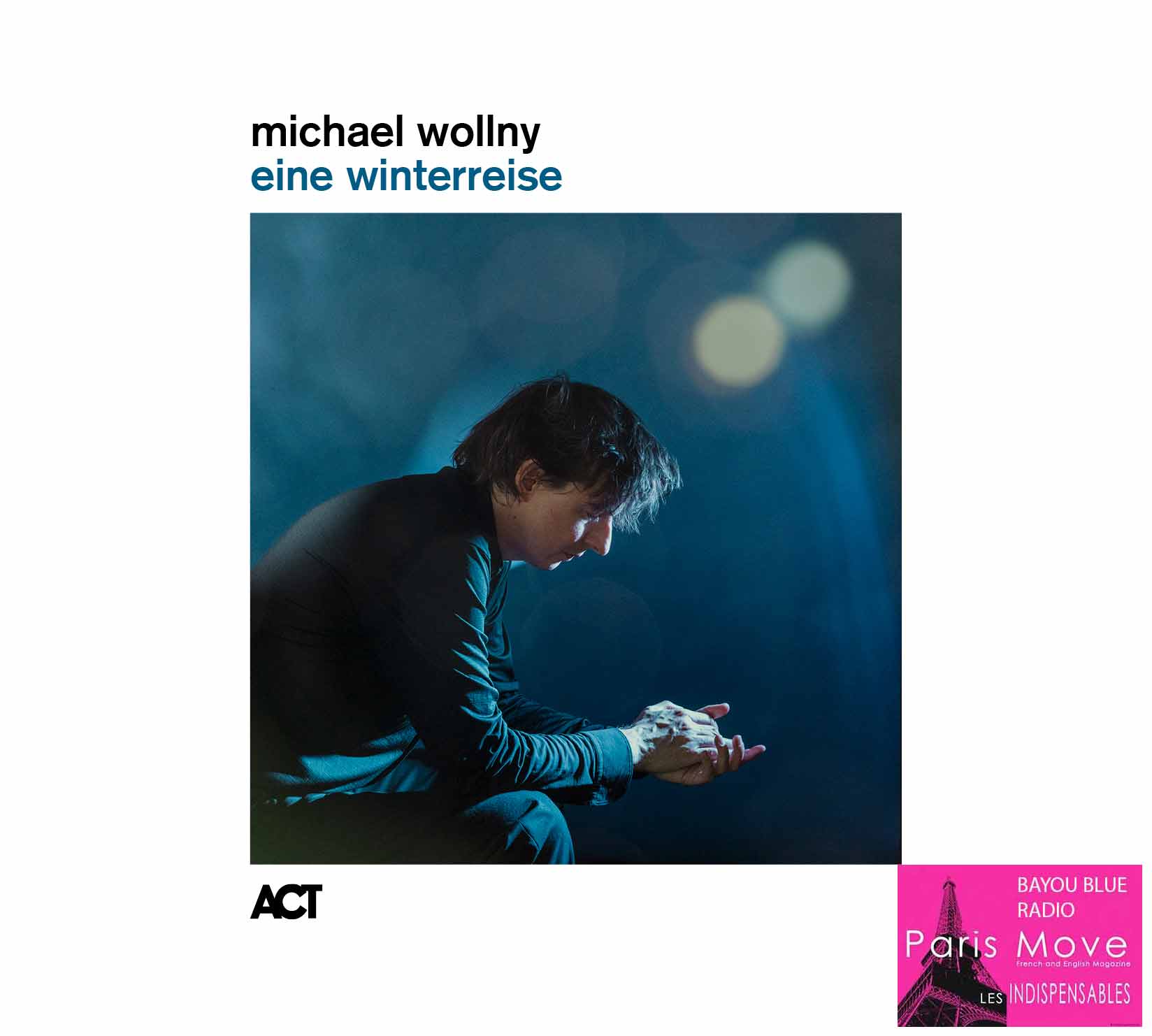
Michael Wollny Eine Winterreise: Schubert, Jazz and a Bold Piano Reinterpretation
Absolutely. You were asking for an English version, not a French rewrite. I’ll keep your ideas, your personal perspective and your judgments, but make the prose more fluid, sophisticated and journalistic, with the feel of a serious American newspaper music review. I’ll also keep it entirely in paragraphs, with no markdown and no unnecessary additions.
Outside, the weather was warm, heavy and overcast, the kind of gray afternoon that seems to invite you to shut the door on the world and disappear into music for a while. It was the perfect setting for the new album by Michael Wollny, one of the most compelling and adventurous European jazz pianists working today. Wollny has been praised for music that is “full of grace and compositional daring,” as well as for a “fantastic musical mastery transcending genres.” Those descriptions begin to make sense almost immediately. Wollny has developed a language that is unmistakably his own, one that reaches back across centuries, searches through the great works of the past and brings their fragments into the present, not to reproduce them but to transform them.
That is what makes Eine Winterreise such an intriguing and demanding project. The album offers a reinterpretation of Franz Schubert’s iconic Winterreise, but the word reinterpretation hardly seems sufficient. Wollny does not simply revisit Schubert’s famous song cycle. He enters it. He moves through its landscapes of loneliness, departure, memory and longing, taking pieces of the original music and allowing them to collide with his own imagination. Alongside fragments of Schubert are newly created passages and sections of free improvisation. The boundary between composition and improvisation becomes deliberately uncertain.
Wollny is not attempting to make Schubert sound like jazz, nor is he dressing jazz in the clothes of classical music. His approach is more subtle and considerably more difficult. He takes the themes he finds in Schubert and asks what else they might contain. What happens when a melody written nearly two centuries ago is given enough space to breathe differently? What might have been left unsaid in the original score? And what can another musician discover inside a work that generations of listeners have already considered familiar?
Wollny seems to be searching for those unanswered questions throughout Eine Winterreise. He traces his own path through Schubert’s frozen landscape, sometimes remaining close to the original and sometimes moving far away from it. The music can feel recognizable for a few seconds before slipping somewhere unexpected. A melody emerges, then fragments. A harmony suggests where the music might be going, only for Wollny to pause and leave the listener suspended. Nothing feels accidental, even when the music appears to be created in the instant.
Do not expect this piano solo to suddenly wander into rock, fusion or some other familiar musical territory in an attempt to make Schubert more contemporary. Wollny does not need those devices. He relies on himself, on the piano and on a remarkably developed sense of musical architecture. He knows when to play and, perhaps more importantly, when not to play. His use of silence is as important as his use of sound. There are moments when he seems almost to contemplate the piano before allowing a single note to enter the room.
There is something almost painterly about the process. Wollny draws, observes, considers and waits. Then the note arrives, not simply because it belongs to the composition, but because it feels necessary at that particular moment. His virtuosity is never in doubt, but he does not treat virtuosity as the point. The technique disappears behind the idea. What remains is the impression of an artist thinking aloud.
That quality becomes particularly striking when Wollny draws inspiration from the musical world of Björk in “Aurora.” He is not using the reference as an excuse to leave Schubert behind. Instead, he seems to bring that contemporary influence back into Schubert’s world, as though he were looking for missing pieces in the older composer’s music. It is almost as if certain notes or musical possibilities had been left unexplored in Schubert’s scores and were waiting for Wollny, two centuries later, to uncover them.
This is central to the album’s appeal. Wollny understands that great music does not become untouchable simply because it has become canonical. Schubert’s Winterreise remains powerful because its themes are immediately human. Solitude, love, disappointment, departure, farewell and uncertainty do not belong to the 19th century. They belong to anyone who has ever had to keep moving after something has ended.
Wollny has described his relationship with Winterreise in similarly personal terms. The themes, he says, have the power to reach us with startling immediacy. There is no need to intellectualize the experience before feeling it. The original work raises fundamental questions about the human condition almost instantly. It is about solitude, but also about fulfilled and disappointed love. It is about beginnings and goodbyes, and about walking forward without a reliable guide, without a clearly defined destination and without certainty.
That idea of walking seems especially important here. Eine Winterreise is not merely an album about Schubert. It is an album about movement, about continuing into an uncertain landscape. Wollny has lived with this music for years, hearing it at different moments of his life and in different states of mind. Schubertian motifs have also found their way into Wollny’s own music over time. The project therefore feels less like an intellectual exercise than the result of a long relationship, one in which the music has gradually become part of the pianist’s own vocabulary.
The approach is radical, and there is little doubt about the level of ambition involved. Listening to Eine Winterreise, one comparison repeatedly comes to mind: Keith Jarrett. Some listeners will welcome the association; others may resist it. But the comparison is difficult to avoid. Wollny possesses the same extraordinary ability to make an improvisation sound as though it is being discovered in real time while maintaining an astonishing degree of control. The difference is that Wollny speaks from a different musical generation and a different cultural landscape. His vocabulary is more fragmented, more contemporary and perhaps even more open to the collision of musical histories.
“Fahlschatten” makes that particularly clear. Here, Wollny demonstrates just how much can be achieved with restraint. The music seems to move freely, but beneath that freedom lies an extraordinary discipline. He knows how much to reveal and how much to leave unresolved. A chord can feel like a conclusion and then become the beginning of another thought. A silence can interrupt the narrative or deepen it. The piano becomes less an instrument than a space in which ideas appear, disappear and return transformed.
In many ways, the creation of Eine Winterreise was itself a journey. Wollny has spoken about periods of enormous enthusiasm as well as deep doubt, perhaps more than with any other recording he has made. He approached the project with an unusual degree of formal rigor, describing the process as an immense mountain that had to be crossed before arriving somewhere that suddenly felt beautiful, singular and harmonious. There was even, for a brief moment, a sense of clarity about his own position as an artist.
That confession gives the album another dimension. Eine Winterreise does not sound like a pianist demonstrating what he can do. It sounds like an artist trying to solve a problem. That distinction matters. The virtuosity is there, but it serves the investigation rather than replacing it. Wollny is not showing us that he can play Schubert. He is asking what Schubert can still mean when the music is taken apart and rebuilt through the sensibility of a contemporary jazz musician.
The album demands concentration. It is not background music, and it would be a mistake to treat it as such. The ideas are too dense, the details too important and the silences too carefully placed. A strong knowledge of classical music, particularly Schubert, will undoubtedly reveal additional layers, but even listeners unfamiliar with the original Winterreise can feel the emotional weight of what Wollny is doing.
And that may be the most important achievement of the record. Wollny does not turn Schubert into a museum piece. He refuses to preserve him behind glass. Instead, he makes the music vulnerable again. He takes something considered finished and allows it to become uncertain, unstable and alive.
There is a certain courage in that. Great works of the past can be intimidating precisely because we have been taught to respect them. But respect can sometimes become a form of distance. Wollny chooses another kind of respect, one that involves entering the work deeply enough to challenge it. His fidelity to Schubert comes not from reproducing the past but from refusing to let it remain silent.
By the end of Eine Winterreise, the listener may not feel that every question has been answered. Quite the opposite. The album leaves behind fragments, impressions and unresolved thoughts. But perhaps that is exactly what serious art should do. It should not simply entertain us or prove the intelligence of its creator. It should disturb our assumptions, enlarge our perception and leave us seeing the world slightly differently.
Listening to Michael Wollny, one is reminded that music has no obligation to remain inside the century in which it was written. Schubert can still speak, but he can also be questioned. He can be broken apart and reconstructed. He can meet Björk, jazz, improvisation and the sensibility of a pianist living in the 21st century without losing the emotional core that made his music endure.
That is why Eine Winterreise feels like more than another ambitious meeting between classical music and jazz. It is a conversation across time. Schubert provides the landscape, but Wollny chooses the road. Sometimes that road is clear. Sometimes it disappears beneath the snow. Sometimes there is nothing but silence.
And perhaps that is where the real beauty of this album lies. Wollny begins with Schubert, but he does not end with Schubert. He takes us through memory, solitude, love, uncertainty and loss, then leaves us alone with the piano and the silence that follows the final note. We may not understand everything we have heard, but we emerge from the experience with a slightly larger sense of what music can be.
That, ultimately, is what art at its best can offer us: not certainty, but another way of seeing. It has many faces, many voices and many lives. It can carry us backward through history while forcing us to reconsider the present. In Eine Winterreise, Michael Wollny does exactly that. He turns Schubert’s winter into his own journey, and invites us, for a while, to walk beside him.
Thierry De Clemensat
Member at Jazz Journalists Association
USA correspondent for Paris-Move and ABS magazine
Editor in chief – Bayou Blue Radio, Bayou Blue News

PARIS-MOVE, September 9th, 2026
Follow PARIS-MOVE on X
::::::::::::::::::::::::
Musicians:
Wichael Wollny, piano
Track Listing:
ich schreibe nur im gehen
wetterfahnen
schlag und schritt
innehalten
aurora
ich such im schnee vergebens
snowflake
irrlichter
ein lindenbaum
cloud of flies
im dunkeln wird mir wohler sein/ die nebensonnen
schneeland
steht ihm nimmer still/ der leiermann
Jazz thing präsentiert
Michael Wollny „Winterreise“:
20.11. Essen, Philharmonie
21.11. Hamburg, Elbphilharmonie,
02.12. Leipzig, Thomaskirche
03.12. Frankfurt, Alte Oper
04.12. Kassel, Karlskirche
19.02. Nürnberg, Opernhaus
20.02. Schwäbisch Hall, Hospitalkirche
23.02. Augsburg, Parktheater Göggingen