| Piano |
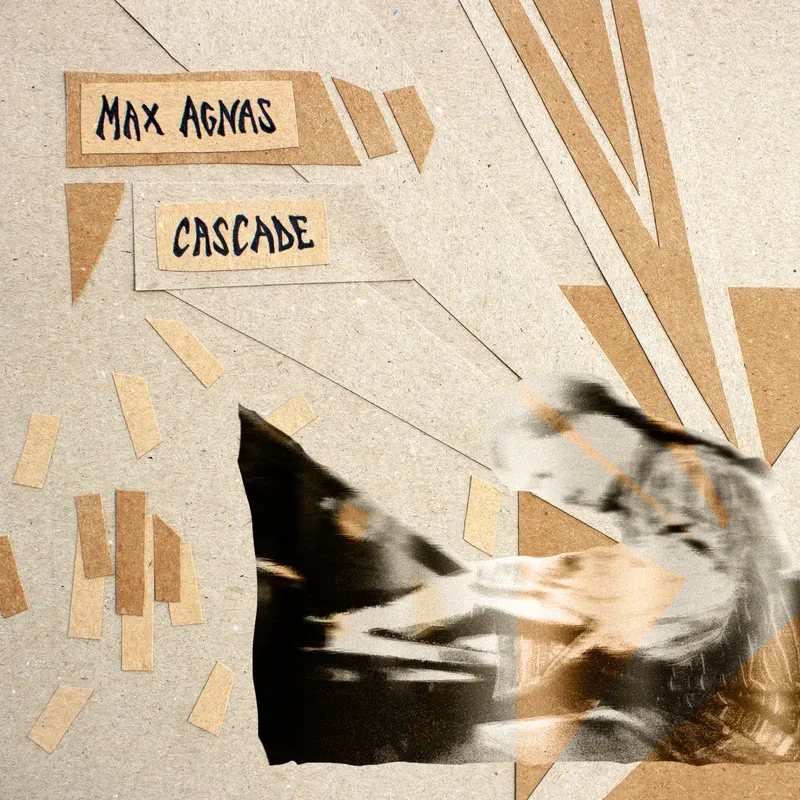
Max Agnas’s Cascade Review: 27 Solo Piano Pieces, Born of Improvisation and a Singing Blackbird
Max Agnas is a jazz pianist from Stockholm who was already making news at the age of twelve, when he became the youngest ever winner of the Fasching soloist prize. Today, at twenty, he has five albums behind him and several European tours. His playing is remarkably refined and mature for his age, with a gift for saying more with less and for letting the music, rather than technique or ego, decide every choice.
The story behind this record is almost as good as the music. In his own words, Max thinks of the piano as a kind of raw energy source, a language that is undefinable and free from logic, changing from day to day yet always understandable. The recording started badly: personal setbacks, microphones, cables making strange noises, and hours lost to solving technical problems. His idea of what the album should be was challenged from the very beginning, and out of frustration he decided to improvise for three hours instead of playing the pieces he had prepared. While he played, a blackbird sat outside the window and sang for hours with only short breaks. He envied its patience and felt that it did not seem to care about the result of its singing. That inspired him, he says, and it led him to drop the original goals of the album and simply interact with the piano and listen to it. This is what he did, and this is what you hear.
Of the 27 tracks, only “For You” and “Raindrops” are composed pieces. Everything else is improvised. The record follows a clear, almost architectural path: “For You” opens the album as a composed piece, “Singing Trees” I to IV are four short improvisations and it is hard not to think of that blackbird. “Ocean” acts as a single, wider breath in the middle of the programme, “Inner Dances” I to VI are six more pieces, the most inward-looking in title and mood, “Evolving Themes” I to XIV form the longest suite, with fourteen movements in which ideas appear, change and develop, and “Raindrops” closes the album as the second composed piece.
Most of the pieces are short, so I won’t comment on them one by one, which would miss the point. Like movements in a suite, they are meant to be heard in order, one flowing into the next, and each takes on meaning from the ones around it.
From the first notes of “For You”, you feel a delicate touch, as if each note needed its own space to be heard in full. There is restraint in Max’s playing, but nothing timid about it. It is an elegance that never turns into empty display and comes from a real intelligence of sound. He seems to know that music is built not only from what you play but also from what you choose to leave hanging in the air.
Through “Singing Trees” and the fourteen parts of “Evolving Themes”, the album stays contemporary and full of surprises. Its freedom to improvise does not exclude rigour, lightness or a sense of construction. The production is of remarkable quality, and it lets you hear the nuances, the balances and the contours of every improvisation without turning the piano into a technical showcase. Everything seems to serve the music rather than draw attention to the pianist’s exceptional talent. The recording in a church, Årsta Kyrka, gives the instrument a natural space in which to breathe.
Max invites us to imagine rather than simply recognise. We are not looking for familiar forms but for the relationships that form between sounds as we listen. That can be unsettling at first, but the reward is a special kind of pleasure: feeling that a work resists our habits enough to keep teaching us something. Sometimes we are tamed by the softness of a melodic line or the restraint of an idea, at other moments we almost jump, caught up in a small tornado of piano. These different sensibilities live side by side without merging into one final synthesis. They bring a wealth of colours, perspectives and ways of listening to each of the 27 pieces, enriching the whole album without dissolving its identity.
Cascade strikes a fragile but perfectly controlled balance between structure and total freedom, between clarity of expression, the strength of a melody and the chance to explore less predictable territory. An album made mostly of improvisations touches one of the essential questions of musical creation: how do you offer freedom without giving up construction?
111 jazz musicians have answered that question in Franck Médioni’s excellent book What is Jazz? (Frémeaux & Associés, available in French only, unfortunately), which I have reviewed on Paris-Move. It is a book you devour without being able to stop reading, and in it each artist finds their own words for the “truth” (improvisation) Jack Kerouac once talked about. Here is what some of them say:
- Jean-Pierre Drouet: “Great improvisation is when something unknown happens, something you’ve never played before. Those are great moments, and it can be magical.”
- Susanne Abbuehl: “Improvisation is pure magic, and it is also an art that requires a lot of preparation, listening and study.”
- Marilyn Crispell: “I think that to be a good improviser, you have to have a sense of composition in mind.”
- Ivo Perelman: “I don’t really ‘design’ an improvisation. It is the improvisation that designs me, and then I work so that it expresses itself.”
- Joëlle Léandre: “Improvisation is a risky, intuitive, spontaneous and ephemeral art, a knowledge of listening. It is an immense and overwhelming sound adventure… You can speak of grace.”
- Shai Maestro: “Improvisation is the window to the musician’s soul.”
These words describe Cascade very well. Max Agnas shows how much composition, listening and trust are hidden inside what sounds like spontaneity. With Cascade, we touch the soul of Max Agnas, and yes, we can speak of a “moment of grace”. Cascade is a quiet, intimate and deeply musical record by a young pianist who is already unafraid to be himself, and who found his best album when the plan went wrong. This is a must!
Frankie Pfeiffer
Editor in chief – PARIS-MOVE
PARIS-MOVE, November 3rd, 2026
Follow PARIS-MOVE on X
:::::::::::::::::::::
The album on Loumi Records’ website
Line-up:
Max Agnas – piano
Tracklisting:
- For You
- Singing Trees I
- Singing Trees II
- Singing Trees III
- Singing Trees IV
- Ocean
- Inner Dances I
- Inner Dances II
- Inner Dances III
- Inner Dances IV
- Inner Dances V
- Inner Dances VI
- Evolving Themes I
- Evolving Themes II
- Evolving Themes III
- Evolving Themes IV
- Evolving Themes V
- Evolving Themes VI
- Evolving Themes VII
- Evolving Themes VIII
- Evolving Themes IX
- Evolving Themes X
- Evolving Themes XI
- Evolving Themes XII
- Evolving Themes XIII
- Evolving Themes XIV
- Raindrops
All music by Max Agnas
“For You” and “Raindrops” are composed pieces, the remaining tracks are improvisations.
Credits:
Recorded at Årsta Kyrka, Stockholm, on 17 May 2026 by Gabriel Lundh and Max Agnas
Mixed and mastered by Gabriel Lundh at The Dome
Artwork by Ima Baeza Bilgin