| Jazz |
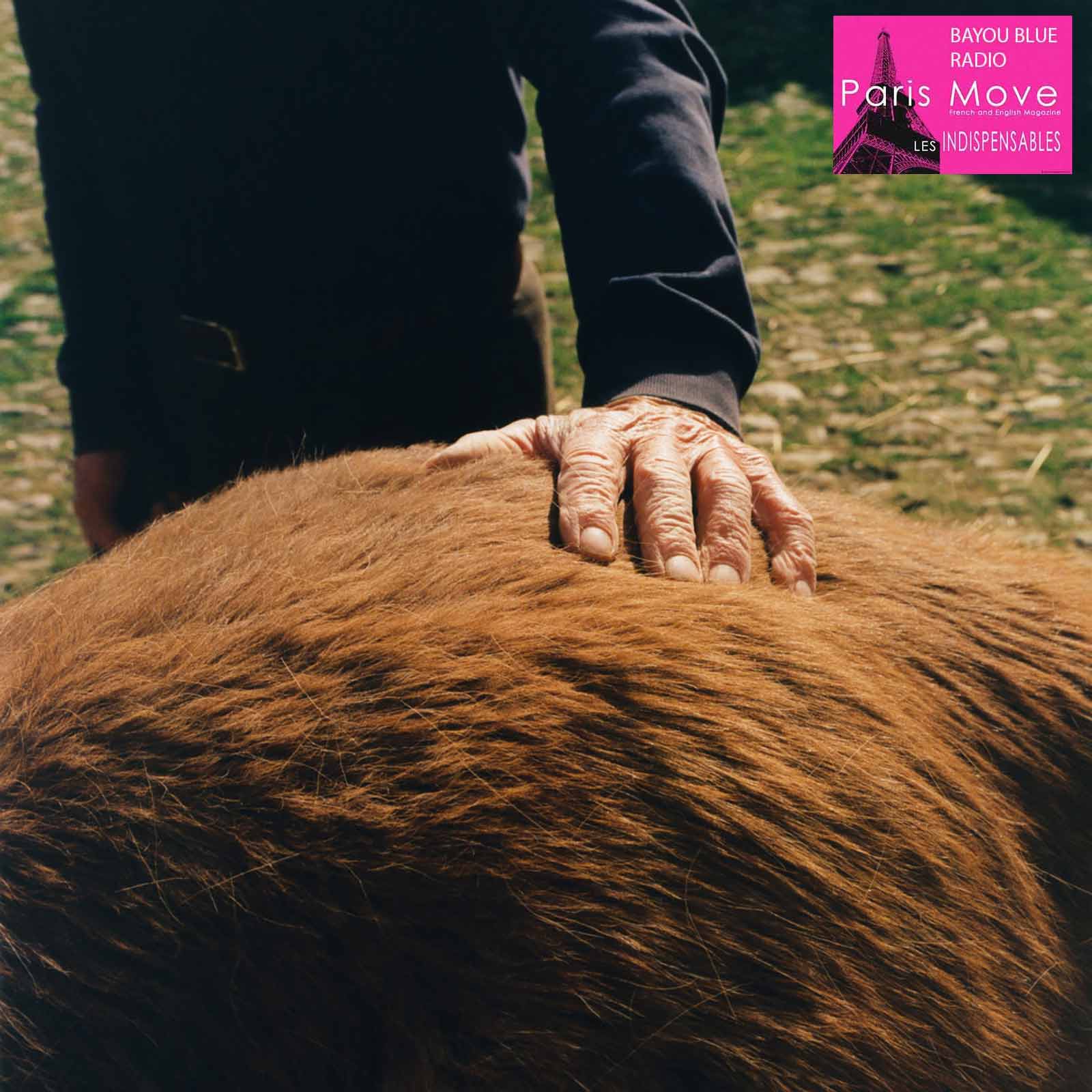
Summary: Matt Carmichael’s Held in the Dark blends jazz, folk and classical influences in a deeply personal album shaped by memory, resilience and the landscapes of Scotland.
Matt Carmichael’s Held in the Dark: Jazz, Memory and the Scottish Landscape
The only place in Scotland I had ever really known was Aberdeen, a port city at the northern edge of the country, which I discovered one December many years ago. The wind was bitter, almost physical, the kind of cold that seems to penetrate everything, yet there was something immediately compelling about the city and the surrounding landscape. I had come there to shoot a few images for a foreign television channel and was supposed to stay for a week. Instead, Aberdeen and the people I encountered there persuaded us to remain for two. There was a warmth in the population that seemed almost contradictory to the weather, and during those days I also attended concerts by local musicians. What struck me then was the level of musicianship. There was no sense of provincialism, no feeling that I was hearing musicians merely imitating what was happening elsewhere. There was confidence, personality and, above all, a strong sense of musical identity.
Many years later, in the spring of 2025, Scotland came back to me through an album by a musician from that country whom I was discovering for the first time, saxophonist and composer Matt Carmichael. His excellent Dancing with Embers immediately caught my attention, and I wrote about it here: https://www.paris-move.com/reviews/matt-carmichael-dancing-with-ember/. What I heard then was a young artist already capable of building a distinctive musical world from several traditions, bringing together jazz, folk and classical influences without allowing the music to become a mere exercise in stylistic fusion. There was a natural quality to the writing, an instinct for melody and an understanding that atmosphere can be just as important as virtuosity.
Time passes, and as summer begins to give way to autumn, another album from Matt Carmichael has arrived. Held in the Dark announces itself differently. From the opening notes, it is clear that this is a musician who has gained considerable confidence, not necessarily in the sense of playing louder or harder, but in trusting his own musical instincts. The language has become more assured and, at the same time, more vulnerable. The folk and classical influences are still present, sometimes clearly and sometimes almost subliminally, but there is now a darker emotional current running underneath the compositions.
Red Sky is the first unmistakable sign of that evolution. The title already suggests a landscape transformed by changing light, and the music follows that image with a darker, more nostalgic character than much of Carmichael’s earlier work. There are rhythmic elements that lean toward rock, giving the piece a more muscular pulse, but the real story is in the saxophone. Carmichael plays with an openness that immediately draws attention. His tone can be warm and lyrical, but there is also an exposed quality to it, as though he is allowing the instrument to reveal something that words could not quite express. He does not use technique as a shield. The technique is there, of course, but it serves the emotion rather than the other way around.
That distinction is important. There are many saxophonists capable of delivering technically impressive performances, but playing a personal composition with this degree of emotional transparency is something else. Carmichael understands that a melody can be shaped by hesitation, breath, silence and restraint. A note does not always need to be pushed to its maximum intensity. Sometimes its fragility says more. In Held in the Dark, he increasingly seems interested in that territory, where the saxophone becomes less a vehicle for improvisation than a voice capable of carrying memory. The depth of the album is clearly connected to the circumstances that inspired it. Held in the Dark is a deeply personal work reflecting the experience of accompanying someone close to Carmichael through persistent health problems, while also confronting the complicated emotional landscape of isolation, resilience and hope. Yet the album never feels like a private diary accidentally made public. That is one of its considerable strengths. Carmichael takes personal experience and translates it into musical language rather than explaining it. The listener is given space to enter the music without being told exactly what to feel.
Perhaps this is also where the Scottish landscape becomes impossible for me to ignore. Having spent time walking through the Scottish countryside, I find it difficult not to associate some of these sounds with those vast, sometimes austere spaces. Not Scotland as a postcard, but Scotland as an experience: wind, distance, changing skies, rough ground, silence and sudden warmth. There is something in Carmichael’s music that understands that contradiction. Beauty does not necessarily have to be comfortable. Solitude can be both threatening and peaceful. A landscape can make you feel very small while simultaneously making you feel more intensely alive. At certain moments, listening to Held in the Dark, I can almost imagine fragments of music drifting out from a pub late at night, escaping through an open door into the cold air before disappearing again. It is an imagined scene, perhaps, but it feels strangely appropriate. Carmichael’s music has a connection to tradition without sounding nostalgic for tradition. It knows where it comes from but is not looking backward.
This is also why I increasingly think of Carmichael as moving toward something literary. Scotland has produced an extraordinary number of writers over the past century, from crime and psychological thrillers to historical novels, major literary works and poetry. One of the recurring qualities of Scottish literature is the relationship between landscape and inner life. The setting is rarely just a backdrop. It becomes part of the narrative, sometimes almost a character in its own right. I hear a similar impulse in Carmichael’s compositions. The places suggested by his music are not simply decorative. They carry emotional information. An artist’s importance, after all, cannot be measured only by notoriety. Fame is an external condition. Art begins somewhere much deeper, with the capacity to absorb experience and transform it. The ability to feel a place, to be affected by an event, to observe the people around you and then translate those impressions into music is one of the qualities that separates a musician who plays from an artist who communicates. Held in the Dark is compelling precisely because Carmichael is increasingly doing the latter.
His melodic writing is central to that achievement. These are melodies that do not simply provide a pleasant surface for improvisation. They establish environments. They create the possibility that the listener will begin to see rather than merely hear. A particular harmonic movement can suggest a landscape; a change in rhythm can alter the emotional temperature; the entrance of another instrument can suddenly make a familiar phrase appear in a different light. The music operates almost cinematically, but without relying on obvious soundtrack gestures. The ensemble is equally important. Held in the Dark brings together longtime friends and collaborators from Scotland’s remarkably vibrant musical community. Guitarists Chris Amer and James Mackay, the latter also known for his work with corto.alto, introduce new colors and textures into Carmichael’s sound. Their guitars do not simply sit behind the saxophone as harmonic support. They help shape the atmosphere, sometimes adding subtle layers and sometimes giving the music a sharper edge. Their presence broadens the record without weakening its coherence.
Charlie Stewart’s violin adds another dimension, one that can immediately evoke the connection between Carmichael’s music and the wider Scottish tradition without reducing the album to a folk exercise. The violin can sound intimate, lyrical and almost conversational, becoming part of the emotional fabric rather than functioning as an exotic color. Stephen Henderson’s drumming is similarly sensitive to the character of the compositions. He knows when to create momentum and when to step back, allowing the melodies and textures to breathe. Pianist Fergus McCreadie brings another crucial voice to the project. His reputation has grown rapidly, and for good reason, but what matters here is not the name attached to the piano chair. It is the sensitivity with which he approaches Carmichael’s material. There is an understanding of space and harmonic color that complements the saxophonist without competing with him. Bassist Ali Watson provides the foundation, but his role is equally conversational, helping the music remain grounded while leaving room for the ensemble to move.
The fact that many of these musicians have known one another and played together since adolescence is more than an interesting detail. It can be heard. There is a degree of trust in the performances that cannot easily be manufactured in a studio. Musicians who have shared years of musical experience develop an instinct for one another’s timing, phrasing and reactions. They know when to step forward, when to disappear, and when a musical idea needs to be allowed to develop rather than immediately answered.
That sense of dialogue is one of the album’s most appealing qualities. Held in the Dark does not feel like a collection of individual musicians waiting for their turn. It feels like a conversation. The compositions provide the architecture, but within that structure the players are free to respond to one another. The result is music that sounds composed without becoming rigid, and improvised without ever becoming directionless. For the first time, Carmichael was also joined in the studio by Canadian singer-songwriter and musician Michelle Willis as co-producer. Now based in Scotland, Willis brought a perspective shaped by a musical world extending beyond jazz, including her work with artists such as David Crosby and Becca Stevens. Her contribution is significant because it seems to have encouraged Carmichael to look beyond the familiar boundaries of the genre. The record remains deeply connected to jazz, but it is not constrained by jazz vocabulary.
That outside perspective may have given Carmichael an additional degree of artistic freedom. There is something less guarded about Held in the Dark, as though the musician has become more comfortable allowing all of his influences to coexist without having to justify them. Folk, classical music, jazz, rock and the intimacy of singer-songwriter traditions are not presented as separate categories. They are simply part of the same musical language. This is where the album becomes particularly interesting in the context of contemporary jazz. Carmichael is not attempting to demonstrate how many styles he can incorporate into a single record. Nor is he trying to make his music more accessible by simplifying it. Instead, he is treating genre as a vocabulary rather than a set of rules. The compositions determine what they need, and the musicians respond accordingly. The darker atmosphere of Held in the Dark therefore never becomes oppressive. Even when the music explores uncertainty and isolation, there remains movement. Hope is present, but it is not the kind of easy, triumphant hope that arrives with a final chord and resolves everything. It is more fragile than that. It exists in persistence, in the decision to keep moving, in the small moments of beauty that remain possible even when circumstances are difficult.
This emotional balance is one of the reasons the album stays with me. Carmichael does not overstate his feelings. He allows them to emerge gradually. The music can be intimate without becoming sentimental, melancholic without becoming heavy-handed, and lyrical without slipping into prettiness for its own sake. There is discipline beneath the emotion. And then there is the saxophone again. Carmichael’s playing has developed a remarkable sense of narrative. He does not seem to be interested in filling every available space. Instead, he uses silence and dynamics as part of the story. His sound can be soft enough to make the listener lean toward it, then suddenly acquire greater intensity without breaking the atmosphere. That ability to control emotional perspective is becoming one of his defining qualities. It is tempting to describe such music simply as beautiful, but that word is too easy. Beauty is certainly present in Held in the Dark, but so are uncertainty, darkness and tension. What Carmichael seems to understand is that these things can coexist. In fact, they often need one another. A bright melody means something different after a darker passage. A moment of warmth carries more weight when the surrounding music has made us feel the cold.
That is perhaps another reason why my thoughts return to Scotland whenever I listen to this album. My own experience of Aberdeen was brief, but it left an impression. I remember the cold, the wind, the city, the surrounding landscapes and, above all, the people. I remember discovering musicians whose names meant nothing to me at the time but whose ability immediately commanded respect. Years later, I found myself encountering another Scottish musician through a recording, and once again I had the feeling that there was something particular happening there.
Held in the Dark reinforces that impression. Scotland has a musical culture that seems capable of holding tradition and experimentation in the same space. Carmichael belongs to a generation that does not need to choose between the past and the present. He can draw from folk music, classical composition and jazz while remaining entirely contemporary. More importantly, he is developing a voice that is recognizably his own. That is still the real test. Influences are inevitable; originality comes from what an artist does with them. Carmichael takes these elements and turns them into something personal, melodic and emotionally precise. He is not simply reflecting the musical environment around him. He is beginning to define his own place within it. Held in the Dark therefore feels less like a conclusion than a threshold. It is the work of a musician who has gained confidence but has not lost curiosity, who has become more personal without becoming insular, and who understands that musical maturity is not necessarily about playing more notes or making bigger statements. Sometimes it is about knowing what to leave unsaid.
For me, that is where the real strength of this album lies. Matt Carmichael is becoming increasingly close to a form of musical literature, where the notes suggest places, people and memories without describing them literally. His music leaves room for the listener’s imagination. It does not dictate the image; it allows the image to appear. The greatness of an artist is never guaranteed by recognition, awards or reputation. It comes from the ability to transform experience into something that can live beyond the experience itself. Carmichael has taken a difficult and deeply personal period of life and turned it into music that is open to anyone willing to listen. That is no small achievement. Held in the Dark is a record about uncertainty, but it is not an uncertain record. It knows what it wants to say. It speaks through melody, texture, silence, ensemble interaction and a saxophone whose voice has become increasingly distinctive. It speaks through the chemistry of musicians who have grown up together. It speaks through a production approach that gives the compositions room to breathe. And somewhere beneath all of it, there is the presence of Scotland: not as a cliché, but as a landscape of memory, weather, solitude and resilience. When I first arrived in Aberdeen, I thought I was going to stay for a week. I stayed for two. I did not know then that the place would remain in my memory, or that many years later another Scottish musician would unexpectedly bring some of that feeling back to me through music.
Matt Carmichael has now gone further than simply reminding me of that country. With Held in the Dark, he has created a musical world that makes me want to return to it. That, for me, is one of the clearest signs that an artist is worth following. Not because the music tells you where to go, but because it makes you want to discover what lies beyond the next composition.
Held in the Dark leaves that door open. And Matt Carmichael is increasingly becoming one of those musicians whose next step matters.
Thierry De Clemensat
Member at Jazz Journalists Association
USA correspondent for Paris-Move and ABS magazine
Editor in chief – Bayou Blue Radio, Bayou Blue News
PARIS-MOVE, September 15th, 2026
Follow PARIS-MOVE on X
::::::::::::::::::::::::
To Buy this album (CD or LP)
Musicians :
Matt Carmichael – tenor saxophone, piano (6)
Charlie Stewart – violin
Chris Amer – guitars
James Mackay – guitars
Fergus McCreadie -piano
Ali Watson – bass
Stephen Henderson – drums
Tom Gibbs – clarinet
Track Listing :
Red Sky
Morning Geese
Wide Eyes
Frog Green
Prayer
Golden Moon
Held in the Dark
All music written by Matt Carmichael
Co-produced by Michelle Willis, Matt and band
Recorded in December 2025 by Garry Boyle at Castlesound
Mixed by Euan Burton
Mastered by Peter Beckmann
Supported by Creative Scotland
Published by Faber Alt
Photography and Cover by Camille Lemoine