
| Jazz |
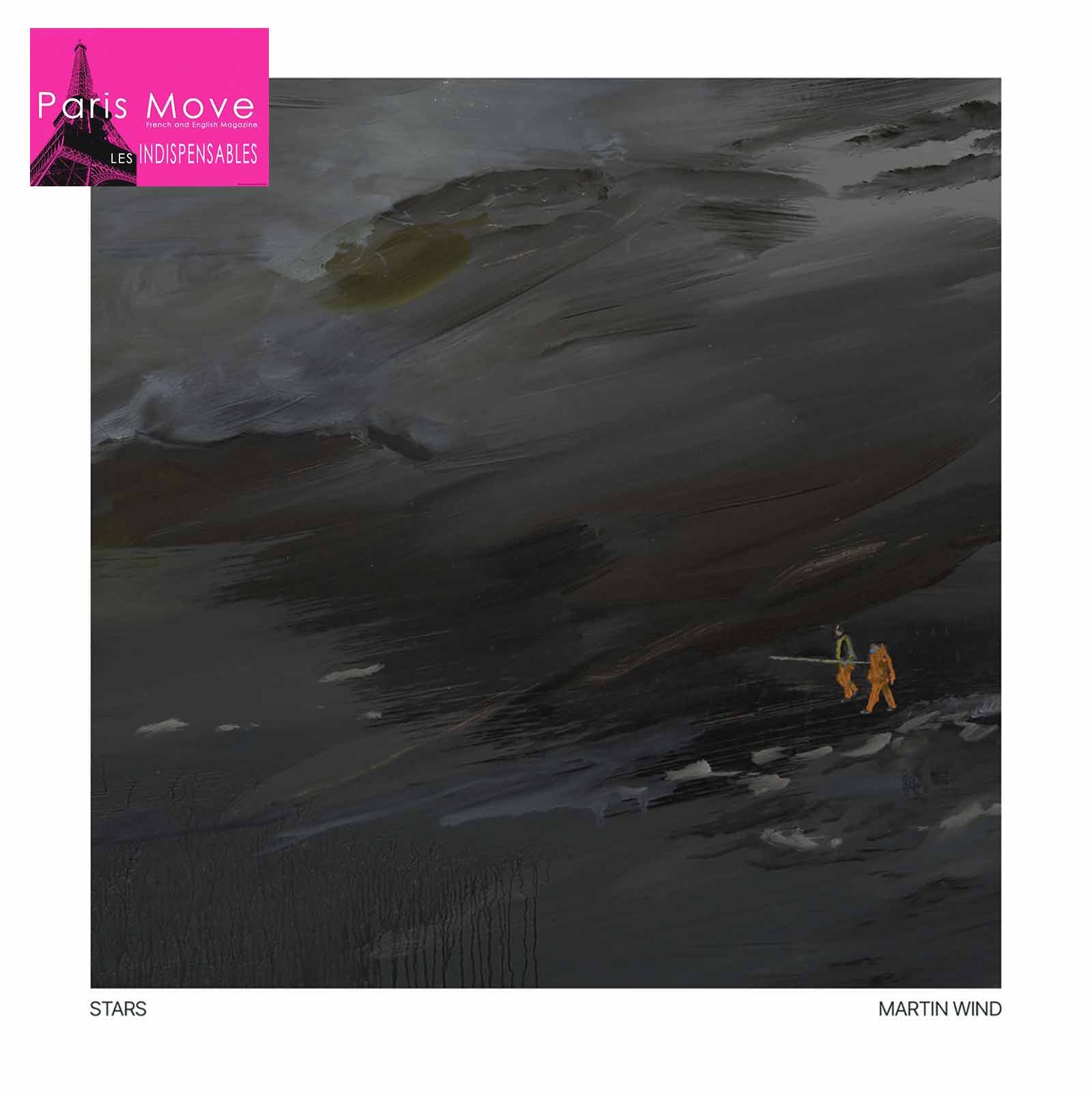
Within Wind’s broader discography, Stars stands out as a culmination
Stars confirms something longtime listeners of Martin Wind have long suspected: he is a musician one hears first and foremost as a composer. A builder of musical environments rather than a soloist seeking the spotlight, Wind belongs to that select group of artists for whom structure, balance, and intention matter as much as virtuosity.
Like several European musicians who crossed the Atlantic to study jazz in the United States, and who managed not only to assimilate but to flourish, Wind offers here a deeply personal response to America. This album feels less like a manifesto than a postcard: a thoughtful, affectionate reflection of what the country sounds and feels like from the inside, after years of immersion.
Within Wind’s broader discography, Stars stands out as a culmination. The writing is more distilled, the pacing more confident, the trust in silence more pronounced. Wind does not “lead” his group in the conventional sense. He guides it with restraint and tact, allowing the music to breathe. His bass playing is generous by design: space is deliberately left open, musical weight carefully distributed. Authority here is quiet, never imposed.
The album unfolds almost as a tribute to the great lineage of jazz itself. Each track carries a clear intention, suggesting a project that took time, perhaps years, to mature. That sense of patience is reinforced by the presence of Kenny Barron, one of the music’s most respected and warmly regarded figures. Barron’s piano work is, as expected, luminous, but his deeper contribution lies in the melodic and rhythmic grounding he provides. He anchors the ensemble with a natural elegance that elevates every interaction.
Now firmly based in New York, Wind has become a regular presence on major jazz stages and a highly sought-after studio musician. His career extends well beyond jazz clubs and concert halls: his work appears in film scores such as The Alamo, Intolerable Cruelty, Mona Lisa Smile, Fur, True Grit, The Secret Life of Walter Mitty, and Gemini Man. A composer by instinct, yet also a bassist of striking clarity and refinement, Wind brings a rare breadth of experience to his writing. That Kenny Barron agreed to join this project comes as no surprise, nor does the fact that Wind has collaborated with artists as varied as James Taylor, Renée Fleming, John Legend, Chaka Khan, Aretha Franklin, and Herbie Hancock. Such range inevitably sharpens one’s compositional voice.
What proves most compelling, however, is the album’s level of musical discipline. The compositions and performances share the same high standard, drawing the listener quickly into a state of fascination. Much of the music appears deceptively simple on first listen, yet beneath that surface lies a demanding complexity and a fragile equilibrium, one achievable only by musicians operating at this level. Stars is remarkably easy to absorb, which may initially suggest a traditional jazz record. That assumption does not hold.
This is music firmly rooted in the restless landscape of the 21st century, a time when jazz, like much of contemporary culture, sometimes struggles to reconcile speed, relevance, and depth. Wind seems acutely aware of that tension. Rather than resisting it through nostalgia or forcing modernity for its own sake, he chooses steadiness. He keeps the vessel afloat, attentive to tradition but oriented toward continuity. His ambition is not to reinvent jazz, but to belong fully to its living, evolving community. In that sense, the album’s wager succeeds.
With a near-perfect command of melody and arrangement, Stars leaves a quietly powerful impression. Joy runs throughout the music, but it is a grounded joy, rooted in craft, shared understanding, and, above all, connection. And connection, after all, lies at the heart of jazz.
This album functions as an invitation, extended equally to musicians and listeners. The music seems to suggest a simple truth: we are in this together. Perhaps this is what mastery ultimately looks like, the ability to let time pass through the music, to encourage deep listening, and to make space for genuine human exchange.
There is, finally, a gentle nostalgia at work here, echoing the early televised images of jazz: smiling artists, fully present, technically assured yet emotionally open. One can imagine listening to Stars in the late afternoon, on a sunlit terrace somewhere in Louisiana, the distant outline of Wynton Marsalis offering a knowing nod, while Martin Wind draws his bow to leave a subtle European imprint on American soil.
It is graceful. It is refined. And it reminds us of a form of musical intelligence we could stand to hear far more often.
Thierry De Clemensat
Member at Jazz Journalists Association
USA correspondent for Paris-Move and ABS magazine
Editor in chief – Bayou Blue Radio, Bayou Blue News
PARIS-MOVE, February 1st 2026
Follow PARIS-MOVE on X

::::::::::::::::::::::::
Musicians :
Anat Cohen: Clarinet
Kenny Barron: Piano
Martin Wind: Bass
Matt Wilson: Drums
Track Listing :
Passing Thoughts
Life
Black Butterfly
Moody
Wail
The Feeling Of Jazz
Pra Dizer Adeus
Standing At The Window Waving Goodbye
Stars Fell On Alabama
Blues With Two Naturals
Marc’s Moments