| Jazz |
Martin Theurillat’s Canicas: A Quartet Album of Quiet Confidence and Irresistible Warmth
A quartet of guitar, saxophone, double bass and drums is all it takes. On Canicas, Swiss guitarist and composer Martin Theurillat shows how much can be made with so little.
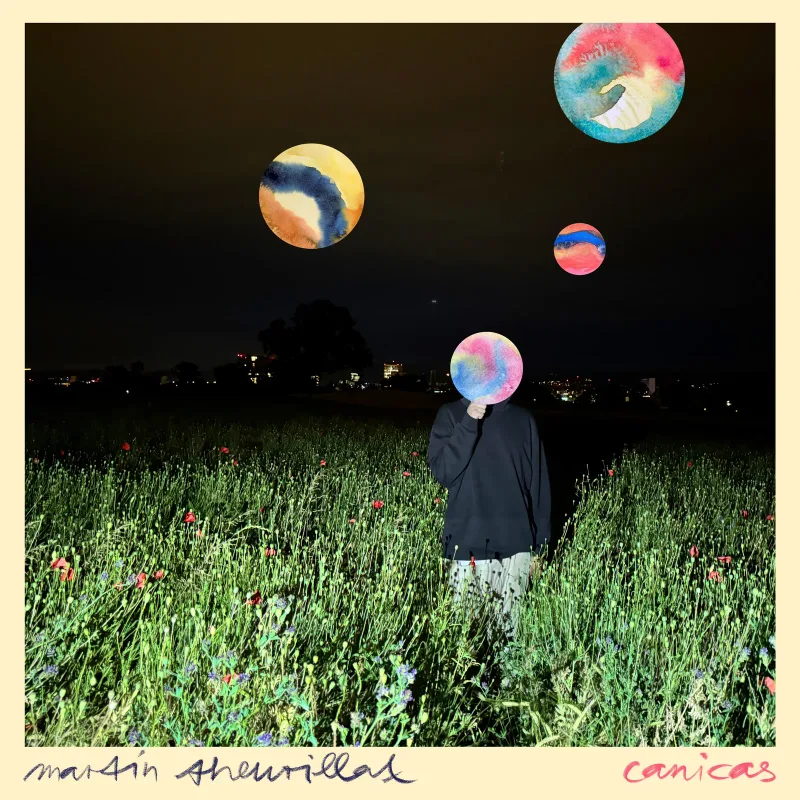
The title of the album, Canicas, means “marbles” in Spanish, and Theurillat explains the image himself. As a child he played with marbles alongside his friends, each one different in size and colour, each one precious. He describes these pieces as his own canicas, “a collage of my recent lives”, now offered to everyone to have and play with. The cover, with its floating watercolour spheres above a night-time meadow (artwork by Maria Von Rütte), captures the idea perfectly.
The collage metaphor also fits the music. Improvised music meets folkloric rhythms rooted in Theurillat’s Chilean heritage, with wider African and South American influences and touches of electronic, indie and alternative colour. This diversity could have produced a patchwork. Instead the album has a remarkable continuity. The influences are never displayed like trophies. They have been absorbed and softened, and they now belong to the language of this quartet. You can hear the long history of jazz guitar and the melodic freedom of saxophonists who dared to step outside the frame, but these references circulate quietly, like memories that give a conversation its depth without becoming its only subject.
What stands out first is how generously the four musicians share the space. The double bass and drums give the music a living foundation that carries each piece without ever freezing it, and they leave room for moments of real freedom. The guitar has a luminous presence that never tries to dominate. Jaka Arh’s saxophone, at times supple and sinuous, at others sharper, adds a wealth of colour without forcing itself on the listener. The two instruments question each other and step back when a piece asks them to. Sometimes they offer a little resistance, and sometimes they open unexpected paths or lead each other into territory where they seem to discover their own possibilities. Theurillat has no wish to be the undisputed leader, and the music is better for it.
The three guest voices add further colour: Francesca Gaza on the title track “Canicas”, Milda Mačiulaitytė on “Tides” and Ana Çop on “Kakor v mraku svelta luna”. They do more than accompany. Like the rhythm section, they open new directions for the melodies and keep them from settling into predictable resolutions.
What makes this album so rewarding is the contrast between how easy it feels and how carefully it is built. The interplay of bass and drums, the harmonic dialogue between guitar and saxophone and the structure of the twelve pieces create a dynamic environment that flows gently from the speakers. Some compositions are more complex than others, but none seem to be trying to impress. They move with a fluency that hides the work behind them, so the pleasure is immediate. Each piece has its own identity and tempo, from the opening “Snow Song” to the closing “Welcome Eddie”, and the record still feels like one coherent whole. It is a musical caress, and resisting it is nearly impossible.
Beneath that clarity lies a demanding approach to composition. The melodies are bright and seem driven by a sense of liberty, felt as much by the listener as by the players. When a motif is presented with only a few notes, the slightest change takes on special significance: a harmonic shift, a rhythmic displacement, a note left hanging. Any of these can change how you hear the whole. The more you listen, the more subtle relationships you find between the instruments. The pieces can be experienced differently depending on your mood, your level of attention, or your wish to return to the same track again and again.
The tracks follow one another like pages from an intimate notebook. Each keeps the trace of an encounter, a memory or a passing emotion, here or there, perhaps in South America. In a modern world where emotion is so often expected to be instantly readable, and every piece seems to announce its intention and hand over its meaning, Canicas moves us more than many other albums. Theurillat and his quartet do not tell us what to feel. They create the conditions for a kind of listening in which everyone can find something of their own inner landscape.
With Canicas, Martin Theurillat seeks neither to impress nor to justify himself. He moves forward with quiet confidence, lets the instruments speak and trusts the act of listening. That is why the music stays with you long after the last note, and why you keep coming back to it. Warm, luminous, generous and wonderfully played, this is a record we love.
Frankie Pfeiffer
Editor in chief – PARIS-MOVE
PARIS-MOVE, November 3rd, 2026
Follow PARIS-MOVE on X
:::::::::::::::::::::
Album on Loumi Records’ website
Tracklisting:
- Snow song
- Dark Lights
- Canicas
- Tides
- Mildux
- Bass interlude
- Atlas
- More than Nothing
- Kakor v mraku svelta luna
- Siii
- Sorry not sorry
- Welcome Eddie
Compositions: Martin Theurillat
Musicians:
Martin Theurillat – Guitar
Jaka Arh – Saxophone
Nadav Erlich – Double Bass
Iago Fernández – Drums
Special guests:
Francesca Gaza – Voice on “Canicas”
Milda Mačiulaitytė – Voice on “Tides”
Ana Çop – Voice on “Kakor v mraku svelta luna”
Credits:
Artwork: Maria Von Rütte
Mixing and Mastering: Patrik Rosso, except on “Mildux” (Jaka Arh/ Martin Theurillat)