| Jazz |
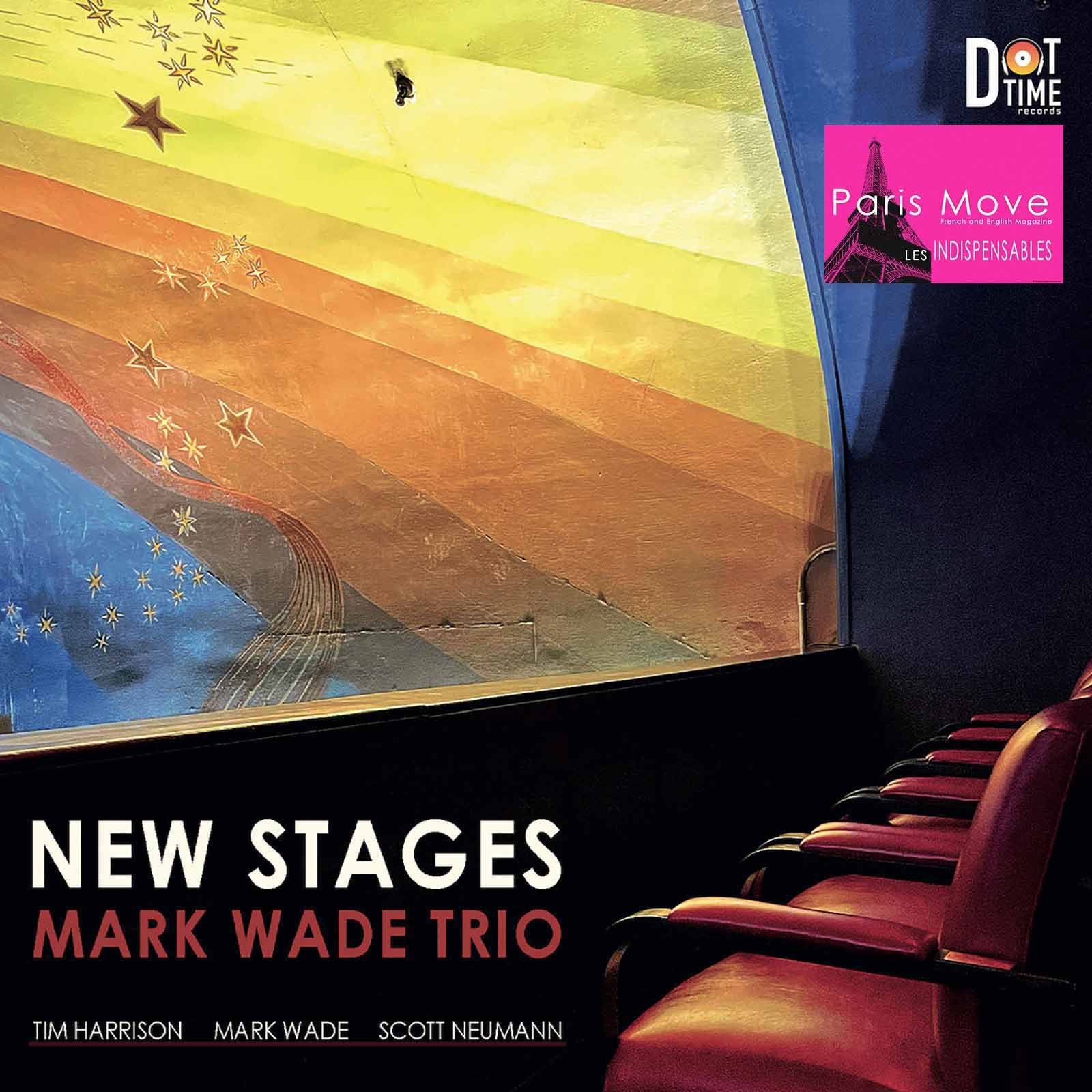
Summary: Mark Wade delivers a refined jazz album where the double bass shifts between lead voice and atmosphere, blending classical depth with modern elegance.
Mark Wade Reimagines the Double Bass in a Luminous, Genre-Defying Jazz Statement
Although I have long held a particular affection for the double bass, I make a point of approaching each recording with a measure of critical distance. Even so, certain artists resist neutrality. Mark Wade is one of them, not by reputation alone, but because his work consistently offers something to examine, to question, to unpack.
From the outset, this album establishes a clear and compelling premise: the double bass not merely as foundation, but as both character and environment. Wade’s instrument introduces itself with a sound steeped in the historical language of jazz, warm, resonant, almost reassuringly familiar. Yet that initial impression proves to be a subtle sleight of hand. As the music unfolds, the bass shifts roles with quiet authority, at times stepping forward as a narrative voice, at others receding into a carefully constructed sonic landscape. This dual function becomes the album’s central thread, and Wade handles it with striking precision. Nothing feels incidental; every gesture contributes to a broader, cohesive vision.
A seasoned performer, Wade has appeared on some of the most respected stages in jazz, including Jazz at Lincoln Center, the Blue Note, the Iridium, and Birdland. His collaborators span a wide spectrum of the genre’s modern history, Gary Bartz, James Spaulding, Eddie Palmieri, Conrad Herwig, Harry Whitaker, Stacey Kent, Peter Eldridge, Don Byron, and Jimmy Heath among them, and he remains a longtime member of the Pete McGuinness Jazz Orchestra. His work in classical settings is equally notable, with performances alongside the Key West Symphony, as well as with Sharon Isbin and Robert McDuffie, and appearances with the S.E.M. Orchestra/Janáček Philharmonic in the Czech Republic, including concerts at Lincoln Center and Carnegie Hall.
That dual immersion in jazz and classical traditions proves decisive. Musicians who move between these worlds often develop a broader compositional vocabulary, and here it translates into music that feels both structured and fluid. Jazz, so often reduced to its rhythmic identity, becomes in Wade’s hands something more expansive—architectural, even. He navigates form and freedom with equal assurance, quietly challenging William Faulkner’s famous association of jazz with chaos and the disruptive modernity of the 1920s. Where Faulkner heard fracture, Wade offers clarity. His music is ordered but never rigid, expressive without excess, and suffused with a luminous sense of direction that draws the listener into a contemporary form of romanticism.
The album’s fifteen original compositions might suggest, on paper, a showcase of technical command. It is anything but. Rather than functioning as a catalogue of abilities, these pieces form a unified, carefully shaped whole. Wade’s approach to space is particularly striking, he allows silence and resonance to carry as much meaning as melody itself. At times, his sensibility recalls that of Maurice Ravel, especially in the way he balances structure with the preservation of fleeting, almost fragile poetic moments. It is a restraint that gives the music its emotional weight.
Marguerite Duras once described jazz as a form of melancholy, placing it above writing and calling it a “silent cry.” That phrase lingers here. This is not simply a well-crafted album; it conveys the urgency of creation, the sense of an artist compelled forward, unable to rest until the work has found its final shape. You hear it in the pacing, in the phrasing, in the careful unfolding of ideas that never feel hurried, yet never static.
On several tracks, the double bass acts as a mirror to the melody, reflecting and refracting it with understated elegance. The effect is disarmingly simple, yet deeply effective, a reminder that sophistication in composition often lies in what is withheld as much as what is stated. Wade’s writing is guided by intention at every turn. His compositions serve not just the instrument, but the music as a whole: its narrative, its atmosphere, its emotional core.
Taken together, these fifteen pieces resemble a kind of jazz symphony, coherent, expansive, and thoughtfully constructed. What ultimately defines the album is its commitment to beauty over artifice, to substance over display. It invites repeated listening, not to decode complexity, but to rediscover nuance, to notice, each time, some small detail that had previously gone unheard. And perhaps that is its most lasting impression: not a flourish, but a resonance that stays with you, quietly insisting on being heard again.
Thierry De Clemensat
Member at Jazz Journalists Association
USA correspondent for Paris-Move and ABS magazine
Editor in chief – Bayou Blue Radio, Bayou Blue News
PARIS-MOVE, April 7th 2026
Follow PARIS-MOVE on X

::::::::::::::::::::::::
Musicians:
Tim Harrison, piano
Mark Wade, bass
Scott Neumann, drums
Track Listing:
The Good Doctor Gradus
The Elephant’s Lullaby
The Shepherd Takes A Turn
Cakewalk
Saga
The Storm
Idyll
Iberia, Pt. I
Iberia, Pt. II
Judgement
Transition
At Rest
Waltz And Variation
Lament
Jesu
Music written and arranged by Mark Wade
Recorded at Oktaven Audio May 2025
Engineered by Ryan Streber
Mixed by Frank Fagnano June 2025
Mastered by Lou Gimenez at The Music Lab September 2025
Album artwork by Kief Schladweiler