| Soul Jazz |
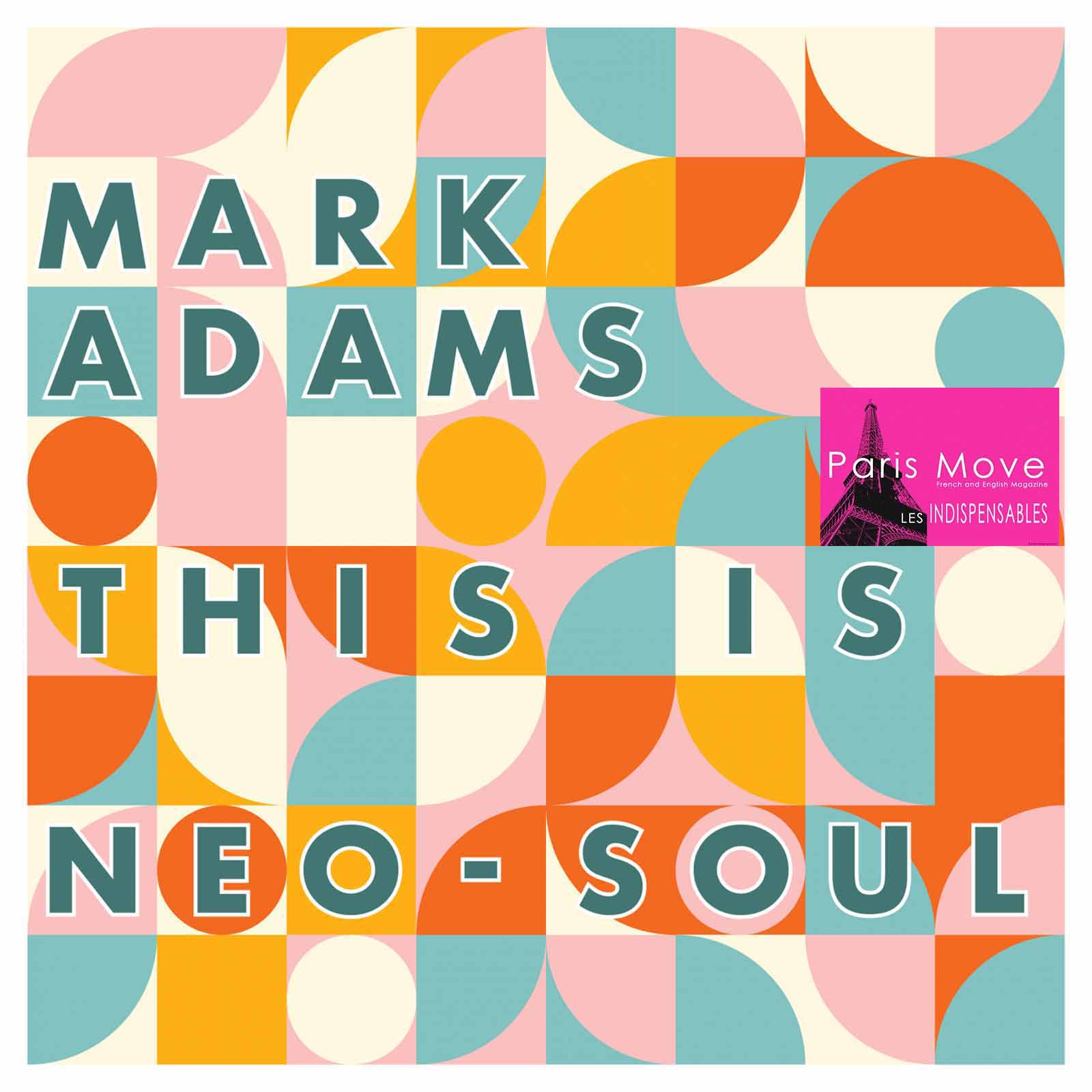
Summary: This Is Neo-Soul blends 1970s soul-jazz roots with a fresh, contemporary sound driven by elite musicians.
Mark Adams’ This Is Neo-Soul Review: A Modern Extension of the Roy Ayers Sound
Released this past March, this superb album only reached our editorial desk in recent days, a delay that, ultimately, works in its favor. With April already saturated by a flood of new releases, we have chosen to feature it in May on Bayou Blue Radio, where it stands a far better chance of receiving the attention it deserves.
Because make no mistake: “This Is Neo-Soul” is one of the most authentic and fully realized entries in the genre to emerge in recent years.
At the helm is keyboardist Mark Adams, a longtime collaborator of Roy Ayers. The album delivers exactly what its title promises, and then some. Surrounding Adams is a remarkable collective of seasoned musicians, many drawn from the extended musical family of Ayers, as well as circles connected to Nile Rodgers’s Chic, Lonnie Liston Smith, Luther Vandross, Gloria Gaynor and Chaka Khan.
The result is an album that does more than invite listening, it commands it. From the opening groove, built on warm Fender Rhodes textures, elastic bass lines and crisp, unforced drumming, the record establishes a sense of immediacy. One mid-tempo cut leans into a deep, hypnotic pocket, while an up-tempo number, driven by tight horn arrangements, recalls the dancefloor urgency of late-1970s jazz-funk. A slower, more contemplative piece allows the harmonic richness to unfold, revealing the album’s compositional depth.
Adams spent more than two decades at the musical core of Ayers’ touring ensemble, Ubiquity, a fluid yet enduring collective through which Ayers carried his sound across continents. As keyboardist, arranger and onstage anchor, Adams helped shape that sound over thousands of performances. What he carries forward here is not simply a style, but a way of thinking about groove, space and musical dialogue.
True to its present-tense title, “This Is Neo-Soul” does not indulge in nostalgia. It extends a living musical language, one Adams inhabited for over twenty years, and reframes it with clarity and purpose.
Following the passing of Roy Ayers at the age of 84, the album inevitably takes on additional emotional weight. Yet Adams and producer David Schwartz avoid the trap of reverence for its own sake. They understand that Ayers’ sound was never static. It was, and remains, a vocabulary in motion.
Schwartz frames that lineage succinctly: “There is a triad, Roy Ayers, Lonnie Liston Smith, and then Gil Scott-Heron with Brian Jackson. That triad forms the foundation of this neo-soul sound.” The album’s defining strength lies in this balance. It honors tradition without being confined by it, and it speaks in a contemporary voice without severing its roots.
The connection to jazz is unmistakable. It emerges in the harmonic language, in the improvisational phrasing, and in the ensemble interplay. This should come as no surprise: many funk and soul musicians, over time, gravitate toward jazz, bringing with them a deepened sense of nuance and phrasing. That evolution is embedded in the DNA of this record.
“This is a quintessential Roy Ayers sound, rooted in the 1970s,” Adams explains, “but we authenticated it through the very musicians who played it then, and those they trained. I played with Roy for more than twenty years; he taught me everything. So, we made this record as something genuine.”
“It’s not a tribute band,” Schwartz adds. “This is the band, the real one. The true torchbearers.” These are musicians who did not learn this music academically, but lived it, on stage, night after night, across decades. That mentor-to-disciple lineage is audible throughout the album, not as a historical reference point, but as a living presence.
What emerges is something that resists imitation. Beyond the grooves and arrangements lies an intangible quality, an artistic sensibility forged over years of discipline and experience. The music may feel effortless, but its construction is anything but simple. This is expert-level musicianship, grounded in precision, restraint and deep musical empathy.
And yet, for all its sophistication, the album never loses sight of pleasure. There is a quiet joy in hearing these textures again, the warmth, the swing, the unmistakable sense of lift. In a restless and often fragmented musical landscape, “This Is Neo-Soul” feels grounded, coherent and alive.
For listeners who cherish Roy Ayers, and for those to whom the names cited above still resonate, this album does not merely honor a tradition, it continues it.
In an era defined by revivalism, “This Is Neo-Soul” stands apart. It is not a reconstruction of the past, but a confident extension of it, a reminder that some musical languages, when truly lived, never stop evolving.
Thierry De Clemensat
Member at Jazz Journalists Association
USA correspondent for Paris-Move and ABS magazine
Editor in chief – Bayou Blue Radio, Bayou Blue News
PARIS-MOVE, April 17th 2026
Follow PARIS-MOVE on X

::::::::::::::::::::::::
Track Listing:
1) Sweet Tears (Ayres) 6:38
2) Don’t Stop the Feeling (Ayres) 4:57
3) Talking Walls (M. Adams) 3:20
4) Expansions (L.L. Smith) 4:51
5) Open Letter (M. Adams) 4:28
6) Don’t Look Back (M. Adams) 5:07
7) Day Dreaming (M. Adams) 4:07
8) Vibrations (Ayres) 3:54
9) Dre’s World (M. Adams) 5:04
10) L.S.S. Groove (M. Adams)