
| Jazz |
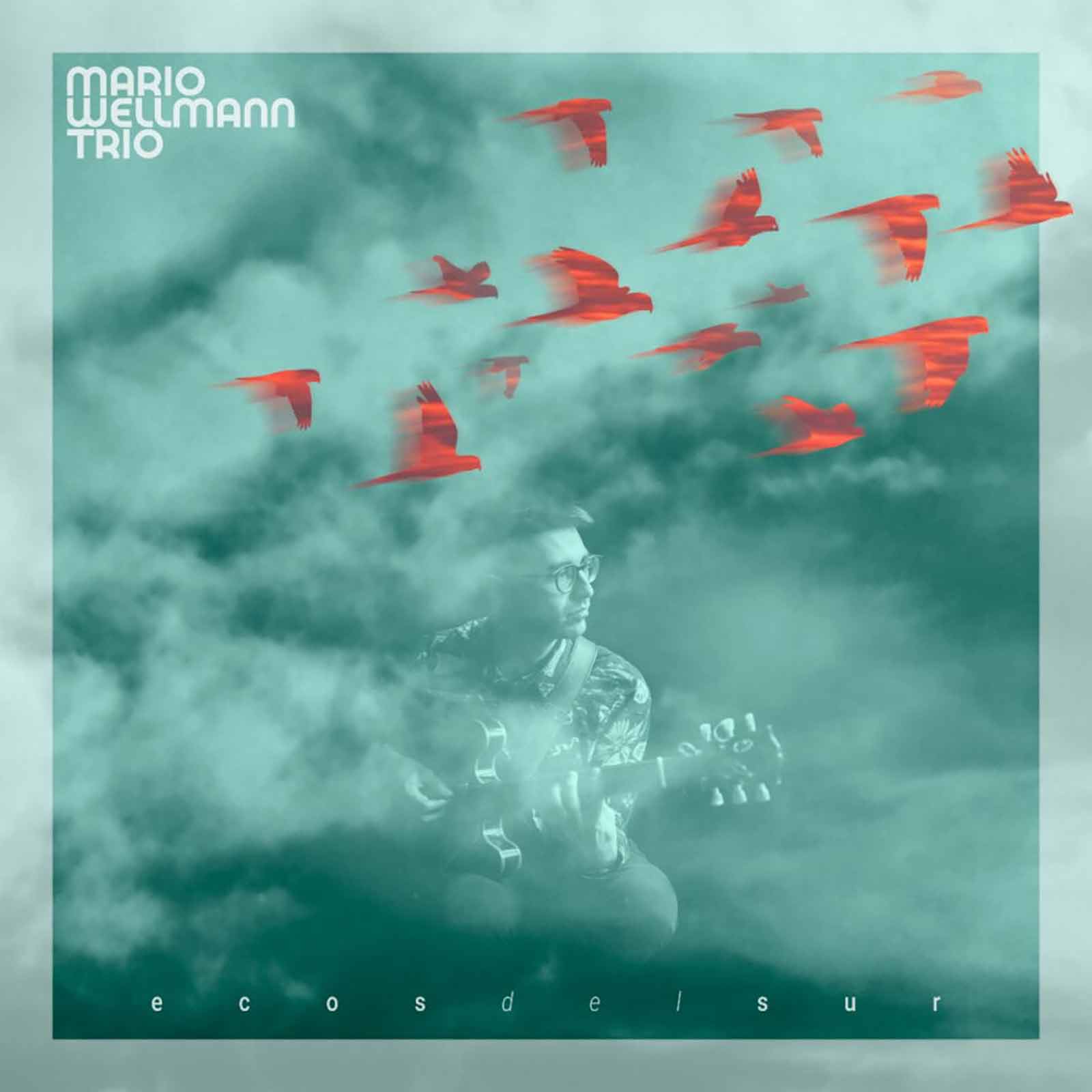
MARIO WELLMANN – ECOS DEL SUR: JAZZ AS A LANDSCAPE OF MEMORY
Jazz has always been a music of movement, shaped by the crossing of cultures, the migration of ideas and the personal histories musicians bring to their instruments. With Ecos del Sur, Chilean composer and guitarist Mario Wellmann turns that spirit of exploration inward, creating an evocative musical journey through the landscapes, traditions and family memories of his native country. His debut album as a bandleader is not simply an introduction to a promising international musician; it is a deeply considered statement about identity, distance and the enduring emotional ties between an individual and the place from which he comes. Recorded in New York at Greyfade Studio with Grammy-winning recording engineer Joseph Branciforte, and supported by Chile’s Fondo de la Música, the album brings together contemporary jazz composition, elements of Chilean musical heritage and a distinctive acoustic sensibility. Yet its greatest strength lies in the way these influences serve a larger personal narrative. Now living between New York and Austin, Wellmann revisits the geography of his childhood, transforming familiar places into musical reflections on memory, belonging and the passage of time.
The journey begins in Chillán, his hometown, and continues through Saltos del Laja, Panguipulli, Osorno and Frutillar. To listeners unfamiliar with Chile, these names may suggest little more than distant geographical locations. For Wellmann, however, they represent chapters in a deeply personal history, places bound to family, emotion and cultural identity. His approach deserves closer attention. Wellmann is not interested in providing musical illustrations of landscapes, much less in producing a picturesque sound postcard of his native country. He is concerned instead with what places retain of our lives: the people who once shared them with us, the experiences that shaped us, and the memories that time transforms, sometimes making them more vivid than ever. Ecos del Sur is therefore less a travelogue than an act of remembrance. Roads, towns, lakes and mountains become elements in a musical narrative whose real subject is the passage of time, the experience of distance and the complicated relationship we maintain with the places from which we came.
By the second track, Ruta 5 Sur, it becomes clear that each composition belongs to a larger structure, conceived as a musical travel journal. The pieces are not simply placed side by side; they converse, echo one another and gradually establish a coherent journey through southern Chile. Compositions devoted to particular destinations alternate with solo interludes representing the roads that connect them. The result is a thoughtful construction in which the three musicians do more than perform a succession of themes. They become successive narrators of the same journey, each contributing a distinct perspective to this geography of memory.
Wellmann’s jazz possesses a quality that is not always easy to find: the ability to combine sophisticated writing with a natural fluidity that never feels compelled to advertise its own complexity. His influences are numerous, yet they never suggest an artificial collection of stylistic references. Instead, they become part of a coherent musical language, informed by a broad cultural outlook and a thorough understanding of his instrument. The writing is intellectual, certainly, but it does not retreat into abstraction for the sake of impressing the listener. It offers a rich musical landscape in which arrangements, harmonic balances and rhythmic shifts reveal themselves gradually with each listening.
There is a familiar challenge facing musicians with considerable technical and theoretical knowledge. An intimate command of structures, harmonies and compositional devices can sometimes allow intellect to overwhelm the creative impulse. Wellmann largely avoids that trap. Sophistication is everywhere, but it never becomes an end in itself. The guitar, the central voice of the recording, does not constantly seek to dominate the musical space. It converses with the bass and drums, merges into the arrangements, steps forward when the composition calls for it and then naturally returns to the ensemble. His playing is precise and delicate, occasionally dense, yet it retains that impression of effortless ease that often distinguishes musicians who have spent years refining their language.
Another particularly compelling aspect of the album is the way Wellmann incorporates elements of Chilean musical heritage into his jazz vocabulary. Ruta 5 Sur draws in part on the cueca, while Regreso takes inspiration from the vals chilote, a traditional musical form associated with the Chiloé archipelago. These are not superficial quotations intended to give an international jazz production a touch of local color. They reflect a genuine desire to maintain a living connection with a musical culture in which the guitar has long played an essential role. The achievement lies in the ability to bring popular traditions into conversation with contemporary composition without reducing either to a decorative accessory.
The piece associated with Panguipulli adds another dimension to this exploration. Wellmann draws on rhythmic and sonic elements connected with Mapuche ceremonial music, particularly through the work of drummer Daniel Dufour. The intention is not to reproduce a tradition or artificially claim to represent its musical codes, but rather to allow these references to inform an individual creative language. That distinction matters. It reflects an approach in which cultural inheritance is not treated as something frozen in time, but as a living source of inspiration capable of entering into dialogue with other musical forms.
Within this musical architecture, Daniel Dufour delivers particularly impressive work. His contribution goes well beyond the conventional supporting role too often assigned to the drums. He creates atmospheres, explores timbres, works with silence and space, and frequently operates more like a percussionist than a drummer in the traditional sense. His playing becomes especially compelling when references to Chilean and Mapuche musical traditions alter the listener’s perception of rhythm. Whether working quietly in the background or taking a more assertive role, Dufour demonstrates remarkable adaptability without ever attempting to overpower the compositions.
Bassist Guillermo López deserves equal recognition. His playing, marked by restraint and subtlety, is essential to the trio’s balance. He does more than provide harmonic support: he participates fully in the musical conversation, gives the compositions depth and follows the guitar’s evolving lines with considerable intelligence. The relationship among the three musicians is built on genuine musical understanding. This is not a soloist surrounded by accompanists, but an ensemble whose individual voices contribute to a shared artistic vision.
That sense of collective purpose becomes particularly evident in the solo interludes, where each musician is given space to develop a distinct musical perspective. The roads connecting the album’s destinations become independent musical territories rather than mere transitions between compositions. The music continues to move, changes direction and occasionally shifts its vocabulary before returning to the larger narrative. The structure gives the album an almost cinematic quality without ever resorting to obvious musical illustration. It is perhaps in the final movement, Regreso, that the album most clearly reveals its emotional depth. Behind the idea of returning lies a painful family story. Wellmann recalls a journey in 2019 with his parents to visit his paternal grandmother, who was then 103 years old. He understood that it might be their last opportunity to see her. His father was supposed to make the same journey with him in December 2023, but died a few months earlier. The journey that would never take place consequently becomes part of the emotional memory of the work. The music takes on a different meaning: it no longer describes simply a geographical passage, but becomes an attempt to preserve what distance and loss threaten to take away. The choice of the vals chilote to accompany this conclusion is therefore far from incidental. It reconnects the composer’s personal history with his family origins while giving the idea of return a significance that extends well beyond the closing chapter of a musical itinerary. The circle is complete, yet something remains unresolved. Perhaps this is where the album achieves its greatest success: in its ability to transform an individual experience into an emotion that listeners can recognize as their own, without slipping into sentimentality.
Ecos del Sur is an entirely acoustic recording that rewards attentive listening. It will naturally appeal to admirers of exploratory jazz, particularly those drawn to carefully developed compositions, subtle arrangements and musicians capable of combining intellectual depth with genuine sensitivity. It should also interest listeners who regard jazz as a space of freedom, a constantly evolving language open to different cultures and human experiences.
With this first album as a leader, Mario Wellmann delivers a remarkably accomplished statement. He demonstrates that the traditional guitar-bass-drums format still has room for new perspectives when it is supported by a clear musical vision and a compelling story. One could certainly examine the harmonic choices, discuss the structures or dwell on the sophistication of the arrangements. But doing so might ultimately mean overlooking what matters most. Behind the technical command and the richness of the writing lies a determination to preserve a connection with a country, a family and a personal history.
Jazz has never needed borders to renew itself. It needs musicians who have something meaningful to express. With Ecos del Sur, Mario Wellmann reminds us that the most interesting journeys do not necessarily lead us toward unfamiliar territory. Sometimes they bring us back to the places we left behind, revealing just how much has changed in the world, and within ourselves, along the way.
Thierry De Clemensat
Member at Jazz Journalists Association
USA correspondent for Paris-Move and ABS magazine
Editor in chief – Bayou Blue Radio, Bayou Blue News

PARIS-MOVE, November 10th, 2026
Follow PARIS-MOVE on X
::::::::::::::::::::::::
Musicians :
Mario Wellmann, guitar & compositions
Guillermo López, double bass
Daniel Dufour, drums
Track Listing :
Chillán
Ruta 5 Sur
Saltos del Laja
Triple Play
203-CH
Panguipulli
T-39
Osorno
U-551-V
Frutillar
All compositions by Mario Wellmann, except “203-CH” by Daniel Dufour and “T-39” by Guillermo López and Mario Wellmann.
Produced by Mario Wellmann and Joseph Branciforte.
Recording, engineering, mixing, and mastering: Joseph Branciforte.
Recorded at Greyfade Studio, New York, in August 2026.
Cover art and design: Fernando Tomás Muñoz.
Cover portrait: Alicja Dębek.
Additional cover photographs: Fernando Tomás Muñoz.