| Jazz |
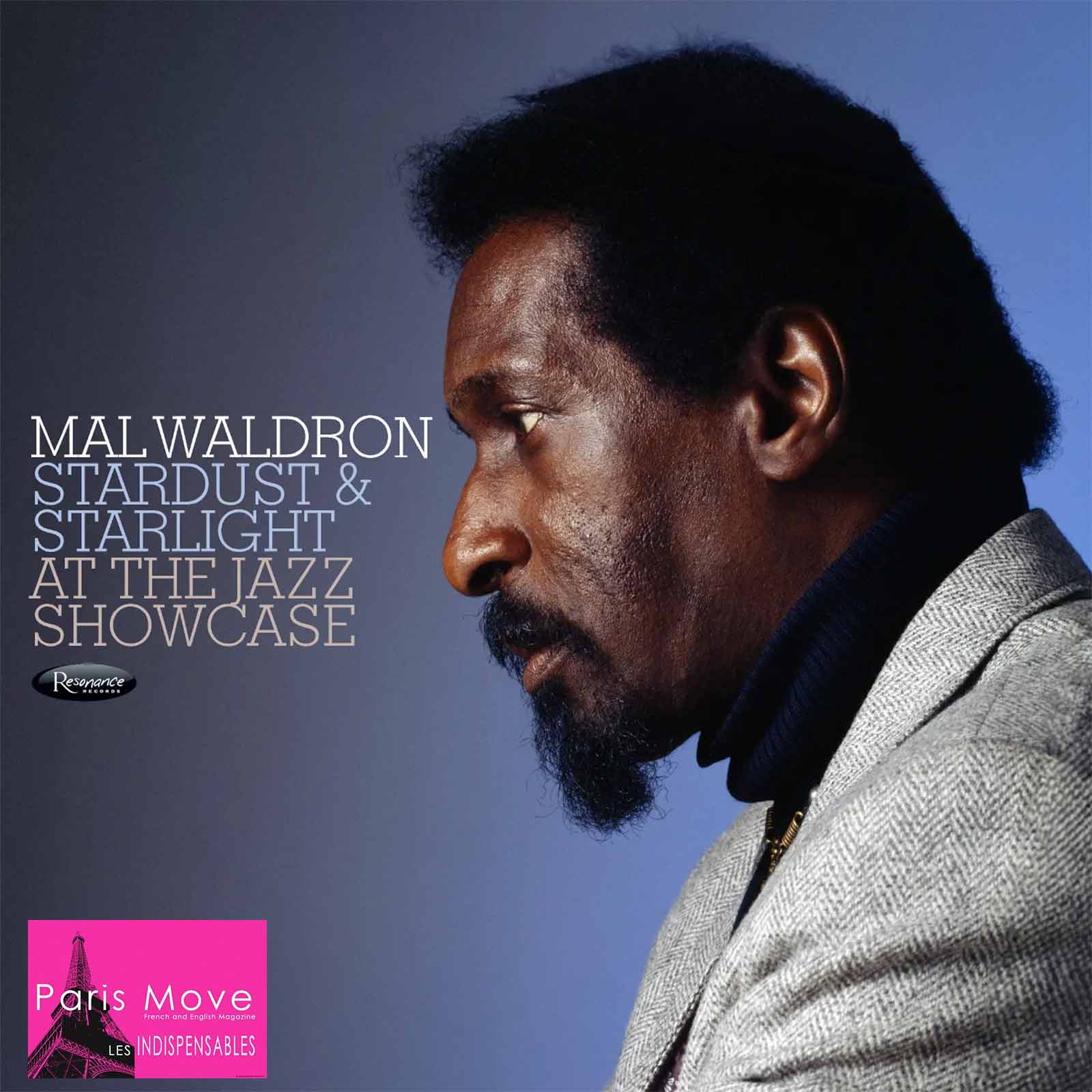
Summary: Mal Waldron’s Stardust & Starlight reveals a deeply original voice in modern jazz, blending classical influence with bold improvisation in a landmark live recording at Chicago’s Jazz Showcase.
Rediscovering Mal Waldron: Stardust & Starlight and the Sound of Reinvention
Mal Waldron stands as one of the most underrecognized major jazz pianists of the 20th century. His relative absence from broader critical conversation may stem from the audible imprint of his predecessors on his work. Yet “Stardust & Starlight: Live at the Jazz Showcase” makes a compelling case that Waldron was not merely an heir to tradition, but a quiet radical, reshaping it from within.
Classically trained, Waldron channels that foundation into a deeply personal language. From the opening moments of “All Alone,” the lineage is unmistakable, not as imitation, but as transformation. His phrasing and harmonic pacing carry the weight of classical structure, yet resist its predictability.
Recorded in the mid-1970s, beneath the restless glow of Rush Street’s nightlife, Chicago’s Jazz Showcase emerges here as more than a venue. It feels like a crucible. Glasses clink, conversations murmur, cigarette smoke hangs low over a tightly packed basement room where the audience sits just feet from the bandstand. Night after night, musicians gathered in this compressed, electric space to stretch, and sometimes fracture, the evolving language of modern jazz.
For Waldron, that language is inseparable from the emotional breadth of classical music: its gravity, its tension, its fleeting lyricism. His introductions are especially revealing. They unfold with deliberate restraint, often built on stark, block chords that recall the dramaturgical patience of Purcell. But just as the listener begins to settle into that structure, Waldron pivots, redirecting the music into unexpected harmonic or rhythmic territory. Repetition becomes propulsion; minimalism becomes intensity. This is where his originality asserts itself most forcefully: not in rejecting tradition, but in bending it until it speaks in a new voice.
The audience, audibly engaged, becomes part of the performance. Applause surfaces not as interruption, but as counterpoint, an organic response to the risks being taken in real time.
The album documents a concert recorded in August, marking Waldron’s first residency at the Jazz Showcase, a club synonymous with hard swing, bebop and post-bop. Founded in 1947 by Joe Segal and now continued by his son Wayne, the venue has long served as a proving ground for artists willing to test the limits of the form. At 54, Waldron opened the club’s annual “Charlie Parker Month,” a centerpiece of its programming.
By then, his career had already traced a remarkable arc. A fixture of the New York scene since the mid-1950s, Waldron had accompanied Billie Holiday in her final years and collaborated with Abbey Lincoln, Max Roach, Eric Dolphy and Steve Lacy. His trajectory was nearly derailed in 1963 by a heroin overdose that led to a psychological collapse. That he returned at all, let alone with such clarity of voice, only deepens the resonance of this recording.
Here, before an intimate and attentive audience, Waldron asserts his presence with quiet authority. Whether alone at the keyboard, in dialogue with the house rhythm section, or in the closing exchanges with Sonny Stitt, by turns incisive and playful on both tenor and alto saxophone, he demonstrates a command of improvisation that feels less like display than discovery.
I am not alone in hearing the modernity of Waldron’s approach. Reflecting on that week, bassist Steve Rodby recalls: “What I remember most distinctly about that week with Mal Waldron is how modern he sounded. His style seemed to fall somewhere between Herbie Hancock and Oscar Peterson, orbiting in a sense around Thelonious Monk. There was a certain roughness to it. I always felt I was hearing him explore new territory when he played, a quality shared by all great musicians. He embodied that emphasis on individuality and the singular artistic voice that defined the era. Many musicians I had worked with possessed that quality, but with Waldron it was unmistakable, it seized my attention completely.”
The recent wave of archival releases from Resonance Records invites a broader reflection. Many of these artists came of age in turbulent decades, and their music often carries the imprint of that instability, a need to reimagine, to purge, to transcend. The 1970s, marked by excess as much as experimentation, produced a body of work that continues to define modern jazz.
Waldron’s performance suggests that such creativity is less a product of era than of necessity. His playing does not simply reflect its time; it responds to pressure, personal, artistic, historical, and transforms it into something enduring. Whether the present moment will yield a comparable urgency remains uncertain.
What recordings like this make clear, however, is that innovation rarely announces itself loudly. More often, it unfolds in rooms like this one, low ceilings, dim lights, where an artist, quietly but insistently, redraws the boundaries of what is possible.
Thierry De Clemensat
Member at Jazz Journalists Association
USA correspondent for Paris-Move and ABS magazine
Editor in chief – Bayou Blue Radio, Bayou Blue News
PARIS-MOVE, April 10th 2026
Follow PARIS-MOVE on X

::::::::::::::::::::::::
Musicians :
Mal Waldron – piano
Steve Rodby – bass
Wilbur Campbell – drums
Sonny Stitt – alto saxophone
Track Listing :
All Alone (6:22)
All God’s Chillun Got Rhythm (10:38)
Fire Waltz (11:10)
I Thought About You (8:06)
It Could Happen To You (5:47)
Round Midnight (6:49)
Stella By Starlight (11:07)
Old Folks (feat. Sonny Stitt) (2:59)
Stardust (feat. Sonny Stitt) (4:29)