| Jazz |
The envelopes are thick, slightly worn at the corners from their journey, the stamps bearing unfamiliar cities and languages. Opening them in the quiet of the morning has become a small ritual, sliding out the disc, reading the liner notes, wondering what sound from what corner of the world is about to fill the room. On this particular morning, the journey leads north, to the jazz scenes of Scandinavia, and to a collective of strikingly accomplished musicians gathered under the name Lexingtone. Among them stands the trumpeter Erik Palmberg, a player whose approach suggests not only technical command but also a restless curiosity about the history he has inherited.
Palmberg’s playing often feels like a form of musical archaeology. He moves through styles and eras with an ease that suggests deep listening and deep study, yet he avoids mere imitation. His tone, clear, burnished, occasionally edged with a dry wit, sits comfortably over music that is bright in spirit, even when harmonically intricate. Jazz, after all, has always been capacious enough to hold both the playful and the profound, and Lexingtone’s music occupies that fertile middle ground.
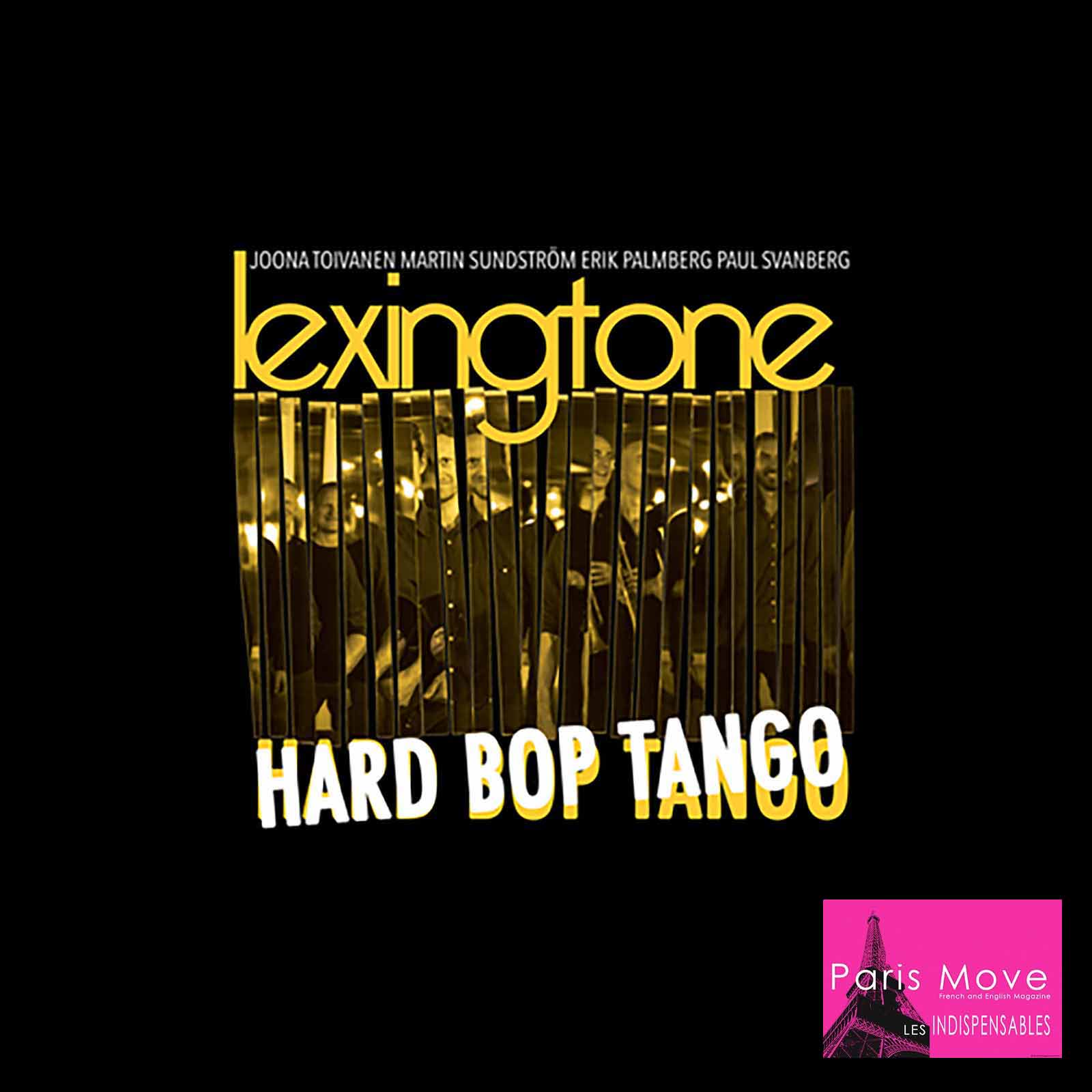
Their piece Hard Bop Tango is emblematic of this approach. It begins with a tight, driving rhythmic figure in the bass and drums, soon joined by piano chords that recall the clipped attack of classic hard bop. Then, almost without warning, the rhythm loosens into a subtle Latin pulse, the percussion emphasizing off-beat accents while the trumpet line stretches into longer, singing phrases. A tenor saxophone enters in counterpoint, and the ensemble briefly returns to a more traditional swing feel before shifting again, this time into a passage built on layered harmonies and spacious phrasing. The effect is exhilarating precisely because it refuses to remain in one place for long.
This kind of writing reveals musicians steeped in a wide musical culture, yet also confident enough to let the music breathe. By choosing an entirely acoustic palette, piano, bass, drums, horns, the group seems intent on preserving a sense of timelessness, allowing the compositions themselves, rather than studio effects or production techniques, to carry the narrative.
There are, too, echoes of the postwar jazz tradition. Though the compositions are undeniably contemporary, a piece such as “Vid Korshamns Bryggor” evokes, in its melodic contours and restrained lyricism, the atmosphere of Miles Davis’s bop-era writing. But Palmberg does not linger in nostalgia. Musicians who have worked with him often note that he thinks of improvisation less as a display of virtuosity than as a form of storytelling, an unfolding line that must lead somewhere, even if the destination is not immediately clear. That philosophy can be heard in the way his solos develop patiently, building tension through phrasing rather than speed, and relying on the rhythmic section to create a sense of forward motion.
Palmberg is a relatively recent addition to Lexingtone, but he is already a familiar presence in European jazz circles, having performed with ensembles such as the Swedish Radio Jazz Group, directed by Nils Landgren, and the Blue House Jazz Orchestra, among others. The connection to Landgren is notable. Beyond his reputation as one of Europe’s most accomplished trombonists, Landgren has long been a central figure at the German label ACT, both as a recording artist and as a collaborator. To be invited into that musical orbit is widely regarded as a sign of both discipline and imagination, qualities that are clearly audible here.
Hard Bop Tango can best be described as a post-bop recording that acknowledges tradition without being confined by it. This is not, perhaps, an album for listeners who seek the reassuring familiarity of strictly traditional jazz forms; some of the harmonic detours and rhythmic shifts may feel unexpected, even disorienting. Yet for those drawn to jazz as a living, evolving language, the rewards are substantial. The interplay among the musicians is alert and responsive, the arrangements carefully shaped, and the overall conception marked by an intelligence that never becomes academic.
The group’s sound also suggests a scale larger than the intimate jazz club. The sequencing of the pieces creates a sense of dramaturgy, each track flowing into the next as if part of a larger suite. Themes appear, recede, and return in altered form, giving the album the shape of a narrative with a discernible beginning, middle, and end. One can easily imagine this music accompanying the long tracking shots of an art-house film, its shifting moods underscoring scenes of movement, reflection, and quiet tension.
For American audiences, there is an added appeal in hearing how European musicians reinterpret a deeply American art form, sometimes preserving its idioms, sometimes bending them in unexpected directions. That sense of dialogue across continents may be the album’s most enduring strength.
In the end, the question for listeners is simple: why hear this record now? The answer lies in its balance. Hard Bop Tango neither rejects tradition nor clings to it; instead, it treats jazz as a conversation still in progress. And in a musical landscape often divided between reverence and reinvention, that middle path can feel not only refreshing, but necessary.
Thierry De Clemensat
Member at Jazz Journalists Association
USA correspondent for Paris-Move and ABS magazine
Editor in chief – Bayou Blue Radio, Bayou Blue News
PARIS-MOVE, February 10th 2026
Follow PARIS-MOVE on X

::::::::::::::::::::::::
Musicians :
Erik Palmberg – Trumpet
Joona Toivanen – Piano
Martin Sundström – Bass
Paul Svanberg – Drums & Percussion
Track Listing :
Snitch
Alcanzar
Vid Korshamns Bryggor
Tango En Botas Demasiado Grandes
Portrait In F Minor
Skylancer
St. Lucia
Down & Quill
Bold Or Gold