| Jazz |
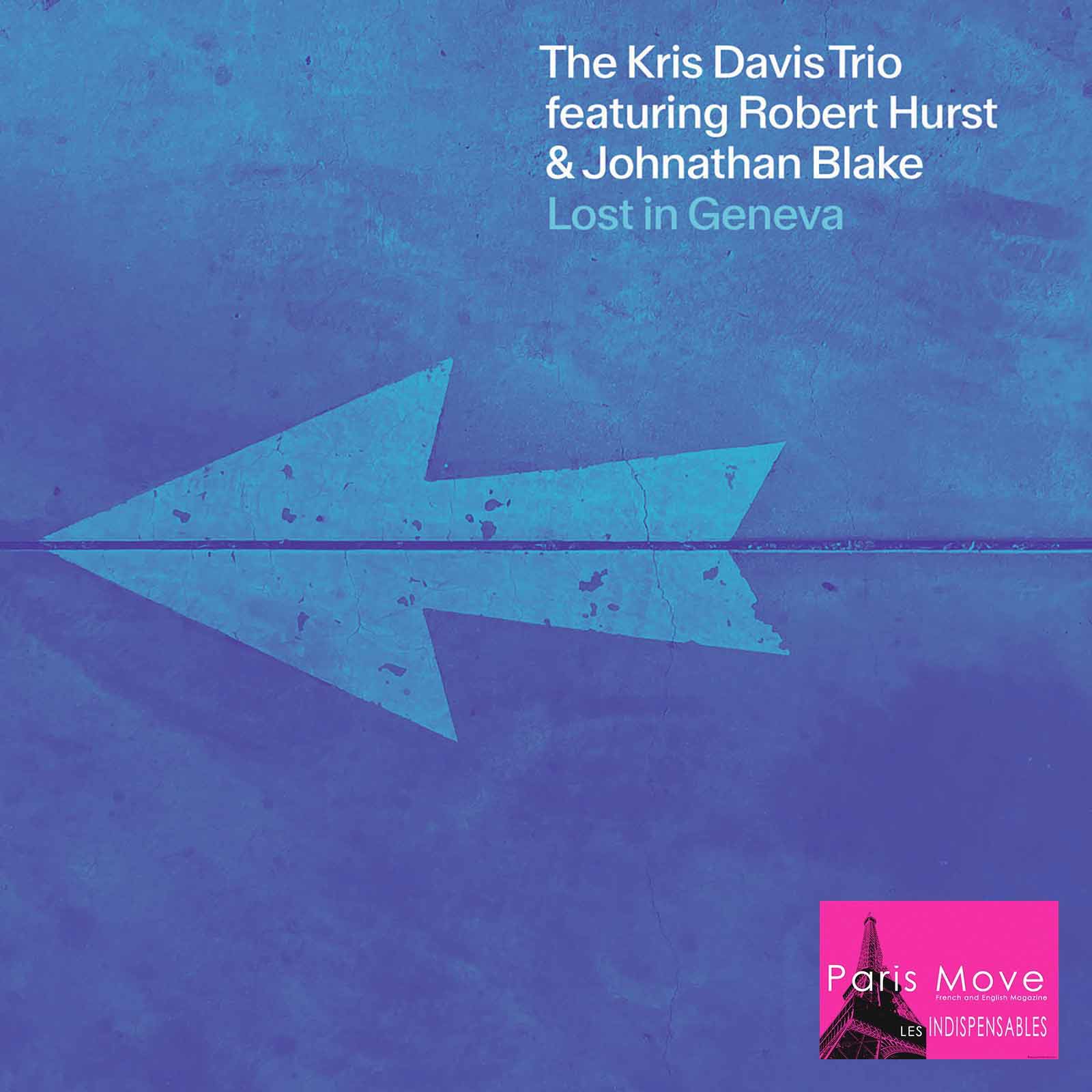
Summary: Kris Davis’ Lost in Geneva showcases a remarkable trio with Robert Hurst and Johnathan Blake, blending complex compositions, groove and extraordinary improvisation.
Kris Davis’ Lost in Geneva: A Jazz Trio at the Peak of Its Creative Powers
Kris Davis has reached that increasingly rare place in jazz where admiration is no longer simply a matter of taste. There are musicians whose work can divide listeners and critics for years, and then there are artists whose command of their instrument and whose understanding of composition become difficult to argue with. Davis belongs to the latter group. She is a pianist and composer with a musical identity so distinctive that recognition often comes within the first few measures, not because she relies on a familiar signature sound, but because of the way she thinks through the piano. A comparison with Keith Jarrett is tempting, although it should be made carefully. Both musicians possess an extraordinary command of composition and improvisation, and both have developed artistic personalities that are immediately recognizable, but their musical languages are fundamentally different. Jarrett often seemed to discover music in real time, allowing the piano to become an instrument of exploration, while Davis approaches the same challenge from a distinctly contemporary perspective, constructing intricate musical environments and then giving her musicians enough freedom to challenge, reshape and sometimes disrupt them.
Lost in Geneva is not an album that reveals all of its secrets on a first listen, and that is precisely part of its appeal. Its complexity may initially keep some listeners at a distance, but for those willing to spend time with it, the record gradually opens up. What first sounds dense begins to reveal an extraordinary internal clarity. The acoustic architecture of the trio is impressive throughout. Davis is joined by Robert Hurst on bass and Johnathan Blake on drums, and neither musician sounds as though he is merely accompanying the pianist. Hurst and Blake constantly shape the music, question it and respond to it, often through details so subtle that they can easily pass unnoticed on a first hearing. This is not the familiar piano trio model in which the pianist establishes the direction while the rhythm section provides support. Here, all three musicians appear to have equal responsibility for what happens next. Davis has described the group as a trio whose identity has become increasingly clear after years of touring together, and that experience is audible everywhere on the album. She wanted to write music grounded in groove but open enough to allow exploration and interaction with her compositional language. That balance may be the album’s greatest achievement. The music can be tightly structured without ever sounding imprisoned by its structure, and it can move into improvisation without losing the underlying logic that holds the pieces together. Davis has not created a showcase for a pianist surrounded by two exceptional sidemen. She has created a genuine collective.
What becomes especially fascinating after repeated listening is the degree to which this trio has learned to listen to itself. Davis has spoken about the importance of having spent so much time with Hurst and Blake, not only playing together but getting to know one another as people, and that familiarity has clearly changed the way they approach the music. The most impressive moments on Lost in Geneva are often not the obvious displays of virtuosity, although there are plenty of those, but the moments when one musician seems to anticipate what another is about to do. A rhythmic figure emerges in the bass, Blake catches it almost before it has fully developed, and Davis subtly changes the direction of the piano without making the transition feel calculated. That kind of chemistry cannot be manufactured simply by putting three exceptional musicians in a studio and pressing the record button. It comes from years of playing the same pieces in different cities, on different stages, in front of different audiences, and discovering that the same composition can become a different piece of music from one night to the next. Davis has described the pleasure of returning to the same music night after night while finding a different experience each time, and that idea is central to understanding this album. The trio is no longer concerned merely with getting the notes right. It is interested in what happens between them. The smallest changes in timing, articulation, dynamics and phrasing become part of the composition itself. That is also why the album can initially seem demanding. Davis does not always tell the listener where to look. The important information may be buried inside a rhythmic exchange between bass and drums, hidden in a piano voicing or revealed only after a theme has returned in a subtly altered form. This is sophisticated music, but it is not academic music. That distinction matters. Davis is clearly fascinated by structure and by the possibilities of composition, yet she never seems interested in complexity for its own sake. Groove remains essential, and the physical presence of the musicians keeps the record from becoming an intellectual exercise. Johnathan Blake is particularly important in this regard. His drumming is extraordinarily refined, but refinement should not be mistaken for restraint. He knows when to push the music forward and when to leave space around it, creating motion without constantly drawing attention to himself. Robert Hurst brings an equally deep understanding of time, anchoring the music while refusing to become predictable. Together, the bass and drums function almost like a second compositional voice. They do not simply keep time. They help determine where the music goes.
It is remarkable to consider that Lost in Geneva is only the second album by this particular trio. Davis had already made a strong impression with the group’s previous work, but the new album feels less like an introduction than the continuation of a conversation that has become increasingly sophisticated. Davis contributes the majority of the compositions, while Hurst and Blake each bring their own writing to the project, and the album also includes a striking interpretation of a work by Morton Feldman. That shared approach to composition is important because the trio’s strength depends in part on the fact that every member brings a distinct musical identity to the group. Throughout jazz history, some of the most powerful collective bands have been built around musicians who were not only extraordinary instrumentalists but also composers with strong voices of their own. Weather Report offered one of the clearest examples of that principle. Each member brought an individual sensibility, yet the group created something larger than the sum of its parts. Davis’s trio belongs to that tradition in spirit, although its music is unmistakably of the present. Nothing is sacrificed for the sake of complexity, but neither is complexity used as a substitute for expression. The three musicians have found a common interpretive language, and it may take several listens before the listener begins to understand where one musical personality ends and another begins. That gradual discovery is one of the pleasures of the album. Lost in Geneva is not content to tell you everything at once. It makes you listen for relationships. It makes you notice how a phrase introduced by the piano may be transformed by the bass, or how Blake can alter the emotional meaning of a passage simply by changing the weight of his attack. The album rewards patience because the music itself is built around patience. Davis understands that complexity becomes much more powerful when the listener is given enough space to absorb it.
There is also a distinctly urban quality to Lost in Geneva. The album feels fascinated by movement through modern cities, by congestion, unfamiliar streets, tunnels, airports and the strange psychological effects of constantly being somewhere other than home. The title itself evokes the kind of temporary disorientation that comes with travel, jet lag and the erosion of ordinary notions of time and geography. For musicians who spend much of their lives on the road, those experiences inevitably become part of their shared history. They may not always appear directly in the music, but they shape the way musicians communicate with one another. The trio has spent enough time traveling together that the road itself has become part of its artistic vocabulary. The music often seems to move through spaces rather than simply through musical forms. There is a sensation of acceleration followed by sudden suspension, of finding a direction and then losing it, of recognizing something familiar in an unfamiliar environment. Yet Davis is too sophisticated a composer to turn these ideas into literal musical illustrations. Instead, they become part of the atmosphere. The record is intellectual and distinctly metropolitan, but it is never cold. That distinction is crucial. Beneath the complex structures there is curiosity, humor, movement and an almost childlike sense of observation. This becomes particularly clear in the pieces inspired by birds and the natural world. The Bluesy Bird in Bob’s Backyard offers a welcome change of perspective, reminding us that Davis’s imagination is not confined to the architecture of the modern city. The natural world keeps breaking through, providing another way of thinking about rhythm, movement and freedom. Those contrasts give the album much of its personality. Just when the music seems to be leading us deeper into an elaborate urban maze, another sound or image opens a window.
The trio’s growing reputation also reflects the fact that this music works particularly well in performance. Seeing Davis, Hurst and Blake together makes it easier to understand why the recording feels so alive. Onstage, the musicians are not simply reproducing compositions that have already been completed. They are continually negotiating them. The written material provides a framework, but the performance determines what that framework becomes on a given night. Davis has spoken about the pleasure of playing the same music repeatedly while finding a different experience each time, and that is exactly the quality one hopes to hear from a great jazz trio. The best groups are never quite finished with their music. Every performance becomes another opportunity to discover something that was not there the night before. That is also why the upcoming concerts surrounding the album’s release are so important. The September 26 performance in Chicago and the September 27 appearance in Monterey will be followed by an Australian tour from October 19 through 30, European dates from November 18 through 24, and a January 2027 residency at the Village Vanguard in New York from January 12 through 17. For a group like this, those concerts are not simply promotional appearances for a new album. They are another stage in the evolution of the music itself. The compositions will continue to change because the musicians continue to change, and because every audience creates a slightly different environment. The Village Vanguard dates, in particular, should be worth watching. Few rooms in jazz history have been more closely associated with the intimate conversation of the small ensemble, and Davis’s trio seems perfectly suited to that setting.
Ultimately, what makes Lost in Geneva so compelling is not simply its complexity or the remarkable technical ability of the three musicians. It is the sense that Davis has found a group capable of turning complexity into something human. That is harder than it sounds. Contemporary jazz sometimes falls into the trap of believing that difficulty automatically equals depth, as if a composition becomes more meaningful simply because it is harder to understand. Davis avoids that trap. Her writing can be intricate, but the music remains connected to rhythm, touch, sound and emotion. Hurst and Blake understand that balance instinctively. They are capable of extraordinary technical detail, but they never lose sight of the larger musical picture. The result is an album that may not appeal immediately to everyone, and that is perfectly acceptable. Some records are designed to win you over in the first three minutes. Lost in Geneva belongs to another category. It asks you to stay. Give it a first listen without trying to understand everything. Come back to it a few days later. Listen again when you are driving, then again late at night when you can concentrate on the smallest details. The record changes because your ears change. A bass line that seemed secondary suddenly becomes central. A rhythmic gesture that appeared almost incidental begins to explain the structure of an entire piece. A melody returns and sounds completely different because you have learned how the trio treats repetition. Eventually, the complexity stops feeling like an obstacle and becomes the source of the pleasure. That is the mark of a genuinely lasting jazz album. You do not simply finish it and move on. You find yourself returning to it, sometimes because you want to understand something you missed and sometimes simply because you are not ready to leave its world. Lost in Geneva has that quality. It is a record that rewards attention, patience and curiosity, and it confirms Kris Davis as one of the most distinctive composers and pianists working in jazz today. More importantly, it suggests that the real story may not be the album itself but what this trio will do with this music over the next several years. If the recording captures where Davis, Hurst and Blake are now, the stage will reveal where they are going. And that is a journey worth following.
Thierry De Clemensat
Member at Jazz Journalists Association
USA correspondent for Paris-Move and ABS magazine
Editor in chief – Bayou Blue Radio, Bayou Blue News
PARIS-MOVE, August 26th, 2026
Follow PARIS-MOVE on X
::::::::::::::::::::::::
CD Release Concerts:
September 26 in Chicago,
September 27 in Monterey,
October 19-30 in Australia,
November 18-24 in Europe,
January 12-17, 2027 at Village Vanguard, NYC
Musicians:
Kris Davis – piano
Robert Hurst – bass
Johnathan Blake – drums
Track Listing:
The Subtext
Congestion Pricing
Lost In Geneva
Where Does That Tunnel Go?
The Ballerina
Mourning Dove
The Bluesy Bird in Bob’s Backyard
Nature Piece 5
Clues
The Deer Fly
Northern Flicker
Recorded on September 15th, 2025 at Oktaven Audio in Mount Vernon, NY
Recorded and Mixed by Ryan Streber
Mastered by Oscar Zambrano (Zampol Productions)
Design by Remake, photos by Jason Powell
All compositions by Kris Davis, with the exception of:
“Mourning Dove,” composed by Kris Davis, Robert Hurst, and Johnathan Blake
“The Bluesy Bird in Bob’s Backyard,” composed by Robert Hurst
“Nature Piece,” composed by Morton Feldman, arranged by Kris Davis
“Clues” composed by Johnathan Blake
“Northern Flicker,” composed by Kris Davis, Robert Hurst, and Johnathan Blake