| Jazz |
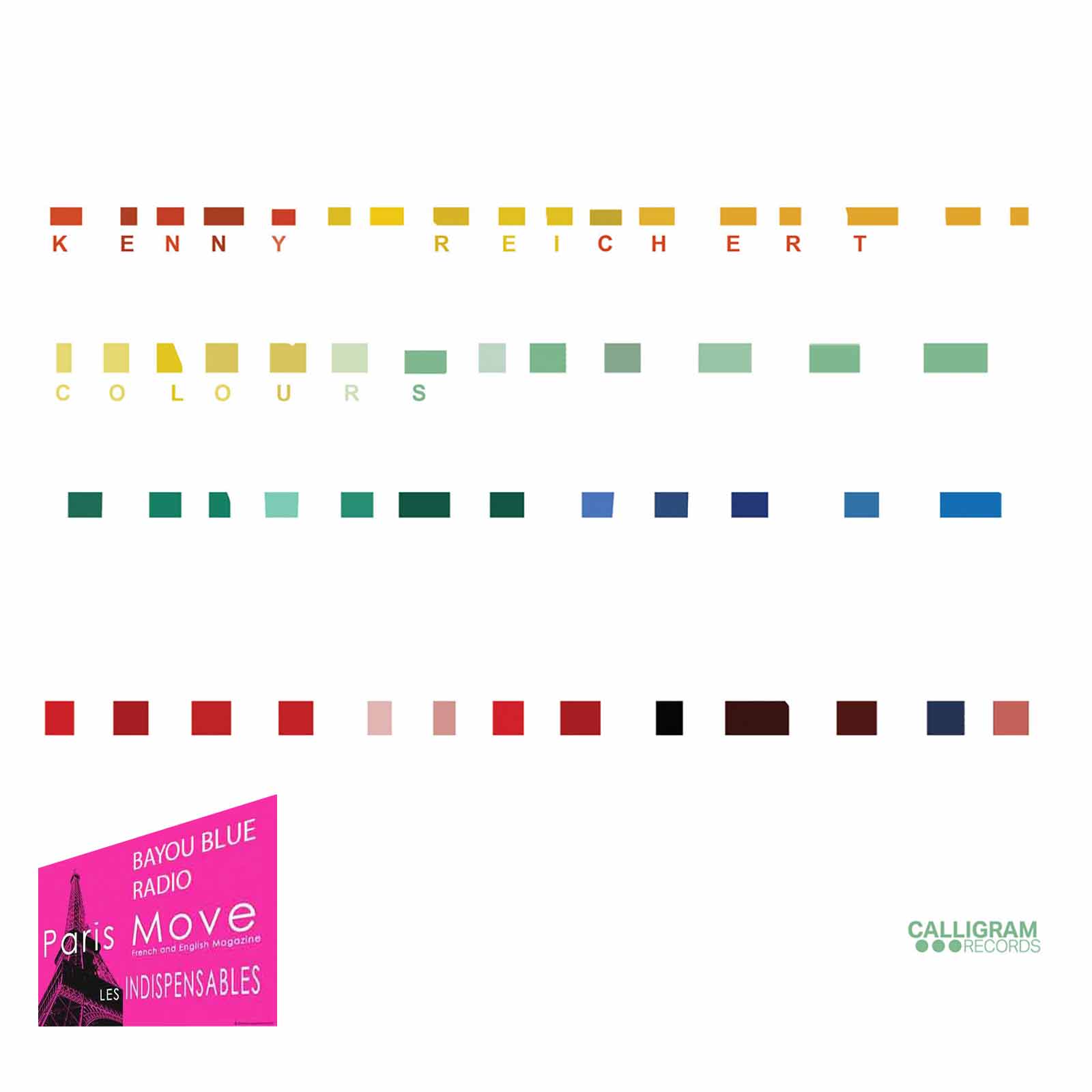
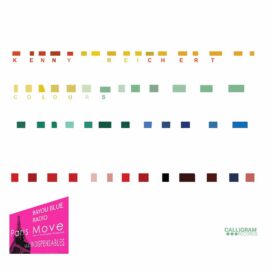
Summary: Kenny Reichert’s Colours is an inventive, beautifully produced jazz album blending lyrical melodies, adventurous improvisation, and exceptional ensemble playing in a richly expressive musical landscape.
Kenny Reichert’s Colours: The Collective Brilliance of a Jazz That Opens New Horizons
With two days of rest finally in sight, I have to admit that I have been pushing the pace of my album reviews lately. It may be time to slow down, to give the music a little more room to breathe and to allow listening to become, once again, an experience rather than an item on a list. Then comes Colours, the album by guitarist and composer Kenny Reichert, and the impulse to put everything aside becomes even stronger. There is something immediately disarming about the delicacy of the guitar, the care with which each phrase unfolds, the refusal to impose itself on the listener. This is music that does not demand attention through sheer force. It earns it through nuance, through a sound that seems to open a space around itself. I knew relatively little about Reichert before hearing this record, and that lack of familiarity proved an advantage: Colours arrived without the weight of expectations, allowing the music to reveal its own character, gradually and on its own terms.
The opening title track establishes an atmosphere of remarkable clarity. Reichert’s guitar has a finely measured touch, balancing precision with a natural sense of ease. Nothing feels overstated; the music develops through small shifts in color, texture and intensity, as though each instrument were contributing a different shade to a carefully composed canvas. Yet the apparent accessibility of the piece should not be mistaken for simplicity. Beneath its inviting surface lies a sophisticated musical architecture, one that gives the performers room to breathe without sacrificing the integrity of the composition. Geof Bradfield’s saxophone brings an expressive depth to this sound world, adding definition and movement without disrupting its balance. The other musicians are equally impressive, not because they compete for the spotlight, but because they understand how to make individual expression serve a larger musical purpose. The result is a collective performance in which every contribution matters and nothing feels superfluous.
That sense of equilibrium becomes more complicated with “Belmont,” the second track, which moves into more demanding territory. The music grows less predictable, opening itself to improvisation and to the productive tension between a clearly conceived structure and the freedom to move beyond it. The listener can no longer remain entirely within the comfort of the opening piece. The ground shifts, phrases take unexpected turns, and the ensemble begins to test the limits of its own framework. This is where Reichert’s compositional intelligence becomes particularly evident. He does not use structure as a fence designed to contain the musicians; he treats it as a point of departure, a set of relationships that can be challenged, stretched and renewed. The musicians respond with assurance and imagination, maintaining a strong sense of collective direction even when the music becomes more elusive. The transition is significant: Colours does not simply offer a succession of attractive melodies, but invites us to hear how a composition can remain coherent while allowing uncertainty, risk and discovery to become part of its expressive language.
The album consists of six original compositions written during Reichert’s residency at the Ragdale Foundation, situated in a nature preserve along the Skokie River in Lake Forest, Illinois. The setting appears to have been more than a picturesque backdrop. Reichert has described the importance of the environment to his work, explaining that the residency gave him the opportunity to deepen his writing and approach it with greater attention and reflection. Something of that experience seems to have found its way into Colours. The music often conveys a heightened awareness of space: not merely the space between notes, but the relationship between movement and stillness, density and openness, the individual voice and the surrounding ensemble. The pieces do not rush toward their conclusions. They allow ideas to emerge, to settle and to acquire meaning through their interaction with other musical elements. One can hear the value of taking time, of observing before acting, of recognizing that a composition sometimes gains more from what it leaves unresolved than from what it explains. There is a quiet attentiveness here that never slips into passivity. The music remains alert, responsive and capable of sudden changes in direction.
Reichert’s stated aim is to balance formal clarity with openness: to create pieces with a recognizable shape and memorable melodic ideas while leaving sufficient room for experimentation. Colours succeeds because these ambitions are not treated as opposing forces. The compositions provide the musicians with a firm foundation, but that foundation never becomes an excuse for predictability. Melody is not simply a decorative element, introduced to make the music more accessible; it is part of the architecture, a thread that can be followed even as the surrounding material grows more complex. At the same time, improvisation is not an obligatory display of virtuosity. It has a purpose, whether that means intensifying a mood, unsettling an established pattern or revealing an unexpected connection between instruments. The writing is detailed without sounding overworked, and the performances are disciplined without becoming rigid. That combination gives the album much of its distinctive character. It is possible to appreciate the music on first hearing and still discover new relationships on subsequent listens, a quality that separates a merely pleasant record from one that continues to reward attention.
There is also a poetic, almost cinematic dimension to Colours. At times, the music feels welcoming, drawing the listener into a world whose contours become familiar almost without notice. Elsewhere, sharper edges emerge, and the atmosphere becomes more ambiguous. The contrast is essential. A uniformly serene album might have settled into a single emotional register, but Reichert allows beauty to coexist with friction, contemplation with movement, and lyricism with a degree of unease. The compositions can suggest the unfolding of a story without dictating what that story should mean. One moment may feel like an invitation; the next may interrupt that sense of comfort and demand a more active response. The listener is not handed a predetermined emotional conclusion. Instead, the music creates situations in which different interpretations remain possible. This quality gives Colours a literary dimension, not because it attempts to illustrate a narrative, but because it understands the power of suggestion. Like a compelling piece of writing, it leaves room for the audience to participate in the construction of meaning.
The musical language is equally difficult to confine to a single category. Jazz remains the central framework, but the compositions seem receptive to a broader range of influences, including classical music, folk traditions and the expansive possibilities associated with world jazz. These affinities are not presented as a checklist of stylistic references, nor do they dissolve the album’s identity into a vague eclecticism. They are absorbed into a coherent musical vocabulary, one that privileges color, atmosphere and the relationship between written material and spontaneous invention. The production plays an important role in that achievement. The instruments occupy a carefully balanced sonic space, allowing the listener to appreciate the subtleties of the arrangements without flattening the differences between individual voices. The sound is clear, detailed and natural, yet never sterile. Every nuance seems to have been considered, from the weight of a phrase to the way one instrument yields to another. This attention to production does not call attention to itself; it makes the music more legible, preserving the intimacy of the performances while giving the ensemble enough depth and dimension to reveal the full range of its interactions.
Reichert himself often seems content to remain discreet, allowing the compositions and the ensemble to carry the music forward rather than insisting on the role of the dominant soloist. That restraint is not a lack of ambition. On the contrary, it reflects a clear understanding of where the album’s strength lies. His work as a guitarist is inseparable from his thinking as a composer: the instrumental lines, the arrangements and the spaces left open for improvisation all serve a broader conception of the music. The other musicians respond to that conception with performances of exceptional sensitivity and conviction. Bradfield’s saxophone adds its own expressive force, while the ensemble as a whole demonstrates an admirable capacity to listen, react and adjust without losing its sense of purpose. The achievement is collective, and the record is stronger for it. There is no need for exaggerated displays or for moments designed simply to remind the listener of the performers’ technical abilities. The musicianship is evident in the control of dynamics, the precision of the exchanges and the confidence with which the group navigates the shifting demands of the compositions. Their virtuosity lies as much in their judgment as in their technique.
What makes Colours so rewarding, ultimately, is the way it combines immediate pleasure with a genuine invitation to think. Its melodies offer points of entry, its arrangements reveal a careful intelligence, and its improvisations keep the music open to surprise. The album neither hides behind complexity nor reduces itself to easy accessibility. It trusts the listener to move between the two, to enjoy the sound while remaining attentive to the decisions that shape it. For a musician whose name may not yet be familiar to every jazz listener, Reichert makes a persuasive case for the importance of composition as an act of sustained curiosity. He creates music that knows where it is going without needing to announce every step, and that is willing to take a detour when the journey demands it. The six pieces form a coherent whole, but they never feel interchangeable; each contributes a different perspective on the balance between order and freedom that defines the album. Colours leaves a lasting impression not through grand gestures, but through the cumulative effect of intelligence, sensitivity and shared purpose. It is a thoroughly accomplished record, beautifully played and thoughtfully produced, whose pleasures deepen with attention. At a time when music can too easily be consumed in haste, Kenny Reichert offers a welcome reminder that listening is also a way of slowing down, of making room for uncertainty and discovery. Colours belongs in that company. Sometimes, that is more than enough to justify the time we choose to give it.
Thierry De Clemensat
Member at Jazz Journalists Association
USA correspondent for Paris-Move and ABS magazine
Editor in chief – Bayou Blue Radio, Bayou Blue News

PARIS-MOVE, October 27th, 2026
Follow PARIS-MOVE on X
::::::::::::::::::::::::
Musicians:
KENNY REICHERT: electric guitar
RUSS JOHNSON: trumpet
GEOF BRADFIELD: tenor saxophone and bass clarinet
CLARK SOMMERS: upright bass
DEVIN DROBKA: drums and cymbals
Track Listing:
Colours
Belmont
Holes In The Dirt
The Prairie
Yin
Simi
All compositions by Kenny Reichert, ASCAP
Recorded April 8, 2024, at Rax Trax Recording, Chicago, IL.
Recorded, mixed, and mastered by Andy Shoemaker
Design concept by Daniel Halsall
Layout, and photography by Chad McCullough