| Jazz |
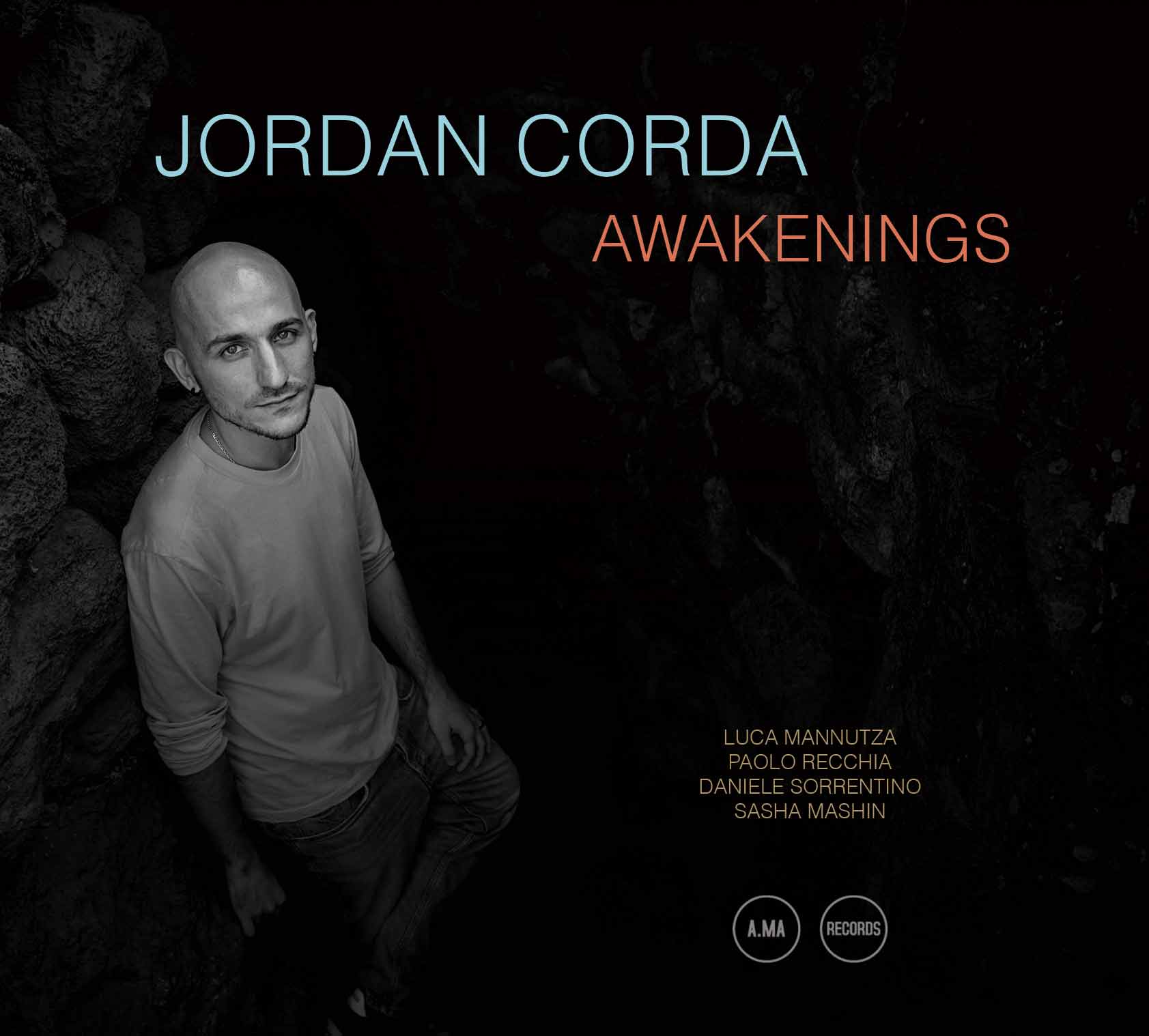
Summary: Jordan Corda’s Awakenings blends contemporary jazz with Sardinian history, vocal traditions and memories of place, exploring identity, migration and cultural transformation.
Jordan Corda’s Awakenings: Sardinia, Memory and the New European Jazz
Every country in Europe has cultures deeply rooted in history, shaped by migrations, conquests, foreign rule and exchanges that, over the centuries, have left their mark on languages, landscapes and collective imaginations. Italy is perhaps one of the clearest examples of this complexity. Beneath the apparent unity of the country lies a multitude of territories, memories and identities that resist being confined to any single definition. Sardinia is a particularly distinctive expression of this diversity. Located at the heart of the Mediterranean yet long removed from the continent’s major cultural centers, the island has maintained a remarkably strong cultural personality, nourished by centuries of history and by a language all its own. It is within this particular geography, somewhere between insularity and openness, memory and modernity, that Jordan Corda’s new album, Awakenings, can be placed.
There is something about this record that immediately reaches beyond the boundaries of jazz itself. The compositions seem to find their true meaning within a larger space, where geography becomes musical material and the composer’s personal journey intersects with a history far older than his own. Jordan Corda grew up in Sardinia before continuing his musical path on the Italian mainland. That move, which might otherwise be regarded as a simple biographical detail, becomes a central element of his writing here. Leaving an island, changing landscapes, entering a different urban environment, none of this necessarily means abandoning what shaped us. Places remain within us, sometimes even more powerfully after we have left them.
Awakenings seems to emerge precisely from that distance. The album brings several worlds together without attempting to place one above another. Contemporary urban sounds, at times touched by an almost dystopian atmosphere, encounter elements connected to a much older memory. The sounds of the present-day city exist alongside a Sardinian history stretching back thousands of years. That confrontation gives the compositions an unusual depth, because they evoke not only what we have become, but also what remains beneath the surface of the present.
Jordan Corda’s music never attempts to turn Sardinia into a postcard. The island’s soft light, sea, rocks, villages and almost mineral landscapes can be sensed in certain passages, but they are never used as decorative shorthand. Rather, they exist as a diffuse presence, an atmosphere that seems to have become part of the musician’s very way of looking at and listening to the world. Sardinia is not a theme here. It is a memory.
That may be what makes the record particularly compelling. When an artist comes from a place so profoundly marked by history, it is difficult to imagine the work being entirely separate from that history. Sardinia carries the traces of ancient civilizations, successive migrations, foreign domination and centuries of Mediterranean exchange. It also possesses a language and traditions that have helped preserve a distinctive identity within Italy. None of this history needs to be quoted directly for it to be present in a work of art. It can emerge in a particular sense of time, in the relationship with silence, in repetition, or in the contrasts between tension and repose.
The title “The Old Story” therefore takes on a particular resonance. It seems to point toward that ancient history whose traces are still visible across the island. The Nuragic structures scattered throughout Sardinia are among the most striking reminders of this historical depth. Some of these stone constructions date back to the Bronze Age and still seem, even today, to belong to another era. The Su Nuraxi complex at Barumini is perhaps the best-known example. Its stones remain where they have stood for centuries, telling a story of which we possess only fragments. Above all, they remind us that landscapes we now regard as natural are often landscapes saturated with memory.
When an artist grows up in such an environment, it is difficult to believe that this memory has no influence on the way he creates. That influence does not necessarily have to be conscious. It may operate at a deeper, more instinctive level. A place shapes sensitivity before we even know how to put that feeling into words. Light, distance, wind, stone, the sea and the silences of a landscape all contribute to the construction of an imagination. In Jordan Corda’s case, that memory subsequently encounters another reality: the mainland and the contemporary city.
It is within this tension that much of the album’s richness lies. The point is not to choose between tradition and modernity, between island and mainland, between past and present. Instead, Corda seems interested in what happens when these different worlds meet. Music becomes an in-between territory. It allows certain traces to be preserved while transforming them. The past is not reproduced; it is reinterpreted.
This approach also gives Awakenings a psychological dimension. The title itself suggests an awakening, a moment of realization, perhaps even an inner transformation. But this awakening is not necessarily limited to the individual. It can also belong to memory. What was left behind returns in another form. Memories, landscapes and earlier experiences reappear through a new language, the language of composition and improvisation.
One of the album’s most compelling qualities is precisely its refusal to separate the intimate from the collective. Jordan Corda is telling something of his own story, but that story quickly becomes recognizable as the experience of countless people who have left their place of origin to live elsewhere. In a Europe where movement has become an everyday reality, the question takes on particular weight. What remains of a place once we no longer live there? What do we carry with us? A language, images, habits, sounds, a particular sense of time? Or simply a sensation that is difficult to name?
Awakenings seems to pose these questions without attempting to resolve them. Perhaps that is why the album never feels confined to a regional identity. Sardinia is everywhere, yet it is never used to limit the music. On the contrary, it becomes the starting point for a much broader journey. From a Mediterranean island, Jordan Corda ultimately speaks about movement, memory and transformation.
The strength of the writing also has much to do with the musicians gathered around him. Like the finest composers, Corda leaves genuine room for expression within the ensemble. The vibraphone is not placed at the center of a setup in which the other instruments exist merely to support it. The group functions more like a collective organism, with each musician helping the compositions evolve.
Pianist Luca Mannutza plays a particularly important role in that balance. His playing gives the vibraphone a harmonic depth that allows the instrument to retain its luminosity without ever becoming superficial. The dialogue between the two instruments is central. The vibraphone brings its resonances and almost physical vibrations, while the piano creates around it a harmonic space that can be both open and tense. Their interaction adds another dimension to the compositions and gives Jordan Corda the room to develop his musical language fully.
The rhythm section is equally important to this construction. Bassist Daniele Sorrentino and drummer Sasha Mashin do far more than maintain a pulse. They participate in the dramatic architecture of the pieces, bringing a freedom that gives the music a constant sense of breath. Saxophonist Paolo Recchia expands the sonic space even further, providing another voice capable of extending or challenging the melodic lines of the vibraphone.
That interaction is essential because it keeps Awakenings from becoming merely a conceptual album. The ideas behind the compositions only acquire their full meaning when they are played. This is where the enduring strength of jazz comes into focus: the ability to begin with a carefully conceived structure and then allow the musicians to shift it, reshape it, and sometimes take it somewhere entirely unexpected.
The presence of the Sardinian vocal ensemble Canto a Tenore Santu Larettu di Silanus introduces another dimension. It allows the island’s vocal tradition to encounter contemporary instrumental writing without the meeting ever feeling contrived. The collective voice carries a memory that requires no explanation. Its presence alone is enough to remind us that a culture does not disappear simply because it belongs to another era. It can remain alive, evolve and enter into dialogue with new forms.
Ultimately, Awakenings is permeated by the question of identity. But this is not an identity frozen in place, locked into origins that must be preserved unchanged. The identity Jordan Corda explores seems instead to be made of movement. It develops through the relationship between what we inherit and what we transform. Sardinia is present because the musician comes from that land, but it is also transformed by everything he has experienced elsewhere.
This circulation of cultures also reflects a deeply European reality. Europe has never been a homogeneous space. It has been shaped by migrations, conflicts, exchanges, conquests, mixtures and resistance. Political borders have changed, sometimes violently, while cultures continued to move across them. Every territory therefore contains several overlapping histories. Jordan Corda’s music inhabits that reality without ever needing to announce it.
European jazz draws much of its richness from precisely this ability to reconsider the question of inheritance. The point is no longer simply to reproduce forms that originated elsewhere, but to explore how jazz can enter into dialogue with the particular histories of the places where it is played. In that context, Sardinia offers extraordinary material. Its history, vocal traditions, language, landscapes and insularity provide countless points of departure for a music that nevertheless remains thoroughly contemporary.
Awakenings does not attempt to create a modern form of folklore. It does something more subtle. It takes a local memory and places it within an open musical space. The album becomes a meeting point between different senses of time: the time of ancient civilizations, childhood, the journey to the mainland, the contemporary city and an uncertain future. The compositions seem to move through these different layers without reducing them to a single narrative.
There is also a particular way of seeing landscape in this music. Sardinia has a distinctive ability to make visitors feel that they have entered another world, sometimes even another era. The sea, rocks, villages and light can create the sense of displacement so often sought by photographers, writers and musicians. But for someone born there, the landscape is never simply exotic. It is bound to childhood, memories, absences and everything that constitutes an intimate sense of place. It is the difference between the landscape we discover and the landscape we carry within us that the music sometimes seems to reveal.
Jordan Corda therefore transforms a personal experience into a work capable of reaching far beyond its place of origin. That may be one of Awakenings’ essential strengths. The album does not require the listener to know Sardinia in order to connect with it. It simply asks us to allow ourselves to be led into a space where sounds can awaken images, memories and sensations that belong to us.
The album’s success lies as much in its compositions as in the way they allow the musicians room to breathe. Nothing feels completely fixed. Themes can be developed, interrupted, extended or redirected. Jordan Corda’s vibraphone becomes a kind of guiding thread around which the other instruments trace their own paths. That collective freedom gives the music a vitality that extends well beyond the idea of an album built around a concept.
Awakenings ultimately emerges as a work about movement, but also about what resists movement. We can change cities, countries, social environments and musical surroundings without erasing the first geographies that shaped us. They continue to return in other forms. In Jordan Corda’s music, they become rhythms, harmonies, timbres and silences. Memory ceases to be something we leave behind and becomes living material.
From this perspective, the editorial work behind such a project also deserves recognition. Independent labels such as A.MA Records play an important role in the circulation of European musical voices. They provide artists whose work does not necessarily fit the most immediate commercial categories with a space in which to develop and be heard. That independence is particularly valuable for music like Corda’s, which asks for time and attentive listening.
This new album should appeal to listeners who enjoy being surprised, but also to those who expect music to offer more than a succession of pleasant tracks. Awakenings asks to be heard as a journey. We may enter through jazz, but we can emerge with images of Sardinia, with the sensation of having moved through a contemporary city, a family memory or a landscape much older than ourselves. It is this ability to open several doors from within a single composition that gives the record its deepest resonance.
Jordan Corda begins with an island, but he never confines himself to it. He begins with its history, but does not turn that history into a monument. He begins with his memories, but allows his musicians to move them, reshape them and reinvent them. Perhaps that freedom is what makes Awakenings so compelling. Sardinia remains present as an origin, never as a boundary. Its stones, voices, light, sea and language seem to accompany the musician into the most contemporary spaces of his writing.
What remains, finally, is the impression of a landscape that continues to travel after we have left its shores. The ancient Nuragic stones, Sardinian voices, city sounds, vibraphone, piano and rhythm section belong to different eras, yet the album brings them together in a single movement. The past does not ask to be restored here. It asks simply to be heard differently. And perhaps it is in that transformation that Jordan Corda finds the most personal substance of his music: a way of bringing what endures into dialogue with what changes, an island with a mainland, memory with the present, and an ancient history with the sounds of a world that is constantly awakening.
Thierry De Clemensat
Member at Jazz Journalists Association
USA correspondent for Paris-Move and ABS magazine
Editor in chief – Bayou Blue Radio, Bayou Blue News

PARIS-MOVE, September 19th, 2026
Follow PARIS-MOVE on X
::::::::::::::::::::::::
Musicians :
Jordan Corda Vibraphone
Luca Mannutza Piano
Paolo Recchia Alto Saxophone
Daniele Sorrentino Double Bass
Sasha Mashin Drums
Featuring:
Canto A Tenore Santu Larettu Di Silanus Vocals
Tracklist:
You, Me And The Mirror
It Will Forget Us
The Continent
Lunar Connections
We
The Old Story
Forget
All Began With A Rope
Allumiere
Re-Fall
Ourselves
Awakenings
All Music by Jordan Corda ©&℗ A.MA Edizioni – 2026
Recorded at La Strada Studio – Rome, October 2025
Producer Sasha Mashin & SMASHINPRODUCTION
Executive Producer Antonio Martino