| Jazz |
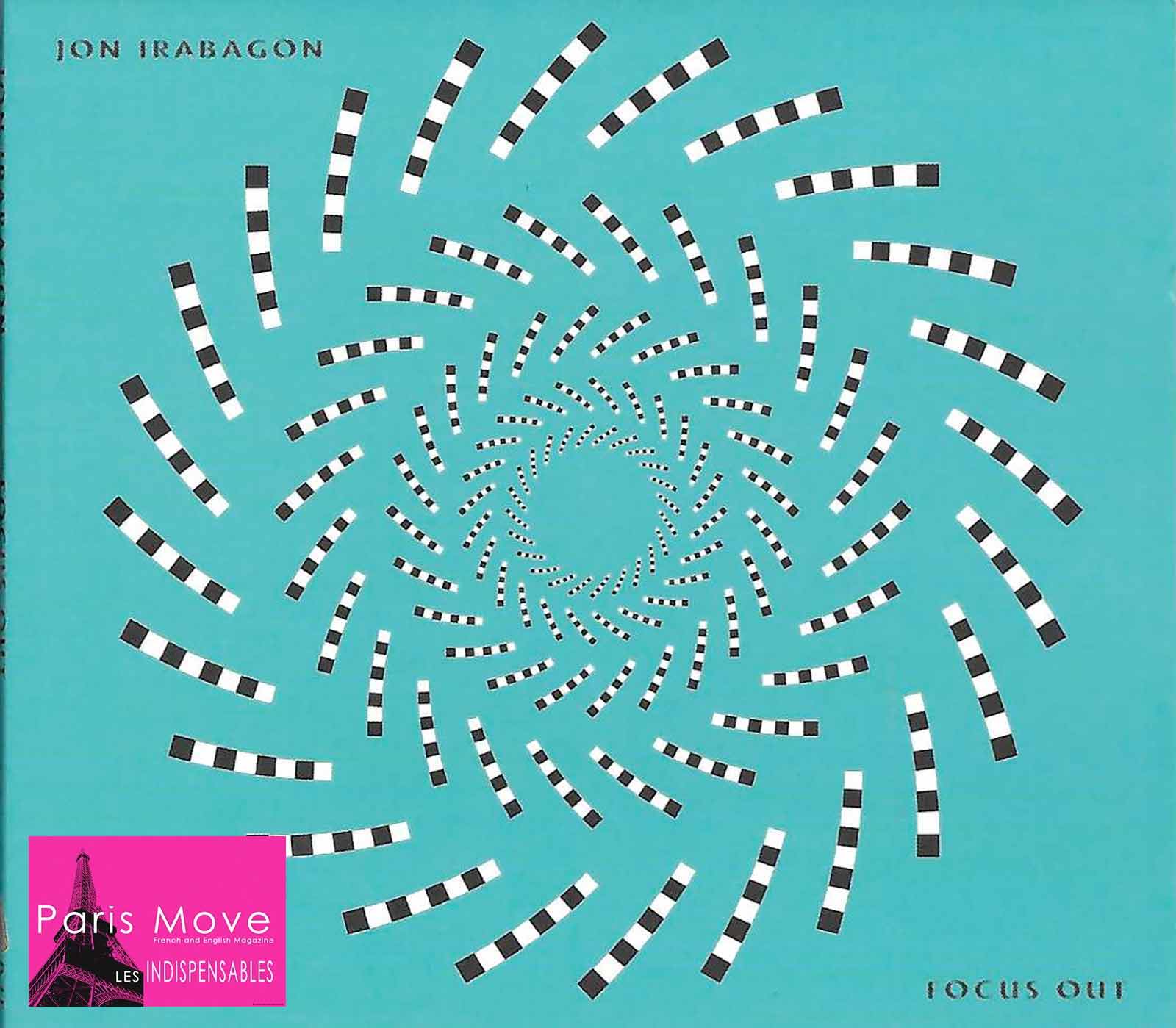
Jon Irabagon and the Architecture of Sound
In the lively, ever-evolving world of jazz, there are certain musicians who inspire a particular kind of fascination, artists whose gifts are so evenly balanced that it becomes nearly impossible to determine where their true mastery lies: in composition or in performance. Jon Irabagon belongs unmistakably to this rare company.
From the very first notes of this album, the listener faces a simple choice: step fully inside its world, or let it pass by altogether. There is little middle ground here, and that is precisely its strength. In music, as in life, one may well ask what purpose is served by moderation when one is propelled irresistibly by the engine of one’s own ideas, especially when those ideas are realized with the intelligence and technical command Irabagon so consistently demonstrates.
Irabagon, a first-generation American of Filipino descent, born in Chicago in 1978, draws on a wide range of influences. Among the most significant are the individualistic, emancipatory philosophies and aesthetics of the AACM (Association for the Advancement of Creative Musicians), the Chicago-based collective whose members, including figures such as Anthony Braxton, Henry Threadgill, and Muhal Richard Abrams, helped reshape the language of modern jazz by emphasizing originality, collective creation, and structural experimentation. Just as crucial is the demanding tenor saxophone tradition of Chicago itself, a lineage that has long prized boldness of tone and conceptual rigor.
Let us say it plainly: Jon Irabagon stands among the most compelling composers working in jazz today. Listening to his music can be an act of intellectual enrichment of the highest order. The language he unfolds, decidedly modern, deeply self-aware, constitutes a work of art in itself, one built upon a carefully structured architecture. Absolute rhythms form its foundations, while layers of sound pour into that structure, sometimes merging, sometimes juxtaposing, always reshaping the sonic space.
A piece such as Paper Plane feels less like a standalone composition than like a continuation of a larger narrative the composer is unfolding. To understand its deeper resonances, one might look to Irabagon’s biography. As a member of a minority community that has often had to contend with marginalization, he has shaped his compositions around open dialogue with his fellow musicians, creating spaces for communication and mutual understanding that are as social as they are musical.
Unlike many contemporary musicians who readily multiply collaborations across genres and projects, Irabagon appears to concentrate his energies primarily within the framework of his own group. This focus may well explain the remarkable depth and coherence of his compositional voice. Latin rhythmic elements occasionally surface, but they are transformed, absorbed, and ultimately reimagined within the composer’s personal vision rather than presented in their traditional form.
The influence of 20th-century classical music is also unmistakable. Themes are developed through sound textures that frequently transcend conventional definitions of music, becoming instead forms, pure, elemental presences, as fundamental and rational as water, earth, or fire. In this sense, Irabagon’s work can be placed in a broader landscape of contemporary composition, where the boundaries between jazz, chamber music, and experimental sound have grown increasingly porous.
In this work, Irabagon offers a creation that demands from the listener an unusual degree of cultural openness. The beauty of the music does not reside in the expectation of an easily grasped melody, but in the material of the work itself: its density, its structure, its unfolding logic.
What, then, are we hearing? Perhaps the voice of an artist asserting his place, or the sound of a composer determined to shape his own language without compromise. Or perhaps it reflects something shared, a fragment of our collective sensibility, shaped by listening, reading, observing, and cultivating a critical ear over time.
Each listener will discover something different in Jon Irabagon’s music, depending on their own experience and cultural background. There are no rules here, only an invitation, to anyone willing to be carried away by the extreme poetic form of an artist who embraces his culture, his accent, and his influences as something vital and irrepressible, like a cry rising from within.
To step across the threshold of this artist’s workshop is to enter a space where sound takes on weight and shape, where rhythms move like beams in a vast structure, and where the listener, pausing for a moment, may feel as though they are witnessing the slow construction of a cathedral made not of stone, but of breath, metal, and time.
Thierry De Clemensat
Member at Jazz Journalists Association
USA correspondent for Paris-Move and ABS magazine
Editor in chief – Bayou Blue Radio, Bayou Blue News
PARIS-MOVE, February 13th 2026
Follow PARIS-MOVE on X

::::::::::::::::::::::::
To buy this album (March 13, 2026)
Musicians :
Jon Irabagon, alto saxophone, composer
Matt Mitchell, piano Fender Rhodes
Chris Lighicad, eletric bass
Dan Weiss, drums
Track Listing :
Morning Star
Focus Out
Paper Planes
Evening Star
Indigo Stains
Prayer (for Reomi)
Center Post (bonus track)