| Jazz |
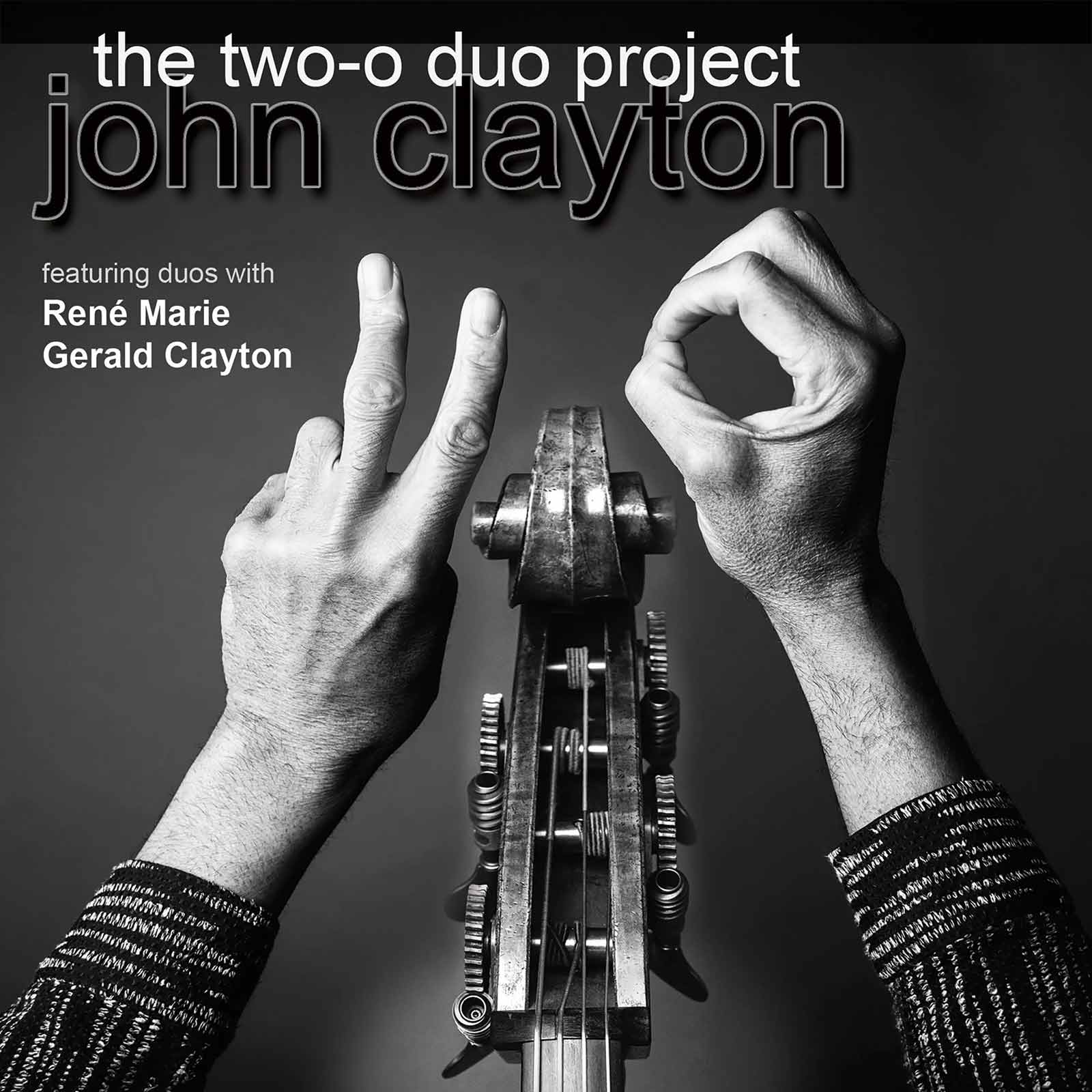
SUMMARY: Two-O Duo is a deeply intimate jazz album by John Clayton and René Marie, built on voice-and-bass duos and select trios, blending standards and originals into a warm, minimalist, and emotionally rich listening experience.
Two-O Duo Review: John Clayton and René Marie Deliver an Intimate, Poetic Jazz Album of Voice and Bass
Few contemporary jazz recordings manage to balance intimacy and sophistication with such ease. Two-O Duo brings together a remarkable constellation of award-winning musicians, yet it resists the temptation to showcase virtuosity for its own sake. Instead, it builds its identity on restraint, trust, and a shared willingness to let silence speak as clearly as sound. At its core lies a long-standing artistic dialogue between bassist John Clayton and vocalist René Marie, an exchange shaped by years of musical curiosity and mutual respect.
Clayton’s double bass anchors the entire project, but it rarely behaves as a static instrument. At times it is warm and grounded, its plucked strings offering a gentle pulse that feels almost conversational. Then, almost imperceptibly, the bow enters the frame and everything shifts. The instrument begins to breathe differently. Its tone lengthens, softens, and takes on an almost human fragility, as if the wood and strings were briefly borrowing the contours of a voice. This fluid transformation becomes one of the album’s emotional centers, especially when paired with Marie’s vocal presence, which moves with striking ease between clarity and depth, playfulness and sorrow.
The repertoire itself moves freely between familiar standards and lesser-known material, along with original compositions that expand the emotional vocabulary of the project. Rather than treating these selections as separate categories, the musicians fold them into a single narrative shaped by mood rather than genre. Even well-known songs feel newly exposed, as though heard from an unfamiliar angle that reveals hidden corners of their structure.
While the duo format defines much of the album’s sonic DNA, Clayton felt an impulse to expand its architecture. “Since we were all together in the studio that day, why not record a few trio pieces as well,” he recalls. That decision opens the music further, introducing a sense of spatial dialogue that subtly reshapes the listening experience. In these trio moments, the interplay becomes more elastic, with sound and silence sharing equal weight. Notes are allowed to decay fully, resonances linger, and nothing feels rushed or predetermined.
Clayton describes those sessions with quiet wonder. “When you are close to someone and sharing the same space, you both feel that connection. There are no words for it. It is intangible, but it is absolutely real.” That sense of proximity defines much of the album’s emotional temperature. It is not just that the musicians listen to each other, but that they seem to inhabit the same emotional air.
A subtle undercurrent of jazz-inflected classical sensibility runs throughout the recording, not as decoration but as structural influence. It reinforces the album’s poetic restraint and deepens its tonal palette. Yet what ultimately gives the project its coherence is the way these influences are filtered through arrangements that prioritize space, patience, and clarity.
Clayton encouraged Marie early on to bring material that held personal meaning for her, shaping the album around her eclectic musical memory. She is not confined to jazz tradition, he explains, but draws from a wide emotional archive that includes radio pop, popular standards, and songs that linger from everyday life. “She does not just sing jazz standards,” Clayton says. “She sings songs she heard on AM radio growing up, or pop tunes that stayed with her. Sometimes she will be walking around the house singing one and suddenly ask if she can bring it into the repertoire.”
The album opens with a reimagined version of “Blue Bayou,” a song long associated with Roy Orbison and later Linda Ronstadt. Here, it is gently destabilized and rebuilt from within. The rhythm feels slightly displaced, the phrasing subtly refracted, as if the song is being remembered rather than simply performed.
“We found a different atmosphere,” Clayton explains. “It is like a wagon missing a wheel. It is always slightly off balance.” That controlled instability becomes part of the performance’s charm, creating a quiet tension that never resolves fully, but never breaks either.
Much of the album’s appeal lies in this ability to inhabit simplicity without flattening it. The Longest Time stands as a clear example of the duo’s careful craftsmanship, built entirely on voice and bass yet never feeling sparse. Instead, it feels complete, as though every note has been placed with intention and every silence given equal consideration.
That apparent simplicity is deceptive. Sustaining emotional depth in such a reduced setting demands an extraordinary level of discipline and trust between performers. What sounds effortless is, in reality, the result of meticulous listening and constant adjustment, a shared awareness of how little is needed to say something meaningful.
One of the album’s most luminous passages appears in the “Smile Medley,” which weaves together “When You’re Smiling,” “Smile,” “Make Someone Happy,” and a gentle nod to “Put on a Happy Face.” Rather than treating these songs as separate entities, the arrangement allows them to dissolve into one another, forming a continuous gesture of optimism. The result feels less like a performance and more like an emotional state taking shape in real time.
Marie selected the material, but Clayton emphasizes the collaborative nature of the arrangements. Their version of “Some Other Time” offers another example of this shared imagination. “I feel a Rio kind of energy in this one,” he says. The arrangement evokes the texture of brushed percussion without ever introducing a drummer, suggesting rhythm through implication rather than presence.
“It is a samba,” Clayton notes, “but we leave the listener to imagine the drums.” That invitation to complete the music internally becomes one of the album’s quiet pleasures.
Ultimately, Two-O Duo is an album that resists urgency. It creates instead a sense of shelter, a warm and unforced atmosphere where musical ideas can unfold at their own pace. There is something deeply comforting in its restraint, something that encourages the listener not just to hear, but to inhabit the space it creates.
In a contemporary landscape often driven by density and excess, this recording offers a different proposition. It suggests that intimacy, when handled with care and intelligence, can carry its own kind of grandeur. The result is an album that does not demand attention, but earns it slowly, and leaves behind a lingering sense of quiet, almost disarming beauty.
Thierry De Clemensat
Member at Jazz Journalists Association
USA correspondent for Paris-Move and ABS magazine
Editor in chief – Bayou Blue Radio, Bayou Blue News
PARIS-MOVE, June 10th, 2026
Follow PARIS-MOVE on X
::::::::::::::::::::::::
Musicians :
John Clayton, double bass
Gerald Clayton, piano
Rene Marie, vocals
Track Listing :
Blue Bayou
Nail… In Need
Beautiful
On The Day You Were Born
En La Orilla Del Mundo
The Longest Time
Smile Medley
Some Other Time
Come Sunday
Somewhere Over The Rainbow
Forth