| Jazz |
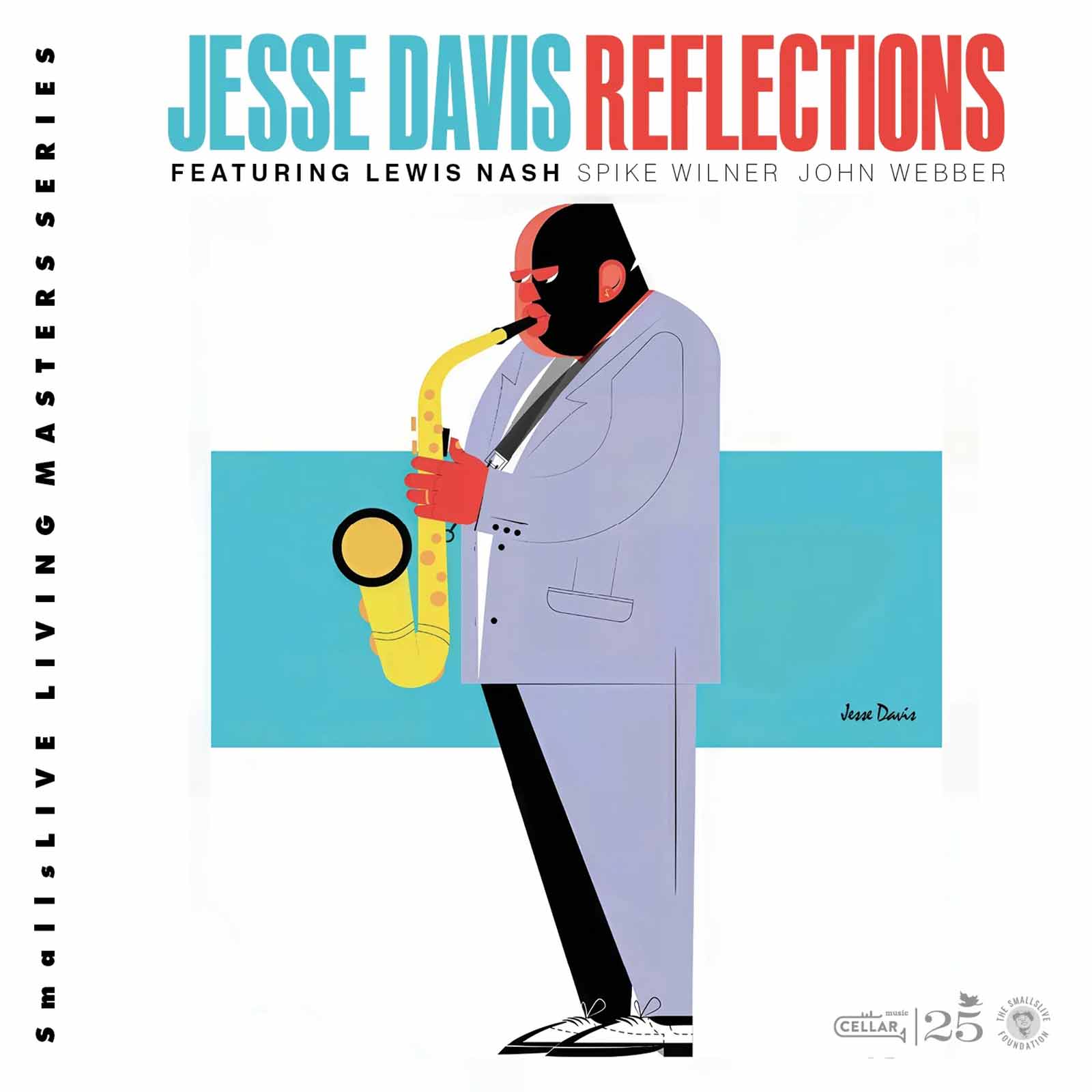
Summary: In Reflections, Jesse Davis delivers a refined, groove-driven jazz album blending tradition and introspection, pairing original compositions with Thelonious Monk’s work in a deeply expressive and elegant style.
“In ‘Reflections,’ Jesse Davis Lets Tradition Speak, With Clarity and Conviction”
This strain of classic jazz reveals its full worth only when performed with genuine fervor. In Reflections, Jesse Davis brings that intensity to the forefront, offering a program that blends his own compositions with those of Thelonious Monk. The result is a record aimed squarely at discerning listeners, one that rewards close attention and invites savoring each phrase through to the final note.
As Charlie Parker once said, “Music is your own experience, your thoughts, your wisdom. If you don’t live it, it won’t come out of your horn.” Davis, a deeply expressive alto saxophonist, seems to take that idea as both principle and practice. “Bird spoke to me,” he reflects, an assertion that finds resonance throughout the album.
Echoes of Bird inevitably surface while listening. Directed by Clint Eastwood and carried by the haunting performance of Forest Whitaker, the film captured a mood that Davis channels here: introspective, shadowed, and lyrical. Working with his quartet, he crafts a sound both poised and emotionally charged, where power is balanced by restraint and reflection.
From the outset, the album signals its intent. Davis has described it as groove-oriented, music designed to feel immediate and connective. Yet beneath that accessibility lies a more personal thread. The opening track, “Blue Autumn,” unfolds as a 48-bar blues driven by a restless rhythmic undercurrent, its structure carrying the emotional weight of loss without tipping into excess. Monk’s “Reflections” reinforces the album’s inward gaze, while original pieces such as “Choctaw Alley”, named after a New Orleans street where Davis first learned to improvise, trace a line back to formative experiences.
These elements give the record its cohesion, though not without a certain familiarity. At times, the adherence to established forms and tonal language may feel more reverential than exploratory—a choice that will either reassure or leave some listeners wishing for sharper departures. Still, that very commitment to tradition is central to Davis’s artistic identity.
It is difficult not to hear, in his phrasing and tonal clarity, an affinity with Dexter Gordon. While their voices differ, both share a lucid sense of musical architecture and narrative flow. Davis’s grounding in the tradition was shaped under the guidance of Ellis Marsalis at the New Orleans Center for Creative Arts. By the late 1980s, he had emerged on the New York scene as part of the “Young Lions” generation, a cohort committed to reaffirming jazz’s core language.
Over the course of four decades, Davis has collaborated with an array of major figures, including Clark Terry, Ray Brown, Milt Jackson, Cedar Walton, Benny Golson and Wynton Marsalis, while releasing ten albums as a leader. Now long based in Verona, Italy, he remains an essential, if still underrecognized, voice on the alto saxophone, bridging generations with a sound that is both grounded and current.
Ultimately, Reflections offers a deeply satisfying listening experience. Its pleasures lie less in reinvention than in refinement: the assurance of touch, the coherence of vision, the quiet authority of a musician fully at ease within his language. Through artists like Davis, jazz continues to renew itself, not by abandoning its past, but by rearticulating it with clarity, conviction and enduring grace.
Thierry De Clemensat
Member at Jazz Journalists Association
USA correspondent for Paris-Move and ABS magazine
Editor in chief – Bayou Blue Radio, Bayou Blue News
PARIS-MOVE, April 4th 2026
Follow PARIS-MOVE on X

::::::::::::::::::::::::
Musicians :
Jesse Davis – alto saxophone
Spike Wilner – piano
John Webber – bass
Lewis Nash – drums
Track Listing :
Blue Autumn
Reflections
Choctaw Alley
Funk Sugo
It’s Just Farewell
Do You Know What It Means To Miss New Orleans
Evidence
Executive Producer: Spike Wilner & Cory Weeds
Produced by Cory Weeds
Recorded at GB’s Juke Join, Long Island City, New York on March 2nd, 2025
Engineered, Mixed and Mastered by Colin Mohnacs
Production Manager: Dominic Duchamp
Photography by William Brown
Cover Artwork by John Mugo
Design and layout by John Sellards