
| Jazz |
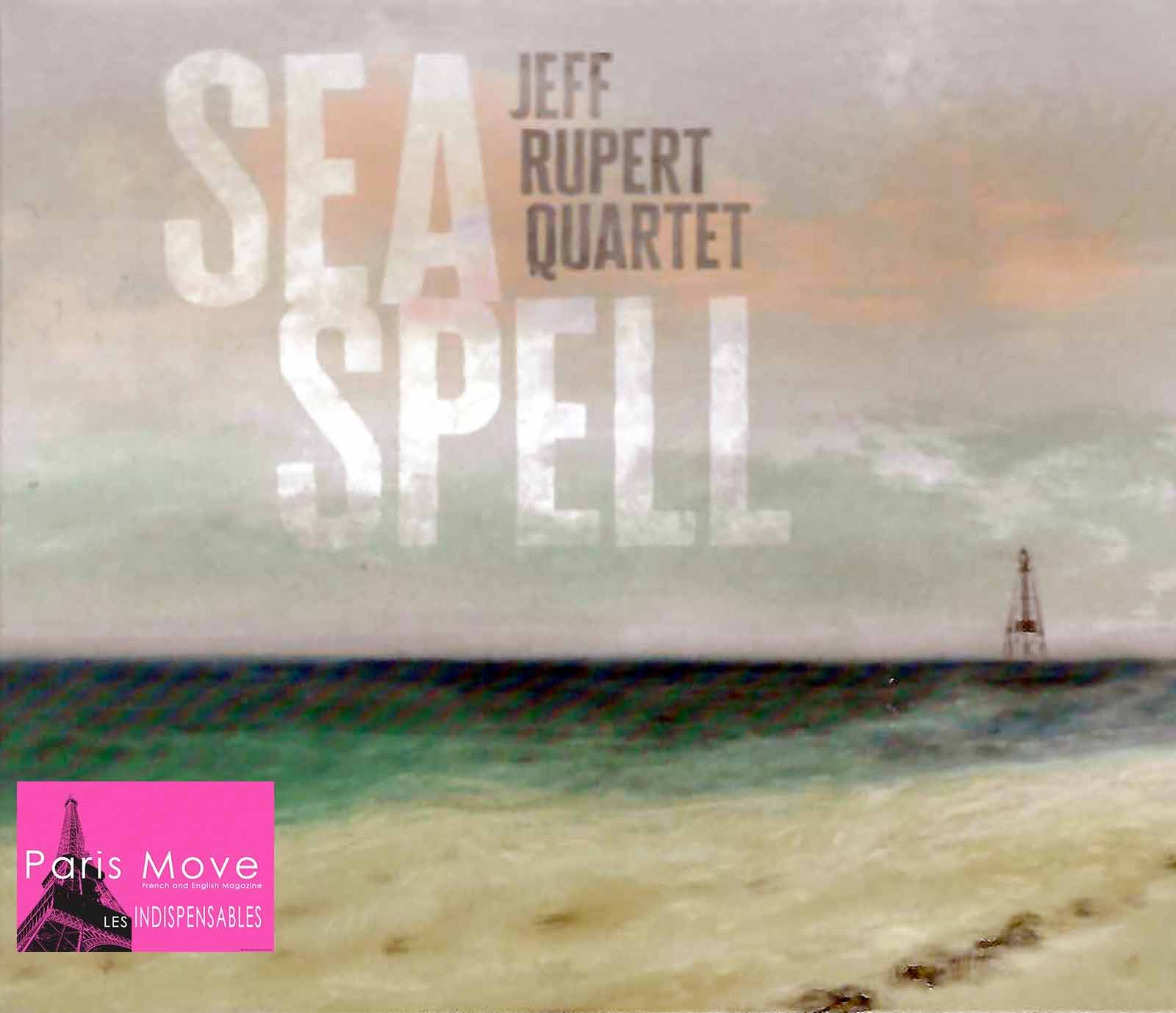
Summary: Jeff Rupert’s Sea Spell blends elegant saxophone work, maritime-inspired atmospheres, and sophisticated quartet interplay into a timeless jazz album that bridges tradition and contemporary artistry.
Jeff Rupert’s Sea Spell Charts a Lyrical Journey Through Jazz Tradition and Maritime Imagination
Some albums announce themselves immediately. Others reveal their character slowly, like a coastline emerging through morning mist. Jeff Rupert’s Sea Spell belongs firmly to the latter category. It is an album that rewards patience, drawing listeners into a world of subtle colors, shifting moods, and quiet discoveries. By the time its final notes fade, it leaves behind the impression of having traveled somewhere both deeply personal and strangely universal.
The sea has long inspired musicians, writers, and visual artists alike. In Paris during the 1980s, an artist known as Solombre operated a small gallery near Place de la Madeleine. To this day, he created some of the most striking maritime works I have ever encountered. Through delicate etchings rendered in soft pastel tones, he captured not the sea itself, but the feeling of the sea: drifting fog, distant horizons, fleeting light, and the elusive boundary between memory and dream. His images felt like waking reveries, suspended somewhere between reality and imagination.
Jeff Rupert’s Sea Spell belongs to that same artistic lineage.
Rather than overwhelming the listener, the album gently draws us into its world. It unfolds through a form of lyrical, deeply traditional jazz that seems almost impossible to date. The music exists outside of fashion and beyond specific eras because each composition speaks directly to a collective imagination. Rupert is not interested in nostalgia for its own sake. Instead, he taps into something more enduring, creating musical landscapes that feel simultaneously familiar and freshly discovered.
It is worth remembering that Rupert arrives at this recording with a remarkable pedigree. Throughout his career, he has performed alongside some of the most respected figures in jazz. Maynard Ferguson is only one example, and perhaps the only name I will mention here, otherwise this review risks becoming a biographical encyclopedia. For those interested in exploring the full scope of Rupert’s career as a composer, saxophonist, educator, and advocate for jazz, his biography is well worth seeking out.
Listening to this quartet explore themes of maritime enchantment, hidden currents, and the mysteries of the sea is akin to watching sunlight dance across calm summer waters. Rupert has often struck me as something of a spiritual descendant of Gerry Mulligan. There is a similar warmth in his phrasing, the same ability to round out a note and let the breath carry the melody with effortless grace. Yet Rupert is unmistakably a musician of his own time. The sophistication of the arrangements quickly dispels any notion of imitation. This is contemporary jazz built upon tradition rather than confined by it.
That balance between heritage and innovation has defined much of Rupert’s career. Since 1996, he has maintained a close artistic association with the legendary Sam Rivers, participating in multiple recordings and performing hundreds of concerts alongside him. Those appearances included prestigious stages such as Jazz at Lincoln Center, where he was featured on Jazz from Lincoln Center with Ed Bradley, broadcast on NPR, as well as performances at New York’s Vision Festival and Columbia University.
These affiliations help illuminate Rupert’s artistic philosophy. Like the finest musicians associated with the Lincoln Center tradition, he seeks to preserve jazz history while ensuring its continued evolution. It is a difficult balance to achieve. Too often, musicians become trapped either by academic orthodoxy or by novelty for novelty’s sake. Rupert avoids both pitfalls. He absorbs the language of the tradition while allowing his own personality and curiosity to reshape it from within.
No track demonstrates this more clearly than “Polka Dots and Moonbeams.” Here, Rupert reveals the full expressive potential of the saxophone. His instrument becomes a storyteller, a character moving through the narrative rather than simply delivering melodies. During several passages, his horn seems to hover above the rhythm section before settling gently into the ensemble’s conversation, creating moments of remarkable tension and release. He is supported by three equally accomplished musicians whose sensitivity and technical command reward repeated listening. In this style of jazz, the real magic lies not in individual virtuosity but in conversation. Every phrase is answered, every gesture acknowledged, every silence given meaning. The quartet operates less like a hierarchy and more like an ecosystem in which each voice contributes to a delicate and constantly shifting equilibrium.
Rupert’s standing within the jazz community is further reflected in his long relationship with Wynton Marsalis. The two musicians share a mutual respect grounded in education, collaboration, and a commitment to preserving jazz’s cultural legacy. Marsalis has frequently drawn upon Rupert’s ensembles and educational work for major initiatives, recognizing both the vitality and relevance of his approach.
What makes Sea Spell particularly compelling, however, is its sense of artistic freedom. In many ways, this feels like one of Rupert’s most accessible and direct statements. There is an ease to the music, as though he has fully liberated himself from any external expectations. On “A Breeze Through the Keys,” subtle traces of jazz fusion emerge. The track drifts effortlessly between lyrical passages and more exploratory harmonic movement, opening windows onto unexpected sonic territory without ever abandoning the album’s central mood. Not enough to alter the album’s overall identity, but sufficient to broaden its emotional palette. Rupert understands precisely when and how to introduce new textures. Nothing feels forced. Every stylistic gesture serves the larger composition.
This level of compositional maturity is rarer than one might expect. Many contemporary jazz recordings aspire to modernity but struggle to achieve genuine depth. Rupert succeeds because his innovations arise organically from a profound understanding of the music’s foundations. The result is an album that feels adventurous without becoming self-conscious and sophisticated without sacrificing emotional clarity.
Sea Spell is, above all, an inward journey. It is also a compelling demonstration of what remains possible within contemporary acoustic jazz. Beneath its inviting melodies lies a remarkably intricate architecture, rich with nuance, interaction, and carefully crafted detail. It is an album that rewards both passive enjoyment and close study. One can simply surrender to its beauty, or return repeatedly to uncover the subtle decisions that shape its world.
At a moment when much contemporary jazz often finds itself pulled between reverence for the past and the pressure to reinvent itself, Sea Spell offers a persuasive alternative. Jeff Rupert demonstrates that innovation does not require abandoning tradition, and that sophistication need not come at the expense of warmth. The album stands as one of those increasingly rare recordings that satisfy both the intellect and the senses, inviting reflection while remaining deeply pleasurable to hear. Like the sea itself, the music reveals something new with every encounter.
Thierry De Clemensat
Member at Jazz Journalists Association
USA correspondent for Paris-Move and ABS magazine
Editor in chief – Bayou Blue Radio, Bayou Blue News
PARIS-MOVE, June 2nd, 2026
Follow PARIS-MOVE on X
::::::::::::::::::::::::
Jeff Ruppert on University of Central Florida’s website
Musicians :
Jeff Rupert, tenor saxophone
Richard Drexler, piano
Ben Kramer, bass
Marty Morell, drums
Track Listing :
Spring Can Really Hang You Up The Most
Blue Steel
Mambo Inn
Sea Spell
Look Who’s Calling
Polka Dots And Moonbeams
A Breeze Through The Keys
Orca-Stration
Wednesday’s News