| Jazz |
Summary: The Jazzlab Orchestra delivers a bold and sophisticated modern jazz album with Glissement du Temps, a richly layered, orchestral work that rewards deep listening, even if its complexity may challenge casual audiences.
Jazzlab Orchestra’s Glissement du Temps: A Bold, Modern Jazz Suite from Quebec’s Leading Ensemble
A large ensemble unlike most, emerging from Quebec, begins not with restraint but with a surge of intent, a dense, shifting tapestry of sound that immediately signals its ambitions. The Jazzlab Orchestra wastes little time establishing its identity: resolutely modern, structurally adventurous, and unafraid of complexity.
Across ten original compositions, seven on CD, four on vinyl, and all ten available digitally, the collective draws on both its own members and three distinguished jazz composers: François Bourassa, Gentiane MG, and Pierre de Bethmann. There is, admittedly, a lingering frustration in the truncated CD format, which omits three pieces and disrupts what feels like a carefully conceived whole. In an era increasingly shaped by digital listening, the decision underscores a quiet tension between format and artistic continuity, one that may leave collectors wanting more than the physical edition provides.
For more than two decades, the Montreal-based Jazzlab Orchestra has asserted itself as a driving force in musical creativity, both within Quebec and far beyond. With over 500 concerts to its credit, the ensemble operates less like a traditional orchestra than a living workshop, an evolving laboratory of sound shaped by collaboration, experimentation, and a shared artistic ethos.
That ethos is most evident in the album’s compositional diversity. The selection of composers allows the orchestra to explore multiple aesthetic pathways, at times angular and fragmented, at others lyrical and expansive, while maintaining a striking sense of cohesion. A piece shaped by Bourassa’s architectural clarity might sit alongside a more impressionistic work by Gentiane MG, yet the transitions feel deliberate, even inevitable.
Still, this ambition is not without its risks. At moments, the density of ideas can verge on overload, the intricacy of the arrangements threatening to outpace emotional immediacy. Some passages, particularly in the more abstract sections, may feel elusive on a first listen, demanding patience rather than offering instant connection. Yet it is precisely this refusal of ease that ultimately defines the album’s character.
The arrangements themselves remain a central triumph. Ingenious and finely calibrated, they create a sonic identity that is unmistakably the orchestra’s own. Over time, the ensemble has brought this vision to stages around the world, including Jazz at Lincoln Center, New Morning, Café de la Danse, Casa del Jazz, Jazz Station, and the Budapest Music Center, spaces that mirror the group’s international reach and artistic credibility.
The sequencing of the album reveals a particularly refined sense of form. Rather than a loose collection of compositions, the record unfolds with a near-symphonic logic, each piece feeding into the next with a quiet sense of inevitability. The effect is cumulative: themes echo, textures evolve, and contrasts sharpen over time. It is music that resists fragmentation, asking instead to be experienced in full.
This is not, by any measure, background listening. It demands attention, rewards repetition, and gradually discloses its architecture to those willing to engage deeply. Like contemporary classical music, it invites analysis as much as emotion, sometimes at the expense of immediate accessibility, but never without purpose.
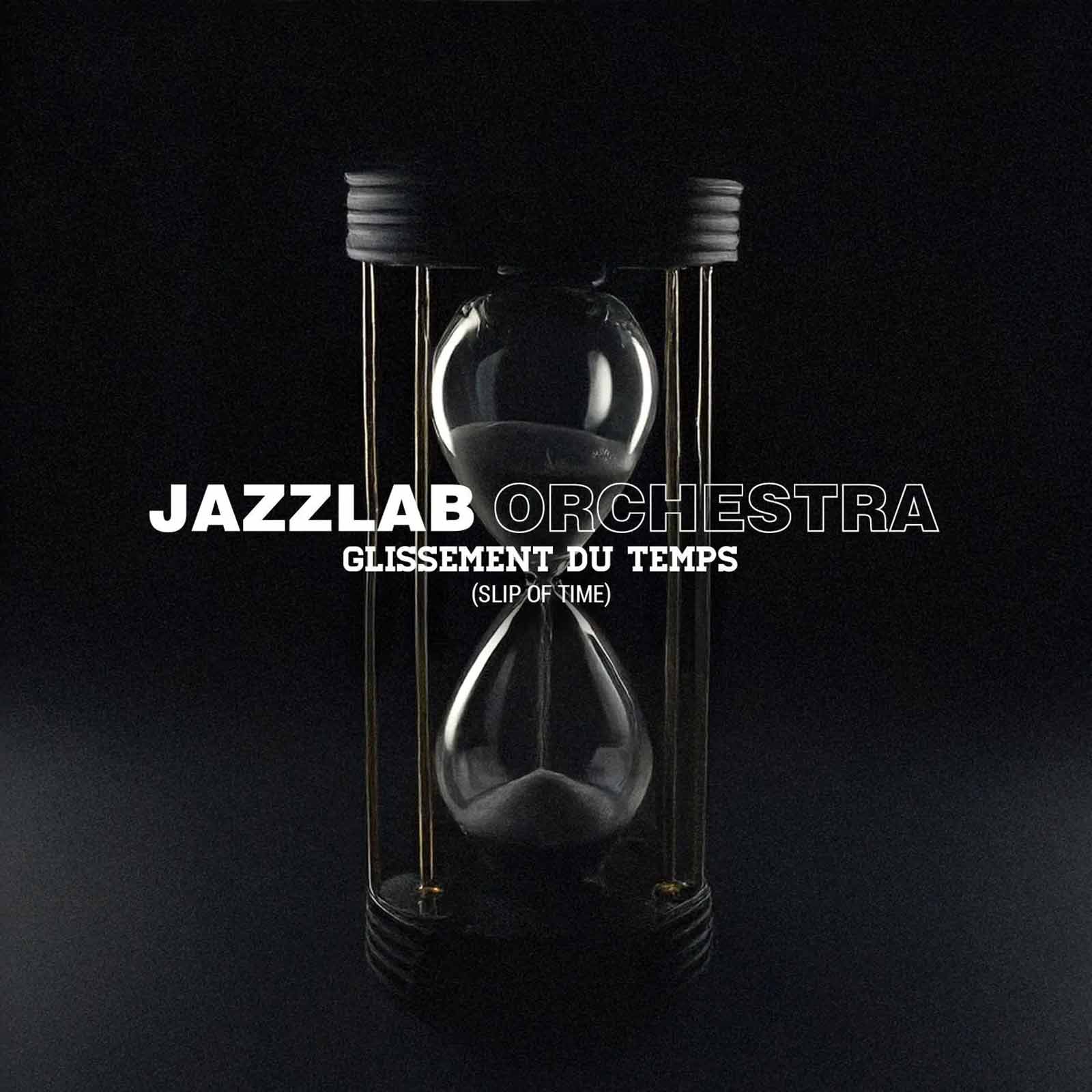
Titled Glissement du Temps (loosely translated as “Slip of Time”), the album ultimately feels like a journey through unstable terrain, shifting, unpredictable, and quietly mesmerizing. It is aimed at listeners who seek challenge as much as beauty, who are willing to navigate complexity in exchange for discovery. Those in search of immediacy or melodic comfort may find themselves at a distance; for others, the album offers a richly rewarding, if demanding, experience.
Thierry De Clemensat
Member at Jazz Journalists Association
USA correspondent for Paris-Move and ABS magazine
Editor in chief – Bayou Blue Radio, Bayou Blue News
PARIS-MOVE, April 6th 2026
Follow PARIS-MOVE on X

::::::::::::::::::::::::
Musicians:
Mario Allard – Alto & Bari Sax (1-3)
Annie Dominique – Alto, Soprano & Tenor Sax, Bass Clarinet
Claire Devlin – Soprano & Tenor Sax
Erik Hove – Alto Sax, Flute (4, 6, 7)
Jacques Kuba Séguin – Trumpet (1-3, 5)
Nicolas Riverin – Trumpet (4, 6, 7)
Thomas Morelli-Bernard – Trombone
Michael Johancsik – Tenor Sax, Flute (6)
François Bourassa – Piano (2, 3)
Marie-Fatima Rudolf – Piano (1, 4-7)
Alain Bédard – Bass
Michel Lambert – Drums
Track Listing:
Thanks Collier
Amigos
Murs de verre
Outer Chamber
Night Bus
EMT
La mule