
| Jazz |
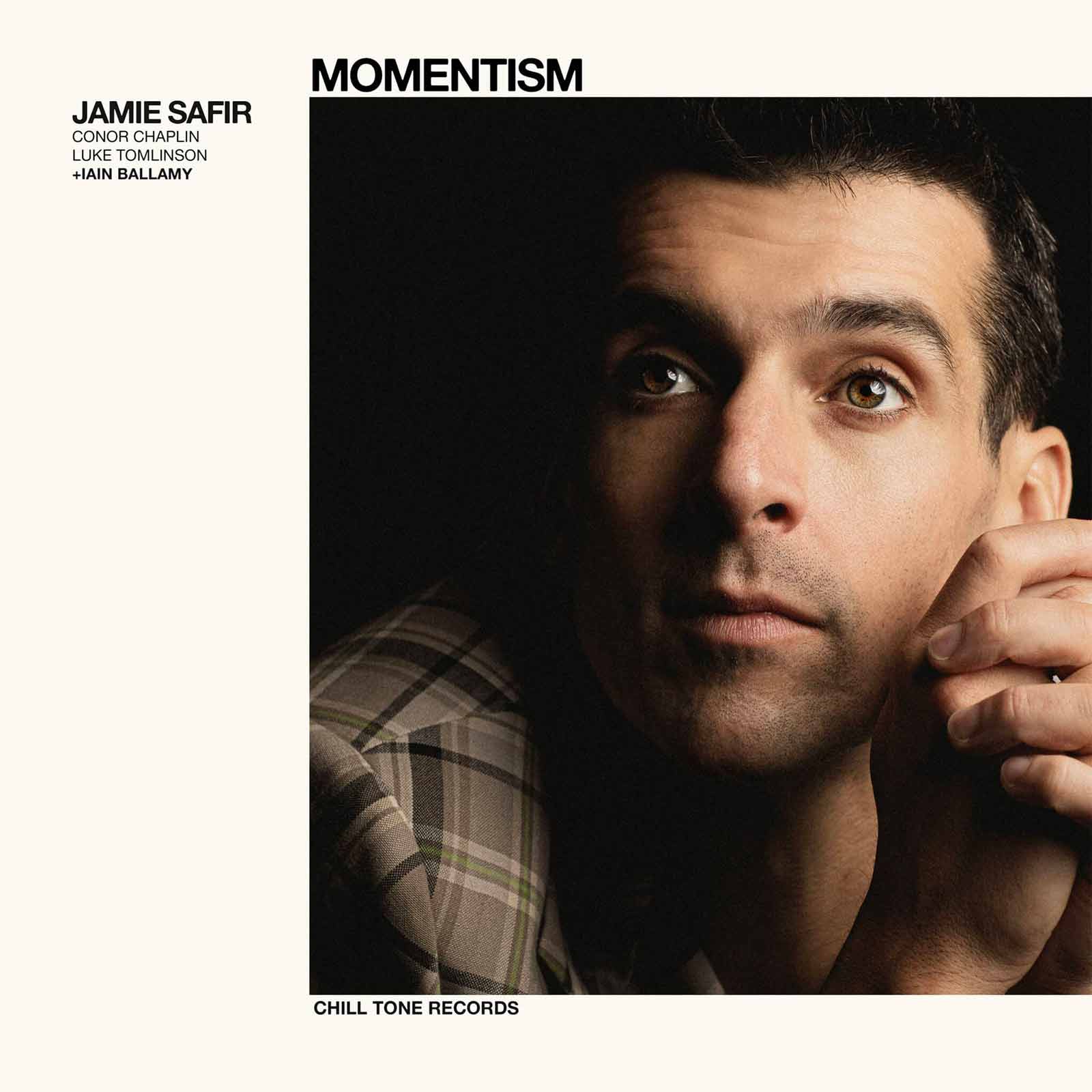
Summary: Jamie Safir’s Momentism brings piano, jazz, classical influences and improvisation together in a quietly confident debut shaped by years as an accompanist.
Jamie Safir – Momentism: A Piano-Led Jazz Album About Listening and Melody
Once again, the piano is at the centre. Jamie Safir’s Momentism is the work of a composer and pianist who moves almost without effort between solo piano, which opens and closes the album, and a quartet in which the instrument becomes less a dominant voice than the point from which everything else begins to move. Safir steps forward here, properly and without fuss, revealing a musical personality that has spent much of its life in the background, accompanying other people. That history matters. It is there in the patience of the playing, in the way phrases are allowed to breathe, in the sense that music is made as much from what is left unsaid as from what is actually played. Years spent accompanying have their consequences. They teach you to listen before you speak, to recognise the moment when a phrase needs support and the moment when it needs space. They also teach you that not every silence needs filling. On Momentism, those lessons have found their way into the writing. Safir has a gift for melody, but his themes never feel like convenient vehicles for improvisation. They have their own weight, their own identity, and yet remain open enough for the musicians around him to enter without having to force their way in. Conor Chaplin on bass, Luke Tomlinson on drums and Iain Ballamy on saxophone form something closer to a small musical community than a backing band. The distinction is subtle but important. Nobody seems to be waiting for the pianist to finish so that they can have their turn. The music moves between them. There is refinement in the playing, precision in the writing, and a simplicity that only becomes more convincing when you notice how carefully it has been made. Nothing is overexplained. Nothing needs to be.
Safir comes from Manchester, but the music carries a history that is difficult to contain within jazz alone. Classical music is part of it, although rarely in any obvious or demonstrative way. You hear it in the architecture, in the way harmonies are allowed to develop, in the care taken over the shape of a piece. There is structure everywhere, but it remains largely invisible. That may be the quiet achievement of Momentism. The sophistication never seems to ask for recognition. Safir does not sound like a musician anxious to show what he knows. He lets the music take its own time, and there is something quietly confident in that decision. His years around pop and songwriters have left another trace, a sense of how a melody can travel quickly from one person to another, how a phrase can be simple without being empty. Jazz brings the freedom to move, to improvise, to respond. Classical music brings an ear for construction. Pop brings an instinct for economy. None of these things cancels the others out. They sit beside one another, sometimes almost unnoticed, until the whole begins to sound like Safir. The categories remain there if you need them, but the music itself does not seem particularly interested in them.
There is also the matter of the accompanist, a role that can easily be misunderstood from the outside. Safir has spent years working with artists from different musical worlds, from jazz to pop, supporting singers and performers whose own voices had to remain at the centre. To accompany someone is to understand when to be heard and when not to be heard. It means following another person’s breathing, anticipating a movement, sensing when a chord will help and when it will only get in the way. It requires control, but also a willingness to disappear. There is a certain humility built into the job. You are there, but you are not supposed to make the room about you. That experience seems to have stayed with Safir. Even alone at the piano, there is something conversational in his playing, as though the space around him were never quite empty. And with the quartet, that instinct becomes part of the music itself. He does not write over his musicians. He gives them somewhere to go. Ballamy’s saxophone can take a melody somewhere more lyrical or somewhere less certain, while Chaplin and Tomlinson keep the music grounded without pinning it down. The result is a band that listens to itself. That may sound like a small thing, but it is not. It is what gives the record its natural movement.
The title Momentism suggests something else. The present, the instant, the thing that cannot quite be repeated. Jazz has always lived there, in that unstable territory between what has been decided and what is about to happen. A composition can be carefully written, but it remains unfinished until musicians enter it and make decisions in real time. Safir’s quartet works inside that space. The pieces have enough shape to remain recognisable, but enough air around them to admit something unforeseen. There is a quiet tension between the written and the spontaneous, between the thing that exists on the page and the thing that may disappear as soon as it has been played. It also mirrors Safir’s own path. After years spent inside other people’s music, he has reached the point where he can turn that accumulated experience towards himself. The move from accompanist to composer does not feel like an escape from the past. It feels like the past finally becoming useful. All the listening, all the restraint, all the hours spent understanding someone else’s intention are now present in his own music.
The transition was already visible in Piano Talk, the solo show he presented in 2022 at venues including Crazy Coqs and Ronnie Scott’s, where he played to full houses. There was nowhere to hide there, at least not in the old way. Without another performer to support, Safir had to carry the room himself. He had to play, speak, shape the evening and establish a direct relationship with the audience. The piano stopped being the instrument behind somebody else’s voice and became the voice. That experience seems to have left a trace on Momentism. Safir never retreats from the piano. Some composers eventually move away from their own instrument when they begin thinking about the larger architecture of an ensemble. Safir remains close to his. The piano is still where the ideas begin, where the harmonies first appear, where the melodies find their shape. Even inside the quartet, it remains the centre of gravity. Not because Safir needs to dominate the music, but because the piano is simply where his musical thinking seems most at home.
There is no return here to the old idea of the pianist as unquestioned master of the group. If anything, the opposite has happened. The years spent accompanying seem to have made Safir more aware of what can be gained by holding something back. A silence can matter. A chord can matter more because it arrives late. A phrase does not become stronger simply because it is played louder or faster. There is a certain distance in his playing, the distance of someone who knows his instrument well enough to listen to it almost from the outside. There is technique, of course, but technique is rarely the point. The music is more interested in atmosphere, in the slow appearance of a melody, in the aftertaste of a harmony. Momentism does not rush to make its case. It allows things to remain unresolved for a while. In a musical culture increasingly shaped by immediacy, that kind of patience can feel almost old-fashioned. Safir seems perfectly comfortable with that. He understands that some melodies need time before they reveal what they are.
Iain Ballamy is central to this balance. His saxophone does not simply colour the piano’s writing; it answers it, pushes against it, sometimes seems to take the same idea and look at it from another angle. There is something of chamber jazz in the relationship, an emphasis on listening rather than display. Yet Ballamy also leaves a little dirt around the edges. His playing can be lyrical, but it can also be rougher, less predictable, preventing the music from settling into anything too comfortable. Chaplin and Tomlinson provide the other half of that equation. The bass gives the harmonies depth, the drums keep the music moving, and neither ever feels like decoration. The quartet works because no instrument seems unnecessary. It sounds less like a pianist surrounded by hired hands than like four musicians sharing the same piece of ground.
Perhaps that is what makes Momentism quietly convincing. Safir does not appear to have invented a new self now that he is finally at the centre of the record. The person we hear here is recognisable as the musician who has been working for years in other people’s music. His pop experience, his work with established performers, his jazz background, his classical influences and his life as an accompanist have not been discarded in order to create a new identity. They have simply accumulated. Now they have begun to speak at the same time. The result is sophisticated without being precious, melodic without becoming obvious, carefully constructed without feeling overworked. It is a difficult balance to maintain, and perhaps the most revealing thing about Safir’s writing is how little it seems to strain for that balance.
For that reason, Momentism feels like more than the arrival of a pianist who has finally decided to step out from behind the people he used to accompany. It is less dramatic than that, and probably more meaningful. The album shows what can happen when the skills of an accompanist are carried into composition. Safir knows what a melody weighs because he has spent years holding up other people’s melodies. He knows what silence can do because he has spent years learning not to fill every available space. He knows the stage because he has lived on it from a position where the spotlight was usually somewhere else. Now the light happens to fall on him, but the old instincts remain. Momentism is where those experiences meet. The piano is still at the centre, but it no longer needs to rule alone. The compositions are firm enough to survive improvisation, and the improvisation is loose enough to keep the compositions alive. The influences are visible, but they do not become a cage.
In the end, Momentism feels like Safir gathering together the different musical lives he has lived without trying to explain them. Manchester, British jazz, London, pop, great voices, solo performance, classical music, the long tradition of jazz piano and its faith in melody: they are all somewhere inside these pieces. Yet there is no sense of a résumé being presented. The music simply goes on. Quietly, steadily, without much need to announce itself. Perhaps that is the most revealing thing about Jamie Safir’s emergence as a composer. He has not tried to erase the accompanist in order to become the man in front. He has taken that accompanist with him. His piano belongs to someone who learned to listen before expecting to be listened to. And now, standing at the centre, he is still listening. That may be why the music works as it does. The compositions know where they are going, but they leave room for the road. They are written, but never entirely fixed. They are personal without becoming inward-looking. And underneath the apparent simplicity lies the thread that seems to connect the whole of Safir’s musical life: a deep trust in the piano, in melody, and in the strange ability of music to take something as fleeting as a moment and make it last.
Thierry De Clemensat
Member at Jazz Journalists Association
USA correspondent for Paris-Move and ABS magazine
Editor in chief – Bayou Blue Radio, Bayou Blue News

PARIS-MOVE, September 23rd, 2026
Follow PARIS-MOVE on X
::::::::::::::::::::::::
Musicians:
Jamie Safir, piano
Conor Chaplin, double bass
Luke Tomlinson, drums
Lain Ballamy, saxophone
Track listing:
- Momentism (3.29)
- Boulevardier (4.52)
- Zacharius (3.28)
- Hirsute Pursuit (5.45)
- Amethyst (5.21)
- Duke Balington (5.08)
- Black Star Sapphire (For Strayhorn) (5.05)
- Clocker (4.43)
- The World In The Evening
- Mad Sad Bad (6.00)
- Esprit D’Escalier (2.33)
All music by Jamie Safir (Jamie Safir/CAC Music Publishing, BMI)
Except Amethyst by Jamie Safir & Emma Smith
Executive Producers: Chris Leon, Andrew Horowitz, Coyle Girelli
Produced by Jamie Safir and Chris Leon
Recorded February 16, 2026 at Master Chord Studio, London, UK
Engineered by Ronan Phelan & Chris Leon
Mixed by Sam Hogg at The Calm And Collected // London
Mastered by Chris Leon at The Vesper Sky Room, Arinsal, Andorra
Photographs and Design by Livia Blanc