| Jazz |
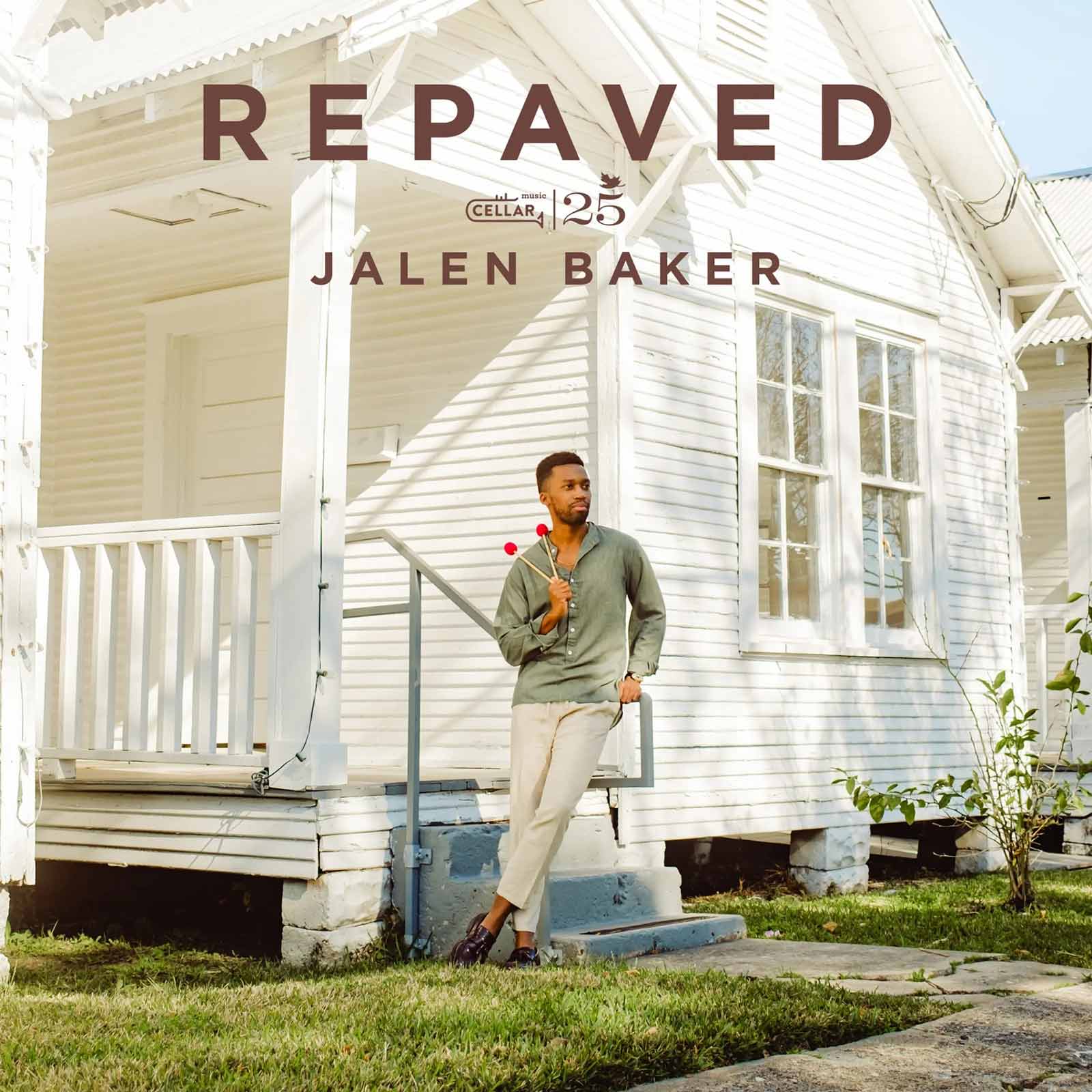
Summary : Jalen Baker’s RePaved blends jazz, classical music and Houston’s rich Black history into a powerful musical reflection on memory, identity, resilience and a city in transformation.
Jalen Baker’s RePaved: A Jazz Portrait of a City, Its Memory and Its Future
As summer slowly begins to give way to fall, the first signs of the season are already becoming difficult to ignore. Before long, the oversized ghosts, skeletons and monsters will begin appearing in American front yards, announcing the approach of Halloween and, with it, the beginning of the long holiday season. It seemed like a good moment to finally spend some time with Jalen Baker’s RePaved, an album that deserves to be heard with more attention than the usual casual listen. Baker is a vibraphonist and composer who moves comfortably between jazz and classical music, bringing the two traditions together without ever seeming concerned that he should choose one over the other. His music suggests that the boundaries between genres are often much less rigid than the music business would have us believe, and RePaved makes that freedom one of its defining characteristics.
There are European musicians, Iiro Rantala among them, who have explored similar territory, although their work often moves increasingly toward the classical tradition. Baker takes a somewhat different route. On RePaved, jazz and classical music are not presented as two separate languages that occasionally meet. They are woven together throughout the compositions, with the improvisational freedom of jazz existing alongside the larger architecture of chamber and orchestral writing. The result is a record that feels carefully composed without ever losing the sense of movement and spontaneity that makes jazz such a vital form of expression. Baker has created a musical environment in which a vibraphone can occupy the same emotional space as a string quartet, while a flute, piano, bass and drums keep the music grounded in the language of jazz.
For the project, Baker brings together his regular quintet with a string quartet, creating an ensemble capable of moving between intimacy and scale. Baker plays vibraphone and serves as composer, joined by Alexandria DeWalt on flute, Paul Cornish on piano, Gabriel Godoy on bass and Gavin Moolchan on drums. The string quartet features Yoojin Park and Chiara Jamila on violin, Tia Allen on viola and Reenat Pinchas on cello. The instrumentation immediately recalls the expansive suites associated with some of Baker’s most important influences, including Duke Ellington, Wynton Marsalis and Billy Childs, but the music never feels trapped inside those references. Baker understands the tradition well enough to use it as a foundation rather than as a set of rules, and that distinction gives the album much of its personality.
The combination of jazz and strings is particularly effective because the quartet does not simply sit behind the jazz musicians as an ornamental layer. The strings become part of the musical conversation, expanding the emotional range of the compositions while allowing the rhythm section to retain its essential role. Baker’s vibraphone provides another dimension, sometimes bright and crystalline, sometimes introspective, often occupying a space between the precision of written music and the freedom of improvisation. The effect is sophisticated without becoming academic, and that is an important achievement because music that attempts to bring jazz and classical traditions together can easily become overly formal. Baker avoids that problem by allowing the musicians to breathe inside the arrangements.
The album’s musical ambitions also reflect the environment in which Baker developed as a musician. Across the United States, colleges and universities have long provided an unusually fertile environment for the meeting of musical traditions. Walk into many American music departments and it is not unusual to find rehearsal rooms filled with instruments, jazz ensembles working alongside classical groups and students moving between different musical disciplines. That infrastructure makes collaboration possible in a way that is sometimes underestimated. Baker has taken that possibility and turned it into a mature artistic language, one that allows jazz and classical music to exist together without either tradition having to surrender its identity.
Yet the musical construction of RePaved is only part of the story. The deeper subject is Houston, and more specifically the history of Houston’s Black communities and the continuing transformation of the city’s historic neighborhoods. Baker was born in Washington, D.C., but he was raised in Houston, and his family history in the city reaches back several generations. That connection gives the album a personal dimension that distinguishes it from a conventional concept record built around historical research. Baker is not simply looking at Houston from the outside. He is writing from inside a place that has helped shape his own identity as a musician and composer.
This becomes especially clear in “Dowling/Emancipation,” a composition whose title refers to one of the most visible examples of how public memory can change. In 2017, a major street running through Houston’s Third Ward was renamed Emancipation Avenue. It had previously been known as Dowling Street, a name honoring Richard W. Dowling, a Confederate officer. The renaming was celebrated by many residents as an important act of cultural reclamation, particularly because the street runs through a historically Black community whose own history had often been overshadowed by the names and symbols imposed upon it. For Baker, the change represented the recovery of something that belonged to the Black residents of the Third Ward, and that idea becomes the foundation for the composition.
What makes “Dowling/Emancipation” compelling is that Baker does not treat the subject as a simple historical footnote. The music becomes a way of connecting the past with the present, allowing the listener to consider what a street name can represent and why a seemingly ordinary piece of urban infrastructure can carry such extraordinary emotional and political weight. A name is never simply a name when it is attached to a community’s history. It can represent power, memory, exclusion or belonging, and Baker understands that changing such a name can become a way of changing the story a city tells about itself.
That question of memory runs throughout RePaved, including in the album’s title. To repave a road is to cover an existing surface with something new, usually because the old surface has deteriorated or because the city has decided that it needs to be replaced. The metaphor becomes difficult to ignore when applied to neighborhoods. Cities are constantly rebuilding themselves, and change is inevitable, but rebuilding can also obscure what existed before. Buildings disappear, businesses close, streets are renamed and communities can become almost unrecognizable to the people who once called them home. Baker’s music asks what happens to the history beneath the new surface and whether a city can continue to change without allowing its memory to disappear.
Houston is an especially appropriate setting for that conversation because its cultural history is enormous and complicated. The city has been home to generations of musicians working across jazz, blues, gospel, soul, funk, R&B and rock, and its musical identity has always been shaped by the interaction of different communities. The Houston Jazz Festival, with its long history of bringing major artists to the city, is part of that tradition, as are the many clubs, concert halls, churches, schools and neighborhoods that have helped sustain the city’s musical life. For a musician raised in Houston, that environment becomes part of the vocabulary even when it is not explicitly referenced in every composition.
Baker’s music seems particularly interested in the relationship between a city and the people who inhabit it. “City On The Water,” positioned near the center of RePaved, offers perhaps the clearest expression of that idea. The composition reflects on Houston’s vulnerability to natural disasters, including the devastating floods that have repeatedly tested the city, while also considering the resilience of the people who live there. The writing is reflective rather than sentimental, and DeWalt’s flute gives the piece an especially human quality, moving through the arrangement with a voice that feels intimate even when surrounded by the larger ensemble. The strings expand the emotional landscape without overwhelming it, while the rhythm section maintains the sense that this is still a jazz composition rather than an orchestral meditation.
The placement of “City On The Water” is important because it gives the album a moment in which the historical material becomes something more personal. By this point, the listener has already been introduced to questions of identity, place and collective memory, and the composition turns those concerns toward the physical reality of Houston itself. The city becomes something vulnerable, something capable of being damaged and rebuilt, but also something whose character is determined by the people who continue to live there. The music captures that tension without attempting to resolve it, which is one of the reasons it feels sincere rather than programmatic.
The same complexity appears in Baker’s decision to include “Smile,” the Charlie Chaplin composition, near the later part of the album. After spending so much time dealing with history, identity and the transformation of a community, the choice of such a familiar melody introduces a different emotional possibility. Chaplin’s song has always carried the idea of maintaining some measure of dignity and optimism in the face of difficulty, but Baker’s placement of it invites another interpretation. The smile could represent endurance, humor or even quiet defiance, the decision to continue moving forward despite everything that has happened. It is difficult to believe that the choice of this particular composition is accidental, especially within an album so concerned with resilience.
Only two compositions on RePaved were not written by Baker, with “Smile” joined by “Bemsha Blues,” the piece associated with Thelonious Monk and Denzil Best. Their presence places Baker’s original compositions within the larger history of jazz and makes clear that his interest in memory extends beyond Houston. Jazz has always been a music in which the past remains present, whether through repertoire, technique, improvisation or the continuing reinterpretation of older ideas. Baker is contributing to that process rather than attempting to stand apart from it, and the album benefits from that awareness.
What makes RePaved ultimately more interesting than a simple fusion of jazz and classical music is the fact that its musical language and its subject matter reinforce one another. The strings bring another historical dimension to the ensemble, while the jazz musicians keep the music moving and open to interpretation. The compositions are rooted in specific places and events, yet they remain accessible to listeners who know nothing about Houston’s Third Ward. The music can work on the level of sound alone, but understanding the stories behind it gives the listening experience another layer of meaning.
That is also where Baker’s work offers something valuable to listeners who may not normally think of jazz as a form of historical storytelling. Jazz is often discussed in terms of virtuosity, improvisation and technical innovation, but it has always been capable of carrying memory. A melody can preserve a feeling long after the circumstances that produced it have changed. A composition can give a neighborhood a musical identity. A performance can keep a story alive long after the physical landscape associated with that story has disappeared. Baker uses those possibilities without turning his music into a lecture, allowing the historical dimension to emerge through the compositions themselves.
For that reason, RePaved benefits from being heard as an entire work rather than as a series of individual tracks. The album has a narrative movement that becomes clearer when the pieces are allowed to speak to one another. The listener moves from questions of identity and history toward resilience, reflection and, eventually, something approaching optimism. The journey is not presented as a neat progression from darkness to light, because Baker understands that history rarely works that way. The past remains complicated, and the future remains uncertain, but music can provide a space in which those contradictions can coexist.
My suggestion would therefore be to give RePaved the kind of attention that has become increasingly rare in an era of endless playlists and constant background listening. Hear it from beginning to end without interruption, and then return to the pieces that initially stand out. Listen again to the relationship between Baker’s vibraphone and the strings, pay attention to the way the flute changes the atmosphere of “City On The Water,” and notice how the rhythm section prevents the larger arrangements from becoming too formal. Then consider the stories behind “Dowling/Emancipation” and the other compositions. The album becomes richer when the geography and history of Houston are allowed to enter the listening experience.
Baker is ultimately asking a question that extends far beyond one Texas neighborhood or one musical tradition. Every city has places that have disappeared, streets whose names have changed and communities whose stories have been pushed toward the margins by development and time. Progress does not necessarily require forgetting, but forgetting is often one of its unintended consequences. By turning the history of his city into music, Baker suggests another possibility in which transformation and remembrance can exist together.
That may be the most persuasive quality of RePaved. It does not attempt to freeze Houston in the past, nor does it romanticize a vanished version of the city. Instead, it looks at a place in motion and asks what should remain visible beneath the new surface. The album is contemporary jazz, but it is also a personal document, a reflection on community and an exploration of the ways in which music can preserve stories that might otherwise become difficult to hear.
As fall approaches and the first Halloween decorations begin appearing in American neighborhoods, the country will once again surround itself with imaginary ghosts. Baker’s music reminds us that the ghosts worth listening for are often much closer to home. They can be found in the names of streets, in family histories, in neighborhoods transformed by time and in the memories of people who refuse to allow their past to be erased. With RePaved, Jalen Baker gives those memories a voice, and in doing so creates an album that is not simply about where Houston has been, but about what it might choose to remember as it decides where it is going next.
Thierry De Clemensat
Member at Jazz Journalists Association
USA correspondent for Paris-Move and ABS magazine
Editor in chief – Bayou Blue Radio, Bayou Blue News
PARIS-MOVE, August 25th, 2026
Follow PARIS-MOVE on X
::::::::::::::::::::::::
Musicians :
Jalen Baker – vibraphone / composer
Gabriel Godoy – bass
Gavin Moolchan – drums
Paul Cornish – piano
Alexandria DeWalt – flute
Tia Allen – viola
Reenat Pinchas – cello
Yoojin Park – violin
Chiara Jamila – violin
Track Listing :
Antioch (The Beginning)
John Henry
Dowling/ Emancipation
Freedman
City On The Water
Kashmere
Bemsha Blues
Smile
Executive Producer: Cory Weeds
Produced by Jeremy Pelt
Recorded at January 5th & 6th, 2026 at GB’s Juke Joint, LIC, New York
Engineered by Owen Mulholland
Mixed and Mastered by Dave Sikula
Production Manager: Dominic Duchamp
Cover and back photographs by Jeremy Kabala
Other photography by William Brown
Design and layout by Perry Chua