| Contemporary music |
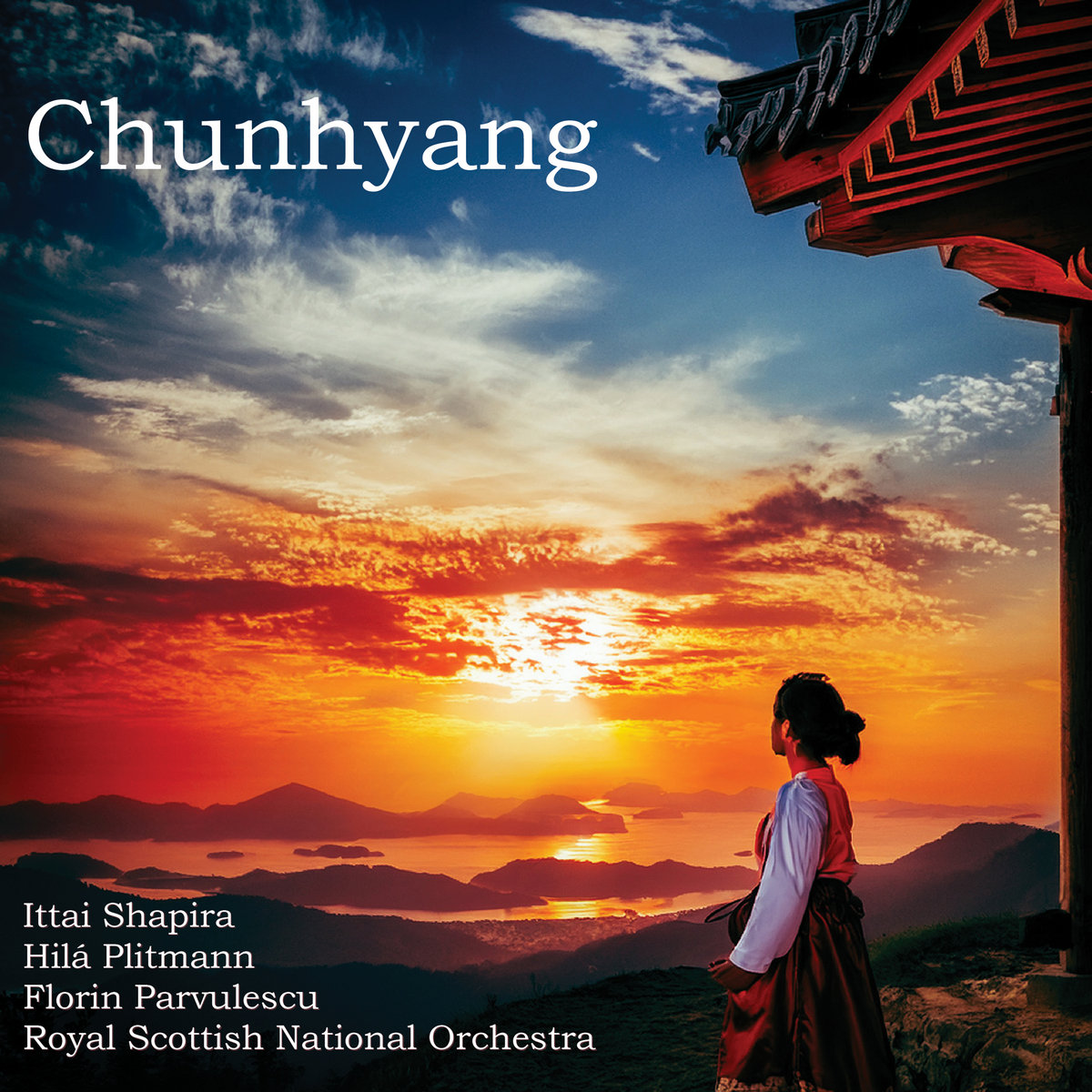
Ittai Shapira – Chunhyang: Where Korean Resilience Becomes Universal Music
There are works that aim to impress, and works that aim to reach you. Chunhyang, the concerto-monodrama by Israeli-American violinist and composer Ittai Shapira, belongs firmly to the second category. Released on Neuma Records, this sweeping three-part work for soprano, violin and orchestra doesn’t present itself as a showcase of cross-cultural craftsmanship. It presents itself as something rarer and more urgent: a deep-rooted belief that music can travel across centuries, continents and wounds to say something essential about human dignity.
The starting point is a four-hundred-year-old Korean legend. Chunhyang, the daughter of a courtesan, secretly marries Mong-Ryong, the son of a government official. When he is called away to Seoul, she is imprisoned and abused by a corrupt magistrate determined to break her will, and refuses, at every turn, to surrender. Shapira recognized in this story not a distant folkloric curiosity but a living archetype, as contemporary as ever at a time when movements of popular resistance continue to reshape the world. “Chunhyang’s defiance isn’t just historical”, he says. “It is a universal blueprint for self-respect”.
What strikes you immediately about the musical conception of the work is its refusal of easy syncretism. Shapira doesn’t simply overlay a Korean flavour onto a Western structure or dress up a concerto in Asian costume. He digs deeper, starting from the intuition that the Korean Pansori storytelling tradition shares genuine musical DNA with the blues and Celtic music, the triplet swing, the pentatonic modes, that way of singing from inside a lived story rather than narrating it from a safe distance. These traditions move freely through the score, without borders, as if they had always known each other.
“Love in Namwon” (10:22) opens the work in warm, almost fragile light. Soprano Hila Plitmann enters as Chunhyang with disarming naturalness.Her voice doesn’t declaim, it inhabits. Shapira’s 1745 Guadagnini violin takes on the role of Mong-Ryong, a passionate masculine voice that responds, hovers and encircles. The high G-string passages evoke the visceral cry of the Pansori singer with uncanny precision. The Royal Scottish National Orchestra, under conductor Florin Parvulescu, holds a gentle tension beneath the two soloists, giving them space to breathe and intertwine, before darker harmonic swells begin quietly signalling the rupture to come. It’s a masterclass in orchestral restraint: the storm is already gathering inside the sunshine.
“Separation: From Struggle to Enlightenment” (12:58) is the emotional and dramatic core of the work, and its most daring achievement. The music fractures, brass lines grow heavier, percussion becomes irregular, chromatic surges unsettle the harmonic ground beneath the listener’s feet. But Shapira never reaches for spectacle to express suffering. He finds it instead in suspended phrases, in unexpected silences, in a dialogue between soprano and violin that increasingly resembles two sides of the same consciousness under siege. The movement arrives at a passage of extraordinary stillness, a moment of such concentrated quiet that it carries more weight than any orchestral climax, before moving toward something that feels like acceptance, or perhaps grace. Eastern and Western traditions converge here not as a compositional concept but as an emotional reality.
“Reunion/ Celebration” (09:13) wisely avoids triumphalism. The joy that unfolds here is that of a woman who has survived everything, not a fairy-tale character collecting her reward. The rhythmic patterns in groups of seven, an auspicious number in Korean tradition, give the final dance an asymmetrical, slightly unpredictable energy that feels alive rather than choreographed. Plitmann’s voice soars through some of her most radiant passages in the entire work, while Shapira’s violin answers with a virtuosity that is never cold, it is, on the contrary, deeply human.
Hila Plitmann, a two-time Grammy Award winner praised by Gramophone for her “wondrous voice”, confirms here why she is one of the most important sopranos working in contemporary music today. Her voice holds together pure beauty and dramatic truth without either quality smothering the other. “Ittai’s score demands everything”, she has said, “lyrical beauty, raw power, and the dramatic fearlessness of a black belt”. She delivers on all three counts.
Conductor Florin Parvulescu, whose career spans stages from Aspen to Macau and San Francisco to Guangxi, shapes the Royal Scottish National Orchestra with a touch that is both precise and sensuous, never allowing technical clarity to come at the expense of emotional warmth.
It is also worth noting that Chunhyang was developed in association with Sound Potential Inc., the organization Shapira founded to advance music’s role in medicine and society, a mission born, in part, from his own experience of recovering from a traumatic physical assault that caused memory loss. That context is not incidental. It illuminates the deeper nature of the work: not just a brilliantly constructed concerto, but an act of conviction, the belief that art can restore, and that stories of integrity and resistance continue to heal something in all of us.
The libretto, written by Shapira himself, gives Chunhyang lines of spare, declarative power: “Respect is something we command!”
The work is dedicated to philosopher Laureen Park, whose writings on self-respect and personal journey mirror the protagonist’s own path through darkness toward light.
Chunhyang, a concerto-monodrama that crosses centuries and continents, is one of the most singular and necessary orchestral works of recent years, intimate and epic, culturally specific and profoundly universal, ancient in its roots and urgently alive in its resonance.
A rare and deeply moving journey from Korean Pansori to blues, Celtic lyricism and contemporary orchestral writing. Essential listening.
Frankie Pfeiffer
Editor in chief – PARIS-MOVE
PARIS-MOVE, July 29th, 2026
Follow PARIS-MOVE on X
::::::::::::::::::::::::
Performers:
Ittai Shapira: Violinist and Composer
Hilá Plitmann: Soprano
Royal Scottish National Orchestra / Florin Parvulescu, conductor
Tracklisting : (3 movements)
- Love in Namwon 10:22
- Separation: from Struggle to Enlightenment 12:58
- Reunion/ Celebration 09:13