
| Jazz |
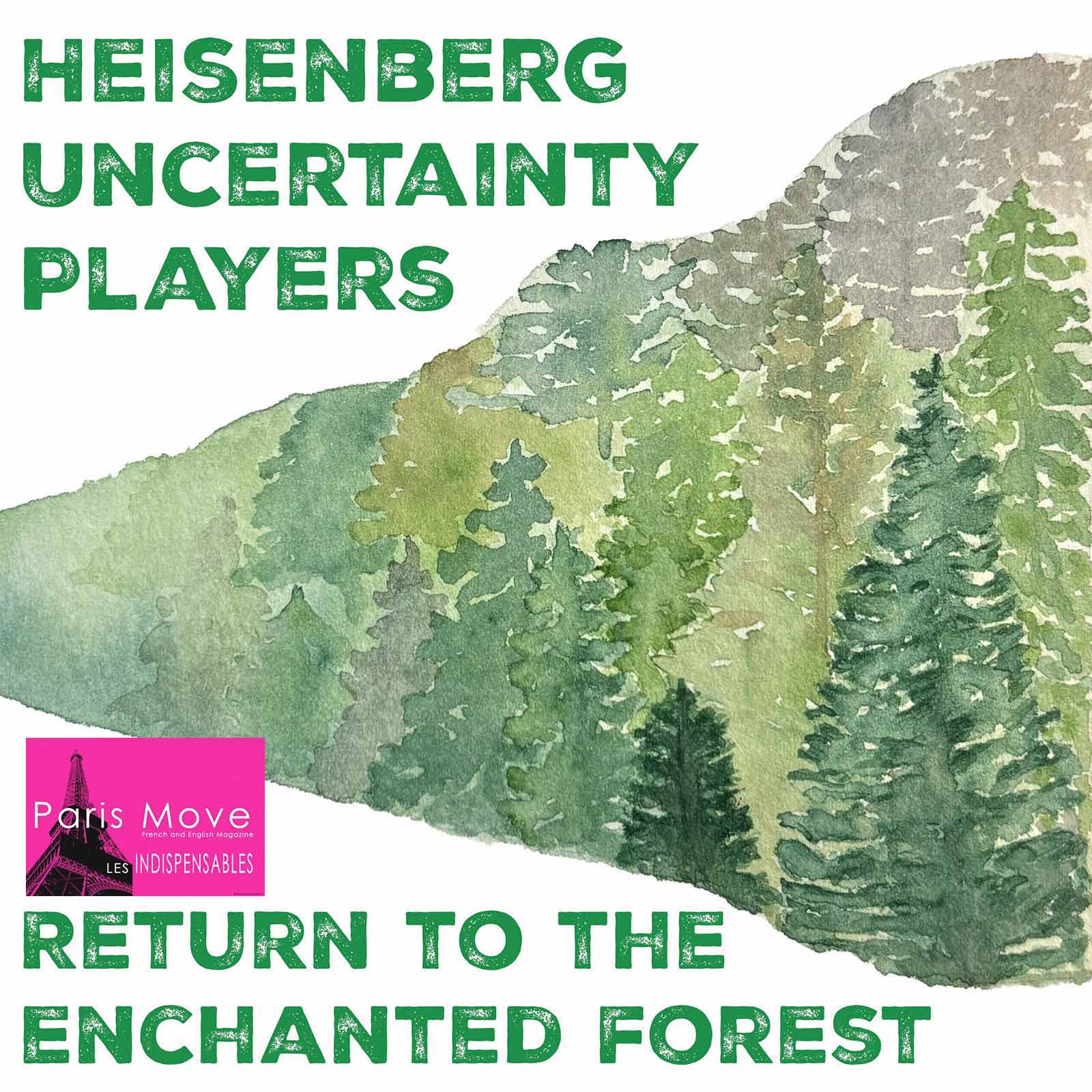
Where Jazz Meets the Enchanted Forest: Inside John Dorhauer’s Visionary Soundworld
Listening to this album feels less like attending a concert than stepping into an enchanted forest. From its opening moments, the music invites the listener into a carefully imagined world, one where jazz drifts effortlessly into folk, classical writing and cinematic atmospheres, guided by a sense of narrative as much as by rhythm or form. What unfolds is not merely a collection of pieces, but a coherent soundscape, animated by curiosity, imagination and a quiet sense of wonder.
At its core, this project is built around original compositions by John Dorhauer, performed by the HUP, an ensemble that brings together some of the most accomplished big-band musicians in the Chicago area. Over the past 15 years, the group has become a pillar of the city’s music scene, amassing more than 200 performances in venues across Chicago. Its artistic reach has been recognized through multiple grants from the Illinois Arts Council in support of recording projects, as well as an invitation to perform at the Ear Taxi International Festival in 2021, a significant marker of contemporary relevance in one of the country’s most adventurous new-music forums.
Yet the term “big band” only partially captures what is happening here. While certain rhythmic passages occasionally recall the propulsion and power associated with the tradition, Dorhauer’s writing consistently pushes the ensemble toward something closer to an orchestra in the fullest sense of the word. The arrangements privilege color, texture and long-form development over sectional display, and the musicians respond with a level of precision and sensitivity more often associated with chamber or symphonic contexts.
This approach places Dorhauer within a lineage of composers who have expanded the expressive vocabulary of large jazz ensembles. Duke Ellington famously treated the big band as a personalized orchestra, writing not for sections but for individual voices, shaping timbre as carefully as harmony. Gil Evans later blurred the boundary between jazz ensemble and orchestral writing, introducing spaciousness, ambiguity and nontraditional forms that drew as much from modern classical music as from swing. More recently, Maria Schneider has continued this evolution, crafting large-scale works in which orchestration, narrative flow and emotional architecture take precedence over conventional jazz formats.
Dorhauer’s music clearly converses with this history, while charting its own course. His classical training is evident in the structural clarity and orchestral balance of the compositions, but it is animated by a playful, wandering imagination. As the album progresses, the listener is drawn into a series of miniature adventures, sonic tableaux that unfold with a sense of discovery. There is an almost fairy-tale quality to the experience, as if unseen guides were leading the ear from one unexpected clearing to the next.
These moments often resolve into passages of striking lyricism: jazz-inflected, romantic, and quietly poetic. They are not decorative interludes but essential components of the album’s emotional logic, and they contribute to a listening experience that becomes increasingly absorbing with each return.
The HUP’s broader body of work reinforces this spirit of exploration. The ensemble is known for its ambitious thematic concerts, which have tackled subjects ranging from the history of boy bands and heavy metal to blues traditions, 1990s popular music, film scores and symphonic movements. Dorhauer’s original compositions frequently embrace similarly inventive frameworks, including The Basketball Suite, inspired by various aspects of the modern NBA, and We Tear Down Our Coliseums, a nine-movement multimedia work paying tribute to demolished baseball stadiums.
Throughout this album, the musicians, formidable in both technique and musicality, clearly relish the space Dorhauer’s writing affords them. Their performances reflect not only technical mastery but a collective engagement with the music’s narrative and textural demands. The result is an ensemble sound that continually resists fixed definition.
After repeated listens, the question inevitably arises: is the HUP a big band, an orchestra, or something altogether different? Dorhauer’s synthesis of genres makes the answer deliberately elusive. But perhaps that uncertainty is the point. Art, at its most vital, unsettles categories, challenges expectations and invites listeners to hear familiar forms anew. By that measure, John Dorhauer emerges not only as a skilled composer, but as a genuinely visionary one, expanding the possibilities of large-ensemble music with imagination, rigor and unmistakable passion.
Thierry De Clemensat
Member at Jazz Journalists Association
USA correspondent for Paris-Move and ABS magazine
Editor in chief – Bayou Blue Radio, Bayou Blue News
PARIS-MOVE, January 19th 2026
Follow PARIS-MOVE on X

::::::::::::::::::::::::
Heisenberg Uncertainty Players are:
SAXES: Natalie Lande, Kelley Dorhauer, Sam Pilnick, Matt Zmuda, James Baum
TROMBONES: Michael Nearpass, Joshua Torrey, Andrew Meyer, Dan DiCesare
TRUMPETS: Grace Mulvey, Jonathan McQuade, Bennett Heinz, Emily Kuhn
RHYTHM SECTION: Chris Parsons (guitar), Stuart Seale (piano), Dan Parker (bass), Ethan Bouwsma (drums)
DIRECTOR: John Dorhauer
Track Listing :
Catalpa
I Want It That Way
Canyonero
Alright
Echolocation
Hold On
At What Point Does A Pillow Become A Cushion?
Threshold