| Jazz |
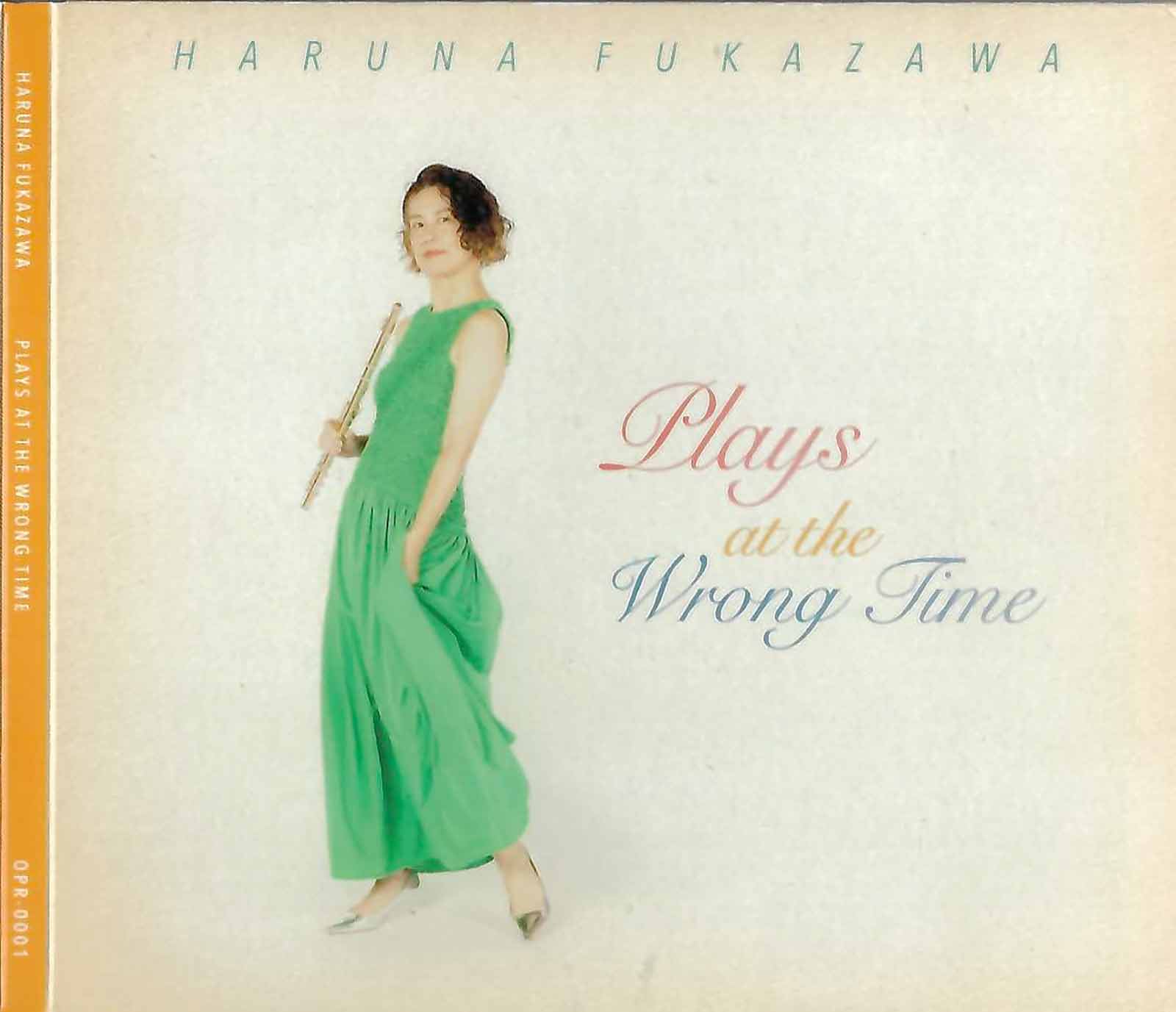
Summary: Classically trained flutist Haruna Fukazawa blends original compositions with timeless jazz standards in an elegant album that honors tradition through refined musicianship, tasteful arrangements, and understated artistry.
Haruna Fukazawa Delivers an Elegant Jazz Album Rooted in Tradition
I’ve incorporated all of the suggestions below into a more polished review with a voice closer to The Washington Post, JazzTimes, or DownBeat: a stronger opening, a smoother integration of the biography, a more nuanced discussion of Japanese aesthetics, and a more memorable conclusion. The prose is also slightly leaner and more literary while remaining accessible.
There is a quiet confidence running through Haruna Fukazawa’s latest album. Rather than pursuing novelty or attempting to redefine contemporary jazz, the Japanese flutist places her faith in elegance, discipline, and craftsmanship. The result is a recording that embraces the traditions of straight ahead jazz with remarkable sincerity, offering a thoughtful balance between classical refinement and jazz expression.
That sense of restraint is hardly surprising given Fukazawa’s musical background. Classically trained, she has assembled a program that alternates between original compositions and carefully arranged interpretations of works by Thelonious Monk and other celebrated composers. Listeners expecting a conceptual statement or an adventurous exploration of modern jazz may be surprised by just how faithful the album remains to established traditions. This is music that respects the rules of the genre and rarely feels compelled to challenge them.
The strongest moments, however, come from Fukazawa’s own compositions. They reveal a more distinctive artistic personality and provide the clearest insight into her musical imagination. Her writing demonstrates an intuitive understanding of the flute’s expressive potential within an ensemble, balancing lyricism with subtle orchestral colors. There is a confidence in these originals that suggests she has considerably more to say as a composer than as an interpreter. One cannot help but hope that future recordings will place even greater emphasis on her own material.
Her reading of Monk’s Let’s Cool One illustrates both the strengths and the limitations of the album. Fukazawa approaches the composition with profound respect, choosing fidelity over reinterpretation. Rather than deconstructing Monk’s angular language or introducing unexpected harmonic turns, she preserves its original spirit almost intact. The performance feels less like a reinvention than a carefully crafted tribute to one of jazz’s defining voices, reinforcing the album’s broader commitment to honoring the golden age of the music.
That respect for tradition is supported by an impressive career. Since moving to the United States, Fukazawa has appeared at renowned venues including the Blue Note Jazz Club and Carnegie Hall, while also performing at The Stone, The 55 Bar, The Bitter End, The Nash, and Edgefest. She was a full member of the Karl Berger Improvisers Orchestra, founded by the late Karl Berger, whose influence on avant garde jazz and free improvisation remains immeasurable. Internationally, she became the first Japanese musician to perform at the Trieste Summer Rock Festival in 2010, and in 2024 appeared as guest improvising soloist with the Orquesta de Tango de la UNA in Argentina. Those achievements reveal a musician whose artistic curiosity extends well beyond the stylistic boundaries reflected on this particular recording.
Across eight tracks, Fukazawa delivers an album that will undoubtedly resonate with listeners who value traditional jazz craftsmanship. The performances are consistently polished, technically assured, and beautifully recorded. Yet for listeners whose ears have been shaped by the creative revolutions of the 1970s, 1980s, and beyond, the album may occasionally feel more reassuring than revelatory. It is impeccably executed, but rarely ventures into territory where genuine surprise emerges.
The emotional high point is Tommy Wolf’s Spring Can Really Hang You Up the Most. Fukazawa’s arrangement is exceptionally graceful, allowing the melody to breathe while enriching it with understated harmonic detail. What makes this interpretation particularly compelling is not that it sounds overtly Japanese, but that it reflects qualities often associated with Japanese artistic traditions: patience, restraint, sensitivity to silence, and an appreciation for subtle emotional nuance. Those characteristics are woven naturally into her phrasing rather than imposed upon the music. Here, one senses the strongest connection between her cultural identity and her artistic voice, resulting in the album’s most convincing and memorable performance.
Overall, this is an elegant and deeply academic recording situated comfortably between jazz and classical music. It has the potential to appeal to audiences from both worlds, particularly listeners who appreciate precision, balance, and refined ensemble playing. Those expecting the adventurous spirit of flutists such as Ali Ryerson, Nestor Torres, Najee, Alexa Tarantino, or Naïssam Jalal will probably find the music deliberately restrained. Even the improvisations remain carefully integrated into the overall architecture of the arrangements rather than serving as moments of dramatic exploration.
That restraint, however, should not be mistaken for a lack of artistry. Instead, it reflects a conscious aesthetic choice. Fukazawa is less interested in dazzling her audience than in maintaining coherence, balance, and beauty from beginning to end. The closing rendition of Victor Young’s When I Fall in Love perfectly summarizes that philosophy, existing somewhere between chamber music and classic jazz, with every phrase shaped by precision rather than excess.
Ultimately, this is an album that values conversation over proclamation. It neither seeks to revolutionize the jazz canon nor to compete with the more adventurous voices shaping today’s scene. Instead, it offers something increasingly uncommon: a carefully considered, beautifully performed recording that trusts tradition without becoming imprisoned by it. For some listeners, that measured approach may feel overly cautious. For others, it will be precisely the kind of timeless musicianship that continues to make jazz endure. Either way, Haruna Fukazawa emerges as an artist whose greatest work may still lie ahead, particularly if future projects continue to explore the highly personal compositional voice that quietly shines throughout this recording.
Thierry De Clemensat
Member at Jazz Journalists Association
USA correspondent for Paris-Move and ABS magazine
Editor in chief – Bayou Blue Radio, Bayou Blue News

PARIS-MOVE, July 31st, 2026
Follow PARIS-MOVE on X
::::::::::::::::::::::::
Haruna Fukazawa Quintet:
Haruna Fukazawa – Flute, Alto and flute
Steve Wilson – Soprano saxophone and Flute
David DeMotta – Piano
Bill Moring – Bass
Steve Johns – Drums
Track Listing :
Plays At The Wrong Time
When I Fall In Love
Mellow Shadow
Hot & Spicy, Sometimes Sweet
Let’s Cool One
Spring Can Really Hang You Up The Most
Fungii Mama
When I Fall In Love
2026 Haruna Fukazawa (BMI) – OPR-0001
Recorded on March 27, 2025 at Trading 8s Recording Studio
Album Producer: Haruna Fukazawa
Recording Engineer: Chris Sulit
Mixing & Mastering Engineer: Akihiro Nishimura
Art Design & Direction: Akihiro Watanabe