| Jazz |
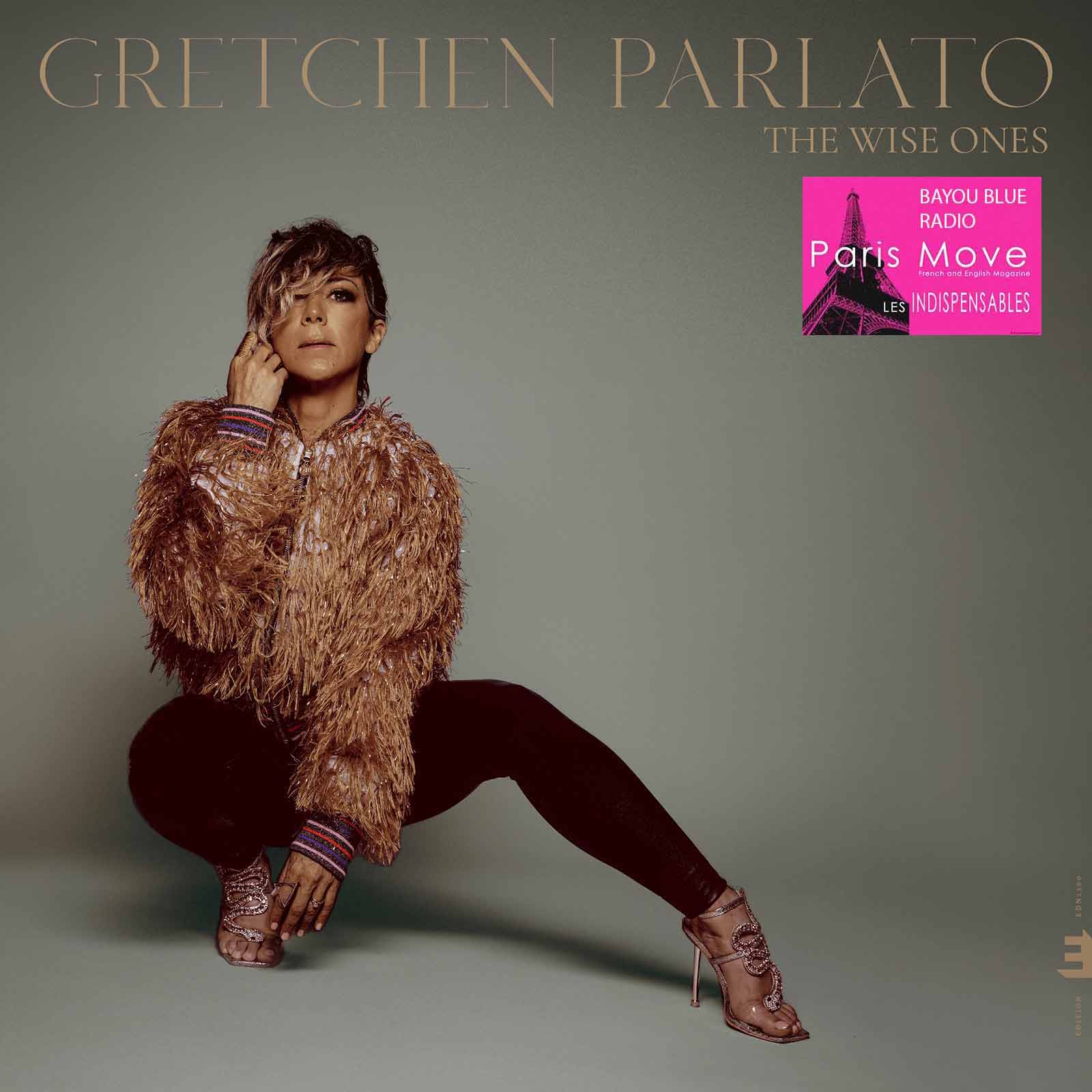
Summary: Gretchen Parlato returns with The Wise Ones, an intimate contemporary jazz album featuring Robert Glasper, Alan Hampton and Becca Stevens, blending jazz, soul, pop and Brazilian influences with remarkable sensitivity.
Gretchen Parlato’s The Wise Ones: A Bold New Chapter in Contemporary Jazz.
Even though traces of Latin music can still be heard in Gretchen Parlato’s music, she is the kind of artist who knows perfectly well how to reinvent herself, and The Wise Ones is proof of that. This time, the atmosphere is much more rooted in contemporary jazz, with some remarkable personalities invited into her musical world, including Robert Glasper, Alan Hampton and Becca Stevens. Their presence gives the album another dimension, different from what we have come to expect from Parlato’s previous records. And, for once, we get a little Robert Glasper, which is not nothing for those of us who have never quite managed to get hold of his albums. But beyond that small personal satisfaction, Glasper’s presence says something important about the direction Parlato has chosen. She is not simply revisiting her past. She is looking for new musical conversations with artists who have become references in their own right.
We should remember that, beginning in 2009, the acclaimed singer and songwriter Gretchen Parlato released two albums that helped redefine the possibilities of vocal jazz in the post millennium era. In a Dream and The Lost and Found established a singular musical language drawing as naturally from jazz as from R&B, soul, pop and Brazilian music, and then moving beyond those influences without ever sounding forced. Parlato belonged to a generation of musicians who understood that the old boundaries between genres had become increasingly artificial. Her music did not need to choose between jazz and popular music because it could exist comfortably in both worlds. That approach influenced an entire generation of artists, and The Wise Ones shows that Parlato herself has no intention of standing still.
There is, in a way, something in this record that reminds me of the idea behind Miles Davis’s Doo Bop. At the time, Davis was looking toward the music coming from the neighborhoods, toward sounds that many traditional jazz listeners might not have considered part of the future of jazz. Parlato takes a very different route, but there is a similar instinct at work. She is looking for musicians who feel authentic, musicians whose work has become a reference because they have developed their own language. She is not simply collecting famous names. She is bringing together people whose musical journeys have something to say to one another. That is an important difference. The Wise Ones does not sound like an album desperately trying to prove that it is contemporary. It sounds like an artist who is still curious.
The circle of collaborators is relatively intimate, but the relationships behind it go back a long way. Robert Glasper, Gerald Clayton, Alan Hampton and Mark Guiliana are among the musicians who return to Parlato’s musical universe, reconnecting with creative relationships that were established more than twenty years ago. This kind of history cannot be invented in a studio. When musicians have known each other for that long, they develop another way of listening. They know when to play, when to step back and when to leave space. There is less need to demonstrate what they can do because they already know what the others are capable of doing.
Parlato has spoken about these musicians with the warmth of someone talking about friends rather than simply collaborators, and that distinction can be heard throughout the album. Beyond the artistic relationship, these are people who have shared a journey, experiences and a deep human connection. Their inspiration comes from their lives, their travels, their collaborations and from the fact that they continue to question themselves. That last point matters. These are artists who have not allowed success to become an excuse for repeating themselves. The Wise Ones is therefore deeply intimate. It plays with musicality and atmosphere and creates a remarkable jazz pop language that will certainly not appeal to everyone. Some listeners will immediately understand what Parlato is doing; others will not. But that is the rule of the game when an artist decides to give herself to an album as simply and sincerely as possible.
And this sincerity becomes particularly important when we consider the way voices are treated in contemporary music. We live in an age in which technology is often used to create the impression that a singer has a voice rather than allowing us to hear the voice itself. Effects, corrections and layers can transform a performance until the human being behind the microphone almost disappears. On The Wise Ones, Parlato does something much more intelligent. She does not hide her voice behind production. A light, carefully calibrated reverb is enough to make it more airy, almost weightless, without taking away its humanity. You can still hear the sensitivity in her voice. You can still hear the person. And that is precisely what makes it work.
Parlato does not need to oversing. She does not need to demonstrate her technique at every opportunity. Her voice is allowed to breathe and to become part of the arrangements rather than dominating them. In a period when so much music seems determined to make everything bigger, louder and more spectacular, there is something almost courageous about an artist trusting simplicity. It is easy to confuse simplicity with a lack of ambition, but there is nothing simple about knowing exactly what not to add.
Alan Hampton, the singer, multi instrumentalist and songwriter who also coproduced the album with Parlato, points to another fascinating aspect of The Wise Ones. The songs were written at very different moments in their lives. Some are recent, while others are nearly twenty years old. Parlato had the beautiful idea of weaving these different periods into a coherent work exploring time, love, loss and personal growth while honoring the common history that connects these musicians. The result is deeply human, and that is precisely what touches us, and sometimes even fascinates us, about music. Parlato does not cheat. She presents herself as she is and allows the sensitivity of her voice to remain audible. In doing so, she returns to one of the foundations of art: emotion does not have to be manufactured when it is already present.
The elegance of The Wise Ones becomes even more apparent after the first listen. The album may seem straightforward at first, but repeated listening begins to reveal the secrets of its arrangements. They are simple, clear and transparent, yet there is considerable work beneath that apparent simplicity. A small movement between musicians becomes noticeable. A rhythmic detail suddenly makes sense. A particular texture that seemed almost invisible begins to change the way you hear a song. This is the kind of album that rewards genuine listening, and that is becoming increasingly rare.
You can get lost in it while traveling, while driving, late at night or simply while dreaming. You can listen without trying to analyze everything and still discover something new the next time around. That is one of the pleasures of The Wise Ones. It leaves enough space for the listener to bring his or her own imagination into the music. From my point of view, this is an album dedicated to people who still appreciate beauty, good musicianship and music that has been made with care. It is not trying to impress us with unnecessary effects or technical fireworks. Its ambition is more subtle. It wants to create a sonic space in which the listener can stay for a while.
That may also be why the album becomes almost hypnotic. The more you listen, the more the apparent simplicity gives way to the intelligence of the arrangements and the extraordinary sensitivity of the musicians. Gretchen Parlato has already demonstrated that she knows how to move vocal jazz forward. With The Wise Ones, she seems less interested in proving anything than in continuing the journey. She brings together musicians with whom she shares history, allows their personalities to enter the music and gives the songs enough room to breathe.
Some will love this record immediately. Others may need time. I think that is perfectly acceptable. An artist who tries to satisfy everybody usually ends up losing the very personality that made the music interesting in the first place. Parlato takes the opposite risk. She makes an intimate record, one that does not shout and does not force itself upon the listener. It simply waits to be heard.
And perhaps that is ultimately what makes The Wise Ones so appealing. In a musical world increasingly obsessed with effects, speed and instant impact, Gretchen Parlato offers something much more difficult to manufacture: sincerity. Her voice remains human, her musicians remain musicians rather than decoration, and the arrangements leave enough room for us to dream. However you approach this album, it rewards an actual listening experience. You can analyze it, you can simply enjoy its atmosphere, or you can let it carry you somewhere inside your own head. For me, that is where The Wise Ones succeeds. It is beautifully made, deeply intimate and quietly ambitious, and after several listens, you may discover that what first appeared restrained has gradually become impossible to ignore.
Thierry De Clemensat
Member at Jazz Journalists Association
USA correspondent for Paris-Move and ABS magazine
Editor in chief – Bayou Blue Radio, Bayou Blue News
PARIS-MOVE, September 7th, 2026
Follow PARIS-MOVE on X
::::::::::::::::::::::::
Tracklist:
01 Capricorn (feat. Alan Hampton)
02 Never Come Down (feat. Meshell Ndegeocello & Mark Guiliana)
03 Rainbow
04 The Wise Ones (feat. Amber Navran)
05 If It’s Magic
06 It’s You (feat. Alan Hampton)
07 Mad World (feat. Becca Stevens & Alan Hampton)
08 Already Gone (feat. Robert Glasper)
09 Block The Sun
10 In My Bed (feat. Alan Hampton)
11 Landslide (feat. Alan Hampton
Musicians :
Gretchen Parlato – Voice (all tracks)
Alan Hampton – Voice (1, 2, 3, 6, 7, 8, 9, 10, 11), Guitar (1, 2, 6, 10, 11), Piano (2), Bass (1, 3, 4, 5, 6, 7, 8, 9, 10, 11)
Robert Glasper – Piano (4, 9, 10), Rhodes (3, 5, 8, 10)
Gerald Clayton – Piano (1, 6), Rhodes, Wurlitzer (6, 11), Celeste, Pump Organ (6)
Mark Guiliana – Drums, Percussion (all tracks)
Meshell Ndegeocello – Voice, Bass (2)
Amber Navran – Voice (4, 8), Woodwinds (4), Synthesizers (4, 8)
Becca Stevens – Voice, Kora (7)
Jacob Mann – Synthesizers (1, 2, 4, 9)
Josh Mease – Guitar (6)
Max Bryk – Synthesizers (8)
Marley Guiliana – Voice (9)
Lauren Desberg – Handclaps (11)
Music composed by:
– Capricorn
Music by Alan Hampton (Shampton Music, BMI)
Lyric by Alan Hampton and Matt Parker (Clayton Matthew Parker, ASCAP)
– Never Come Down
Music by Gretchen Parlato (Gretchen Parlato Music, ASCAP) and Mark Guiliana (HEERNT Music, BMI)
Lyric by Gretchen Parlato (Gretchen Parlato Music, ASCAP) and Alan Hampton (Shampton Music, BMI)
– Rainbow
Music and Lyric by Robert Glasper (I Am A Jazzy Guy (admin. by Concord Tunes) (ASCAP) c/o Concord Music Publishing) and Gretchen Parlato (Gretchen Parlato Music, ASCAP)
– The Wise Ones
Music by Amber Navran (Amber Jeanne Publishing, ASCAP), Gretchen Parlato (Gretchen Parlato Music, ASCAP) and Max Bryk (Do Geese See God, ASCAP)
Lyric by Gretchen Parlato (Gretchen Parlato Music, ASCAP)
– If It’s Magic
Music and Lyric by Stevie Wonder (Black-Bull-Music Inc, ASCAP)
Arranged by Robert Glasper
– It’s You
Music and Lyric by Alan Hampton (Shampton Music, BMI )
– Mad World
Music and Lyric by Roland Orzabal (Bmg Rights Management (Uk) Limited o/b/o Roland Orzabal Limited)
Arranged by Gretchen Parlato and Becca Stevens
– Already Gone
Music by Max Bryk (Do Geese See God, ASCAP), Gretchen Parlato (Gretchen Parlato Music, ASCAP), and Amber Navran (Amber Jeanne Publishing, ASCAP)
Lyric by Gretchen Parlato (Gretchen Parlato Music, ASCAP)
– Block the Sun
Music and Lyric by Robert Glasper (I Am A Jazzy Guy (admin. by Concord Tunes) (ASCAP) c/o Concord Music Publishing) and Gretchen Parlato (Gretchen Parlato Music, ASCAP)
– In My Bed
Music and Lyric by Josh Mease (Magic Face Music, ASCAP)
– Landslide
Music and Lyric by Josh Mease (Magic Face Music, ASCAP)
Produced by Gretchen Parlato & Alan Hampton
Additional Production by Mark Guiliana
Executive Producer Dave Stapleton
Edition Records
Recorded at Lucy’s Meat Market, Los Angeles on November 17 & 21, 2025
Engineered and Mixed by Pete Min
Additional Engineering by Alan Hampton, Mark Guiliana, Becca Stevens
Mastered by Dave Darlington at Base Hit Recording, New York
Album artwork by Oli Bentley, Split
Photography by Mike Quain, quainphoto