| Jazz |
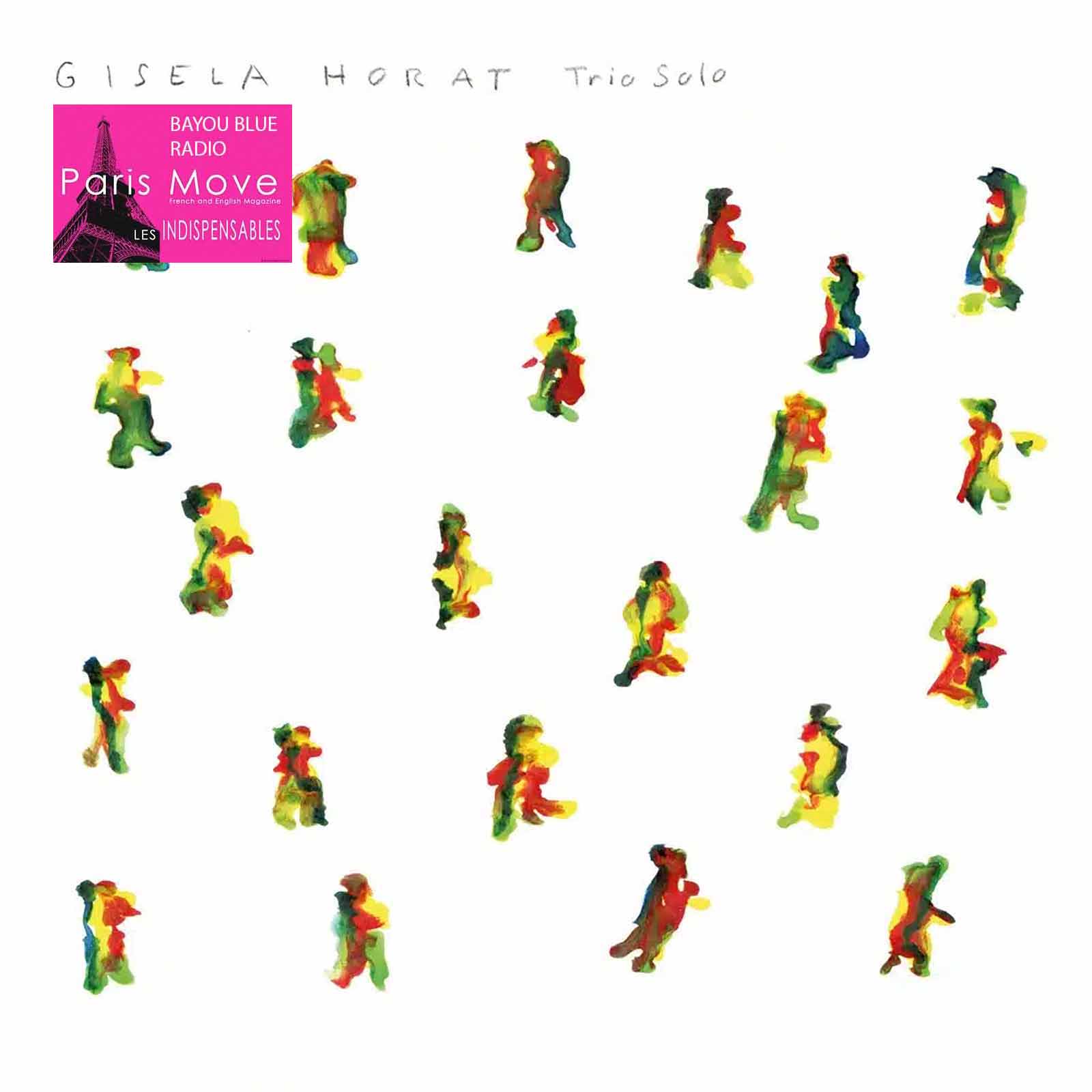
Summary: Swiss pianist Gisela Horat explores the expressive possibilities of contemporary jazz on Trio Solo, blending improvisation, emotional depth, and a singular musical vision.
Gisela Horat’s Trio Solo: A Distinctive Voice in Contemporary Jazz
Switzerland may be a small country, but it has produced artists whose work has reached far beyond its borders, from Ernest Bloch and Arthur Honegger to Frank Martin and countless other creators who have forged distinctive artistic identities. Gisela Horat belongs to this tradition of musicians for whom creativity is less a pursuit of immediate recognition than an inner necessity. Her new album, Trio Solo, released in late September and delivered to me a few weeks later by the vagaries of the postal service, deserves a closer listen. A classically trained pianist and composer who has spent years exploring music on her own terms, Horat has developed a personal language at the intersection of jazz, improvisation and an intensely intimate approach to sound. Born in a small mountain village, she maintains a connection to nature that seems to inform her music without reducing it to a representation of the landscape. There is nothing picturesque or conventional about this relationship. Sounds emerge, evolve and disappear with the quiet persistence of natural phenomena that reveal themselves only when we take the time to notice them. Horat’s compositions often begin with concise musical ideas, personal memories, lived experiences or fleeting impressions, which she allows to develop through improvisation. Rather than saturating the sonic landscape, she favors restraint, silence and the expressive weight of each note. At a time when music is increasingly caught up in the accelerated consumption of culture, with new releases arriving so relentlessly that one work can quickly become interchangeable with the next, her approach has significance beyond aesthetics. It reminds us that listening is also a way of inhabiting time, of making ourselves receptive to what does not reveal itself immediately and of accepting that certain works demand more than passing attention.
I began with the trio pieces, always glad to encounter compositions that do not simply recycle familiar formulas. But this music demands patience. It asks us to open our souls as much as our ears, to let ourselves be carried along rather than insist on finding a predetermined direction. Those who regularly read my reviews know that I am drawn to artists who follow their own paths, even when doing so means moving beyond the conventions and expectations of an audience accustomed to familiar reference points. With Horat, the question of whether the music still fits within the traditional boundaries of jazz quickly loses its relevance. Jazz remains a point of departure, a practice and a way of approaching improvisation and musical dialogue, but it is never a boundary that must not be crossed. What matters here is art itself, its ability to create a deeply felt experience without dictating what that experience should mean. The album’s combination of trio performances and solo piano pieces establishes its essential character from the outset. Two configurations, two ways of inhabiting music, yet a single commitment to artistic sincerity. In the collective passages, ideas circulate among Horat’s piano, Simon Iten’s double bass and Samuel Büttiker’s drums. The two musicians have worked with Horat for more than a decade, developing a trust that is heard less in displays of technical prowess than in the quality of their interaction, their ability to respond without imposing themselves and to let an idea evolve through the presence of others. The bass does more than provide harmonic support, just as the drums do more than maintain the pulse. Each instrument helps shape a shifting sonic environment in which silence and restraint play an integral part in the music’s construction. The solo pieces, by contrast, strip away this collective dimension, leaving the piano alone to explore its own possibilities. Gestures become more exposed, resonances more perceptible, and each note seems to carry a different weight. This alternation is not simply a matter of contrast. It reveals how a single artistic sensibility can unfold in different ways, depending on whether it draws energy from the presence of others or confronts space and time alone.
From the opening pieces onward, Horat’s music inhabits a realm of uncertainty in which nothing seems entirely fixed. Motifs emerge, linger, then shift direction or fade away without any clear indication of precisely when the change occurs. Leben, which opens the album, establishes the tone of a work attentive to life’s contradictions, its surges of energy and moments of suspension. The titles Ein Schicksalsschlag, Verloren and Angst evoke a devastating turn of fate, loss and fear, but Horat never attempts to illustrate these states through instantly recognizable musical effects. Instead, she explores their tensions, vulnerabilities and ambiguities, leaving listeners free to discover their own experiences within them. Such restraint demands genuine mastery. In music this spare, no note can hide behind a buildup of effects, and every gesture must justify its presence. Economy of means, therefore, means neither poverty nor a lack of structure. On the contrary, it gives each gesture greater significance, requiring the musician to consider not only what to add but also what to leave unsaid. Silence becomes a material in its own right, not an empty space that must be filled, but a place where resonances continue to unfold and listening can deepen. This attention to sound connects directly with Horat’s relationship to nature. She is not trying to imitate wind, water or mountain scenery, but to recover a way of listening to subtle phenomena, to perceive transformations that happen quietly and often escape a hurried mind. Her use of prepared-piano techniques, placing objects such as felt, cymbals or seashells on the strings to alter their resonance, extends this exploration. The piano becomes more than a melodic instrument; it turns into a field of vibrations, textures and unexpected colors. Horat is not pursuing novelty for its own sake. She is challenging our listening habits and revealing possibilities that familiarity with the instrument may have led us to overlook. At times, her music evokes a landscape, but never in the form of an image imposed on the listener. Instead, it recalls the experience of looking at the same place for a long time and gradually discovering, within its apparent stillness, countless imperceptible changes.
The extended piece Einfach müde, which runs for more than 16 minutes, offers a particularly revealing example of this approach. Its title, roughly translated as “Simply Tired,” refers to an ordinary experience that a culture obsessed with performance tends to regard as a weakness to be corrected. Horat chooses instead to give fatigue room to unfold, without turning it into drama or forcing it toward a resolution. Duration becomes an essential element of the composition. Repetition, pauses and subtle variations invite us to abandon the expectation of a spectacular event and enter a different relationship with time. The question is no longer how much musical material is being produced, but what quality of presence the music makes possible. In a society that places enormous value on efficiency, speed and productivity, this willingness to let time breathe carries implications beyond the listening experience itself. Without turning her album into a manifesto, Horat creates a space in which attention can briefly escape the demands of immediacy. She reminds us that withdrawal can be a form of receptiveness, and that slowness does not necessarily mean stagnation. Other pieces, including Der kleine Gnom and Blick in die Welt, show that this aesthetic is not confined to introspection or gravity. A sense of play, curiosity and openness runs through the album, preventing restraint from becoming a pose. The music remains free to move from unease to calm, from uncertainty to moments of lightness, without imposing a definitive interpretation. This is one of its essential qualities: the compositions grow out of personal experience without becoming trapped in confession. They become spaces in which listeners can recognize an emotion, a memory or a sensation of their own. Music does not become more profound by explaining everything. Sometimes it reaches us more deeply precisely because it leaves something unresolved.
The transition to the solo piano pieces intensifies this intimacy. Without Iten and Büttiker, Horat must construct the sonic space herself, without relying on another instrument’s immediate response. Innere Unruhe, or “Inner Turmoil,” does not necessarily express anxiety through speed or violence. Tension can reside in a repeated figure, a harmonic hesitation or a resonance that seems to postpone the return to calm. Zerstreutheit, which suggests distraction or mental dispersion, evokes a mind that wanders, temporarily loses its focus and sometimes discovers an unexpected direction. These pieces do not attempt to narrate psychological states literally. Instead, they capture their movements, contradictions and shadows. This freedom becomes particularly evident in Mutter and An meine Schwester denken, which refer to the mother and to remembering a sister. Their titles open a window onto Horat’s private world without pretending to tell her story. Family memory is a complicated territory, shaped by tenderness, distance and conflicting emotions that music cannot reduce to a single feeling. Horat allows her notes to preserve that ambiguity. She does not reconstruct the past so much as explore its traces and transformations. A memory never returns in precisely the same form, because time changes both our understanding of what happened and the people we have since become. The second version of Leben reveals a similar principle, allowing us to hear how the same musical idea can take on a different meaning when performed by the trio or by the pianist alone. In the first version, collective improvisation reshapes the original material, brings it into contact with other sensibilities and opens up unexpected directions. In the second, Horat explores the possibilities of her instrument more directly, though solitude does not imply absolute control. The piano has its own physical resistance, its resonances and lingering vibrations, all of which extend beyond the gesture that set them in motion. Neither version takes precedence over the other. Together, they show how a living composition can remain open to new interpretations rather than becoming fixed in a definitive form. The album’s architecture gives it the coherence of an exhibition in which each work stands on its own while shedding light on the others.
The final compositions, Dem Tode nahe, Vergessen and Abschied, deepen the album’s engagement with memory, disappearance and separation. Death, forgetting and farewell are universal experiences, yet their meanings remain profoundly individual. Horat refuses to turn them into emotional spectacle. Instead, she answers them with restrained music that accepts incompleteness and makes no attempt to resolve what remains beyond explanation in human existence. Forgetting can become a transformation in our relationship with the past, while farewell does not necessarily mean a definitive rupture. It may involve accepting distance, recognizing an ending or allowing something we cannot hold on to slip away. The music does not choose among these interpretations. It makes room for them, and that openness is precisely where its power resides. The piano does not dictate an emotion; it gives listeners the opportunity to rediscover their own. An isolated note, an unfinished phrase or a resonance fading into silence can leave a more lasting impression than an elaborate display of virtuosity. This restraint is also a form of artistic rigor. In a musical landscape where visibility, efficiency and a constant supply of effects too often determine how works are received, Horat refuses to confuse expressive power with sonic abundance. She trusts listeners to engage with an experience that does not immediately disclose all its meanings. This does not mean that every silence is inherently eloquent or that slowness alone creates depth. It requires discipline, a thorough understanding of the material and the ability to recognize what deserves to remain. In Horat’s hands, minimalism works because it is animated by a clear musical intention. Composition and improvisation feed each other, and freedom is measured not by the number of conventions broken but by the necessity of the choices made.
Trio Solo is therefore much more than an alternation between collective music-making and solitary piano performances. It documents a carefully developed artistic practice in which trust, listening and restraint matter as much as instrumental command. The trio reveals the richness of a dialogue in which no one seeks to dominate; the solo pieces expose a more direct relationship with sound, memory and time. In both settings, Horat pursues the same question: how can the simplest gestures carry profound emotion when given enough room to breathe? To enter this world, listeners must abandon the expectation that every piece should immediately captivate, produce an effect or justify its existence through a display of technique. They must allow themselves to be guided by their own listening rather than by predetermined expectations. That is why I regard this album as a work that commands respect as well as attention, not because it claims to transform the history of jazz, but because it advances a demanding vision of art. Its pieces resemble paintings in an exhibition, each offering an independent perspective while contributing to a larger whole. One can pause before a particular work, return to it later and discover another that changes the way the first is perceived. None claims to summarize the entire journey. Each offers a particular light, an emotion and a way of inhabiting the world. This is Gisela Horat’s real distinction. Her music does not seek to assert itself through sheer volume; it makes audible what usually remains at the margins of our attention. It offers no ready-made answers. Instead, it creates a space in which listening becomes a personal experience, almost a form of presence with oneself. When the final sound fades, something remains: a resonance, a memory or simply a different awareness of silence. That is when the value of this album becomes clear. It does more than invite us to hear music; it reminds us how to listen. And perhaps that is where art truly begins, beyond classifications and the boundaries between genres.
Thierry De Clemensat
Member at Jazz Journalists Association
USA correspondent for Paris-Move and ABS magazine
Editor in chief – Bayou Blue Radio, Bayou Blue News
PARIS-MOVE, October 11th, 2026
Follow PARIS-MOVE on X
::::::::::::::::::::::::
Musicians :
Gisela Horat | Piano, Composition
Simon Iten | Double Bass
Samuel Büttiker | Drums
Track Listing:
CD 1 – Trio
Leben (Trio)
Ein Schicksalsschlag (Trio)
Verloren (Trio)
Angst (Trio)
Blick in die Welt (Trio)
Der kleine Gnom (Trio)
Im Stress (Trio)
Einfach müde (Trio)
CD 2 – Solo
Innere Unruhe (Solo)
Zerstreutheit (Solo)
Mutter (Solo)
Leben (Solo)
An meine Schwester Denken (Solo)
Angst (Solo)
Spielerei (Solo)
Dem Tode nahe (Solo)
Leben! (Solo)
Vergessen (Solo)
Abschied (Solo)