| Jazz |
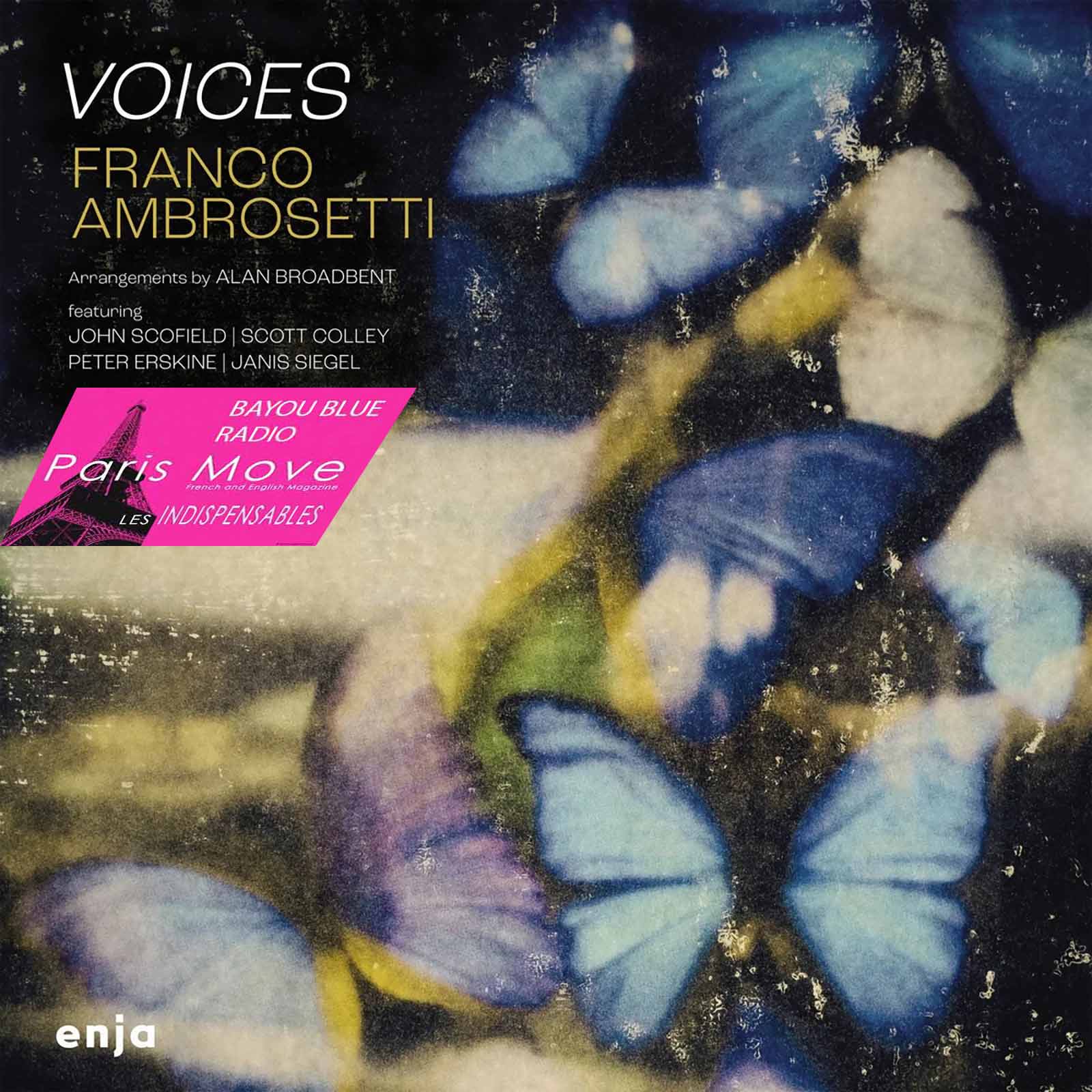
VOICES, BY FRANCO AMBROSETTI: WHEN JAZZ REDISCOVERS THE LANGUAGE OF THE VOICE
There is something quietly unusual about Franco Ambrosetti’s Voices. At a time when vocal jazz can too easily become either a polished exercise in nostalgia or a showcase for individual virtuosity, Ambrosetti has chosen a more demanding path. He brings together an exceptional group of singers and musicians, not simply to revisit a golden age, but to explore what happens when the human voice and the language of jazz meet on equal terms. The result is an album of unusual grace, rich in musical detail yet remarkably free of self-importance. Switzerland has produced some of Europe’s most compelling jazz musicians, and Ambrosetti belongs firmly among them. A trumpeter, flugelhorn player and composer, he has built a career around an unusual combination of instrumental authority, melodic instinct and intellectual curiosity. His playing reflects a deep knowledge of the jazz tradition, but it is never confined by it. There is a distinctly personal quality to his sound: lyrical without becoming sentimental, sophisticated without turning cold, and expressive without resorting to grand gestures.
With Voices, he creates a musical setting in which the relationship between singers and instrumentalists becomes the central subject. This is not merely a collection of guest appearances or a succession of vocal performances supported by an accomplished rhythm section. It is a carefully conceived musical conversation. The voices are not placed above the instruments, nor are they expected to decorate the arrangements. They are partners in the music, sometimes taking the lead, sometimes becoming part of a larger harmonic texture, and at other moments functioning almost like an instrumental section. That distinction matters. Ambrosetti understands that the voice can do far more than carry a melody or communicate a lyric. It can shape rhythm, create harmonic tension, suggest instrumental colors and open up possibilities that a conventional arrangement might never reach. The album’s achievement lies in making those possibilities feel entirely natural. Janis Siegel is one of the principal reasons I find this recording so compelling. I have always had a particular affection for The Manhattan Transfer, and especially for Siegel, whose artistry has long seemed to me to transcend the usual boundaries of vocal performance. She has never been simply a singer who delivers a melody beautifully. She approaches the voice as a musician approaches an instrument, shaping phrases, bending rhythms and finding colors that can be as expressive as those of any horn or string instrument.
What makes her singing so distinctive is the combination of technical command and emotional intelligence. Her precision is extraordinary, but it never feels like an end in itself. She can navigate the most intricate vocal passage without sacrificing spontaneity, and she knows how to make a seemingly small inflection transform the meaning of a phrase. A note can be held back, an accent subtly displaced, a line given an unexpected turn. These details are not decorative flourishes. They are part of the musical argument.
Siegel’s career beyond her celebrated group has also demonstrated a continuing appetite for exploration. She has pursued individual projects, embraced new collaborations and continued to develop an artistic identity that cannot be reduced to any one chapter of her career. Her presence on Voices is therefore more than a welcome reunion with a familiar musical sensibility. She brings experience, individuality and an instinctive understanding of ensemble singing. For listeners who have followed her work over the years, hearing her here is a particular pleasure.
But the album should not be viewed primarily through the presence of any one singer, however beloved. Voices is first and foremost Franco Ambrosetti’s project. Its atmosphere reflects his sensibility, its musical architecture his conception, and his trumpet provides one of its central points of reference. What is striking is not simply what he plays, but how he creates the conditions in which the other musicians can do their best work.
His trumpet never attempts to dominate the singers. Instead, it listens, responds, challenges and sometimes extends their phrases, as though continuing a conversation already under way. There are moments when the instrument seems to complete a thought begun by a voice; elsewhere, it offers a counterpoint that changes the emotional direction of the passage. This is a form of leadership based less on assertion than on attention. Ambrosetti knows when to step forward, but he also knows when the music needs him to step aside.
That quality of judgment is central to his artistry. He has a finely developed sense of space and proportion. A phrase can end at precisely the right moment; a note can remain suspended without needing to be prolonged; a silence can carry as much weight as an extended solo. His restraint should not be mistaken for a lack of ambition. It reflects a confidence in the music itself, and in the musicians with whom he has chosen to share it. The influence of Miles Davis inevitably comes to mind. Davis shaped generations of trumpet players not merely through his sound or harmonic choices, but through his understanding of improvisation as an art of suggestion. His music demonstrated that an expressive statement does not have to be exhaustive, and that what remains unsaid can be as revealing as what is played. Ambrosetti belongs to a generation that absorbed that lesson, but his connection to Davis is not a matter of imitation. He has taken elements of that musical philosophy and made them part of a language that is unmistakably his own.
There is also something distinctly European in his approach: an attention to structure, color and arrangement, combined with the freedom and responsiveness that define jazz. Rather than treating these qualities as competing traditions, he allows them to coexist. To understand part of the musical world behind Voices, it helps to return to a period when the boundaries between jazz, popular music and vocal arranging were less rigid than they have since become. Ambrosetti has recalled his earliest musical discoveries in the early 1960s, before the Beatles transformed the popular landscape. It was an era when a listener could move from a Miles Davis record to the Hi-Lo’s, from Ray Conniff to Bert Kaempfert, without feeling obliged to choose between supposedly incompatible musical worlds.
That coexistence of styles left a lasting impression. Vocal groups, orchestral arrangements, sophisticated film scores and jazz-inflected popular music all belonged to a shared soundscape. Melody often occupied center stage, supported by demanding harmonic and orchestral writing. The voice could be treated as an instrument, vocal sections could function like brass or strings, and arranging itself became an essential part of the musical architecture.
Voices recaptures something of that spirit, but it does not attempt to reproduce the sound of a vanished era. It draws on an aesthetic memory, on a familiarity with musical forms and colors that helped shape the history of jazz and popular music, and brings them into a contemporary setting. The album’s relationship with the past is not sentimental. It is creative.
That distinction is important. Nostalgia, when it becomes an artistic program, can trap music in a lifeless act of reproduction. Here, the past is not a refuge. It is a resource, a vocabulary through which certain qualities that contemporary production sometimes overlooks can be rediscovered: melodic richness, harmonic subtlety, attention to instrumental color and a willingness to let music breathe. Ambrosetti is not asking the listener to return to an earlier time. He is showing how elements of that musical culture can still speak convincingly in the present.
The instrumental lineup contributes enormously to the album’s success. Around Ambrosetti, pianist Alan Broadbent, bassist Scott Colley and drummer Peter Erskine form a trio of exceptional experience. Their role is not simply to provide accompaniment. They create a flexible musical environment in which the singers can move freely without losing the underlying structure. Broadbent brings harmonic depth and a remarkably sensitive touch. Colley provides a foundation that is both solid and mobile, while Erskine combines precision with an instinctive sense of movement. The three musicians understand that supporting a vocal ensemble requires more than keeping time or supplying chords. They must anticipate, respond and adjust, sometimes within the space of a single phrase. Their playing gives the album a quiet momentum, ensuring that the music never becomes static even when the arrangements are carefully controlled.
The trio’s strength lies as much in its collective intelligence as in the individual abilities of its members. Each musician knows when to contribute and when to leave room for someone else. No one tries to occupy every available inch of musical space. The singers are free to develop their lines, while the instrumental presence remains sufficiently assertive to keep the jazz dimension alive. This is not passive accompaniment. It is a form of musical conversation in which the instrumentalists are constantly involved, even when they are not in the foreground.
Alan Broadbent’s work deserves particular attention. His vocal arrangements are among the defining features of Voices. They reveal a deep understanding of choral and orchestral music, along with a harmonic imagination that extends well beyond the conventions of traditional jazz. His interest in Mahler helps illuminate certain structural choices and the almost symphonic breadth he gives the voices. At times, the arrangements suggest the expansive, late-Romantic sound world, with its search for depth, suspension and emotional resonance.
Yet this richness never becomes heavy-handed. Even when several vocal lines are layered together, the arrangements remain transparent. Voices intertwine and answer one another, drawing closer and then drifting apart. They create shifting harmonic colors, sometimes with the density of a small orchestra, sometimes with the delicacy of a chamber ensemble. At certain moments, the changing textures suggest Debussy, particularly in their emphasis on nuance, shimmering harmonies and transitions rather than emphatic declarations. These are not references imposed from outside the music. They are affinities that emerge naturally from the way Broadbent organizes sound. What matters is the result: an ensemble of singers that can function as a single musical instrument without losing the individuality of the people who make it up.
“Desert Rose,” an Ambrosetti composition with lyrics by Giorgia Mancio, offers a particularly compelling example. In its a cappella setting, the piece exposes the quality of the vocal writing. Without the usual support of the instrumental trio, the singers must carry the harmony, rhythm and emotional weight on their own. The absence of instrumental accompaniment creates no sense of emptiness. On the contrary, it reveals an intricate structure in which every entrance and every line takes on added significance.
The voices become a collective instrument, delicate yet remarkably precise. Their harmonies seem to unfold in the air, with each part contributing to a larger whole. It is one of the album’s most poetic moments, and one of the clearest expressions of its artistic ambition. The effect is not simply beautiful. It is revealing: one hears just how much musical architecture can be built from the human voice alone. Aubrey Johnson and Carolyn Leonhart bring further dimensions to this musical world. Their vocal personalities are distinct, and that difference is precisely what makes the ensemble so rewarding. Johnson has an agility and flexibility that allow her to move naturally between the demands of contemporary jazz and the precision of tightly constructed vocal arrangements. Her singing retains a welcome rhythmic freedom without disturbing the group’s cohesion.
Leonhart, meanwhile, brings a presence of exceptional refinement. Her experience in vocal ensembles and across a range of musical settings is reflected in her control of phrasing and nuance. She knows how to give a melodic line an individual character while remaining faithful to the larger logic of an arrangement. Both singers possess considerable technical resources, but neither seems interested in displaying them for their own sake. Their contributions are shaped by the needs of the music. Trist Curless completes the vocal picture with a distinctive personality of his own. His experience with The Manhattan Transfer places him within a tradition in which harmonic precision, tonal richness and the almost instrumental use of the voice are central. But his contribution is not simply an exercise in preserving a legacy. He fits naturally into a project that brings together different generations and musical sensibilities.
This is one of the most appealing aspects of Voices: rather than celebrating a particular era or school, the album creates a meeting place for artists who share a common commitment to musical excellence. Their different backgrounds do not produce a collection of disconnected performances. Instead, they become part of a coherent musical language.
Such diversity could easily have resulted in a series of individual showcases. It does not. The singers are not competing for attention. They are building a common musical statement, one in which individual personalities remain audible without compromising the balance of the whole. Achieving that requires considerable musical intelligence. It also reveals how much the project depends on the quality of the relationships among its performers, as well as on the precision of its arrangements.
The repertoire contributes to that coherence. The compositions and standards do not feel like separate pieces assembled to accommodate different tastes. They form a journey in which each selection brings its own color, atmosphere or approach to the relationship between voice and instrument. Miles Davis’s “Four” reasserts the album’s jazz foundations and the essential role of improvisation. “Once Upon a Summertime,” associated with Michel Legrand, introduces another kind of lyricism, one in which melodic appeal and harmonic sophistication meet with effortless grace.
Jerome Kern’s “I’m Old Fashioned,” featuring Gianluca Ambrosetti on soprano saxophone, is an especially good example of how the album brings a familiar melodic tradition into conversation with a more contemporary instrumental approach. The performance does not attempt to modernize a classic for its own sake. Instead, it recovers the tune’s elegance and flexibility, allowing the arrangements and musicians to reveal fresh nuances. Carlos Jobim’s “Dindi,” meanwhile, brings the distinctive light of Brazilian music, where apparent melodic simplicity often conceals considerable harmonic sophistication. John Scofield’s appearances on several tracks add another intriguing dimension. His unmistakable instrumental language brings a different color to the ensemble. His phrasing, rhythmic instinct and highly personal relationship with harmony fit into the music without upsetting its balance. Once again, the point is not to accumulate prestigious guest appearances. It is to bring in musicians whose individual voices can enrich the project without pulling it away from its central purpose.
And then there is Bill Evans’s “Waltz for Debby,” which closes the album. The choice is hardly incidental. It belongs to a musical world in which delicacy, melancholy and harmonic transparency are paramount. In many ways, the piece seems to distill the spirit of Voices: a music that favors suggestion over assertion, nuance over emphasis, and finds its strength in the relationships among the performers. The ending does not reach for a dramatic flourish. Instead, it leaves the listener with the impression of an ensemble that has found its balance and has no need to do more than let the music speak.
The production deserves recognition as well. Each voice has a distinct presence, yet none is artificially separated from the others. The instruments have room to breathe, the arrangements remain clear, and the different layers of sound retain their definition. That transparency is especially important in a project where several overlapping vocal lines could easily become dense or overly elaborate. Here, the recording allows the listener to follow the movement of the music without sacrificing the warmth of the ensemble.
But an album’s success cannot be measured solely by the quality of its performers, the sophistication of its arrangements or the precision of its production. There is another, harder-to-define test: the desire to remain inside the music, to keep listening and then to start again. Voices has precisely that quality. When the final track ends, the natural impulse is to return to the beginning, not simply to revisit a familiar sequence, but because the album has created a musical world you want to return to.That may be Franco Ambrosetti’s greatest achievement here. He has brought together exceptional musicians and singers without turning the album into a showcase of virtuosity. He has found a balance between memory and the present, between written arrangements and freedom, between harmonic sophistication and the spontaneity of jazz. Most important, he understands that the voice can be much more than a vehicle for melody. It can be an instrumental partner, a source of harmonic color, a space for expression and a means of musical dialogue.
For listeners who love great vocal ensembles, certain voices will inevitably awaken memories and long-standing loyalties. But the significance of Voices reaches well beyond that. The album does not merely pay tribute to a distinguished tradition; it demonstrates that the tradition remains capable of evolving, welcoming new sensibilities and finding a place in the jazz of today. Generations meet without becoming interchangeable. Musical legacies are passed on without turning into rigid templates. The voices keep discovering their own language.
Janis Siegel remains, for me, one of the principal reasons to return to this album. But it is Franco Ambrosetti who gives it its perspective and unity. His trumpet, by turns luminous, restrained and deeply lyrical, never tries to take center stage. It listens, accompanies and responds, eventually becoming inseparable from the vocal ensemble. His willingness to place his own gifts in the service of a collective vision reveals an artistic maturity that is especially moving.
What ultimately makes Voices so rewarding is not simply the caliber of the musicians or the beauty of the arrangements. It is the sense that something meaningful is being passed from one generation to another without being frozen in time. Ambrosetti understands that tradition is not something to preserve behind glass. It is something to keep alive, to question and to make one’s own.
In Voices, the past is never an obstacle to the present. It is what gives the music its depth. The album reminds us that jazz can embrace elegance, poetry and melodic beauty without surrendering its freedom. And when the final notes fade, the strongest impression is not nostalgia, but the unmistakable feeling that this music still has somewhere to go.
Thierry De Clemensat
Member at Jazz Journalists Association
USA correspondent for Paris-Move and ABS magazine
Editor in chief – Bayou Blue Radio, Bayou Blue News
PARIS-MOVE, November 5th, 2026
Follow PARIS-MOVE on X
::::::::::::::::::::::::
Musicians :
Franco Ambrosetti, Flugelhorn, trumpet
Alan Broadbent, piano, arranger, conductor
John Scofield, guitar on tracks 2,7,9
Scott Colley, bass
Peter Erskine, drums
Gianluca Ambrosetti, saxo soprano, on track 6
Vocalists
Aubrey Johnson, soprano
Janis Siegel, alto 1
Caroline Leonhart, alto 2
Kevin Osborn, tenor
Trist Curless, baritone, bass
Jeff Levenson, producer
Tracking List :
Four
Five Notes
Once Upon a Summer Time
So Many Stars
Desert Rose
I’m Old Fashioned
Dindi
Vida Real
Waltz for Debby