| Jazz |
Summary: A wildly inventive big band album blending jazz, noise, folk and British humor, Ferg’s Imaginary Big Band delivers a fearless and imaginative take on contemporary large ensemble music.
Ferg’s Imaginary Big Band Turns Chaos, Humor and Social Reflection Into One of Britain’s Boldest Jazz Statements
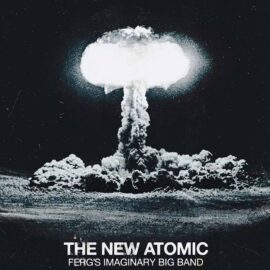
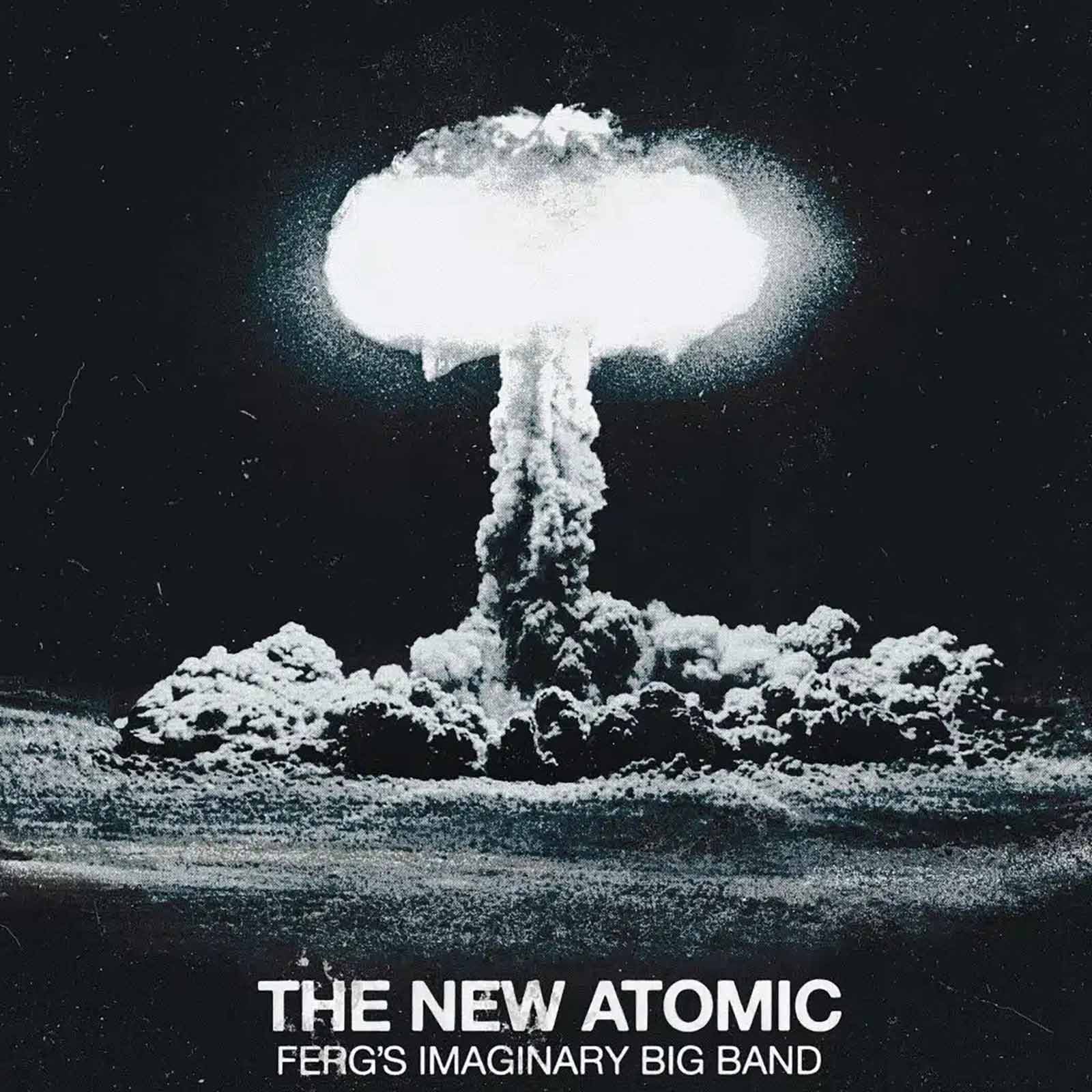
If your tastes lean as much toward the surreal wit of Monty Python as they do toward adventurous jazz, there is a good chance this album will feel like a discovery worth making. The title and artwork deliberately reference Count Basie’s 1958 masterpiece Atomic Mr. Basie, creating an intriguing point of departure. Yet the resemblance is largely symbolic. Basie’s recording remains a monument to the elegance and power of the classic American big band, while this project follows a far more unpredictable path, one rooted in a distinctly British sensibility and a willingness to embrace the absurd.
From the outset, the music refuses to be confined by genre. Jazz rock, folk traditions, classical textures, experimental improvisation and, at times, flashes of near-punk intensity all coexist within the same musical universe. Such eclecticism will not appeal to everyone. Some listeners may find the constant shifts exhilarating, while others may struggle with its refusal to settle into familiar territory. Yet that very unpredictability is also what makes the album so compelling.
There is a strong sense that these compositions were conceived with performance in mind. The music often feels less like a carefully controlled studio creation and more like a living organism designed to evolve in front of an audience. The production preserves that spirit, allowing the ensemble’s spontaneity, rough edges and collective energy to remain intact. Rather than polishing every detail into perfection, the recording captures the excitement of musicians pushing ideas to their limits.
At its heart, the project reflects many of the questions and concerns that characterize contemporary life. Themes of power, inequality, freedom and collective responsibility hover in the background without ever overwhelming the music itself. The album invites reflection rather than delivering manifestos. That sense of engagement extends beyond the artistic realm, with part of the proceeds being donated to the charity War Child, supporting children affected by armed conflict around the world.
Jazz has always possessed a remarkable ability to absorb the atmosphere of its time. Born from communities confronting hardship and transformation, the music has repeatedly served as a vehicle for expression, resilience and social observation. Today, as societies across Europe and beyond navigate economic uncertainty, cultural change and evolving political landscapes, artists inevitably respond to the world around them. This album feels very much like part of that tradition, not because it offers direct commentary, but because it channels a sense of curiosity, tension and restless creativity that many listeners will recognize.
The result is a remarkable collision of influences. The worlds of Duke Ellington and Sun Ra intersect with Godzilla, Japanese monster cinema, early bluegrass field recordings, harmolodic experimentation, vintage samplers, Sunn amplifiers and the ecstatic noise explorations of Boredoms. On paper, such a combination sounds almost impossible. In practice, it works because it is held together by a genuine sense of community among the musicians and an obvious delight in collective creation.
From the soaring lyricism of “Surfing on Saturn,” composed by Fergus Quill and Sam Eastmond, to pianist Nico Widdowson’s free-flowing improvisation on the title track, the album continually shifts between beauty and chaos. One moment evokes the grandeur of classic big band writing, while the next plunges into textures that seem on the verge of collapse. Yet the music never loses its sense of purpose. Instead, it demonstrates that large ensemble jazz remains capable of surprise, humor and invention in ways that many listeners may have forgotten.
What makes the project particularly fascinating is the way it balances reverence for tradition with a determination to challenge expectations. Listeners may hear echoes of Sun Ra’s cosmic vision, Charles Mingus’s organized turbulence or the experimental instincts that have long flourished within British jazz. Yet the ensemble never feels trapped by its influences. Every reference point is filtered through a uniquely contemporary perspective.
That spirit has defined Ferg’s Imaginary Big Band from the beginning. What started as a nine-piece ensemble in Leeds paying tribute to Sun Ra has gradually evolved into one of the most distinctive large jazz groups in the north of England. Drawing musicians from projects such as Awen Ensemble, Ancient Infinity Orchestra, Plantfood and KOG, the collective has steadily expanded both its musical ambitions and its reputation.
Their self-titled debut album in 2023, followed by Live at Lancaster Jazz Festival in 2024 and a national tour in 2025, introduced audiences across the United Kingdom to a group determined to challenge conventional ideas of what a big band can be. Performances at Ronnie Scott’s, the Vortex, the Howard Assembly Rooms and major British festivals further established their standing within the contemporary scene. Recognition soon followed, including the Peter Whittingham Jazz Award in 2023 and a nomination for the Jazz FM Innovation Award in 2025.
The ensemble’s rise also coincides with a broader resurgence of British jazz, a movement characterized by stylistic openness and a willingness to draw inspiration from virtually any source. Yet even within that vibrant landscape, Ferg’s Imaginary Big Band occupies a category of its own. Where many contemporary groups seek a balance between experimentation and accessibility, this ensemble often appears willing to follow an idea wherever it leads, regardless of how unconventional the destination might be.
Perhaps that is why the album feels so unmistakably British. The brass arrangements, the rhythmic language and, above all, the sense of humor reflect a cultural tradition that has long celebrated eccentricity. There is something deeply English in the willingness to juxtapose the profound and the ridiculous, to treat complexity with irreverence and to find joy in apparent chaos. The spirit of satire is never far away, but neither is a genuine affection for the music’s rich history.
Viewed from a European perspective, this may be one of the most daring large ensemble projects to emerge in recent years. Its reception will inevitably vary according to cultural background and musical expectations. Some listeners will embrace its unpredictability immediately, while others may require time to acclimate to its unusual logic. Yet even those who remain skeptical are likely to recognize the originality of the undertaking.
The album ultimately succeeds because it never mistakes complexity for depth or experimentation for innovation. Beneath its layers of references, stylistic detours and moments of joyful absurdity lies a sincere belief in the power of collective music-making. One can almost picture the musicians exchanging smiles across the bandstand as another improbable idea somehow comes together.
In an era when many recordings prioritize safety and familiarity, this album chooses risk. It embraces contradiction, celebrates imagination and revels in the unexpected. Whether listeners find it exhilarating or bewildering, it is difficult to deny that it offers something increasingly rare: a genuinely distinctive artistic voice. For that reason alone, it deserves attention. To overlook such an audacious and imaginative work would be to miss one of the more fascinating adventures currently unfolding within European jazz.
Thierry De Clemensat
Member at Jazz Journalists Association
USA correspondent for Paris-Move and ABS magazine
Editor in chief – Bayou Blue Radio, Bayou Blue News
PARIS-MOVE, June 2nd, 2026
Follow PARIS-MOVE on X
::::::::::::::::::::::::
Track Listing :
J Surfing On Saturn
Theme from ‘The New Atomic’
Love Sick
Do The Right Thing
Playin’ The Names
¡Besszilla!
Same Sky
I Shall Not Be Moved
Musicians :
Trumpets: Dan Coulthurst, Felix Burling (+Tuba, Trombone), Emyr Penry Dance, Ernie Moore, Fee Buckton, Olivia Cuttill, Sam Ehret’Pickett (+ Marching Baritone Horn)
Trombones: Aidan Ruffle, Benji Arnold, George Murray, Peter New, Adam Chard
Tenor Horn: Nat Martin
Alto Saxes: Flo Taylor, Saul Duff
Tenor Saxes: Sophie Speed, Will Gibbon, Harvey Parkin-Christie
Baritone Sax: Bess Shooter
Bass Sax: Alex Fisher (+ Sopranino Sax)
Viola: Aby Vulliamy
Keyboards: George MacDonald, Nico Widdowson
Guitar: Conall Mulvenna, Will Lakin, Joe Cross
Bass: Woody Hayden, Joe Cross
Drums: Josh Ketch, Theo Goss, Jonathan Lodder
Percussion: Jonathan Lodder, Richard Moulton, AJ
Noise: Hamish Dixon
The Imaginettes: Amy Clark, Sunday Lendis, Rebecca Herrington, Rosie Miles, Laura Kindelan
Vocals: Conall Mulvenna, Fergus Quill, Jonathan Lodder, Joe Cross
Spiritual Advice: Poppy, AJ
Various: Fergus Quill
Mixing Engineer: Hamish Dixon
Mastering Engineer: Andy Hawkins
Engineer: Tom Orrell
Assistant Engineers: Laura Kindelan, Ben McDonald
Graphic Design and Artwork: Jonathan Lodder
Album Photography: Em Atherton