| Blues |
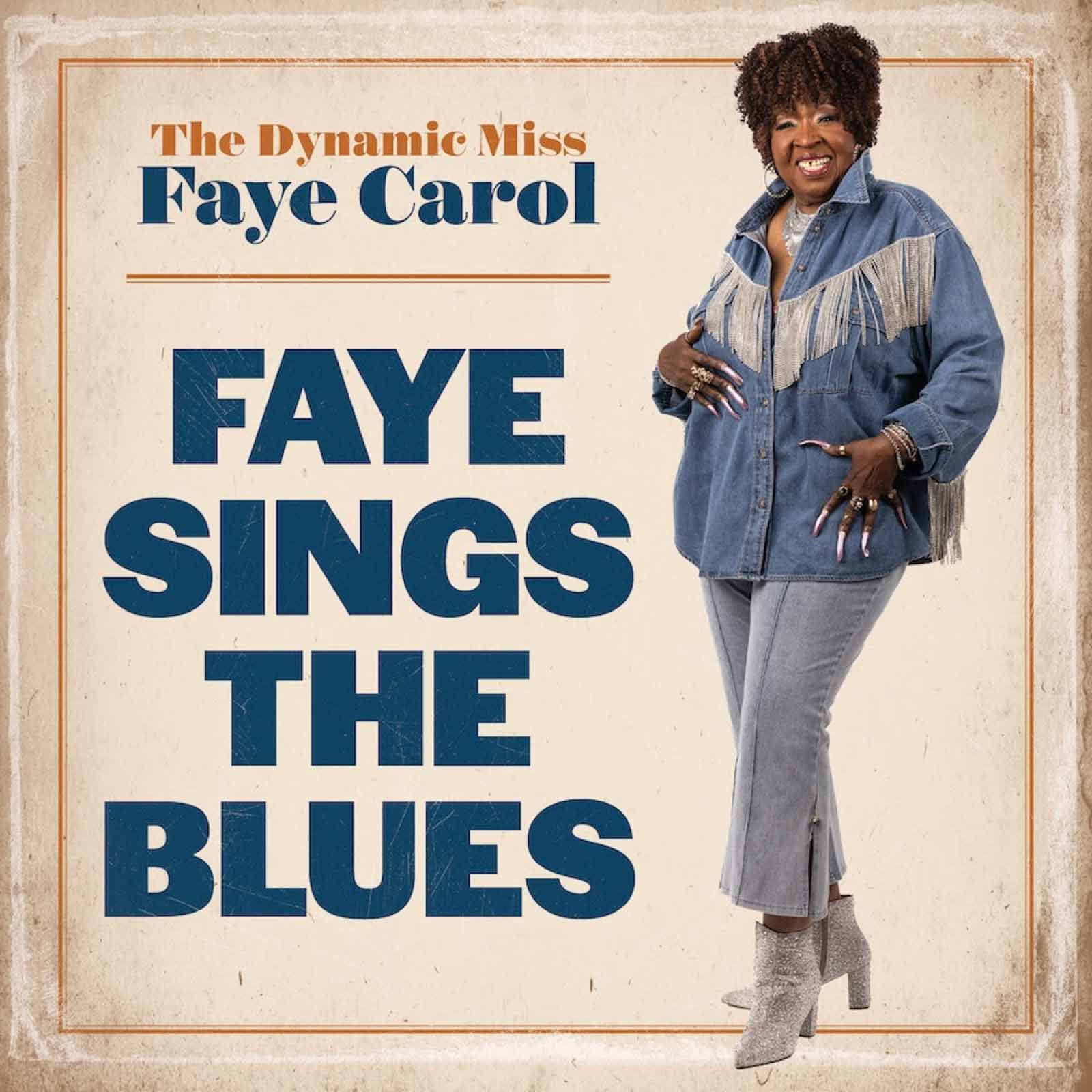
Summary: Faye Carol celebrates 60 years in music with a star studded double album featuring Taj Mahal, James Carter, Wycliffe Gordon and other jazz and blues greats. While the record honors her remarkable career, Bay Area legacy and role in preserving Black musical traditions, its polished production and uneven performances may leave listeners wanting more.
Faye Carol at Sixty Years: When a Monumental Career Meets an Uneven Album
There are albums that arrive with the weight of history already attached to them, records that ask to be listened to not merely as collections of songs but as documents of a life, a community and an era that are gradually disappearing from view. Faye Carol’s new double album belongs unmistakably to that category. Released to celebrate six decades of a career that has taken her from gospel and rhythm and blues to jazz, blues, funk and cabaret, the record comes wrapped in an impressive cast of musicians and in the undeniable authority of a singer who has spent much of her life standing at the crossroads of several important American musical traditions.
And yet, for all of that history, all of that experience and all of that accumulated cultural capital, I cannot escape the feeling that the album itself is less remarkable than the woman who made it.
That may sound unnecessarily harsh when discussing an artist celebrating sixty years in music, particularly one whose career has intersected with so many important figures and movements in American culture. But admiration and criticism are not mutually exclusive. In fact, when an artist has achieved what Faye Carol has achieved, the obligation to listen critically becomes greater rather than smaller. A career of this magnitude deserves more than polite applause, and a double album celebrating it should offer something more substantial than a parade of respected musicians confirming what we already know.
Carol herself has provided a clear explanation for what she wanted to accomplish. She has said that she wanted people to hear what she considers the real twelve bar blues, supported by beautiful horn arrangements and performed by great musicians. There is nothing wrong with that objective. Indeed, in an era in which the blues is often repackaged, diluted, polished beyond recognition or transformed into little more than a marketing category, there is something almost radical about insisting on the fundamentals.
The problem is that an artist can be completely sincere in her intentions and still produce a record that does not fully justify them. This is where the album becomes complicated. The guest list alone is enough to make any serious jazz and blues listener stop and look twice. Taj Mahal, Eric Gales, James Carter, Wycliffe Gordon, Gerald Albright, Russell Gunn, Nicholas Payton, Kirk Whalum, Jon Faddis, Tia Fuller and Jubu Smith appear alongside Carol, creating a musical cast that crosses several generations and several branches of Black American music. These are not anonymous session players brought in to fill empty spaces on a studio schedule. They are musicians with their own histories, reputations and artistic identities, and several of them could easily have been the central attraction on a record of their own.
That is precisely why their presence sometimes creates a strange imbalance. The album has assembled enough talent to produce something genuinely unpredictable, yet too often the musicians appear to have been recruited to reinforce the celebratory character of the project rather than to challenge Carol or the songs themselves. The result can feel less like a musical collision than a very well organized ceremony. Everyone arrives dressed appropriately, everyone knows what is expected of them and nobody appears particularly interested in disrupting the proceedings.
That may be exactly what Carol wanted. It may even be entirely appropriate for a sixty year celebration. But from a listener’s perspective, it also raises a difficult question: if you have access to musicians of the caliber of Kirk Whalum, Gerald Albright, Nicholas Payton, Tia Fuller, James Carter and Wycliffe Gordon, why not allow them to tear the material apart and rebuild it? Why not take the risk?
The frustration is particularly acute with musicians whose personalities are normally impossible to suppress. Kirk Whalum has spent decades developing a recognizable voice on the saxophone, one that can move comfortably between jazz, soul and contemporary music. Gerald Albright has an equally distinctive presence, with a powerful sound that has made him one of the best known saxophonists in contemporary jazz and R&B. Nicholas Payton brings a completely different history and vocabulary, while Tia Fuller belongs to a younger generation of musicians whose approach to jazz is informed by both tradition and modernity. On this album, however, the listener is sometimes left wishing that these artists had been given more freedom.
It is one of the central weaknesses of the record. The musicians are impressive, but their very brilliance exposes how conservative some of the arrangements are. Instead of creating situations in which the guests might force the songs into unexpected territory, the album often uses them as particularly distinguished pieces of musical furniture.
The blues musicians fare better because the language is closer to their natural environment. Taj Mahal brings decades of experience in American roots music to “Let the Good Time Roll,” and his presence gives the performance a sense of lived history that cannot be manufactured. Wycliffe Gordon brings his extraordinary command of traditional jazz and blues vocabulary to “Blow Top Blues,” while James Carter gives “The Thrill Is Gone” an entirely different energy.
Those moments work because the guest musicians are not merely appearing on the record. They are changing the way the songs are heard. That distinction matters.
“The Thrill Is Gone” has been recorded so many times that any new interpretation risks becoming an exercise in musical archaeology. James Carter’s presence gives the piece another dimension, because his jazz sensibility refuses to treat the song simply as sacred blues territory. “Blow Top Blues” benefits from Wycliffe Gordon’s instinct for movement, humor and rhythmic conversation, while Taj Mahal brings to “Let the Good Time Roll” the kind of relaxed authority that only comes from a musician who has spent a lifetime inside the vocabulary of American roots music. These are among the record’s strongest moments precisely because they feel less like tributes and more like conversations. Unfortunately, the album does not always maintain that level of engagement.
There are stretches where the production becomes so determined to sound impressive that it loses sight of what makes blues compelling in the first place. Blues is not supposed to be impressive in the conventional sense. It is supposed to be direct, physical, imperfect and human. The power of the form has historically come from the tension between limitation and expression, from what a singer can communicate when there are very few places for the emotion to hide.
Faye Carol’s voice is now inevitably different from what it was decades ago, and that should not be treated as a defect that technology ought to conceal. Age is audible here, and it should be. The voice contains fatigue, memory and experience, and sometimes it sounds as though Carol is not merely singing a lyric but remembering the person she was when she first encountered it. That is valuable. But there are also moments when the limitations of the voice become impossible to ignore, and the arrangements seem to compensate by surrounding her with increasingly elaborate instrumentation. The danger is that the production can begin to tell the listener how important the performance is rather than allowing the performance to demonstrate its own importance.
This is where the album occasionally crosses the line from celebration into self celebration. And perhaps that is inevitable when an artist reaches sixty years in the business. Faye Carol is not simply celebrating a recording career. She is celebrating survival.
Her story begins in Mississippi, where she was born before moving with her family to Northern California. She discovered her talent through church singing and went on to tour nationally with the gospel group The Angelaires. By the 1960s, she had established herself in the Oakland music scene alongside Johnny Talbot and De Thangs, becoming part of a musical community that was simultaneously developing its own identity and responding to the enormous social changes taking place around it. She released her first single in 1967, and during the following decades became a familiar and influential presence in the San Francisco Bay Area’s jazz, blues and cabaret worlds. She was among the early Black performers to gain broad recognition in the region’s cabaret scene and received multiple Cabaret Gold Awards. But the importance of Faye Carol’s story cannot be reduced to awards or appearances. She came of age in a period when Black music in America was inseparable from the broader struggle over Black identity, economic independence and political power. Oakland was one of the places where those connections became particularly visible.
Carol’s career intersected with the political culture of the Bay Area, including performances at events connected with the campaign to free Angela Davis and appearances associated with the Black Panther movement. These were not simply glamorous historical footnotes. They were part of the environment in which Black musicians were working, performing and building communities. Music was everywhere in that world because music was one of the ways people expressed identity, solidarity and resistance.
The civil rights movement had already transformed the political landscape by the time Carol established herself professionally, but the struggle did not end when federal legislation was passed. In Oakland and throughout California, debates about policing, housing, education, employment, political representation and racial inequality continued to shape everyday life. The Black Panther Party emerged from precisely that environment, and music became part of the cultural language surrounding the movement.
To understand Faye Carol, therefore, is to understand that she belongs to a generation of musicians for whom entertainment and history could not easily be separated. She was not a political singer in the narrow sense, and it would be misleading to turn her career into something it was not. But she performed in political spaces, lived through political struggles and remained connected to communities for whom Black music carried meanings far beyond the nightclub. That history gives her current work as a mentor an importance that goes beyond professional courtesy.
She has spent years helping younger musicians understand that the music they perform did not appear from nowhere. It came through churches, clubs, neighborhood theaters, independent record labels, family traditions, political movements and communities that created musical institutions without the financial resources or institutional support available to larger cultural industries.
Carol’s own career is a living example of that process. She eventually co founded an independent label and continued to operate outside the conventional structures of the recording industry. Her philosophy is consistent with that history. As she has explained, having control of her own label gives her the freedom to make the music she wants in the way she wants to make it. That independence is admirable, but it also means that the usual excuses become less convincing. This is not an album imposed on Carol by a major label looking for a marketable anniversary product. It is a project made under her own artistic authority. The decisions belong to her and her collaborators.
Which brings us back to the record itself. If this album were made by an unknown singer with a promising voice and an impressive collection of guests, it would probably be judged rather differently. We would ask whether the songs were fresh, whether the arrangements had something new to say and whether the musicians were being used creatively. We would not automatically forgive weaknesses because the singer had been performing for sixty years.
Faye Carol deserves the same standard. The fact that she has shared stages with Marvin Gaye, Ray Charles, Albert King, Bobby Hutcherson, Joan Baez and Sister Rosetta Tharpe is extraordinary. Her appearances alongside Otis Redding, James Brown, the Grateful Dead and Jefferson Airplane reveal just how broad the musical world in which she operated could be. She has moved between jazz, blues, R&B, gospel, funk and Latin music with an ease that makes most contemporary genre classifications seem almost absurd. But none of those accomplishments automatically makes a new album successful. A great career can produce an ordinary record. That is not an insult. It is one of the inevitable truths of artistic longevity.
In fact, perhaps the most honest way to approach this double album is to stop expecting it to be a career defining statement. It is better understood as a gathering, a document and, above all, an act of transmission. That interpretation makes the record more compelling.
At sixty years into a career, Faye Carol is no longer required to prove that she belongs in the room. She has already earned her place. What she can do now is invite other musicians into that room and give them access to a history they might otherwise encounter only through recordings and stories. This is where the younger musicians and the established stars become important.
The record can be heard as a kind of musical bridge. Carol represents one generation, Taj Mahal another, while artists such as James Carter, Tia Fuller and Nicholas Payton belong to different chapters of the evolving jazz and blues tradition. The point is not necessarily that they should sound alike. The point is that they are being placed in the same conversation. And perhaps that is why the album occasionally feels more significant than it sounds. Its importance lies partly outside the grooves.
There is a danger, particularly in contemporary music journalism, of confusing historical importance with artistic quality. The two are not the same. An artist can be historically important and release a mediocre album. Another artist can have no obvious place in history and make a masterpiece. Faye Carol’s career is unquestionably important. This particular album is much harder to defend as a masterpiece.
It contains good performances, some excellent guests and several moments that deserve repeated listening. But it also contains too much reverence, too much polish and too little danger. The musicians assembled here could have created something far more adventurous, and the listener is occasionally left with the frustrating sensation that the record has been carefully designed to prevent anything from going wrong.
Yet nothing going wrong is not necessarily the same thing as something going right. The blues has never been about perfection. It is about presence. It is about what happens when a human voice meets a song and refuses to hide behind technique.
That is why Carol’s aging voice can sometimes be more moving than the album’s most elaborate arrangements. When she sounds fragile, she also sounds real. When the voice carries the weight of six decades, the listener hears something that no younger singer can reproduce simply by imitating an old blues style. There is a lifetime inside that sound. The irony is that the album might have been more powerful if it had trusted that fact more completely.
Faye Carol does not need an army of famous musicians to prove that she matters. She does not need a double album overflowing with names to establish her credibility. She does not need to pretend that her voice has remained unchanged since 1967. What she has is much more difficult to manufacture. She has history. She has memory. She has relationships with musicians who have themselves become part of American musical history. And she has the extraordinary position of being able to tell younger musicians, through example rather than theory, what it meant to build a career when the industry offered very different opportunities to Black artists. That may ultimately be the most valuable thing about this project.
The album is not necessarily the record that will make a new generation discover Faye Carol. It is not the kind of radical artistic reinvention that suddenly makes an established artist sound dangerous again. It is not even consistently the most exciting use of the remarkable musicians who appear on it. But it is a document of a woman who has spent sixty years refusing to disappear. That is not a small achievement.
Faye Carol began in gospel, passed through Oakland’s blues and funk scene, shared stages with giants of American music, participated in a cultural environment shaped by the struggle for Black political and social equality, built an independent career and eventually turned toward mentorship and education. Her story runs alongside the history of the Bay Area itself, a history in which music, race, politics and community were constantly intertwined. Listening to her now means hearing not only a singer but an archive. And archives are rarely perfect.
They are messy, incomplete and sometimes frustrating. They contain treasures beside ordinary material. They preserve things that later generations may not immediately understand. Their value does not come from every individual artifact being brilliant. Their value comes from the fact that they allow us to remember. Perhaps this is the fairest way to approach this album.
As a piece of music, it is uneven, sometimes too conventional and occasionally disappointing given the extraordinary talent involved. As a celebration of Faye Carol’s sixty years in music, however, it becomes much harder to dismiss. The strongest performances are those in which the musicians appear to forget that they are participating in an anniversary project and simply start playing. Those are the moments when the album stops looking backward and becomes alive in the present.
For longtime followers, those moments may be enough. For newcomers, I would recommend beginning elsewhere, with the recordings and performances that reveal more directly why Faye Carol became such a respected figure in the first place. Because the real story is not this double album. The real story is the six decades that made the album possible. And that story is considerably more fascinating than the record itself.
Thierry De Clemensat
Member at Jazz Journalists Association
USA correspondent for Paris-Move and ABS magazine
Editor in chief – Bayou Blue Radio, Bayou Blue News
PARIS-MOVE, August 10th, 2026
Follow PARIS-MOVE on X
::::::::::::::::::::::::
To buy this album (August 21, 2026)
FEATURED ARTISTS
Taj Mahal – vocals (“Let The Good Times Roll”), harmonica (“Woke Up This Morning”)
Gerald Albright – tenor sax (“Driving Wheel”)
Jubu Smith – guitar (“Payin’ The Cost To Be The Boss,” “Chill With You”)
Wycliffe Gordon – soprano trombone & vocals (“Blow Top Blues”)
James Carter – tenor sax (“The Thrill Is Gone”)
Eric Gales – guitar (“Black Nights”)
Robert Randolph – pedal steel guitar (“Never Make Your Move Too Soon”)
Kirk Whalum – tenor sax (“How Long Blues”)
Russell Gunn – trumpet (“The Way You Do The Things You Do”)
Tia Fuller – alto sax (“Driftin’ Blues”)
Jon Faddis – trumpet (“Fine & Mellow”)
Nicholas Payton – trumpet (“Blueberry Hill”)
Track Listing :
DISC 1
- Soulful Dress (Maurice McAllister/Terry Vail) (4:12)
- Let The Good Times Roll feat. Taj Mahal (Sam Theard/Fleecie Moore) (4:06)
- Driving Wheel feat. Gerald Albright (Roosevelt Sykes) (6:22)
- Payin’ The Cost To Be The Boss feat. Jubu Smith (Riley B. King) (4:17)
- Bad, Bad News (Gerald Lenoir/Faye Carol/Joe Warner) (7:35)
- Blow Top Blues feat. Wycliffe Gordon (Leonard Geoffrey Feather) (7:05)
- The Thrill Is Gone feat. James Carter (Rick Darnell/Roy Hawkins) (8:44)
- He Wants To Sell My Monkey (Hudson Whittaker) (5:27)
- Black Nights feat. Eric Gales (Ferdinand Washington) (8:17)
- Never Make Your Move Too Soon feat. Robert Randolph (Nesbert Hooper/Will Jennings) (6:14)
DISC 2
- Woke Up This Morning feat. Taj Mahal (Riley B. King/Jules Bihari) (4:02)
- Chill With You feat. Jubu Smith (Kito Kamili) (6:22)
- How Long Blues feat. Kirk Whalum (Leroy Carr/Larry Shayne) (3:50)
- The Way You Do The Things You Do feat. Russell Gunn (William Robinson/Robert Rogers) (6:57)
- Driftin’ Blues feat. Tia Fuller (Charles Brown/Johnny Moore/Edward Williams) (4:50)
- After Hours (Avery Parrish/Buddy Feyne/Robert Bruce) (7:05)
- Roll ‘Em Pete (Pete Johnson) (5:24)
- Fine & Mellow feat. Jon Faddis (Billie Holiday) (11:01)
- I’ll Take Care Of You (Brook Benton) (10:38)
- Blueberry Hill feat. Nicholas Payton (Al Lewis/Larry Stock/Vincent Rose) (5:19)
Produced by Faye Carol & Joe Warner
Arrangements by Faye Carol & Joe Warner
Copyright 2026 Getdown Records
Recorded at 25th Street Recording by Gabriel Shepard
Mixed by Charles Haynes & Xian You Ong at The Contrlroom
Mastered by Chris Longwood
Photography by Ariel Nava
Graphic design by Mike Nicholls
Thank You: Kito Kamili, Jennie Clyne, Tarus Mateen, Dante Roberson, Gabriel Shepard, Geechi Taylor, Larry Smith, Laura Ginyard, Ariel Nava, Mike Nicholls, Dr. Gary Bean, Geoffrey Pete, Charles Haynes, Chris Longwood.
“Soulful Dress” is dedicated to the memory of Sugar Pie DeSanto
Eric Gales’ guitars recorded by Benjy Johnson
Earthtones Recording, Greensboro, NC
Gerald Albright appears courtesy of Bright Music Records
Kirk Whalum appears courtesy of Mack Avenue Records
Nicholas Payton appears courtesy of Paytone Record