| Contemporary music |
Summary: Emil Miszk’s MEGALOPOLIS blends contemporary jazz, classical composition and free improvisation into a powerful portrait of modern urban life.
MEGALOPOLIS: Emil Miszk and the Sound of a City in Constant Motion
Closer to the world of the big band and contemporary classical music than to jazz as such, composer and trumpeter Emil Miszk presents MEGALOPOLIS, the first album from his new international project, MODULAIRE. Alongside his work as a musician, Miszk is also a co-founder of Alpaka Records, and this new project reveals a composer increasingly interested in moving beyond established musical boundaries. MEGALOPOLIS is a surprising work, above all because of its structure and its refusal to conform to what we normally expect from contemporary jazz. Jazz is certainly part of its vocabulary, but it is rarely the real point of departure. The deeper references seem to lie elsewhere, in the highly organized musical worlds of composers such as György Ligeti, Karlheinz Stockhausen and James Dillon, as well as in a rigorous classical education that allows Miszk to explore the lower registers of the ensemble with a remarkable sense of weight, architecture and orchestral depth. The result is music that often feels closer to a contemporary chamber orchestra or a modern symphonic work than to a conventional large jazz ensemble. MODULAIRE brings together musicians from across Northern Europe and the Baltic region, creating a genuinely international collective in which contemporary jazz, free improvisation, contemporary classical composition and cinematic orchestration coexist within a single large-scale musical architecture. At its heart, MEGALOPOLIS examines the relationship between individuals, communities and the increasingly complex environments in which we live, but it does so without imposing an obvious narrative on the listener. The music itself becomes the city, its density, its contradictions, its movement, its noise and its constantly shifting human relationships.
What makes the album particularly fascinating is that its complexity does not come primarily from improvisation, but from the compositions themselves. These are pieces built with an extraordinary degree of structural awareness, in which every section seems to have been carefully positioned within a much larger architectural design. Improvisation nevertheless remains essential, perhaps most clearly in passages influenced by repetitive music, where patterns are allowed to evolve through interaction rather than simply being reproduced. The project has developed over several years, giving Miszk the opportunity to bring together the different dimensions of his artistic identity as composer, improviser and ensemble leader. Rather than imposing a rigid musical blueprint on the musicians, he creates a framework based on trust. The performers are expected to listen, react, take risks and assume responsibility for the collective result. This approach is crucial because the ensemble is not treated as a machine designed simply to reproduce a score. It behaves more like a living organism, in which every individual voice affects the shape of the whole. Contemporary jazz, free improvisation, contemporary classical music and film-inspired orchestration are all present, but none is allowed to dominate completely. The album constantly moves between expansive orchestral writing and moments in which the musicians are given the space to respond to one another.
Miszk’s admiration for Frank Zappa is particularly revealing in this respect. Zappa understood that large ensembles could be both meticulously organized and profoundly unpredictable, and something of that philosophy can be felt in Miszk’s fascination with sharp contrasts, sudden changes of direction, unusual combinations of timbres and the tension between written form and spontaneous performance. Yet MEGALOPOLIS never sounds like an exercise in imitation. The influence has been absorbed, transformed and incorporated into a much broader musical language that clearly belongs to Miszk himself. The same can be said of his relationship with contemporary classical music. Ligeti, Stockhausen and Dillon are not simply intellectual references placed around the music; their presence can be felt in the way sound is organized, in the importance given to density and register, and in the understanding that timbre itself can become a structural element. This is one of the reasons the album can feel so far removed from the conventions of the contemporary jazz ensemble, even when improvisation remains an important part of its identity.
The title of the album perhaps offers the clearest key to understanding the project. Contemporary cities seem to grow almost overnight, spreading outward like enormous organisms and gradually becoming labyrinths in which human beings can easily disappear. Their architecture is increasingly cold and impersonal, often softened by carefully designed patches of vegetation that attempt to conceal the concrete, glass and steel beneath them. People cross one another every day without necessarily seeing one another. Traffic becomes an expression of collective impatience, movement becomes increasingly brutal, and the sheer scale of modern urban life can create a strange sense of isolation even in places filled with millions of people. MEGALOPOLIS captures something of that contradiction. Whether one lives in Europe or the United States, the experience is remarkably similar. We build too much, too quickly, often without asking where the human being actually belongs within the structures we create. Miszk translates this complexity into musical form, turning the ensemble into a miniature city, a network of independent voices whose meaning emerges through their relationships with one another. Instruments collide, overlap, disappear and return. Some passages seem to expand almost architecturally, while others contract into tightly controlled patterns. The music can be dense, even overwhelming at times, but it is never dense simply for the sake of being dense. Beneath the apparent complexity lies a very human question: how can individual voices coexist without losing their identity?
This question gives MEGALOPOLIS much of its emotional strength because the album is not simply describing a city from the outside. It is trying to understand what it feels like to live inside one. A city is not only buildings, roads, traffic and infrastructure; it is also millions of private lives moving simultaneously through the same physical space. It is proximity without intimacy, communication without necessarily being understood, and movement without any guarantee of arriving somewhere meaningful. Miszk seems to understand that contradiction and turns it into one of the central forces of the music. The large ensemble becomes a reflection of that human condition, with individual voices constantly negotiating their place within a much larger structure. At certain moments, the collective sound becomes almost monumental, while at others a single instrument suddenly emerges with an intimacy that seems almost out of proportion to the scale of the ensemble. Those contrasts are essential to the album because they prevent the music from becoming merely an exercise in orchestral density.
That idea also explains why MEGALOPOLIS can change its meaning from one performance to another. The compositions establish clear architectural frameworks, but those frameworks contain spaces in which the musicians can react to one another and allow the music to breathe differently each time. The basic structure remains, but the internal life of the music is never completely fixed. Improvisation is therefore not used as decoration or as a way of making a composed piece appear more spontaneous. It is an integral part of the philosophy of the project. Miszk appears less interested in controlling every second of the music than in creating the conditions in which something unexpected can happen. There is a certain courage in that approach, particularly for a composer working with such a large and intricate ensemble. The music has to be precise enough to maintain its identity while remaining open enough to accommodate the individuality of the performers, and that balance is one of the album’s greatest strengths.
MEGALOPOLIS does not ask musicians to surrender their personalities to a collective sound. Instead, it makes difference itself part of the composition. The ensemble works because the musicians are not identical. Their different backgrounds, instruments, temperaments and approaches become the raw material from which the music is constructed. In that sense, MODULAIRE is not simply an international ensemble but also an artistic proposition about coexistence. Each musician contributes something that cannot simply be replaced by another voice, yet the music only becomes complete when those differences begin to interact. There is a delicate balance here between individuality and collective responsibility, and Miszk seems determined to preserve both sides of that equation.
The sheer density of the writing ultimately places MEGALOPOLIS much closer to contemporary classical music than to jazz in the traditional sense. Listeners who approach the album expecting familiar jazz structures, conventional soloing or an immediately accessible groove may find themselves disoriented. There are certainly elements that connect the work to contemporary jazz and improvisation, but they are only pieces of a much larger picture. The most adventurous listeners, those willing to cross cultural and stylistic borders without demanding that music remain inside a familiar category, will probably find much more to discover here. This is not an album that seems particularly interested in making things easy for the listener. It does not simplify its language in order to become immediately accessible, nor does it smooth away its rougher edges. There is something almost uncompromising about its approach, and that uncompromising quality is part of what gives the project its character.
MEGALOPOLIS presents the listener with a creative proposition and asks for attention in return. Its rewards come gradually, through repeated listening, when what initially appears to be a dense and complicated musical landscape begins to reveal its internal relationships. Recurring gestures become easier to recognize, patterns begin to connect, and changes in texture acquire a significance that may not be immediately apparent on first hearing. What first seems like a wall of sound slowly reveals itself as a carefully organized network in which every element has its place. The album does not necessarily become easier with repeated listening, but it becomes more understandable, and that distinction is important. Miszk does not remove the complexity; he gives the listener time to learn how to hear it.
There is also something deeply cinematic in the way Miszk organizes sound. The music often seems to move through spaces rather than simply through musical sections, as though the listener were passing through different districts of an immense city. Low instruments provide an almost physical foundation, while brass, woodwinds, percussion, piano, guitar and voice contribute layers that constantly alter the perspective. The lower registers are particularly important, giving several passages an imposing gravity that recalls the physical force of major contemporary orchestral works. Yet the music is never reduced to orchestral spectacle. Its most compelling moments occur when the large-scale architecture and the human element suddenly meet, when an individual gesture becomes visible inside the mass of sound. That tension between the individual and the collective may ultimately be the album’s real subject, and it is what gives the music a dimension that goes beyond its impressive compositional construction.
There is something particularly interesting about the way Miszk allows these two forces to coexist. The collective does not erase the individual, but the individual cannot exist completely outside the collective either. Every musician is constantly influencing the musical environment around them. A single gesture can change the direction of a passage, while a small rhythmic displacement can alter the atmosphere of an entire section. The music becomes a conversation in which nobody has complete control. This gives MEGALOPOLIS a sense of movement that is difficult to achieve in such a carefully constructed work. Even when the composition is highly controlled, there is always the possibility that something will shift, and the listener senses that the musicians are not simply following instructions but actively negotiating the music as it happens.
The album has clearly required enormous compositional discipline, but discipline is never presented as an end in itself. Miszk uses structure to create possibilities rather than limitations. The score establishes the landscape, but the musicians determine how that landscape is inhabited. This is perhaps one of the most convincing aspects of the entire project because it allows the music to remain intellectually rigorous without becoming emotionally distant. There is a human vulnerability in giving musicians this degree of responsibility, particularly within such a complex structure, and that vulnerability is audible. The music can sound powerful and controlled, but it can also suddenly feel fragile, as though the enormous structure might shift under the weight of the individual voices moving inside it.
MEGALOPOLIS is therefore an ambitious debut, but its ambition should not be measured simply by the size of the ensemble or the complexity of the writing. Its real ambition lies in the attempt to rethink what a contemporary large ensemble can be. Miszk refuses to choose between composition and improvisation, between jazz and contemporary classical music, between precision and freedom. Instead, he places these elements in constant dialogue and allows their differences to become productive. The result will undoubtedly be too demanding for some listeners, particularly those looking for conventional jazz, but that is precisely what makes the project interesting. MEGALOPOLIS does not need to please everyone. It needs to create its own world, and it succeeds in doing so with unusual conviction.
The music asks to be entered rather than consumed, experienced rather than simply heard. It does not reveal everything immediately, and perhaps it should not. Some music needs time before its real character begins to emerge, and MEGALOPOLIS belongs to that category. It rewards patience without ever becoming passive, and repeated listening does not make the music smaller. If anything, the opposite happens. The deeper one goes into it, the larger the world seems to become, with new relationships and details gradually appearing inside the larger structure.
There are albums that entertain, albums that impress, and albums that remain in the mind because they somehow manage to touch something more difficult to articulate. MEGALOPOLIS belongs to the latter category. It is the beginning of a project that appears to have much further to travel, and more importantly, it suggests that Emil Miszk is not simply looking for another way to write for a large ensemble. He is searching for a language capable of reflecting the complexity of the world around him without reducing that complexity to a simple concept. That is not an easy task, but MEGALOPOLIS is an impressive first answer and, perhaps even more importantly, a promise that there is considerably more to come.
Thierry De Clemensat
Member at Jazz Journalists Association
USA correspondent for Paris-Move and ABS magazine
Editor in chief – Bayou Blue Radio, Bayou Blue News

PARIS-MOVE, September 4th, 2026
Follow PARIS-MOVE on X
::::::::::::::::::::::::
Musiciens :
Emil Miszk (PL) | Trumpet
Patrycja Wybrańczyk (PL) | Drums
Steinar Heide Bø (NO) | Drums
Kertu Aer (EE) | Double Bass
Håkon Huldt-Nystrøm (NO) | Double Bass
Sondre Moshagen (NO) | Piano
Emil Bø (NO) | Trombone
Maria Dybbroe (DK) | Alto Saxophone, Bass Clarinet
Viktoria Holde Søndergaard (DK) | Vibraphone
Jorik Bergmann (NL) | Flutes
Per Åke Holmlander (SE) | Tuba
Jonathan Sandqvist (SE) | Bassoon
Krzysztof Stencel (PL) | French Horn
Aleksandra Panasik (PL) | Oboe
Krzysztof Hadrych (PL) | Guitar
Aleksander Rewiński (PL) | Voice
Track Listing :
Shapes of Water I: Foundation
Shapes of Water III: Circulation
Shapes of Water II: Concentration
Diatonic Jogger
Non Omnis Moriar
Saying Something
Something is missing
Non Omnis Moriar: Reprise
Recorded at Polish Radio Studio S4/S6, Warsaw, by Piotr Taraszkiewicz, October 8-11, 2025.
Assistant engineer: Michał Wójtowicz
Mixed by Ingar Hunskaar
Mastered by Andreas LUPO Lubich
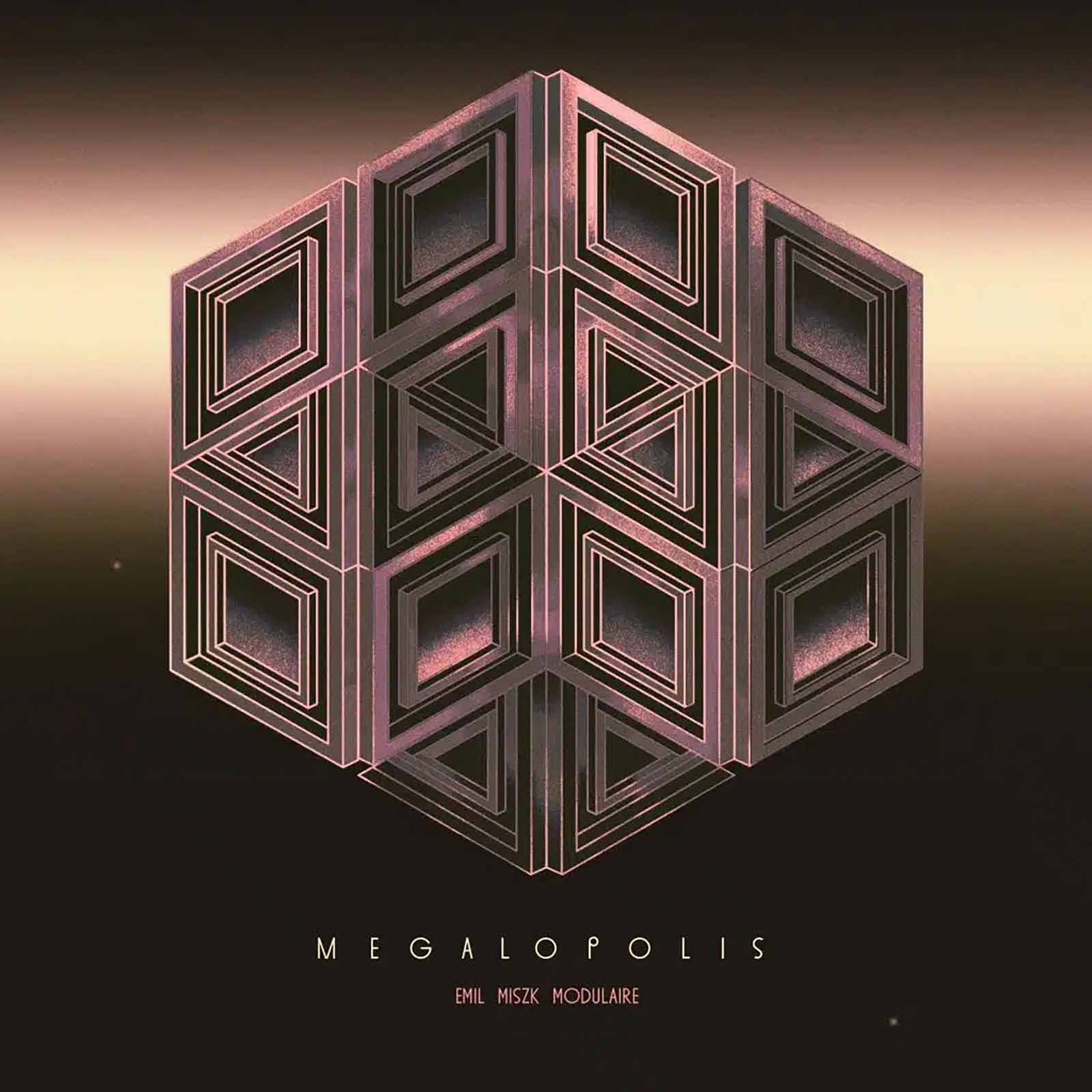
Cover art and design by Ada Zielińska
Released by Alpaka Records