| Blues Grunge |
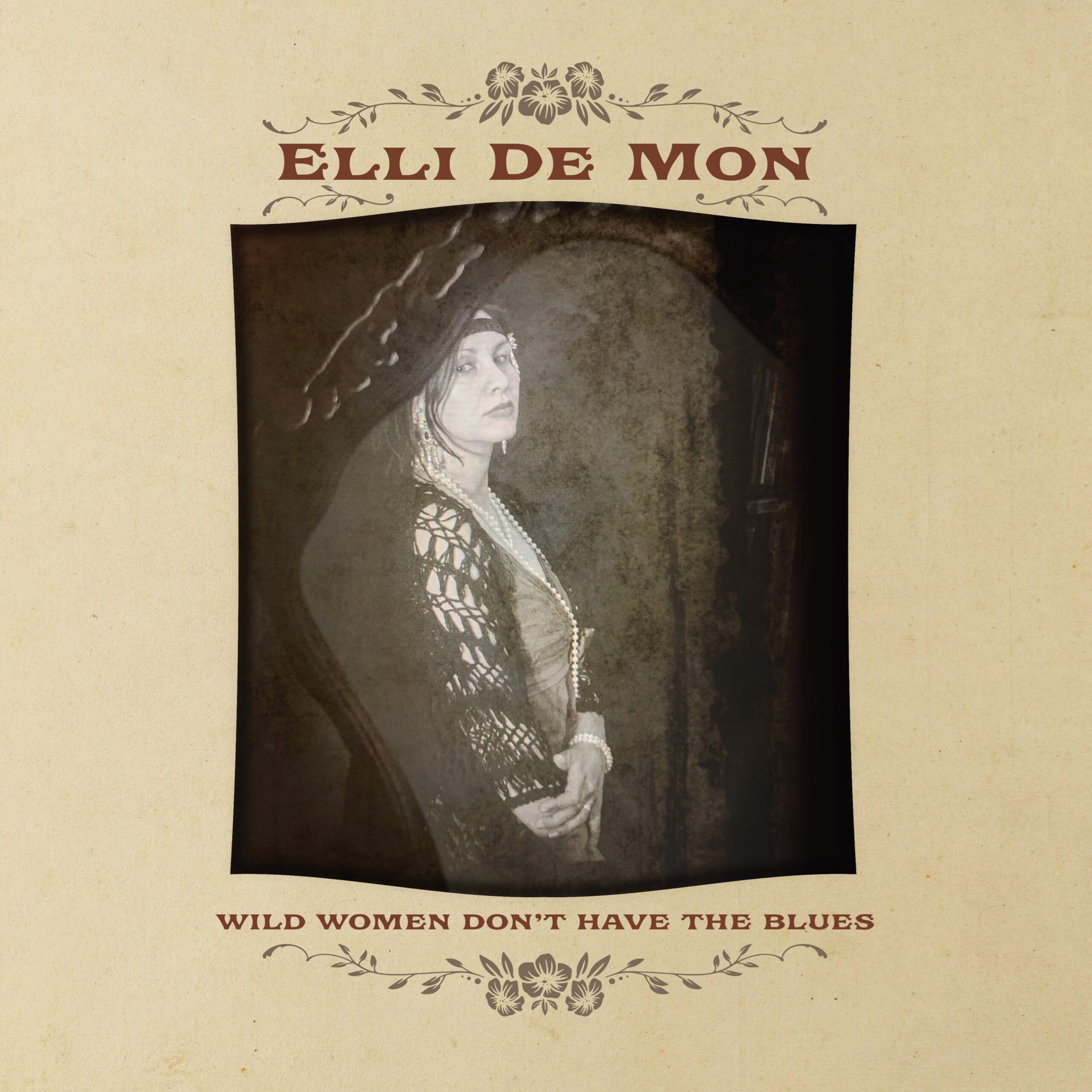
Elli de Mon, Wild Women Don’t Have the Blues: A Loving, Fierce Tribute to the Women Who Built the Blues
Some albums are tributes in name only. Wild Women Don’t Have the Blues, the new record from Italian one-woman-band Elli de Mon, is a tribute in the fullest, most committed sense of the word: ten songs, ten pioneering African American women, one artist determined to make sure their names and their fire don’t get lost to history. Raw, minimal and utterly alive, it’s a genuinely moving listen, and a very good album indeed.
Elli de Mon, the stage name of Italian singer, multi-instrumentalist and writer Elisa De Munari, has spent over a decade carving out one of the most distinctive corners of European blues. Drawing on the “shamanic tradition” of Bessie Smith, Fred McDowell and Son House as much as on raw garage-punk energy, she builds her sound entirely alone: guitars, lapsteel guitars, drums, bells, sitar, synth, voice, saturated and distorted tones, all run through a genuinely lysergic, psychedelic filter. Since her 2014 self-titled debut, she’s released a steady stream of acclaimed albums, II (2015), VS (2016), the sitar-and-tabla-flavoured Blues Tapes: The Indian Sessions (2017), Songs of Mercy and Desire (2018), and shared stages across Europe with the likes of The Jon Spencer Blues Explosion, The Devil Makes Three, Nick Oliveri, Cedric Burnside and Carmen Consoli.
It was 2021’s Countin’ the Blues, though, that set her on the path leading directly to this new record. That album, built around the “queens of the blues” of the 1920s, was released alongside her first book, Countin’ the Blues – Donne indomite (“Indomitable Women”), and earned her glowing reviews across Europe, not least here in the UK where she was even featured on the BBC. Since then she’s kept moving restlessly between languages and traditions. 2023’s darker, heavier Pagan Blues pushed her into the UK charts, while 2025’s Raìse saw her sing for the first time in her own native Vicenza dialect. With Wild Women Don’t Have the Blues, she returns to English and to her founding obsession at once: the African American women who sang the blues before it was blues, before it was history, before it was even reliably written down.
What makes this album so powerful is its specificity. Rather than a vague homage to “the blues”, Wild Women Don’t Have the Blues is dedicated to ten real, specific women, several of whom are barely documented anywhere outside archival field recordings: Sister Rosetta Tharpe, the electric-guitar-wielding gospel-blues pioneer now rightly celebrated as a godmother of rock and roll, Jesse Mae Hemphill, the great Mississippi hill-country bluewoman and granddaughter of fife-and-drum legend Sid Hemphill, Mary Alice and Alan McGowan, Mattie Mae Thomas and Mississippi Matilda Powell, both captured on rare 1930s recordings that might otherwise have vanished entirely, Mamie Smith who in 1920 became the first Black woman to record a blues song at all, Sister O.M. Terrell, whose gospel-inflected blues carried real conviction, Ida Cox, the formidable “Uncastrated Blues Singer” who gave the album its title song, Etta Baker, the North Carolina Piedmont fingerstyle guitar master, and Billie Holiday, whose devastating “Strange Fruit” closes the record. This is a story of resistance before it’s even a story of music: women who sang against the fate assigned to them, defying social, moral and musical convention all at once.
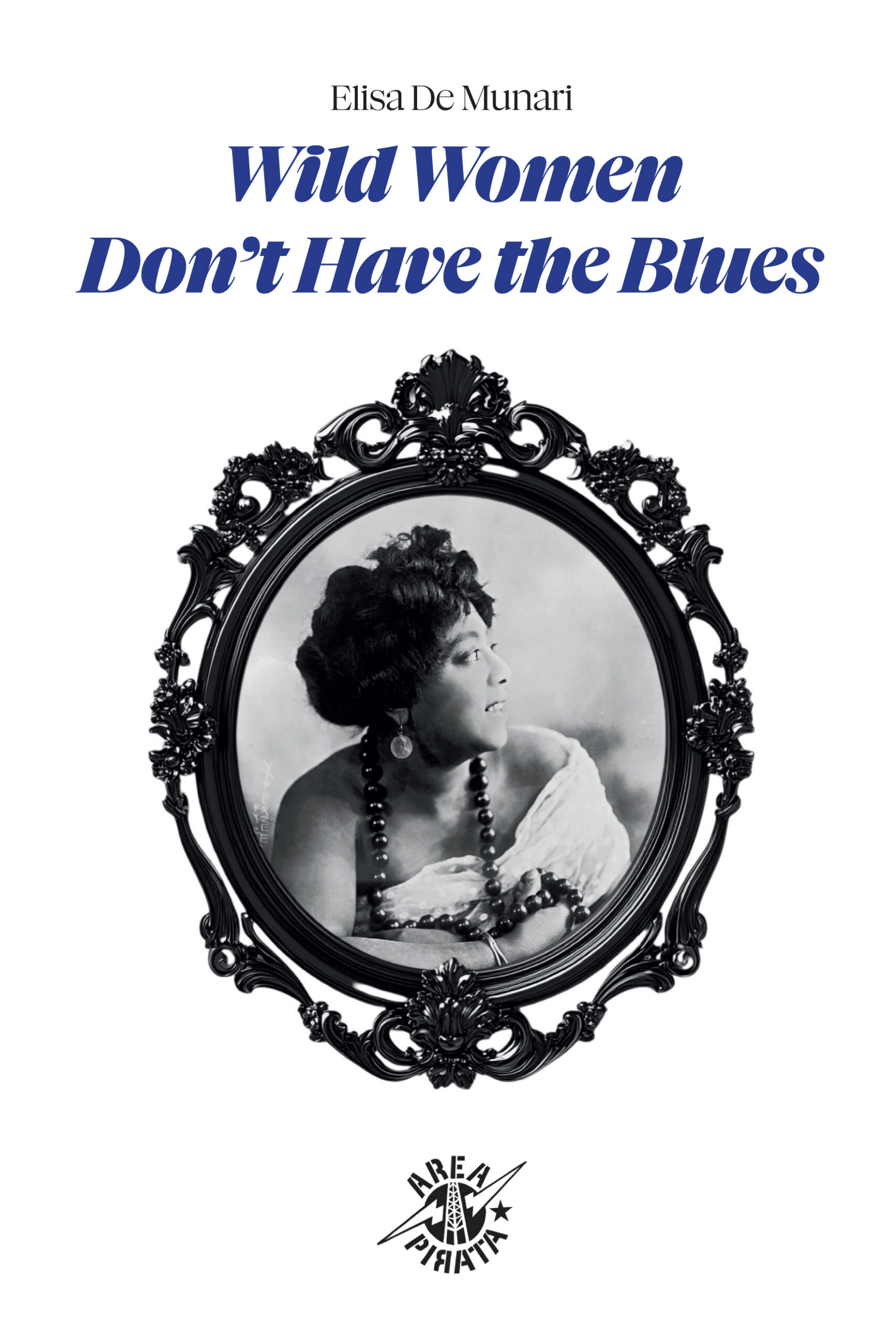
This isn’t a one-off gesture, either. The album arrives as a companion piece to a second book, also titled Wild Women Don’t Have the Blues, published under De Munari’s own name, a continuation of the same “poetic atlas” of memory, body and resistance she began with Countin’ the Blues. Album and book together form a genuine artistic project: twelve emotional maps charting a musical, political and spiritual pilgrimage through voices that history tried to leave at the margins.
The album’s emotional centre of gravity is unmistakably its closing track, Billie Holiday’s “Strange Fruit”, a song, as Elli de Mon has explained, that she spent a long time believing she shouldn’t touch at all. She eventually came to feel that truly listening to it meant she had to sing it herself and chose to record her version inside a church, not out of religious conviction, since she isn’t Catholic, but in search of a place where silence still felt possible. Into her reading of Holiday’s song she has woven an old Venetian funeral lament, in which a father mourns his dead daughter, an image she has said resurfaced for her again and again in recent months in connection with the children killed in Gaza. She has dedicated this performance to them. It’s a bold, deeply personal way to close an album otherwise rooted in 1920s and ’30s source material, and it reframes everything that came before it: these aren’t museum pieces, but part of a living tradition of grief, protest and survival that stretches unbroken into the present.
True to form, Elli de Mon plays almost everything herself (guitars, lap steel, drums, sitar and synth) giving the record the same gloriously raw, garage-folk-blues character that has defined her catalogue from the start. She’s not entirely alone this time, though: Ciro Montanari adds tabla to “Hard Working Woman Blues” and “Going Down the Road Feeling Bad,” Giusi Pesenti contributes washboard, bones, spoons and worry beads across several tracks, and Marco Parmiggiani’s pedal steel guitar graces the title track itself. It’s a minimal, carefully chosen cast of extra textures that never gets in the way of the album’s essential one-woman-band spirit, these are decorations on the frame, not a different frame altogether.
The whole album was recorded, mixed and mastered by Marco Degli Esposti at Happenstance Recording Studio in Carbonarola, the same trusted collaborator behind Elli de Mon’s recent Raìse and Grembo de Pria, and the production keeps things appropriately unpolished: close-mic’d, intimate, with plenty of room left for buzz, rattle and grain.
Wild Women Don’t Have the Blues works on every level it’s trying to work on. As a listening experience, it’s a compelling, texturally rich hour of solo garage-blues from one of Europe’s most distinctive interpreters of the form. As a historical project, it’s a genuine act of recovery, putting names and voices back at the centre of a tradition too often reduced to a handful of male icons. And as a personal statement, closing on “Strange Fruit” gives the whole record real weight and urgency. It’s a very good album, and a worthy, fiery companion to Elli de Mon’s growing body of work.
Frankie Pfeiffer
Editor in chief – PARIS-MOVE
PARIS-MOVE, October 3rd, 2026
Follow PARIS-MOVE on X
:::::::::::::::::::::
Tracklisting
- Two Little Fishes and Five Loaves of Bread – Sister Rosetta Tharpe
- She Wolf – Jesse Mae Hemphill
- My Mother’s on the Train – Mary Alice and Alan McGowan
- Workhouse Blues – Mattie Mae Thomas
- Hard Working Woman Blues – Mississippi Matilda Powell
- Crazy Blues – Mamie Smith
- I’m Going to That City – Sister O.M. Terrell
- Wild Women Don’t Have the Blues – Ida Cox
- Going Down the Road Feeling Bad – Etta Baker
- Strange Fruit – Billie Holiday
Musicians
Elli de Mon: guitars, lap steel, drums, sitar, organ, voice
Guests
Ciro Montanari: tabla (tracks 5, 9)
Giusi Pesenti: washboard (track 6), bones (track 7), spoons and worry beads (track 8)
Marco Parmiggiani: pedal steel guitar (track 8)
Recorded, mixed and mastered by Marco Degli Esposti at Happenstance Recording Studio, Carbonarola (MN), Italy
Cover artwork and graphic design by Riccardo Bucchioni
Photo by Denis Ulliana
Released November 20, 2026, on Area Pirata Records (CD, LP, digital)