
| Jazz |
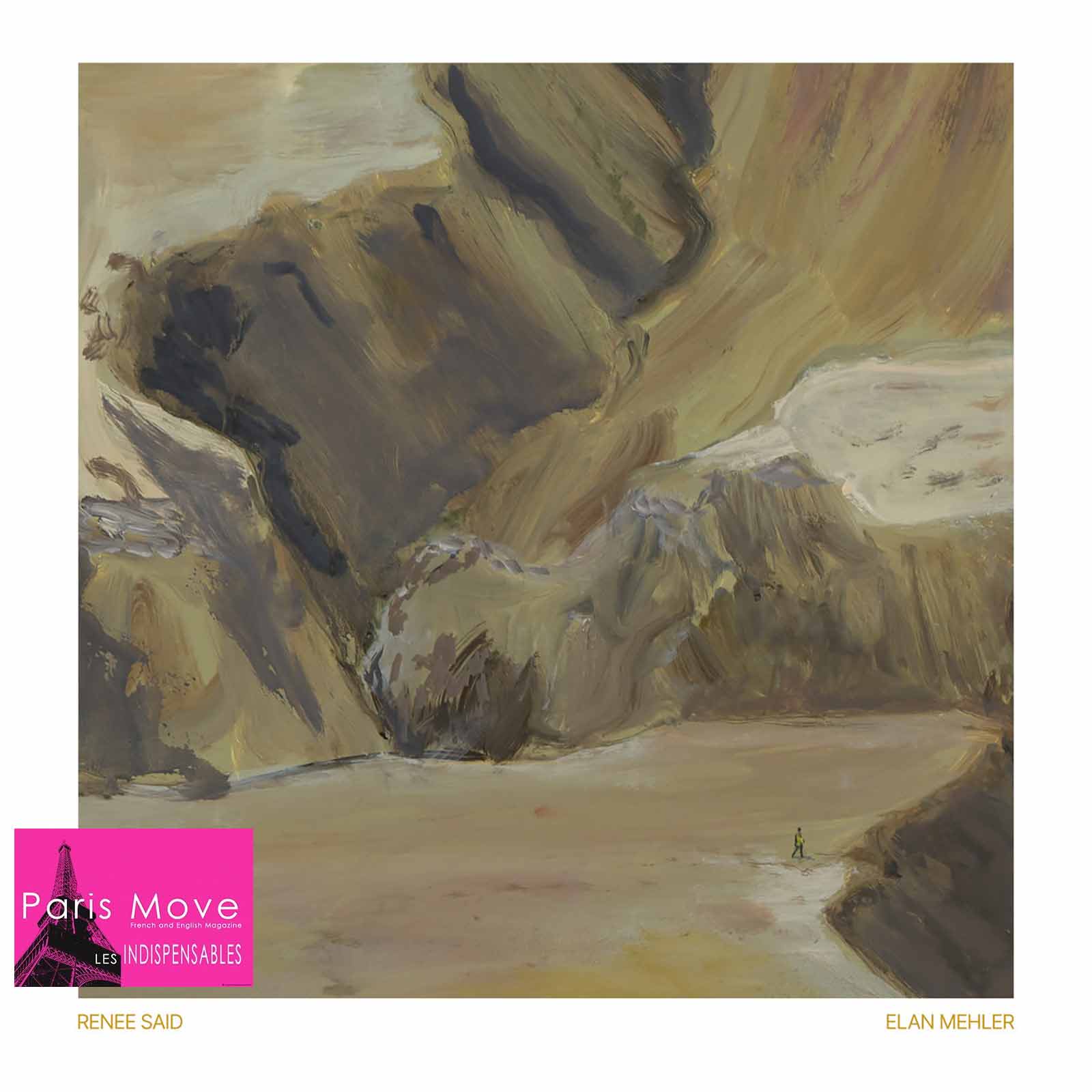
Summary: Elan Mehler’s Renee Said is a richly textured chamber jazz album blending classical elegance, modern improvisation, and deep emotional narrative, featuring an outstanding ensemble and standout tributes to Paul Motian and Frank Kimbrough.
Elan Mehler’s Renee Said: A Luminous Chamber Jazz World of Memory, Space, and Imagination
Sometimes the most rewarding discoveries arrive through the quiet recommendations of trusted friends. Every so often, someone I have worked with for years sends a brief message suggesting that I listen to an artist I have never encountered before. I cherish those moments. In fact, I make a point of avoiding any background reading at first. I prefer to approach the music without preconceptions, allowing it to reveal itself on its own terms.
In the case of pianist and composer Elan Mehler, the first impression was striking. His writing immediately brought to mind the delicate sophistication of Maurice Ravel and Erik Satie. There is the same sense of spaciousness, an elegance that seems to float effortlessly while remaining firmly anchored by a powerful compositional voice. The piano itself is central to this balance: Mehler’s touch is neither showy nor detached, but carefully calibrated, capable of shifting from near whisper-like intimacy to harmonically dense passages that carry real weight. Just as the listener begins to settle into what appears to be a contemporary classical landscape, a magnificent saxophone enters the conversation, whispering in the ear with an evocative quality that recalls the dreamlike worlds of One Thousand and One Nights, itself rooted in the eighth century Persian collection Hezar Afsana, or “A Thousand Tales.”
What becomes apparent very quickly is that this music operates on multiple levels. The intellectual architecture is present everywhere, woven into every phrase and structural choice, yet the emotional immediacy remains intact. Certain moments stand out with particular force: passages where the ensemble seems to hover in suspension before reassembling itself with quiet precision, or where the dialogue between piano and reeds suddenly opens into unexpected emotional clarity, as if the music briefly sheds its own structure to breathe more freely.
Mehler’s own description of the project captures something essential about its spirit: “This is the album I am most proud of. What a gift it was to work with these musicians in this context. The life they bring to this music is astonishing.” Life, however, may be too modest a word. What emerges from these performances is not merely vitality but narrative. The listener hears intention, poetry, and emotional resonance unfolding in real time.
Guitarist Ben Monder, one of the most distinctive voices on the contemporary jazz scene, contributes with remarkable restraint and precision. His presence is subtle, but his harmonic coloring adds a shifting luminosity that deepens the ensemble’s overall texture. Recorded at EastSide Sound Studio in New York on February 3 and 4, 2025, by engineers Marc Urselli and Rocky Russo, Renee Said presents eight original compositions by Mehler alongside two deeply meaningful interpretations: Paul Motian’s “Byablue” and Frank Kimbrough’s “Quickening.”
These selections are far more than respectful nods to influential predecessors. Several members of the ensemble worked closely with both Motian and Kimbrough, making these performances feel less like tributes than living continuations of their artistic legacy. Nothing here appears accidental. The voices of different composers, different generations, and different aesthetic traditions are brought together into a coherent poetic statement. They function almost like illuminating footnotes, enriching the listener’s understanding of the larger work while deepening its emotional reach.
From a broader stylistic perspective, the album also resonates with a lineage of chamber-like jazz associated with ECM aesthetics, where silence is treated as an active musical force and where harmonic space is as important as melodic development. There is a similar sense of restraint and openness here, though Mehler’s writing retains a distinctly New York intensity, a quiet urgency beneath its surface clarity.
Understanding Mehler’s broader contribution to contemporary jazz provides additional context for the significance of this recording. Alongside his partner Christophe Morisseau, he co-founded Newvelle Records, a label that has produced more than fifty albums featuring some of the most respected artists in modern jazz, including Jack DeJohnette, John Patitucci, Rufus Reid, Lionel Loueke, and Skúli Sverrisson, among many others.
In 2020, the label launched an ambitious project dedicated to the musical heritage of New Orleans, bringing together legendary figures such as Irma Thomas, Little Freddie King, Ellis Marsalis, and Jon Cleary. A year later, Mehler produced an extraordinary tribute to pianist and composer Frank Kimbrough. Spanning more than five and a half hours and featuring sixty eight musicians, the project was recognized as one of the most important jazz releases of the year, earning the number two position in Slate magazine’s list of the ten best albums of 2021. The following year saw the release of the Renewal Collection, which showcased an impressive roster of artists including Dave Liebman, Michael Blake, Nadje Noordhuis, Francisco Mela, Tony Scherr, Ben Monder, and Fred Hersch.
Albums such as Renee Said are rare. They become reference points not because they seek greatness but because they achieve something increasingly uncommon: they create a complete artistic world. This is undeniably a jazz album, yet it constantly drifts beyond conventional boundaries into parallel universes where imagination and reality coexist. Listening to it, one would hardly be surprised to encounter Salvador Dalí’s famous melting clocks draped across a windowsill somewhere in the distance.
If this review took longer to write than expected, it is because I found myself returning to the album again and again, concerned that I might overlook some hidden detail, some fleeting nuance concealed within its intricate architecture. In truth, the only real sense of absence arrives when the final track fades away. The music is remarkably addictive, not through immediacy alone but through depth. Each successive listen reveals new relationships, new colors, and new emotional dimensions.
The ensemble itself is a study in finely balanced contrasts. Alto saxophonist Loren Stillman and tenor saxophonist Scott Robinson form a compelling and richly expressive reed section, capable of both tight interplay and expansive lyricism. Guitarist Ben Monder adds his unmistakable textures, while bassist Tony Scherr provides a grounded yet elastic foundation that allows the music to breathe freely without losing its coherence.
At the center of the ensemble stand two of the most distinctive and contemplative drummers working today, Francisco Mela and Matt Wilson. Their frequent collaborations have produced a musical rapport that borders on the telepathic, and here their interaction becomes one of the album’s defining strengths. Together they infuse the music with constantly shifting colors, rhythmic depth, and a thrilling sense of unpredictability.
Ultimately, Renee Said feels less like a collection of compositions than like a fully inhabited sound world. It belongs to the small category of recordings that continue to expand in the listener’s perception long after the final note has disappeared.
If there is a verdict to be made, it is that this is not only one of Mehler’s most accomplished statements, but also one of the more quietly significant jazz recordings of its moment, a work that rewards patience, attention, and repeated immersion.
Thierry De Clemensat
Member at Jazz Journalists Association
USA correspondent for Paris-Move and ABS magazine
Editor in chief – Bayou Blue Radio, Bayou Blue News
PARIS-MOVE, June 22nd, 2026
Follow PARIS-MOVE on X
::::::::::::::::::::::::
Musicians :
Loren Stillman – alto sax
Scott Robinson- tenor sax
Ben Monder – guitar
Elan Mehler – piano
Tony Scherr – bass
Francisco Mela – drums
Matt Wilson – drums
Track Listing :
Renee Said
Byablue
Dani’s Fortress
White Cloud’s Dark Sky
Wolf Orchard
Yonder Waterswav
Quickening
The Violence of Reason
Tilt
Bloodcount
I Should Have Prayed for Rain – digital only
Shmoon – digital only
Renee Said stands as the third release in the Newvelle Ten Collection, a landmark series celebrating the label’s tenth anniversary. Each album in the series features original artwork by internationally acclaimed artist Ragnar Kjartansson, reinforcing Newvelle’s mission of pairing exceptional music with striking visual art.