| Jazz |
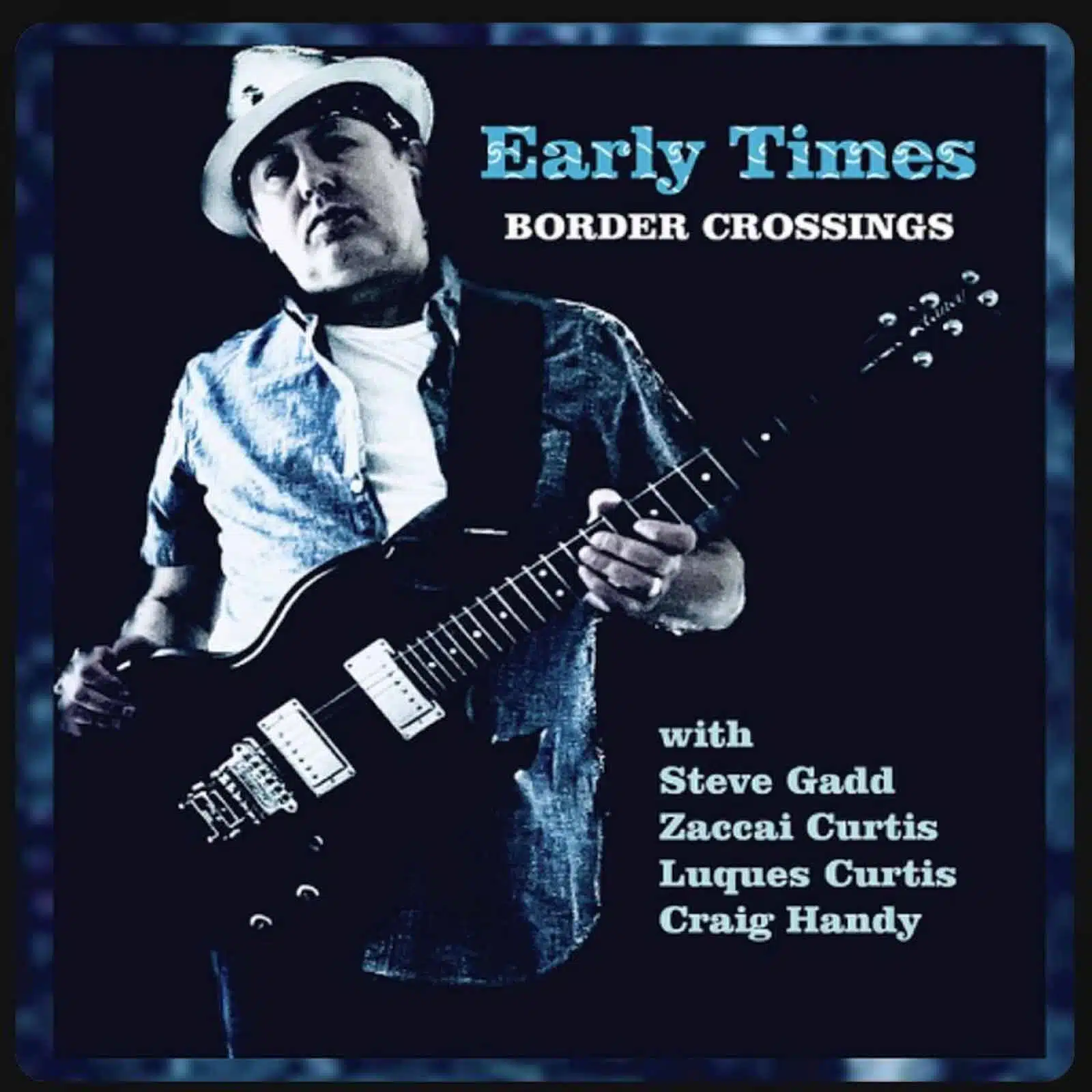
Summary: Despite an unfortunate album cover, Border Crossings reveals itself as Early Times’ most accomplished work to date. Supported by an exceptional ensemble featuring Steve Gadd, Zaccai Curtis, Luques Curtis and Craig Handy, the guitarist delivers a warm, melodic and deeply engaging jazz album that rewards repeated listening and promises to be even more compelling in a live setting.
Early Times’ Border Crossings Review: A Melodic Jazz Journey Beyond Expectations
For two days, this album sat beside my mixing console while I found excuses not to listen to it.
The reason was embarrassingly simple. The cover art is spectacularly uninviting. It evokes the sort of generic rock album sleeve that populated European record stores in the 1980s, the kind of design that often signaled music far less interesting than its creators believed. Judging a record by its cover is a dangerous habit, but in this case the temptation was difficult to resist.
Fortunately, the musicians listed on the back cover inspired far more confidence than the artwork on the front. Steve Gadd, Zaccai Curtis, Luques Curtis and Craig Handy are names that carry considerable weight in contemporary jazz. Their presence suggested there was something substantial waiting beneath the unfortunate packaging.
That suspicion proves correct almost immediately.
With Border Crossings, guitarist Early Times may have delivered his most accomplished album to date. Any lingering doubts disappear during the opening moments of “Roadside Quickie.” Gadd’s drums establish the pulse with understated authority. Handy’s saxophone enters naturally, Luques Curtis’ bass radiates warmth and depth, and Times’ guitar glides into the arrangement with remarkable elegance. At first, everything feels comfortably familiar, almost deceptively so. Then the bass begins to push forward, the groove shifts ever so slightly, and a saxophone solo cuts through the hypnotic rhythm, demanding attention. Suddenly, the listener is fully invested.
That moment reveals one of the album’s greatest strengths. Early Times understands how to create music that feels accessible without becoming predictable. There is a traditionalist’s respect for melody throughout these compositions, but there is also an openness to exploration. The music never abandons structure, yet it constantly searches for new emotional territory within it.
The title Border Crossings naturally invites broader interpretations. It suggests movement between places, cultures, ideas and experiences. Whether Times intended the phrase as a political statement, a philosophical reflection or simply a personal metaphor is ultimately less important than the atmosphere it creates. From the second track onward, the album develops a quietly introspective character, encouraging reflection rather than demanding attention.
That quality emerges particularly on “Succubus.” Luques Curtis opens with a bass passage that subtly alters the album’s emotional landscape. It is also the moment when Zaccai Curtis’ contribution becomes impossible to ignore. Rather than dominating the music, the pianist provides a constantly evolving palette of colors and textures. His playing is sophisticated without being showy, enriching every composition with harmonic nuance and emotional depth.
The Curtis brothers form one of the album’s essential pillars. Zaccai, who received the 2025 Grammy Award for Best Latin Jazz Album for Cubop Lives, brings extraordinary musical intelligence to the project. Luques, whose career has included collaborations with Eddie Palmieri, Gary Burton and Orrin Evans, anchors the ensemble with a bass sound that is simultaneously powerful and lyrical. Their interplay often provides the connective tissue that binds these diverse compositions together.
“It’s Been So Nice” places Early Times squarely in the spotlight. His guitar work is notable precisely because it avoids the excesses often associated with modern jazz guitar. Rather than dazzling listeners with technical displays, he focuses on melody, phrasing and atmosphere. Every note appears carefully considered. The result is deeply expressive music that feels personal rather than performative.
Elsewhere, “Scarlet Dancer” pushes the ensemble toward Latin-inflected territory. The rhythmic energy expands, the group chemistry becomes increasingly apparent and the track culminates in an exhilarating drum performance from Steve Gadd. Decades into a legendary career that has earned him Grammy recognition, induction into the Modern Drummer Hall of Fame and multiple honorary doctorates, Gadd remains a master of making complexity sound effortless.
Craig Handy deserves equal recognition. A veteran of performances alongside Herbie Hancock and recordings with artists ranging from John Scofield to George Cables, Handy brings authority and imagination to every appearance. His saxophone work often serves as the album’s narrative voice, guiding listeners through its changing landscapes while maintaining a sense of continuity.
The album’s production also deserves mention. Listening through a high-quality sound system reveals a recording that values space as much as detail. Every instrument occupies its own place within the mix without sacrificing ensemble cohesion. The bass remains resonant and articulate, the piano retains its warmth, the drums possess remarkable dimensionality and the guitar never overwhelms the surrounding textures. The engineering allows the musicians to breathe, creating the sensation of sharing a room with the ensemble rather than merely observing a studio construction.
What is particularly impressive is how naturally the album moves between different moods and influences. In less capable hands, such variety might have produced a patchwork collection of disconnected ideas. Here, however, the diversity feels organic. The record unfolds like a series of journal entries collected during a long journey. Different locations, different conversations and different emotional states emerge, yet the voice behind them remains unmistakably the same.
Ultimately, Border Crossings is not interested in reinventing jazz. It seeks something more enduring. It aims to communicate, to tell stories and to create moments of genuine human connection. In an era when technical virtuosity often overshadows emotional resonance, that choice feels refreshing.
This is an album that rewards patience. Its pleasures reveal themselves gradually, through repeated listens and careful attention. It is equally suited to a summer afternoon, a long drive or a quiet evening spent with good speakers and no distractions. One suspects, however, that these compositions will reach their fullest expression on stage, where the interaction between these exceptional musicians can unfold without limitation.
Sometimes the most rewarding journeys begin with the album you almost never bothered to play.
Thierry De Clemensat
Member at Jazz Journalists Association
USA correspondent for Paris-Move and ABS magazine
Editor in chief – Bayou Blue Radio, Bayou Blue News
PARIS-MOVE, June 15th, 2026
Follow PARIS-MOVE on X
::::::::::::::::::::::::
Musicians :
Early Times | Guitar
Steve Gadd | Drums
Luques Curtis | Double Bass
Zaccai Curtis | Piano
Craig Handy | Saxophone and Flute
Track Listing :
Roadside Quickie
Succubus
It’s Been So Nice
Scarlet Dancer
On The Corner
Chicago Sundown