
| Jazz |
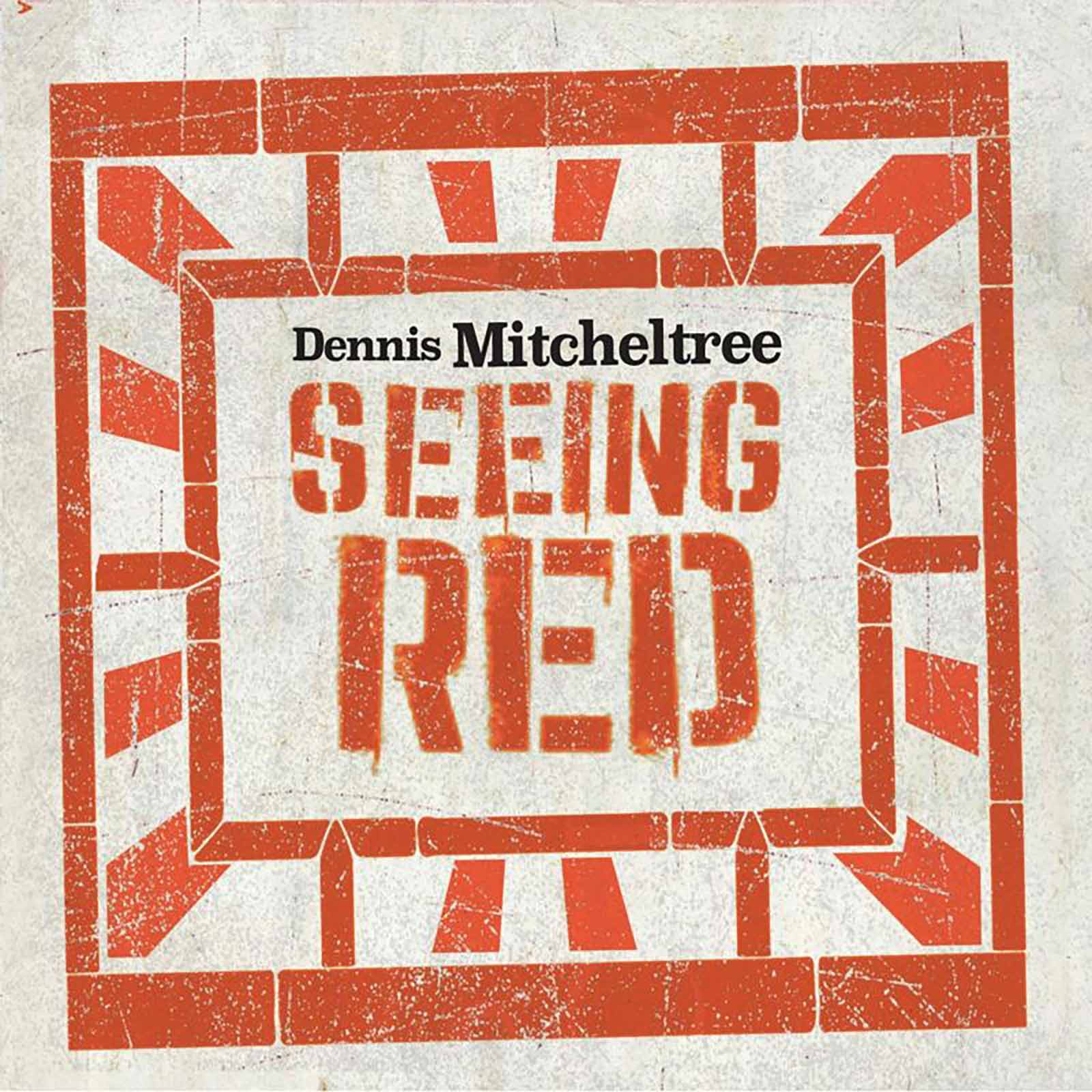
Summary: Dennis Mitcheltree’s Seeing Red transforms political tension, personal experience and compassion into powerful contemporary jazz built on dialogue, empathy and connection.
Dennis Mitcheltree’s Seeing Red: Jazz, Compassion and Resistance
Since the late 1970s, openly confrontational artistic statements have almost disappeared. It took a troubled period such as the one we are living through now for this kind of music to return, although in forms very different from those we knew before. For months now, jazz has been one of the places where this kind of album has been emerging, sometimes under very different guises, as with the magnificent Trip the Night Fantastic by Terri Lyne Carrington. Today, it is composer and saxophonist Dennis Mitcheltree who enters this circle, which is becoming less and less closed, with Seeing Red.
Mitcheltree is clearly boiling over with intense emotions. In the current sociopolitical climate, red is everywhere: angry faces on social media, political arguments becoming increasingly polarized, warnings of danger, identity symbols, and those who believe they alone represent the truly “blooded” American. Red is perceived as the color of destruction, although destruction can also precede transformation. One only has to think of Shiva. Yet limiting ourselves to a single range of colors prevents us from experiencing the whole picture. It is a narrow and restrictive vision, ultimately contrary to nature and hardly conducive to fulfillment. As Mitcheltree puts it, “Music is not monochrome. It can draw from all the colors of the visible and invisible spectrum, offering an infinite range of sonic shades that embody collaboration, cooperation, understanding and empathy. Through our prodigious musical palette, we have the power to illuminate what unites us.”
It is more than likely that the excellent musicians present on this album share these reflections. Yet if the music is contemporary and beautiful, I believe that to fully understand what is at stake here, it is important to know what lies behind each composition. Mitcheltree gives us the keys, and those keys reveal an album that is considerably more personal than its political title might initially suggest.
Far Left might sound like a political statement, particularly in the context of an album called Seeing Red. But the title contains a musician’s joke. For tenor saxophonists, “far left” simply refers to the extreme left-hand position on the keyboard required to play the melody of this slow blues. It is a small detail, but an important one: Mitcheltree is not interested in making everything literal. Even when the titles appear loaded with political meaning, there is often another layer underneath.
Lapis Lazuli is built around a fluid mixture of 3/4 and 4/4, interwoven throughout the structure, resting on a harmonic foundation that may initially appear conventional but soon moves away from familiar territory. The lapis lazuli stone itself is a deep blue metamorphic stone, traditionally associated with wisdom, truth and self-awareness. There is something appropriate about that choice. In the midst of an album dominated by the symbolic heat of red, this piece introduces another color, another state of mind, another way of looking.
Undocumented Language is perhaps the clearest expression of what jazz can actually be. Music is a language, and playing alongside musicians of the caliber of Johannes Wallmann, Jesse Crawford and Bill McClellan means entering into an intense conversation, a conversation rich in meaning but impossible to transcribe on paper. You have to experience it to understand it. This is not simply an intellectual proposition. You can hear it in the way the musicians respond to one another, leaving space, challenging one another, listening and moving forward together. That is where the music becomes alive.
911 comes from an entirely different place. Mitcheltree was living in New York on September 11, 2001. On that day, this composition emerged spontaneously, demanding to be released. There is no need to force an explanation onto such music. Some experiences are too overwhelming to be translated directly into words. Sometimes the only possible response is sound.
Mortal Coil, or the burden of existence, refers to the poetic expression associated with Shakespeare. To cast off this “mortal coil” is to leave behind the physical body and its earthly weaknesses in order to reach a state of pure spirit. Once again, Mitcheltree moves between the physical and the metaphysical, between the body and what might exist beyond it. The title may be literary, but the feeling behind the music is unmistakably human.
Maitri is a Sanskrit term that lies at the root of compassion: loving-kindness, empathic joy and equanimity toward oneself and toward all other beings. On an album so deeply concerned with division and confrontation, this idea is essential. Maitri does not arrive as a simplistic answer to a complicated world. It is something more demanding: an invitation to change the way we listen, to ourselves as much as to everyone around us.
Tai Time was written for Mitcheltree’s sixteen-year-old son Tai, himself a saxophonist with, according to his father, musical potential well beyond what one might expect. There is something particularly moving about the presence of this piece on an album so concerned with the state of the world. Suddenly the political and philosophical landscape becomes intimate. We are no longer talking about abstract ideas, but about transmission, family, music passed from one generation to another, and the hope contained in that gesture.
Brooklyn is both a person and a place, and the reflection of one of the deepest and most overwhelming experiences of Mitcheltree’s life. The music emerged while he was going through that experience; it was not so much composed as written through him. There are moments when a musician constructs a piece, and others when the music seems to find its own way out. Brooklyn belongs to the second category. It feels less like an object that has been built than an emotional event that has been allowed to take musical form.
By now, you will have understood that Seeing Red is ultimately an anthem to love, gathering, sharing and listening. Nothing about it is overly complicated, because Mitcheltree and his musicians create their own form of osmosis through the way they play. The sound is warm, the interaction is constant, and there is a generosity in the music that never shuts anyone out. The quartet of Mitcheltree on tenor saxophone, Johannes Wallmann on piano, Jesse Crawford on bass and Bill McClellan on drums understands that communication does not mean everyone speaking at once. It means listening closely enough to know when to speak.
And perhaps that is where Seeing Red becomes most powerful. The album is clearly born from a moment of political and social tension, but it does not reproduce that tension in the way so much contemporary discourse does. It does not build another wall. It opens a door. Mitcheltree uses the language of jazz to argue, without preaching, that there are other colors available to us, other possibilities than anger, division and fear.
This is why Seeing Red is not simply another contemporary jazz album. It is an album that feels necessary. Not because it offers easy solutions to a world that has become increasingly difficult to understand, but because it reminds us that music can still create a space where people listen to one another. And perhaps, in the end, that is the most radical thing an album can do today.
Seeing Red is not an album that simply takes its place among the releases of the moment. It naturally takes its place in a much larger history, one in which jazz has always been capable of absorbing the tensions of its time and transforming them into something else.
Thierry De Clemensat
Member at Jazz Journalists Association
USA correspondent for Paris-Move and ABS magazine
Editor in chief – Bayou Blue Radio, Bayou Blue News
PARIS-MOVE, September 14th, 2026
Follow PARIS-MOVE on X
::::::::::::::::::::::::
Musicians :
Dennis Mitcheltree – tenor saxophone
Johannes Wallmann – piano
Jesse Crawford – bass
Bill McClellan – drums
Track Listing :
1 Far Left 6:11
2 Lapis Lazuli 4:38
3 Undocumented Language 5:34
4 911 7:16
5 Mortal Coil 2:12
6 Maitri 7:02
7 Tai Time 6:26
8 Brooklyn 5:59
All compositions by Dennis Mitcheltree, BMI ©&℗ 2026
Recorded December 15, 2025 at Samurai Hotel Recording Studio, New York City
Engineered and mixed by David Stoller at Samurai Hotel Recording Studio
Mastered by Mike Marciano at Systems Two
Graphic design by Christopher Drukker
Produced by Dennis Mitcheltree
On The Road :
September 16 – Silvana, NYC
September 17 – Smalls, NYC
September 18 – The Five Spot, NYC
September 19 – Bad Therapy Bar, Brooklyn, NY
September 20 – The Connect Bar, Jamaica, NY
October 7 – Bird and Beckett, San Francisco, CA
October 8 – Soundroom, Oakland, CA
October 9 – Mr. Tipples, San Francisco, CA
October 10 – Meyhouse Jazz, San Ramon, CA
December 20 – The G Spot, Los Angeles, CA