| Jazz |
Rewriting Monk: Why Dayna Stephens’s Boldest Risk Pays Off
I break the silence of both office and street with the familiar clicking of my keyboard. Sometimes, by the quirks of promotional timing, an album reaches us later than expected. It hardly matters in this case. Dayna Stephens’s latest release feels untethered from chronology, timeless, in fact, and it revives an enduring question in jazz, in America as in Europe: Why do great saxophonists, at certain moments in their careers, feel compelled to rewrite history by confronting the universe of Thelonious Monk?
Between the postmodern reimagining offered by Pierrick Pédron on Kubic’s Monk, released in 2012 on the German label ACT Music, and the post-bop vision Dayna Stephens unveiled last October, we encounter two distinct perspectives on Monk’s legacy. Yet beneath these divergent aesthetics lies a shared conviction: that Monk’s music, radical in its time and still startlingly modern, contains an elasticity that invites perpetual reinvention.
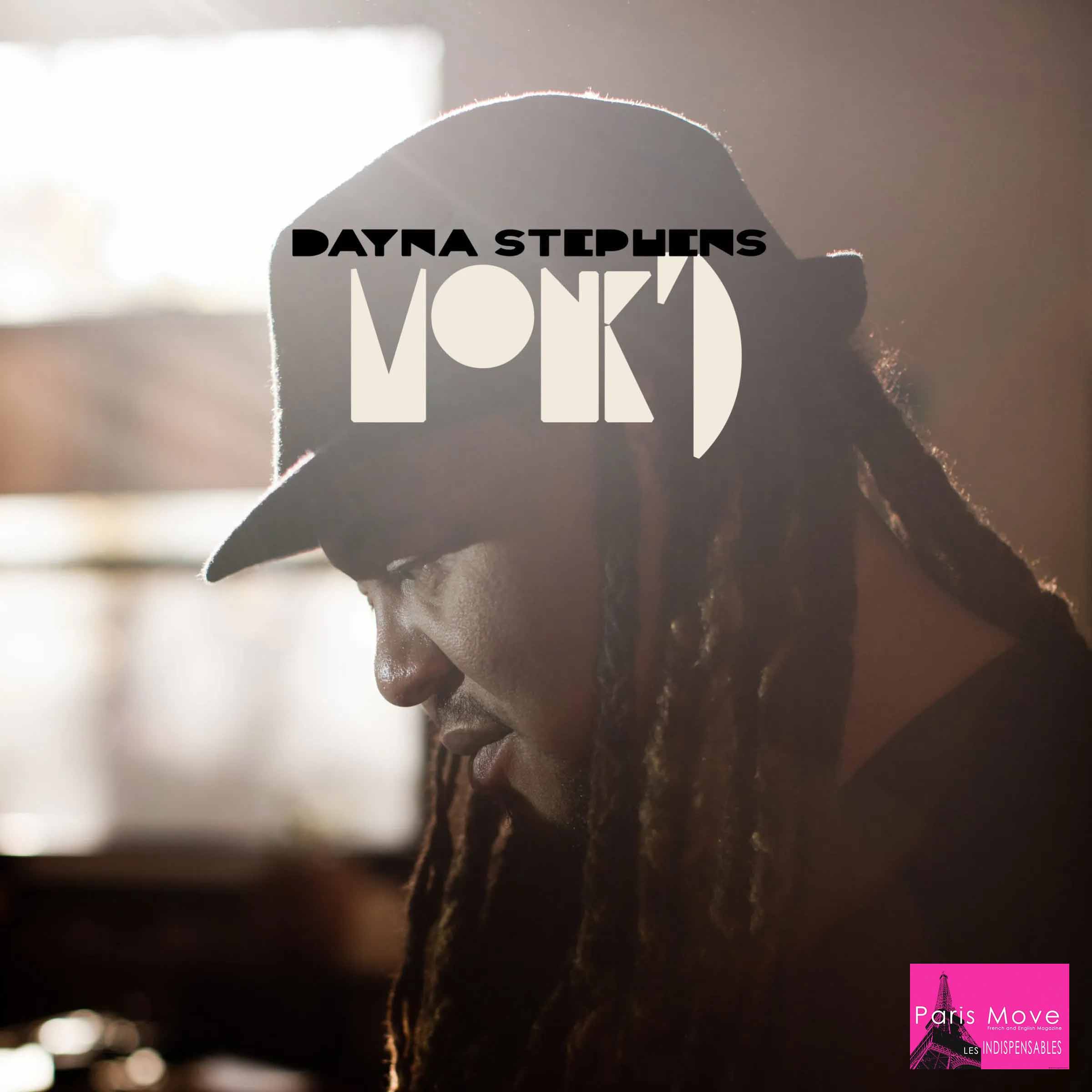
What sets Stephens’s project apart is not merely the choice of repertoire, but the nature of the risk he takes. Widely regarded as one of the most accomplished saxophonists of his generation, Stephens steps away from his primary instrument to assume the role of bassist. It is a move that could easily have felt symbolic or self-indulgent. Instead, it becomes the album’s organizing principle. This is not a sideline experiment but a deliberate act of leadership, Stephens placing himself at the structural core of the music.
From the outset of his career, Stephens has revealed himself as a musician driven by inquiry: into composition, into arrangement, and above all into sound. Taking up the double bass here is less a rupture than a continuation of that search. The bass, after all, is where authority resides in a jazz ensemble. It governs harmony, dictates momentum, and quietly determines how risk is distributed among the players.
Stephens’s history with the instrument is deeper than casual listeners might expect. Between 2004 and 2006, he toured with Lavay Smith and Her Red Hot Skillet Lickers, and earlier with the formidable Miss Faye Carol. He has performed on bass with Roy Hargrove, notably during a Valentine’s Day concert at the Jazz Gallery alongside Lionel Loueke, Aaron Parks and Greg Hutchinson. Over the years, he has shared the stage with Eric Harland, Billy Hart, Jeff “Tain” Watts, Sam Yahel, Peter Bernstein and Joshua Redman, among others. Though the bass is not his principal voice, Stephens returns to it regularly, drawn to its rare balance of support and command.
“When I choose a bassist for my saxophone trio or quartet, I choose the person who will lead the band,” Stephens has said. “They control the root notes of all the harmonies and, most importantly, the rhythm everyone intuitively feels. It’s a role I want to assume whenever I can.”
There is also a natural kinship between the bass and the lower registers of the saxophone family. On instruments ranging from alto to baritone, the deep, resonant tones often mirror the physical vibration of a double bass. It is no accident that many saxophonists devote part of their professional lives to string instruments. They share not only technical affinities, but similar ways of perceiving musical space and form. The real gamble for Stephens, then, lies less in musicianship than in perception: how audiences might respond to seeing him lead from the bass chair. The album answers decisively, he excels, and the music gains depth because of it.
The project itself, Monk’d, emerged from a suggestion by Stephens’s longtime friend and supporter Mark Weiss, who proposed pairing him with pianist Ethan Iverson. “It immediately occurred to me that we should play and produce a tribute to the great Thelonious Monk,” Stephens recalls. Rather than relying on Monk’s most familiar compositions, Stephens selected lesser-known works and reshaped them with subtle formal shifts, altered meters, reconfigured structures, and, at times, the fusion of multiple pieces.
The suite “Just You and Me Smoking the Evidence” exemplifies this approach, weaving together “Just You, Just Me,” “Evidence,” and Stephens’s own contrafact, “Smoking Gun.” Elsewhere, pieces such as “Ruby, My Dear” and “Ugly Beauty” retain their original architecture, animated instead by the ensemble’s clarity and restraint. Throughout the album, the arrangements never blunt Monk’s edges; they illuminate them from new angles.
Stephens could have chosen the safer path, smoothing out Monk’s asymmetries, simplifying the rhythmic puzzles. He does precisely the opposite. By rethinking tempos, reinjecting swing, and subtly modernizing our perception of the material, he undertakes a task that is both ambitious and deeply respectful. The result is a body of work that feels alive rather than archival.
This stands as one of the most accomplished albums in Dayna Stephens’s discography, one of those recordings that lingers in the player long after the first listen, quietly elevating the day that surrounds it.
More broadly, it reaffirms why Thelonious Monk remains a proving ground for jazz modernists. To engage with Monk is to test one’s relationship to risk, form and authority, to decide not only how to honor the past, but where to stand within it. In choosing to lead from the bass, Dayna Stephens does more than reinterpret Monk. He enters into a dialogue with him, one that continues to redefine what modern jazz leadership can look like.
Thierry De Clemensat
Member at Jazz Journalists Association
USA correspondent for Paris-Move and ABS magazine
Editor in chief – Bayou Blue Radio, Bayou Blue News
PARIS-MOVE, January 2nd 2026
Follow PARIS-MOVE on X

::::::::::::::::::::::::
Musicians:
Dayna Stephens, double bass
Stephen Riley, tenor saxophone
Ethan Iverson, piano
Eric McPherson, drums
Track Listing :
- Brake’s Sake – 5:54
- Humph – 4:31
- Coming on the Hudson – 6:17
- Just You and Me Smoking the Evidence – 6:25
- Ugly Beauty – 6:03
- Stuffy Turkey – 4:05
- Hornin’ In – 5:38
- Ruby My Dear – 6:16
- Monk’D – 4:41